
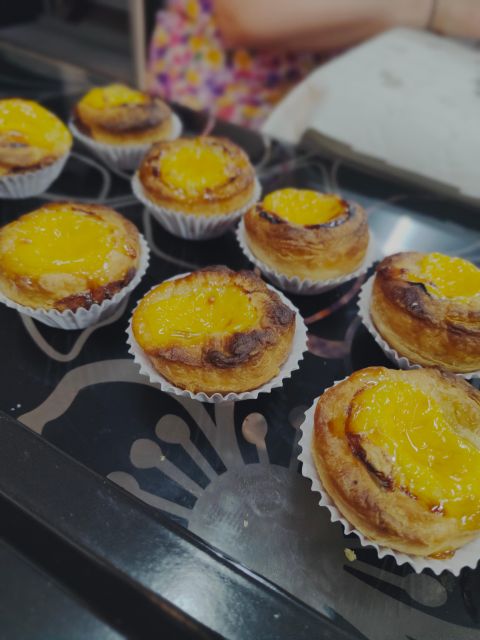
Reviewed · PASTEL DE NATA WORKSHOPS
Porto: Pastel de Nata Pastry-Making Workshop
Porto’s famous pastel de nata is more fun to make than to simply buy, especially when a glass of Port is in your hand and your host is keeping the room laughing. At Boiler Studio, hosts such as Maria, Sara, Patricia, Ana, and Alice lead a relaxed English-language class near the Cathedral, with plenty of local food tips along the way.
I like the small group format, which can make the lesson feel personal even when several people are sharing the work. I also like the useful souvenir: you eat the hot pastries at the end, then carry at least two more home in a cardboard box.
The main thing to understand is that the dough is prepared before class. You roll and shape it, make the custard, and take part in the key stages, but you do not make the laminated dough from the first step. If you want to handle every stage yourself, ask about a private class.
What makes this Porto pastry class worth your time
- A central location: Boiler Studio is at Rua Chã 77, opposite Porto Cathedral and close to São Bento Station and the Luís I Bridge.
- A social lesson: You cook in a group of no more than nine, meeting people from different countries over drinks and pastry.
- Practical baking advice: You receive the recipe and tips for recreating the tarts at home.
- A drink with the lesson: Your included choice is Port wine, regular wine, or a mimosa. Some sessions have included a second drink.
- Pastries for now and later: You usually eat one fresh from the oven and take at least two more away.
- A good rainy-day plan: The 90-minute workshop gives you an indoor activity without giving up a taste of Porto.
Meeting the pastry team at Rua Chã 77
The workshop takes place at Boiler Studio on Rua Chã 77, a typical street directly opposite Porto Cathedral. That location matters. You can pair the class with São Bento Station, the cathedral, the Luís I Bridge, or the Time Out Market without arranging extra transport.
I would allow a little time to find the studio, since Porto’s old streets can be steep, narrow, and confusing. The meeting point is central, but this is not a suburban cooking school where you arrive by car and park outside. Plan to come on foot from the nearby sights.
The studio itself is described as bright, clean, and nicely laid out. It also has a small area with gifts for sale. That makes it a pleasant place to spend an hour and a half, but the main attraction is the shared work table rather than a formal restaurant setting.
Your instructor speaks English. Different sessions are led by different hosts, including Maria, Sara, Patricia, Ana, Alice, and others. The strongest pattern across the class is the host’s role as part baker, part social organizer. The best instructors keep an eye on who has and has not had a turn, explain the work clearly, and keep the conversation moving.
Other places to bake your own in Porto:
- Porto: Pastel de Nata Cooking Class with Port Wine – Sé
★ 4.8 · 888 reviews - Lisbon: Pastel de Nata Baking Class
★ 4.9 · 2,106 reviews - Porto: Pastel de Nata Cooking Class with Grandma’s Recipe
★ 5.0 · 1,565 reviews
The 90-minute class, step by step
The class starts with an introduction to pastel de nata and the basic method. Your host explains the stages before bringing people into the work. This is useful if you have never baked with laminated pastry or made a cooked egg custard.
You then roll out the prepared dough. This is an important distinction. The dough cannot be made during the workshop because it takes around three hours to rest and become ready. The preparation is done ahead of time, while you still learn how to roll and shape it for the tart shells.
Next comes the custard. You prepare the egg-based mixture under instruction, then add it to the pastry shells. The lesson is not a silent demonstration. People are brought to the front of the table in stages, so each person or pair can take part in selected jobs.
That shared format has a clear benefit: it keeps the session moving and avoids a crowded workbench. It also has a limit. You may not personally perform every single step. If hands-on time is your top priority, ask for details about a private workshop before booking.
While the pastries bake, the class shifts into conversation. You can sip Port, wine, or a mimosa, ask questions, and get suggestions for eating and sightseeing in Porto. The pause is well placed. You are not standing over a hot oven, and you have time to write notes on the printed recipe.
When the tarts come out, you eat them fresh. Warm pastel de nata has a softer custard and crisp pastry that you do not quite get from a pastry shop hours later. You then pack at least two more into a cardboard box. Several sessions have produced three pastries per person, with one eaten at the studio and two carried away, though the exact number should be confirmed when you book.
Why the drink and conversation matter
This is a baking lesson, but it is also a social activity. The drink gives everyone an easy opening, and the shared table does the rest. People come from different countries, and solo participants can join without needing to form their own group.
I would choose this class if you want something more relaxed than a technical cooking course. Hosts such as Maria and Patricia have been praised for drawing everyone into the process, while Sara and Ana have been noted for their humor and friendly manner. The tone is informal, with conversation woven into the baking rather than held until the end.
You should not expect a serious professional pastry certification. The class is designed for ordinary people on holiday, including complete beginners. The useful result is that you leave with a workable recipe, a better idea of how the pastry should look, and a few small tips that are easy to miss in a recipe alone.
The local advice is another nice touch. Your host may suggest food places and things to do around Porto. Treat this as personal guidance rather than a formal city tour. The class will not replace a walking tour, but it can help you decide where to eat next.
What you really learn about pastel de nata
The recipe covers the two parts that matter most during the session: the pastry shells and the custard. You roll the prepared dough, shape it, and make the filling with instruction. The host also explains the order of the work and the small adjustments that help the tarts bake well.
You receive the recipe to take away, with room to add notes. That is valuable because the process has several stages, and the tips shared aloud may not appear in a short printed recipe.
One useful point for home bakers is equipment. If you plan to make pastel de nata for a large group, one set of baking molds may not be enough to prepare everything in a reasonable time. The workshop gives you the method, but your home setup will affect how quickly you can repeat it.
Do not describe the class to yourself as making pastel de nata entirely from scratch. That would set the wrong expectation. A more accurate description is hands-on pastry and custard making with dough prepared in advance. For many people, this is the sensible balance in a 90-minute class.
Same base, a different kind of day out:
- The Unvanquished Tour in Porto City Center
★ 5.0 · 26,497 reviews - From Porto: Douro Valley w/ Boat Tour, Wine Tasting & Lunch
★ 4.7 · 19,061 reviews - Complete Douro Valley Wine Tour with Lunch, Wine Tastings and River Cruise
★ 5.0 · 12,920 reviews - Porto: Six Bridges Cruise
★ 4.2 · 11,680 reviews
Eating your work at the end
The payoff arrives when the pastries are hot. You can taste the result immediately and judge the crispness of the pastry, the texture of the custard, and the balance between the two.
You also take at least two pastries away. That matters if you are booking the class early in your Porto stay, since the box gives you a small treat for later. Handle it carefully while walking over cobblestones and up Porto’s hills.
The class is especially appealing for people who like food souvenirs but do not want another mass-produced item. The recipe and the hands-on practice stay with you, while the pastries offer an instant reminder of the afternoon.
Is $41 a fair price?
At $41 per person, the class is not the cheapest way to eat pastel de nata in Porto. A pastry from a bakery costs far less. You are paying for the instruction, the studio, the included drink, the social setting, the recipe, and the pastries you take away.
I consider the price reasonable if you value a planned activity and want more than a quick tasting. The 90 minutes are long enough to learn the method without taking half a day from your sightseeing. The central location also helps, since you can fit the class between major sights rather than lose time getting across town.
The value is strongest for couples, friends, solo visitors, and families with older children who want a shared activity. It is less convincing if you only want to sample Porto’s pastries or if you already bake laminated pastry regularly.
Some sessions have included two drinks, while the formal inclusion is one glass of Port, wine, or a mimosa. I would treat the second drink as a possible bonus, not something to count on when comparing prices.
Who should book this workshop?
This class suits you if you:
- Like food and want a practical activity, not just a tasting.
- Are happy to work as part of a group.
- Want to meet people while visiting Porto alone.
- Enjoy a relaxed class with humor and conversation.
- Would like a recipe and tips you can use at home.
- Need an indoor plan for a wet afternoon.
- Are visiting with children aged 10 or older.
It may not suit you if you need every participant to make every part of the recipe independently. It is also not suitable for children under 10. Groups larger than eight should ask for details in advance, since the normal setup is limited to a maximum of nine people.
For a quieter and more complete hands-on session, ask about a private workshop. That is the better choice if you are a larger group or if the dough-making stage matters most to you.
Practical timing and booking advice
The activity lasts 1.5 hours, so you can schedule it around a morning at São Bento Station or an afternoon near the cathedral. Check the available start times before you commit to another reservation, since the class is offered at set times.
The workshop is in English. If everyone in your party is comfortable following English instructions, the process should be easy to follow. The host explains the work aloud and shares the recipe, so you can ask questions as you go.
Cancellation is free up to 24 hours before the activity for a full refund. You can also reserve now and pay later, which helps if your Porto plans are still shifting. Keep the confirmation details with you, since the studio is in the old center and the surrounding streets can look similar.
I would book earlier rather than later if you have a fixed day. The class has a small capacity, and its central location makes it an easy choice for many visitors.
Final verdict: should you book it?
Yes, if you want to understand pastel de nata by making it, not just eating it. The strongest parts are the warm pastries, the friendly hosts, the included drink, and the useful advice you can take home.
Book it with the right expectation. You will not make the dough from the first step, and you may share some stages with the group. In return, you get a lively 90-minute lesson, a recipe, local food suggestions, at least two pastries to carry away, and a good chance to meet people in Porto.
For most visitors, especially solo visitors, couples, food lovers, and families with children over 10, $41 is a fair price for the time and setting. If you want a full pastry-school lesson, ask about a private format. If you simply want the cheapest nata in town, visit a bakery instead.
FAQ
Where does the pastel de nata workshop take place?
It takes place at Boiler Studio, Rua Chã 77, on a typical street opposite Porto Cathedral. São Bento Station, the Luís I Bridge, Time Out Market, and the Cathedral are nearby.
How long does the workshop last?
The workshop lasts 1.5 hours.
What drink is included?
You receive one glass of Port wine, regular wine, or a mimosa.
Is the workshop taught in English?
Yes. The instructor speaks English.
Do I make the pastry dough during the class?
No. The dough is prepared before the workshop because it needs about three hours to be ready. You roll and shape the prepared dough, make the custard, and take part in the other main stages.
How many pastries do I take home?
You receive at least two pastel de nata to take away in a cardboard pastry box. The exact number can vary, and some sessions have provided three pastries per person, with one eaten during the class.
Are children allowed to join?
Children aged 10 and older are welcome. The workshop is not suitable for children under 10.
Can larger groups book the workshop?
The usual group size is a maximum of nine people. Groups of more than eight should ask for additional information, and private workshop options are available for those who want to participate in all the stages.
Just added in Porto
- From Porto: Gerês National Park Canyoning Trip★ 5.0 · 407 reviews
- Porto: Guided 3-Hour Best of Tour by Segway★ 4.9 · 479 reviews
- From Porto: Arouca 516 and Paiva Walkways Guided Day Trip★ 4.9 · 456 reviews
- From Porto: Braga & Guimarães with Lunch Small Group Tour★ 4.8 · 545 reviews
- From Porto: Aveiro, Paiva Walkways, Suspension Bridge and Lunch★ 5.0 · 434 reviews
- Porto: 6 Bridges Port Wine River Cruise with 4 Tastings★ 4.9 · 586 reviews
- Porto: Small Group Surf Lesson with Transportation★ 4.9 · 594 reviews
- Porto: Daytime or Sunset Douro River Sightseeing Cruise★ 4.7 · 626 reviews
Pastel de Nata Workshops, compared.
Pastel de Nata Cooking Class with Grandma’s Recipe
Read our review →
Pastel de Nata Cooking Class with Port Wine – Sé
Read our review →Browse the lists this tour appears in