

Reviewed · PASTEL DE NATA WORKSHOPS
Lisbon: Pasteis de Nata Baking Class
Lisbon’s famous custard tart is even better when you make it yourself. This two-hour class takes place in the neighborhood where pastéis de nata were created, with chef and host Miguel guiding you through the pastry, custard, and baking. I like the small limit of eight people and the fact that you make everything from scratch, not just decorate a ready-made tart.
I also like the easy timing. You can choose a morning or afternoon start, and the class is short enough to fit around a day of sightseeing. The main consideration is the price: at $76 per person, this costs more than simply buying a pastel de nata at a bakery, so you are paying for instruction, a social experience, drinks, and the chance to take your own baking home.
Key points at a glance

- Make the pastry and custard yourself: This is a hands-on class, not a demonstration from the sidelines.
- Learn with Miguel: He teaches in English or Portuguese and uses a relaxed, patient approach.
- Small groups help: With no more than eight people, you have room to ask questions and get help shaping the tarts.
- Taste the results fresh: Your pastéis de nata are served with coffee, tea, and one alcoholic drink.
- Take extra tarts away: The quantity can be generous, with some pairs making about ten tarts to share and pack up.
- Easy to fit into Lisbon plans: The class lasts two hours, with morning and afternoon options.
Why this pastry class is worth your Lisbon time

Pastéis de nata are everywhere in Portugal, from corner cafés to grand pastry shops. You can buy one for a few euros, dust it with cinnamon, and carry on with your day. This class offers something different: a look at how the flaky shell and soft custard come together, plus a practical skill you can try again at home.
I like food classes that connect a dish to its place. Here, you are not learning a random international recipe in a rented room. You are working with one of Portugal’s best-known foods in the quarter linked to its beginnings. That setting gives the activity a useful sense of place, even though most of the two hours are spent in the kitchen.
The class is also friendly to beginners. You do not need to arrive as a baker, and the instructions are broken into manageable steps. Miguel’s teaching style is described as clear, encouraging, and relaxed, which matters when pastry goes wrong easily. He explains why each stage matters instead of simply telling you what to do.
Other classes where you cook in Lisbon:
- Lisbon: Pastel de Nata Baking Class
★ 4.9 · 2,106 reviews - Lisbon: Traditional Portuguese Cooking Class
★ 4.9 · 592 reviews - Lisbon: 2-Hour Pastel de Nata Cooking Class
★ 4.8 · 461 reviews
Finding the green gate and private kitchen
The kitchen studio sits inside a private yard. Your meeting point is the green gate, so pay attention to the arrival instructions rather than expecting a prominent shopfront or hotel-style entrance.
The studio is accessible from central Lisbon by bus or Bolt, according to the practical directions provided for the experience. Hotel pickup and drop-off are not included, so you need to make your own way there. Build in a little time to locate the gate, especially if you are arriving for the morning session and do not know the area.
The setting sounds modest rather than grand, and that is part of its appeal. You are entering a working kitchen studio, not a large tourist attraction. The space is reported to be clean, organized, and ready for the class when you arrive. The kitchen is wheelchair accessible, though you should still check the exact route and access needs when booking if those details are important for your party.
Starting with the pastry, not a shortcut

The class covers the full process, including the pastry. That is important because the pastry shell is the part that gives a pastel de nata its character. A filling poured into pre-bought shells would make this a tasting lesson, but here you get to handle the basic components yourself.
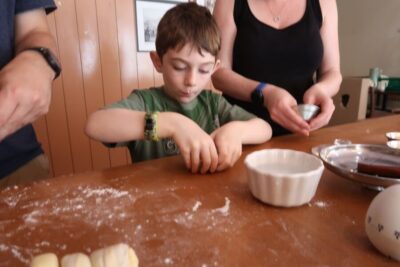
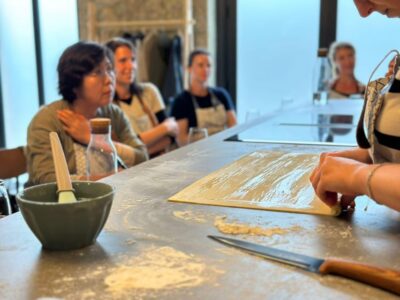
Expect Miguel to guide you through the work step by step. The class is intended to be hands-on, with participants shaping and preparing their own tarts rather than watching one person do all the work. That makes the session more useful for home bakers and more fun for couples, friends, families, and solo participants.
Pastry work can feel fussy at first. The shell needs care, and small differences in handling can affect the final layers. A small group makes a real difference here. With a maximum of eight people, Miguel has a better chance to notice when you need help and answer questions without rushing from table to table.
You will usually work in pairs or share the kitchen process with the other people in your group. One session produced about ten tarts for two people, or roughly five each, with some left over to take away. The exact amount may vary, but the portions appear generous enough to make the class feel like more than a single tasting.
Preparing the creamy custard filling

The custard is the other half of the equation. Pastéis de nata need a filling that is smooth and sweet, but not so heavy that it overwhelms the pastry. The class explains the process behind the creamy center and how it fits into the shells before baking.
This is where the lesson becomes more useful than a simple bakery visit. You get to see how a few familiar ingredients become a pastry with a very particular texture. Miguel also shares details about the tart’s background while the food is being prepared, giving the baking a little cultural context without turning the session into a long lecture.
The class uses traditional Portuguese ingredients and methods as the foundation. It does not promise the original secret recipe from the famous bakery associated with the area. Instead, the chef relies on his own tested approach to create a version that is tasty and manageable for people to repeat at home.
That distinction is worth noting. If you are searching for a guarded commercial formula, this is not that. If you want a practical introduction to the method, with a chef explaining the reasoning behind each stage, it is a better fit.
Other places to bake your own in Lisbon:
- Lisbon: Azulejos’ Design Create Your Own Tile Workshop
★ 4.9 · 420 reviews - Lisbon: Pastel de Nata Masterclass at a Real Bakery
★ 4.9 · 132 reviews - Porto: Pastel de Nata Cooking Class with Grandma’s Recipe
★ 5.0 · 1,565 reviews - Porto: Pastel de Nata Pastry-Making Workshop
★ 4.9 · 1,542 reviews
The oven break and tasting table

Once the tarts go into the oven, you get a short pause. This is when the activity shifts from hands-on baking to conversation, a drink, and a little history about the pastry.
Coffee and tea are included, along with one alcoholic drink. The drink may be enjoyed with the finished tarts, and past sessions have included Port or Portuguese liqueurs. Bottled water is also provided. These extras help turn the last part of the class into a relaxed tasting rather than a rushed handoff at the oven.
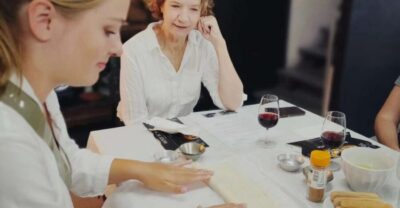
The baking wait is also a useful social moment. A small group gives you a chance to chat with the other people at the table, but you are not locked into a large cooking crowd. Solo participants can join in easily, while couples can treat it as a shared activity.
Do keep your expectations practical. This is a two-hour class, not a full meal or a half-day food tour. The included food is the pastry you make, plus the drinks listed above. If you need lunch, plan another stop before or after the session.
Eating your own pastéis de nata

The best part comes when the tarts leave the oven. You can taste your work fresh, when the pastry is still at its most appealing and the custard has set. There is a special satisfaction in comparing the result with the many tarts you will see in Lisbon cafés.
You also get to take extra pastéis de nata with you. A box makes the experience more practical, since you can save some for later instead of eating everything at once. Handle them carefully during the rest of your day, especially if you plan to walk around Lisbon afterward.
The final result will depend partly on your own work. That is not a flaw. A cooking class is more interesting when you can see the connection between technique and outcome. Miguel’s role is to keep the process clear and help you avoid common mistakes, but you still have a hand in the finished pastry.
The class works well for people who want a food memory tied to an activity. You are not just handed a branded souvenir. You learn a method, eat the result, and leave with a story you can repeat when you try the recipe at home.
Miguel’s teaching style and group size

Miguel is the central part of the experience. His approach is described as warm, patient, entertaining, and well organized. He keeps the mood casual, which helps if you have little baking experience or feel unsure about working with pastry.
He teaches in English and Portuguese. English-speaking visitors should find the class easy to follow, while Portuguese speakers can take part in their preferred language. The instructions are presented at a steady pace, neither rushed nor drawn out.
The group limit of eight is one of the strongest practical features. In a large class, you might spend much of the session waiting for an oven, sharing tools, or trying to see a demonstration from the back. Here, the smaller setup should give you more direct contact with the instructor.
It also makes the class a good choice for a couple or a small family group. One pair described the private version as especially enjoyable, while a group of eight used it as a team activity. If you are traveling alone, the class still gives you an easy setting for meeting people without committing to a full-day group excursion.
When to book the morning or afternoon session

The morning class is useful if you want to bake early and keep the rest of the day open. You can pair it with sightseeing later, perhaps using the pastry class as the first planned activity before moving on to other parts of Lisbon.
The afternoon session works well after a morning of museums, walking, or neighborhood exploring. It gives you a slower break from sightseeing and ends with a snack and drink. Since the class is only two hours, you can still have dinner plans afterward.
Your choice should depend on the rest of your schedule, not on a major difference in the lesson. The same basic baking experience is offered at both times. Check the available start times when you book, since the exact schedule can change.
The location may require a bus or Bolt from central Lisbon, so account for transport at both ends. With no hotel pickup, the class is best for someone comfortable navigating independently.
Is $76 a fair price?

At $76 per person, this is not the budget way to eat pastéis de nata. A bakery visit will cost far less, and Lisbon gives you plenty of chances to compare different versions on your own.
The price makes more sense if you value the activity itself. You receive instruction from a dedicated chef, a small-group setting, ingredients, your own pastries, coffee or tea, one alcoholic drink, bottled water, and extra tarts to take away. You are also paying for a cultural lesson that fits into a morning or afternoon rather than consuming an entire day.
For a couple, the class offers a shared activity with a clear result. For a solo visitor, the group size and relaxed setting make it easier to take part without feeling lost. For a family or team, the hands-on format gives everyone something to do.
I would skip it if your main goal is simply to find the cheapest or most famous pastel in Lisbon. I would consider it good value if you enjoy cooking, want a local food experience, or like bringing home a skill rather than another souvenir.
Who should book this class?
This class suits:
- First-time bakers who want patient, step-by-step help
- Food lovers who have already eaten pastéis de nata and want to understand them
- Couples looking for a shared Lisbon activity
- Solo visitors who enjoy small social classes
- Families and small groups who want something more active than sightseeing
- Anyone with a free morning or afternoon and two hours to spare
It may not suit you if you dislike group activities, need a full meal, or want a formal pastry-school course with advanced techniques. The mood is casual and welcoming, not strict or highly academic.
The class is also a good rainy-day option. Lisbon is a walking city, but two hours in a clean kitchen gives you a useful pause when the weather is poor or your feet need a break.
Should you book the Lisbon pastéis de nata class?
I would book this class if you want more than a quick pastry stop. The strongest reasons are the small group, the hands-on work from scratch, Miguel’s clear teaching, and the chance to eat fresh tarts with a drink before taking some away.
The price is high compared with buying pastries at a café, but the comparison is not quite like for like. You are buying instruction and an activity, not just food. Book it when you have a free two-hour window, especially if you enjoy cooking or want a relaxed cultural experience with a strong local connection.
If you are watching every euro or have no interest in baking, spend the money on several bakery visits instead. For most food-focused visitors, though, this is a compact and practical way to understand one of Portugal’s most famous treats.
FAQ
How long does the pastéis de nata class last?
The class lasts two hours. You can choose from morning or afternoon start times, subject to availability.
How many people are in the class?
The group is limited to a maximum of eight participants. Private sessions may also be available, depending on the booking arrangement.
Who teaches the class?
Chef and host Miguel leads the class. Instruction is available in English and Portuguese.
What is included in the price?
The price includes the pastry-making lesson, an instructor, your own pastéis de nata, coffee, tea, one alcoholic beverage, and bottled water.
Do I need to bring my own transport?
Yes. Hotel pickup and drop-off are not included. The kitchen is inside a private yard, and the meeting point is at the green gate. The studio can be reached from central Lisbon by bus or Bolt.
Can I cancel the booking?
You can cancel up to 24 hours in advance for a full refund. The experience also offers a reserve-now, pay-later option.
Just added in Lisbon
- Half day Spa Water Therapy experience at THE SPA at Corinthia Lisbon★ 4.5 · 51 reviews
- Lisbon Cinematic Photoshoot with Top-Rated Photographer★ 5.0 · 76 reviews
- Central Lisbon E-Bike Tour★ 5.0 · 168 reviews
- Small-Group Sailing Tour on the Tagus River from Lisbon★ 5.0 · 78 reviews
- Lisbon Sailing Catamaran Public Cruise with drinks★ 5.0 · 304 reviews
- Alfama and the Castle of Saint George Skip the line Tour★ 5.0 · 53 reviews
- City Centre Run in Lisbon★ 5.0 · 164 reviews
- Boat tours in the Óbidos Lagoon★ 5.0 · 100 reviews
Pastel de Nata Workshops, compared.
Pastel de Nata Cooking Class with Grandma’s Recipe
Read our review →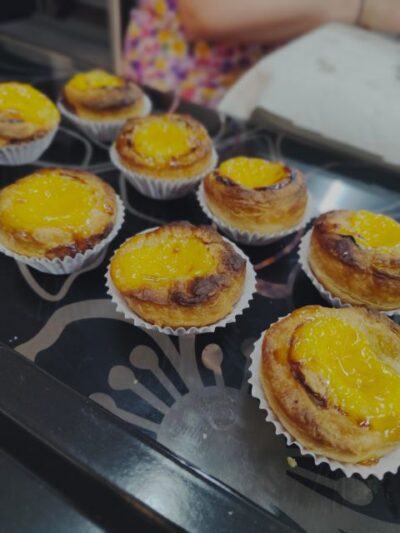
Pastel de Nata Cooking Class with Port Wine – Sé
Read our review →


Browse the lists this tour appears in