
Reviewed · PASTEL DE NATA WORKSHOPS
Porto: Tile Painting and Cocktails in Downtown Porto
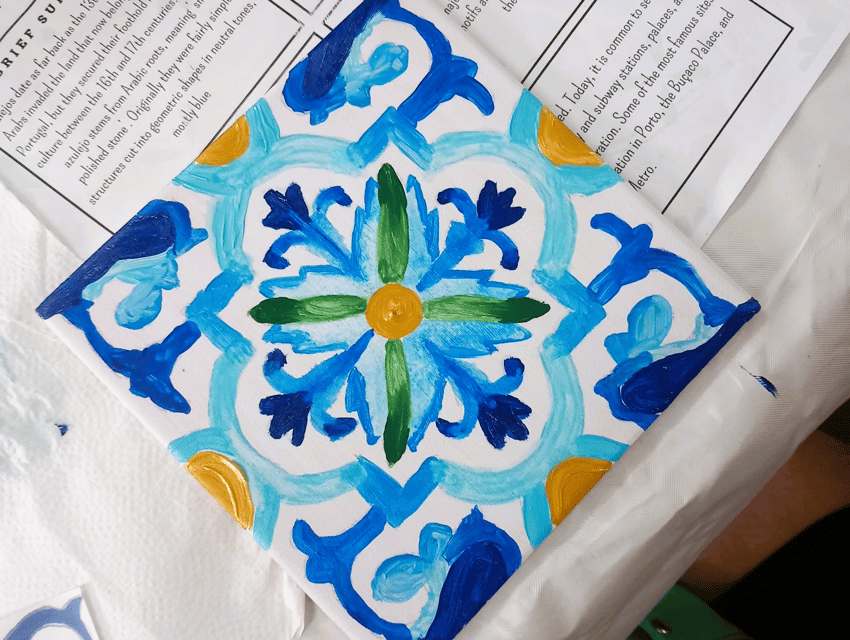
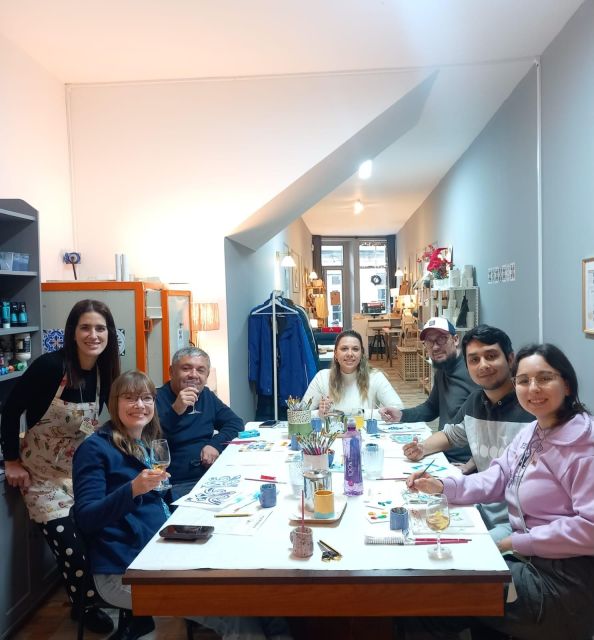
Porto’s famous tiled facades become more meaningful when you make one yourself. At Boiler Studio, you learn how azulejos entered Portuguese culture, choose a design, and paint a ceramic tile while calm music and a cocktail keep the mood easygoing.
I like the useful cultural lesson and the patient, hands-on guidance from instructors such as Daniella, Emmanuel, and Diogo. I also like that your tile becomes a real souvenir, not just a craft exercise. The main consideration is timing: your tile may need extra drying time, so an afternoon booking could mean returning later or the next day to collect it.
Key points to know before booking

- Paint a real ceramic azulejo: Choose from prepared designs or have a personal image printed for tracing.
- Learn before you paint: The introduction covers Arabic origins, Portuguese tile traditions, colors, techniques, and modern use.
- A Porto Tonic comes with the class: Reviews also mention coffee and white port wine cocktails.
- Daniella and the team guide every skill level: You do not need prior art experience, and help is available throughout.
- Central location: Boiler Studio is on Rua Chã 77, across from Porto Cathedral and close to São Bento Station and the Luís I Bridge.
- Plan around pickup: Some people finish within two hours, but drying and extra painting time can affect when you take the tile home.
Why painting a tile is a smart Porto activity
Porto is full of azulejos, but many visitors only admire them from the street. This workshop gives you a reason to pause and understand what you are seeing. You learn that the familiar Portuguese tile tradition has roots reaching back to the 13th century, when Arab influence spread across the land that is now Spain and Portugal.
The word azulejo comes from Arabic roots and is often translated as small polished stone. Early examples used simple geometric forms and restrained colors. In Portugal, tile work became especially important in the 16th and 17th centuries, later appearing on churches, railway stations, homes, shops, and public buildings.
That short historical lesson matters because it turns decoration into a record of culture and trade. You begin to notice how tile patterns vary by place and period, and how color choices shape the look of a building. The workshop also covers how tiles are used today, along with examples connected to different seasons and Portuguese cities.
I like this balance. You are not sitting through a long lecture, but you are not simply handed a brush and left to guess what to do. The history gives the painting a purpose, and the painting helps the history stick.
Other places to bake your own in Porto:
- Porto: Pastel de Nata Pastry-Making Workshop
★ 4.9 · 1,542 reviews - Porto: Pastel de Nata Cooking Class with Port Wine – Sé
★ 4.8 · 888 reviews - Porto: Pastel de Nata Cooking Class from Scratch
★ 4.9 · 468 reviews
Arriving at Boiler Studio on Rua Chã 77
The studio is on Rua Chã 77, a typical street directly in front of Porto Cathedral. This is a useful location for a short creative break because you can fit it around some of Porto’s major sights.
São Bento Train Station, the Luís I Bridge, Time Out Market, and the Cathedral are all listed as nearby landmarks. You can plan the workshop between sightseeing stops rather than setting aside a full day for an activity outside the center.
Boiler Studio also functions as a shop selling handmade products from local artists. That gives the visit a little more character than a plain classroom. You can browse local work before or after painting, though you should treat shopping as an extra rather than the main reason to book.
The activity is wheelchair accessible. The meeting point is central, but the supplied information does not describe every street or interior detail, so you may want to confirm any specific access needs when booking.
The opening lesson: azulejos, colors, and Portuguese places

The activity lasts two hours, beginning with an overview of tile history and use. You learn who brought tile traditions to the Iberian Peninsula, how outside influences shaped Portuguese design, and why blue became such a familiar color in azulejo work.
The lesson also moves through different cities and periods. That broader view helps you see that Portuguese tiles are not one fixed style. Geometric patterns, decorative borders, figurative scenes, and changing color palettes all have a place in the story.
The introduction is short enough to keep the focus on making something. It is also practical. By hearing about patterns and colors before painting, you have a better sense of how a small design can work on a square ceramic surface.
This is especially useful if you came to Porto hoping to understand the tiled buildings rather than simply photograph them. A workshop cannot replace a visit to a church or station, but it gives you a simple visual vocabulary to use while exploring the city afterward.
Choosing a design, including personal images

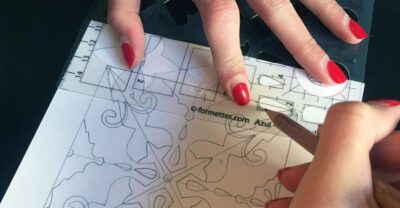
Once the introduction is complete, you receive a ceramic tile, acrylic paints, brushes, and the other materials needed for the activity. You can choose from prepared patterns and stencils, or ask the staff to print a personal design for you.
That flexibility makes the workshop suitable for different personalities. You can follow a prepared Portuguese-inspired pattern if you want clear direction. You can also create something personal if you have a favorite image or a design connected to your trip.
Several people found the prepared designs helpful, especially if they did not think of themselves as artistic. Staff can explain techniques, help with color choices, and guide you through the steps. You are not expected to arrive with a plan or professional skill.
If you choose a detailed design, allow yourself time. The class is relaxed, but painting a large tile with several colors can take longer than expected. One useful feature is that the staff may allow you to stay beyond the scheduled two hours if you need to finish, though you should not assume unlimited extra time.
Same base, a different kind of day out:
- The Unvanquished Tour in Porto City Center
★ 5.0 · 26,497 reviews - From Porto: Douro Valley w/ Boat Tour, Wine Tasting & Lunch
★ 4.7 · 19,061 reviews - Complete Douro Valley Wine Tour with Lunch, Wine Tastings and River Cruise
★ 5.0 · 12,920 reviews - Porto: Six Bridges Cruise
★ 4.2 · 11,680 reviews
Painting with a cocktail and calm music

The main activity is a classic painting and sipping session, but the cultural setting keeps it from feeling like a generic craft class. Calm music plays while you work, and a cocktail is included in the price.
The drink is often described as a Porto Tonic or a white port wine and tonic. Some people also mention coffee during the session. The precise drink offering may vary, so think of the cocktail as part of the experience rather than choosing this activity as a dedicated tasting.
The atmosphere is meant to be relaxed. You can paint quietly, talk with the people around you, or ask the instructor for help. The social side is a real part of the appeal, particularly if you are traveling with someone who prefers an easy indoor activity to another busy sightseeing stop.
I especially like the way the drink supports the pace. You are encouraged to slow down and enjoy the process rather than rush through a checklist. On a rainy afternoon, this can be a welcome change from walking over slippery cobblestones and trying to fit in one more church.
The studio’s shop and handmade setting also give the room a local-art feel. One review even mentions a friendly studio dog, but that should be treated as a possibility rather than a guaranteed part of every session.
How much help will you receive?
You get hands-on support throughout the painting. Daniella is repeatedly singled out for her patience, humor, and practical art advice, while Emmanuel and Diogo are also praised for being friendly and attentive.
That matters because tile painting can look simpler than it is. Acrylic paint may spread differently on ceramic than on paper, and small details can become hard to control. The instructors can show you how to handle the brush, follow a stencil, and recover from small mistakes.
You can expect help rather than a formal, technical ceramics course. The focus is on making a pleasing keepsake in a social setting. A potter or experienced painter may find the class straightforward, but the history and chance to work with a Portuguese craft still make it worthwhile.
For beginners, the setup is reassuring. You can trace a prepared design, ask questions as you go, and adjust your approach without feeling judged. Several people who described themselves as non-artistic still enjoyed the process and finished a tile they were happy to take home.
What happens to the tile after painting?

The tile is yours to take home, packed in paper packaging. The best-case plan is simple: finish the design, collect the tile, and carry it away as a Porto souvenir.
Drying time is the one practical wrinkle. Some people report taking their tile home after roughly an hour, while others needed to return later the same afternoon. If you book later in the day, you may need to collect it the next day.
Ask the staff about pickup when you arrive, especially if your schedule includes a train, flight, or day trip soon afterward. The tile is a more meaningful souvenir than a mass-produced trinket, but it is also fragile. Keep the paper packaging and place it somewhere secure in your luggage.
The final result will reflect your skill and patience. Do not expect a factory-perfect tile from a two-hour beginner class. The charm is that you made it, and the instructors help you produce something presentable even if your brush control is not perfect.
Is the $41 price good value?

At $41 per person, the price includes the workshop, historical introduction, ceramic tile, acrylic paints, brushes, packaging, and cocktail. You are paying for instruction and materials as well as the finished object.
I consider that fair value for Porto, particularly because the activity takes two hours and combines a lesson with a hands-on souvenir. Buying a handmade tile in a shop could cost less or more depending on the design, but it would not give you the personal connection of painting one yourself.
The value is strongest if you enjoy making things or want a quieter cultural activity. If you only want a quick souvenir, the class may feel expensive compared with purchasing a ready-made tile. It also may not suit someone who dislikes group activities or would rather spend every hour outdoors.
The included drink helps round out the price, but it should not be the deciding factor. The real value is the guided introduction to azulejos and the chance to leave with your own work.
Who will enjoy this workshop most?

This is a good choice for adults, couples, friends, solo visitors, and families with older children. The official age guidance says the activity is not suitable for children under 10.
You do not need drawing experience. Prepared designs and instructor support make the class accessible to beginners, while more experienced artists can choose a custom image or add their own details.
It is also useful for mixed-interest groups. Someone who likes art can focus on technique, while someone more interested in history can enjoy the lesson and the tile tradition. The social setting gives both people something to do without forcing either one into a demanding tour.
Book it if you want a slower afternoon, a break from Porto’s steep streets, or a souvenir with a story attached. Skip it if you want a highly technical ceramics course, a private class, or a fast activity with no chance of returning for pickup.
Practical details that affect your plans
The workshop is offered in English and Portuguese. The central location makes it easy to combine with the Cathedral, São Bento Station, the Luís I Bridge, or Time Out Market.
You can cancel up to 24 hours before the activity for a full refund, and the reserve-now, pay-later option gives you some flexibility while your plans are still changing. Check the available start times before booking because the activity lasts two hours and may require later tile collection.
Smoking, fireworks, and explosive substances are not allowed. Those rules are basic, but they matter in a studio containing paint, ceramics, and handmade goods.
Wear something you can work in comfortably. The supplied information does not promise stain-proof materials or protective clothing, so ordinary caution with acrylic paint is sensible. Keep your finished tile protected during the rest of your day.
Should you book the Porto tile-painting class?
I would book this if you want a cultural activity with a real object to carry home. The best parts are the short but useful history lesson, the calm pace, the cocktail, and the patient help from Daniella and the Boiler Studio team.
The main issue is the drying and pickup schedule. Leave room in your Porto plans, especially for a late session. Also remember that this is a friendly group workshop, not a private art lesson.
At $41, it offers good value for anyone who likes creative activities, local crafts, or a rainy-day plan. You will see azulejos differently afterward, and your finished tile will carry a personal link to Porto that a shop-bought souvenir cannot quite match.
FAQ
How long does the Porto tile-painting activity last?
The activity lasts two hours. Some people may need extra time to finish their design, and the tile may require additional drying time.
Where is Boiler Studio located?
Boiler Studio is at Rua Chã 77, on a typical street in front of Porto Cathedral. São Bento Train Station, the Luís I Bridge, Time Out Market, and the Cathedral are nearby.
What is included in the price?
The price includes the workshop lesson, a ceramic tile, acrylic paints, all materials needed for painting, paper packaging, and a cocktail.
Do I need artistic experience?
No. You can choose a prepared design or stencil, and the instructors provide guidance throughout the process. You may also have a personal design printed for you.
Can I take my painted tile home?
Yes. You take your painted tile with you, but drying time can vary. Some people collect it later the same day, while an afternoon booking may require pickup the next day.
What languages are spoken during the workshop?
The instructors offer the activity in English and Portuguese.
Is the workshop suitable for children?
The activity is officially not suitable for children under 10. It is wheelchair accessible.
Just added in Porto
- Wine experience with a sommelier★ 5.0 · 55 reviews
- Winery Tour and Wine Tasting Quinta da Portela de Baixo in Lamego★ 5.0 · 81 reviews
- Porto: Tuk tuk Tours with Port Wine Tasting★ 4.5 · 65 reviews
- The Beautiful Story of Porto: Guided Tour with Entry Tickets★ 4.8 · 111 reviews
- Porto: Royal Oporto Tour na Real Companhia Velha★ 4.8 · 395 reviews
- Porto: Entry Ticket at WOW – The Wine Experience Museum★ 4.7 · 356 reviews
- Porto Wine Tasting Experience with Portuguese Tapas Plate★ 4.7 · 356 reviews
- Porto: WOW Daily Ticket★ 4.7 · 42 reviews
Pastel de Nata Workshops, compared.
Pastel de Nata Cooking Class with Grandma’s Recipe
Read our review →
Pastel de Nata Cooking Class with Port Wine – Sé
Read our review →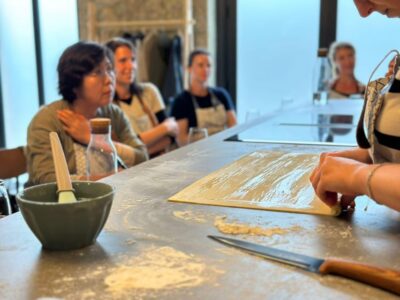



Browse the lists this tour appears in