Reviewed · PASTEL DE NATA WORKSHOPS
Porto: Pastel de Nata Cooking Class with Grandma’s Recipe
Porto’s famous custard tart is easy to buy, but much harder to make well. This two-hour class brings you into Joana’s home to prepare pastel de nata from scratch, including the pastry, using a recipe passed down by her grandmother. You finish at the table with warm tarts and drinks.
I like the home setting, which gives the class a personal feel instead of a polished cooking-school routine. I also like that everyone takes part, with Joana carefully guiding beginners and seasoned bakers alike. The main drawback is the location outside central Porto, so you need to allow extra time and possibly pay for a Bolt or Uber.
Key points to know
- Grandmother’s recipe: You make both the pastry and creamy custard from scratch.
- Joana’s welcoming home: Expect a relaxed kitchen, natural light, music, and a beautifully set table.
- Small, hands-on group: Up to 10 people participate, often working in teams so everyone gets a turn.
- Warm pastries at the end: Sit down with your fresh tarts and coffee, tea, or orange juice.
- Good value at $33: Ingredients, equipment, instruction, drinks, and pastries are included.
- Plan the ride: The home is about 10 minutes by car from Porto’s center, but public transport takes longer.
Why a pastel de nata class is worth two hours
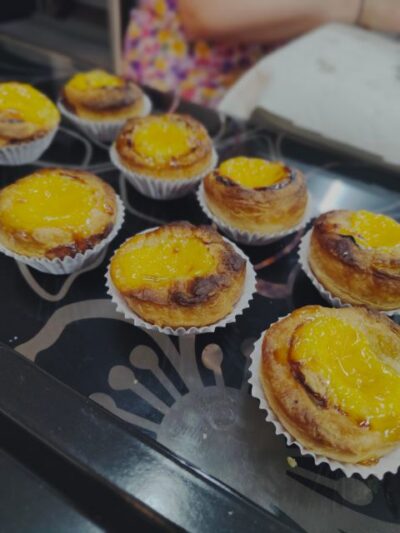
Pastel de nata is one of Portugal’s defining sweets: crisp layers of pastry wrapped around a soft, sweet custard. You can find one in almost every Porto café, often for very little money. The value of this class is not the number of pastries you eat. It is the chance to understand the work behind a good one and leave with a recipe you can use at home.
I like cooking classes that connect food with a person and a place. Here, the recipe belongs to Joana’s grandmother, and the class takes place in Joana’s apartment rather than in a commercial kitchen. That changes the mood. You are not simply following instructions at a workstation. You are being welcomed into someone’s home and hearing about her family and Portuguese food traditions.
The activity lasts two hours, which is enough time for a proper introduction, hands-on preparation, baking, and a shared snack. It is also short enough to fit into a busy Porto schedule, especially on a rainy afternoon or between sightseeing plans.
The class has earned a perfect five-star rating from 1,565 bookings, and the praise focuses on the same things again and again: Joana’s patience, the cozy home, the clear instruction, and the quality of the finished tarts. Those details matter more here than a long list of extras.
Other classes where you cook in Portugal:
- Lisbon: Pastel de Nata Baking Class
★ 4.9 · 2,106 reviews - Porto: Pastel de Nata Cooking Class with Port Wine – Sé
★ 4.8 · 888 reviews - Lisbon: Traditional Portuguese Cooking Class
★ 4.9 · 592 reviews
Arriving at Joana’s home
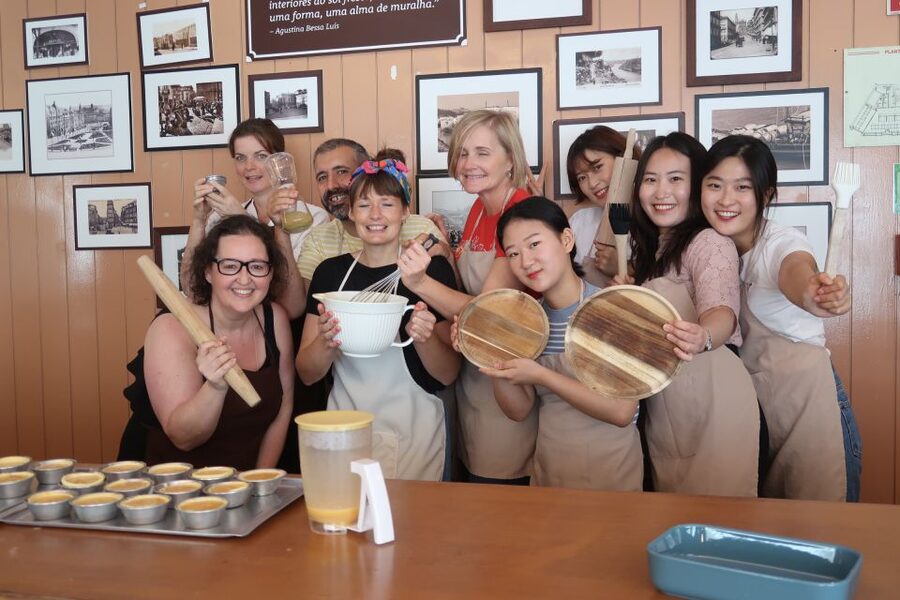
The meeting point is about 10 minutes by car from central Porto. If you are staying near the historic center, a Bolt or Uber is the simplest choice. The activity information notes that this can be the fastest and cheapest option for groups of more than two, though one booking reported paying about $12 for an Uber ride each way. Add that cost when judging the total price.
You can also reach the home by public transport. From Bolhão, bus 800 or 801 takes about 20 minutes and stops across the street. There is one useful catch: bus tickets can be bought onboard only with coins, so do not arrive without some change.
From Trindade, take the Orange Metro Line directly to Fânzeres. The metro ride takes about 30 minutes, followed by a walk of roughly 700 meters, or about 10 minutes. The metro route is practical, but it takes longer than a car and requires a short walk at the other end.
When you reach the address, ring the bell marked 2 Andar. Joana waits inside. It is worth checking your booking details carefully before leaving central Porto, since this is not a class in the old city center itself.
The setting is part of the appeal. You can expect a clean, comfortable home with plenty of natural light, a prepared kitchen, and a table arranged for the final tasting. Several people specifically enjoyed the apartment’s decoration and the home music playing from Joana’s record player.
Meeting Joana and hearing the family story
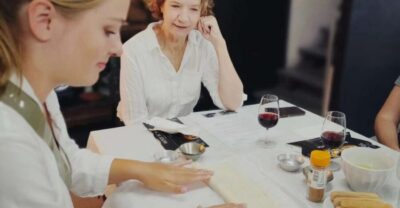
The class begins with an introduction to Joana, her family, and the background of pastel de nata. This opening is not a long lecture. It is a way to settle in, understand where the recipe comes from, and get comfortable with the small group.
That personal start is especially useful if you are traveling alone. The group can include people from different countries, and the shared kitchen work gives you an easy way to talk without forcing conversation. Several solo participants found themselves chatting with new friends by the end.
English is the listed language, and Joana’s clear explanations are a key part of the class. She is patient with different cooking levels and takes care to keep everyone involved. You do not need to arrive with baking experience.
The class is limited to 10 people. That is small enough for a personal feel, though it is not an individual lesson. With a full group, Joana uses a rotating system or divides people into two teams. This keeps the work moving and lets each person contribute.
Making the pastry from scratch
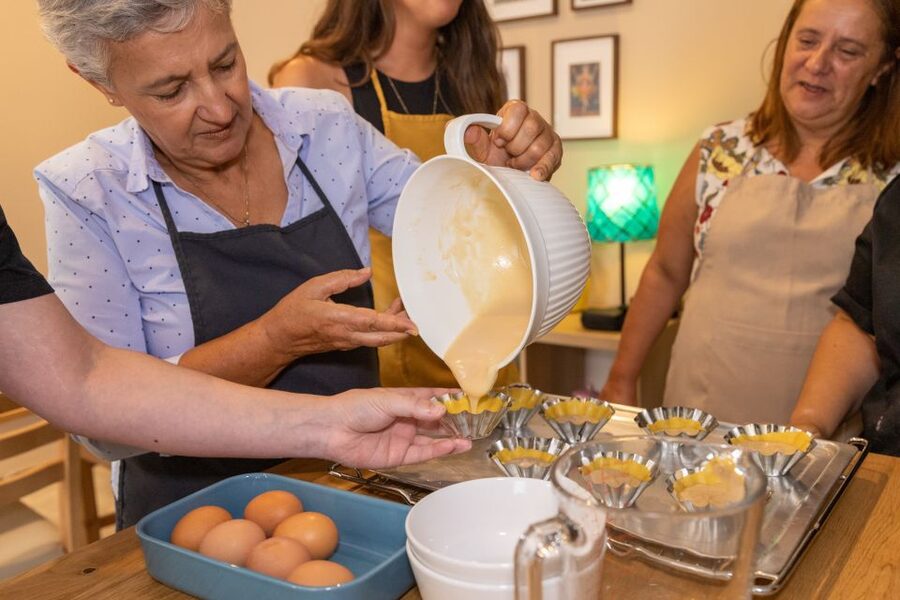
One of the best features is that the class includes the pastry itself. Some baking classes prepare the dough before you arrive, leaving you to mix the custard and fill ready-made shells. Here, you work through the pastry and custard stages.
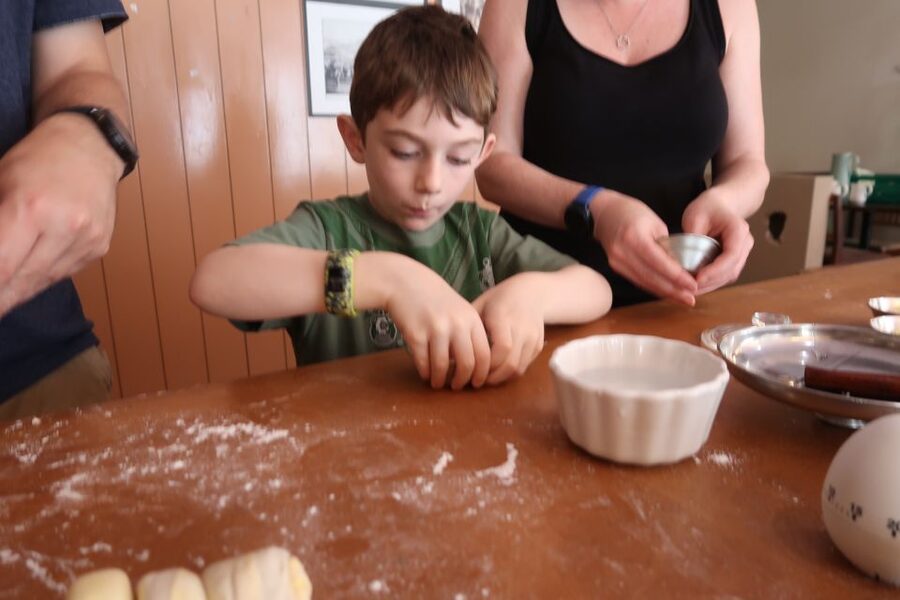
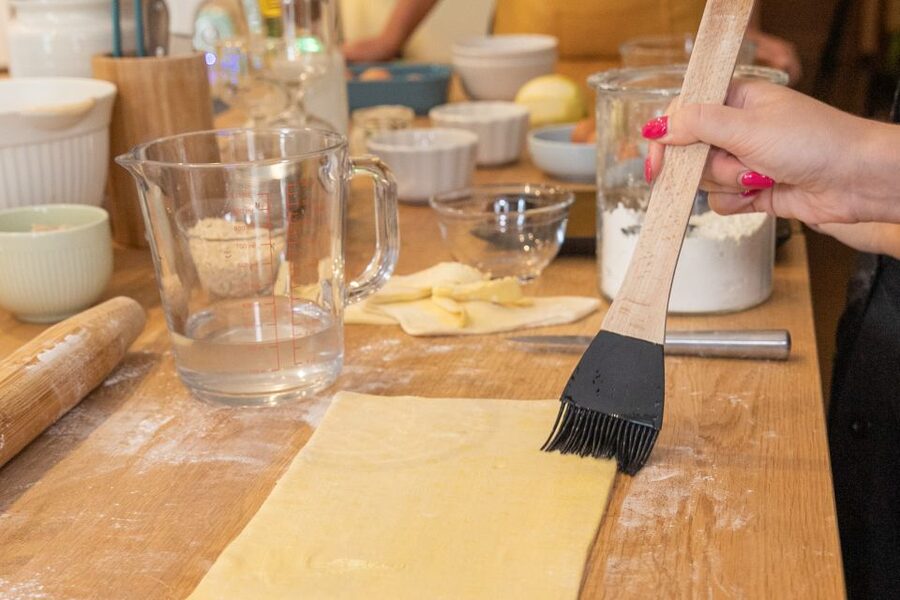
You will roll up your sleeves, use the supplied ingredients and utensils, and follow Joana’s grandmother’s method step by step. The dough requires care and coordination, so Joana demonstrates the technique and helps as needed. This is where her calm approach matters most.
The group format means you may not personally handle every second of every stage. One participant who already had baking experience noted that completing both pastry and custard in two hours can limit the time each person gets with each task. That is a fair tradeoff for keeping the activity within two hours and allowing up to 10 people to take part.
Even so, the class is designed to be interactive rather than a demonstration where you simply watch. The rotating setup gives everyone a role, and Joana makes sure the process stays understandable for beginners.
For experienced bakers, the class still has value because the pastry technique and family recipe provide something beyond a basic cooking lesson. For beginners, the relaxed pace and hands-on help make the task feel manageable rather than intimidating.
Other places to bake your own in Portugal:
- Porto: Pastel de Nata Pastry-Making Workshop
★ 4.9 · 1,542 reviews
Preparing the creamy custard
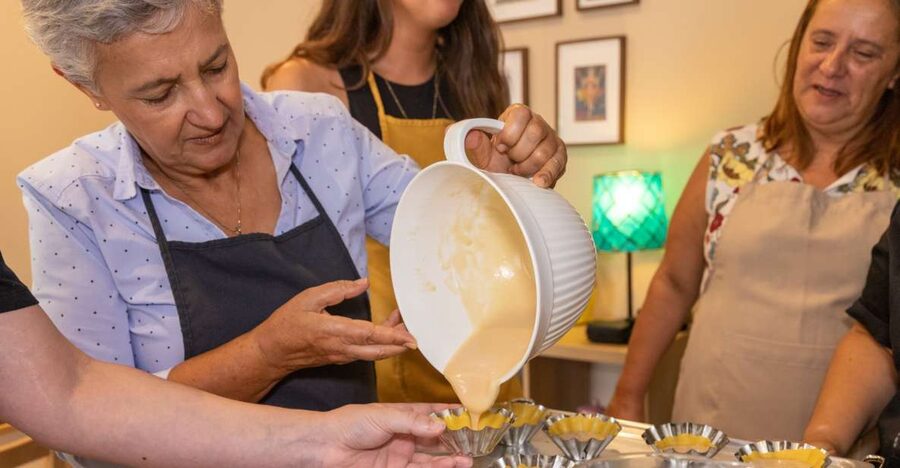
After the pastry work, you prepare the custard filling. The goal is the familiar pastel de nata contrast: flaky pastry outside and a smooth, creamy center.
Joana explains the process carefully and shares useful facts about the pastry as the group works. The emphasis is on patience and care rather than rushing through a list of steps. That is a good lesson for home bakers, since the final texture depends on how the components are handled before they reach the oven.
The supplied equipment and ingredients are included in the price, so you do not need to bring anything besides yourself. Joana also keeps the class organized and pays attention to hygiene, which is reassuring in a home kitchen shared by a full group.
Once the pastry shells and custard are ready, the tarts go into the oven. The most satisfying part is seeing the result arrive warm rather than sampling something baked hours earlier. The pastry should be crisp and flaky, while the custard stays soft and creamy.
Several people compared the finished tarts favorably with pastéis they had eaten elsewhere in Portugal. One person even preferred the class results to a well-known bakery in Lisbon. Taste is personal, of course, but the repeated praise for the fresh texture is easy to understand: a pastel de nata is at its best when it is still warm.
Sitting down with the fresh tarts
The class ends around a shared table. You eat the pastries you helped prepare with coffee, tea, or orange juice. Some sessions have also included a taste of Port wine, but the listed drinks included with the activity are non-alcoholic, so do not book this expecting alcohol as part of the standard offering.
This final table time is more than a quick snack. It gives you a chance to talk with Joana and the other people in the class, compare results, and swap Porto suggestions. Joana has also provided local recommendations to people after the session, which can be helpful if you still have time in the city.
I like this ending because it completes the home visit. You begin by being welcomed into Joana’s kitchen and finish as part of a small table gathering. The pastries are the main event, but the conversation is what makes the experience feel different from buying a tart at a bakery.
If you have a sweet tooth, this is the most rewarding part of the activity. If you are mainly interested in technique, it is still useful because you can taste the finished result immediately and connect the texture to the steps you just followed.
What $33 gets you
At $33 per person, the class is fairly priced for a two-hour small-group activity. The fee includes ingredients, cooking utensils, instruction, non-alcoholic drinks, and the pastries. You are paying for teaching, preparation, equipment, and access to a private home, not simply for a plate of sweets.
The value improves if you want a cultural activity rather than another sightseeing stop. A café pastel may cost only a small amount, but it will not give you the family story, the recipe, the baking practice, or the chance to meet other people around a table.
Transportation is the main extra cost. If you take a car from central Porto, the ride can add a noticeable amount, especially for one or two people. A group can share the fare, while the bus is cheaper if you have coins and do not mind the longer trip.
You also receive a recipe to try at home. That makes the class more useful after your holiday, although recreating laminated pastry in your own kitchen may take practice. Joana’s method gives you a realistic starting point rather than a souvenir recipe with no instruction behind it.
Who will enjoy this class most
I would choose this for anyone who likes food, meeting local people, or taking a break from monuments and churches. It works well for couples, friends, families with older children, solo visitors, and people who want a relaxed indoor activity on a wet day.
You do not need to be a confident cook. Joana’s patient teaching suits beginners, while the from-scratch pastry work gives experienced bakers something to pay attention to. The class is social, so it is a good fit if you enjoy sharing a table with people you have just met.
It may be less suitable if you want a private lesson, a large amount of baking to take away, or a class in central Porto. The group can reach 10 people, and not everyone will handle every stage for a long time. The location also requires planning.
The activity is not suitable for wheelchair users. The available information does not provide further accessibility details, so you should confirm any other mobility needs before booking.
Simple planning advice before you go
Allow more than the two-hour class time for transport. From the city center, a car is fastest, while the bus and metro options take longer and require you to follow specific directions.
Bring coins if you plan to take bus 800 or 801 from Bolhão. If you use a ride-hailing service, check the destination carefully and keep the doorbell instructions handy: ring the bell marked 2 Andar.
Book with the weather in mind. The class is a particularly sensible choice for a rainy afternoon, since you spend the time indoors in a warm kitchen instead of losing half a day to poor conditions.
You can cancel up to 24 hours before the start for a full refund, and the reserve-now, pay-later option keeps your plans flexible. Starting times vary, so check availability for the date you want.
Should you book the pastel de nata class?
Yes, if you want a personal food experience and do not mind leaving central Porto. The strongest reasons are specific: Joana teaches the pastry from scratch, shares a real family recipe, welcomes you into her home, and gives everyone a chance to participate.
I would skip it only if your schedule is so tight that the trip outside the center becomes a nuisance, or if you need a fully accessible activity. For most food lovers, the $33 fee is good value once you count the instruction, ingredients, drinks, fresh pastries, and recipe.
This is not just a lesson in making custard tarts. It is a small slice of Portuguese hospitality, with flour on the counter and warm pastries at the end. That is a fine way to spend two hours in Porto.
FAQ
How long does the pastel de nata class last?
The class lasts two hours, including the introduction, preparation, baking, and time at the table with the finished pastries and drinks.
Where does the class take place?
The class takes place in Joana’s home, about 10 minutes by car from Porto city center.
How do I reach the host’s home from central Porto?
You can use Bolt or Uber, take bus 800 or 801 from Bolhão, or take the Orange Metro Line from Trindade to Fânzeres and walk about 700 meters.
Can I take the bus to the class?
Yes. Bus 800 or 801 from Bolhão stops across the street from the home and takes about 20 minutes. Bus tickets can be bought onboard with coins only.
What is included in the price?
The price includes the ingredients, cooking utensils, guided class, non-alcoholic drinks, and the pastries you prepare.
Do I need baking experience?
No. The class is suitable for beginners, and Joana explains the process patiently. Experienced bakers can also take part in the from-scratch pastry work.
How many people are in the group?
The group is limited to 10 participants. Depending on the group, people may work in teams or rotate through different tasks.
Is the class taught in English?
Yes. The listed host or greeter language is English.
Is the activity suitable for wheelchair users?
No. The activity is listed as not suitable for wheelchair users.
Just added in Portugal
- Prozelo: Buggy Tour★ 4.9 · 48 reviews
- Funchal: Monte Tropical Garden & Toboggan Ride by Tuk Tuk★ 4.8 · 227 reviews
- Benagil Cave – Sunrise or Sunset Kayak Tour (Small groups)★ 4.5 · 324 reviews
- Funchal: Guided Tuk Tuk Tour to Toboggan Rides & Old Town★ 4.9 · 308 reviews
- Algarve wine tour and mountain top trip with lunch or dinner at sunset time★ 5.0 · 104 reviews
- Islet Tour- Ilhéu de Vila Franca do Campo★ 4.8 · 471 reviews
- Private Tour Sintra, Palaces and Mountain Tuk Tuk(2 to 6 people)★ 5.0 · 174 reviews
- Peniche:Surf lessons Beginners ,Intermediate, advance level★ 4.8 · 229 reviews
Pastel de Nata Workshops, compared.