
Reviewed · PASTEL DE NATA WORKSHOPS
Lisbon: Azulejos’ Design Create Your Own Tile Workshop
Lisbon’s famous azulejos usually belong to churches, palaces, and old city walls. Here, you get to design one yourself and take home the finished tile the same day. The clever Formettes method gives you a framework to work from, so you do not need drawing experience to make something that looks polished.
I especially like the calm setting in artist Agathe’s home studio and the patient, lighthearted instruction. I also like the practical format: your paper design is refined digitally, multiplied, and heat-pressed onto ceramic while you are still in Lisbon. The main consideration is that children under 10 cannot join, and extra tiles or personalized objects cost more.
Key points to know before booking
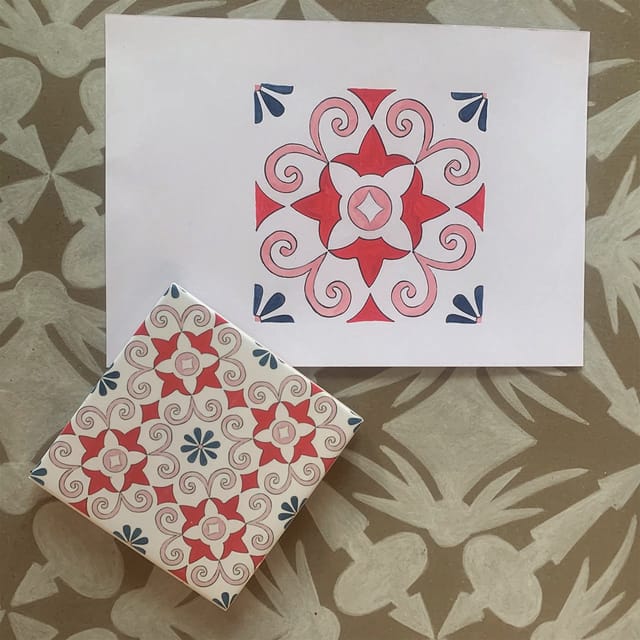
- Your tile is ready immediately: The design is transferred by thermal press onto a 10-by-10-centimeter ceramic tile during the workshop.
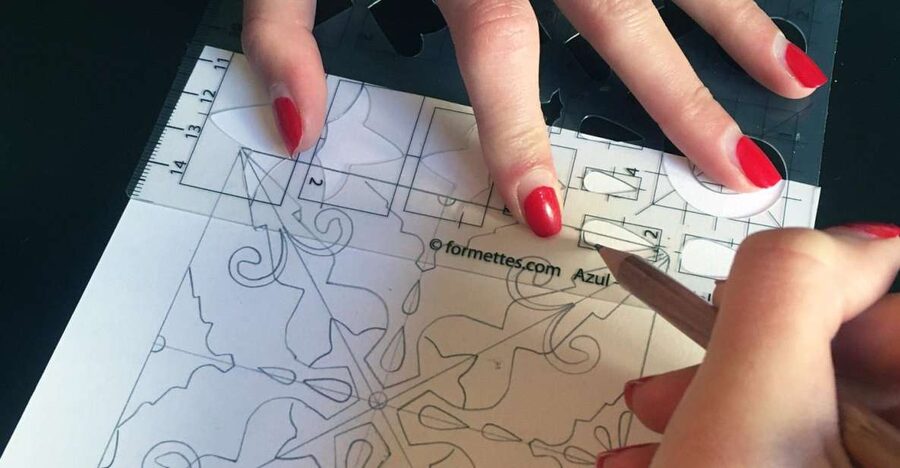
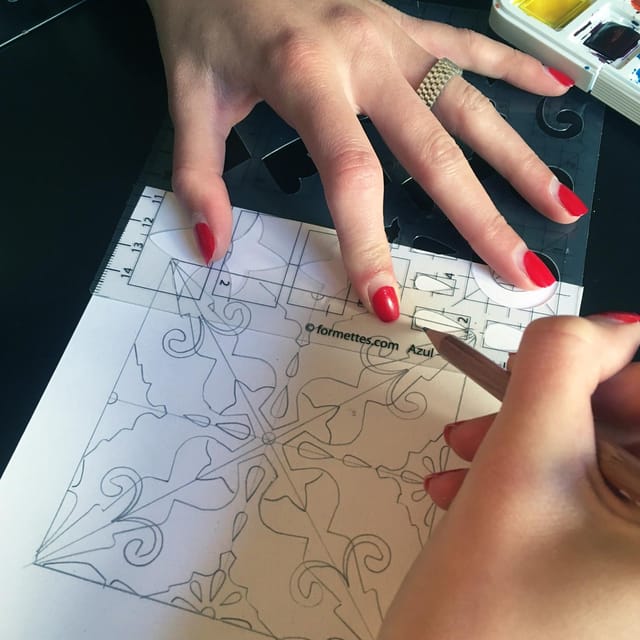
- Formettes helps beginners: You use a simple drawing aid that removes the pressure of starting with a blank page.
- Agathe leads the session: Instruction is available in French, English, and Portuguese.
- The setting feels personal: The class takes place in an artist’s home studio rather than a large production room.
- Tea, coffee, and cookies are included: Small refreshments make the 2.5-hour session feel unhurried.
- The class suits solo visitors: Small and private group options allow for individual help and a relaxed social setting.
Why making an azulejo adds something to Lisbon
You will see azulejos everywhere in Lisbon: on building fronts, inside churches, around train stations, and in decorative panels. They are not just pretty souvenirs. These painted and patterned ceramic tiles help explain the look of the city, where repeated shapes and strong color often turn ordinary walls into works of art.
This workshop gives you a small, hands-on connection to that tradition. You are not simply buying a tile from a shop. You are making a design, deciding on its colors, and watching it become a ceramic object you can pack in your suitcase.
I like this kind of activity because it slows down a city visit. Lisbon can involve plenty of walking, hills, traffic, and packed sightseeing stops. Two and a half hours with a pencil, paper, watercolor, and a cup of tea gives you a quieter change of pace.
The result is also more personal than a standard souvenir. Your tile does not need to be perfect. Its value comes from remembering the afternoon you spent creating it, along with the particular design you chose.
Other places to bake your own in Lisbon:
- Lisbon: Pastel de Nata Baking Class
★ 4.9 · 2,106 reviews - Lisbon: 2-Hour Pastel de Nata Cooking Class
★ 4.8 · 461 reviews - Lisbon: Pasteis de Nata Baking Class
★ 5.0 · 134 reviews
Entering the studio at Bell Number 2
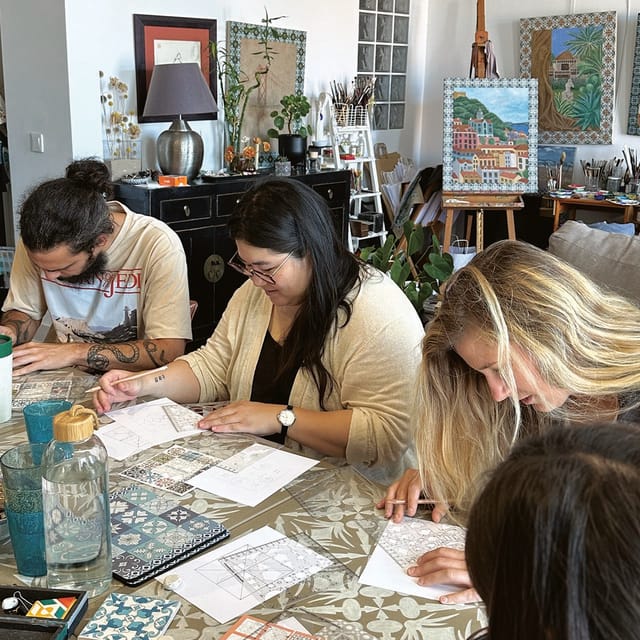
The meeting point is Bell Number 2. Once inside, expect a small-scale workshop rather than a formal classroom or factory visit. The setting is described as an artist’s home studio, and that changes the mood from the start.
A home studio can feel warmer and less intimidating than a commercial art school. You are working close to the person who makes art for a living, with the tools and examples nearby. The setting also helps explain why the activity works well for solo participants and small groups. You can concentrate on your own design without feeling lost in a crowd.
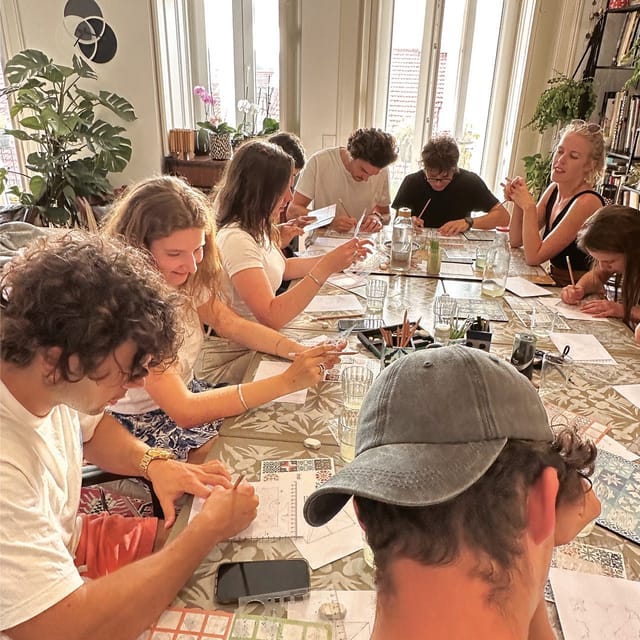
Group size varies, since private and small-group sessions are available. Some sessions may have only a few people, while others can include a somewhat larger small group. If personal attention matters to you, choose the private or smallest available option when booking.
Agathe leads the activity and speaks French, English, and Portuguese. Her teaching style is patient and encouraging, which matters here because many people arrive convinced they are not artistic. You will receive help without having your design taken away from you.
The short introduction to Portuguese azulejos
The class begins with a brief presentation about azulejos and the design method. This introduction gives the activity cultural context without turning it into a long lecture.
You will learn what you are doing before you pick up the pencil. That is useful because the finished tile depends less on advanced painting skill and more on understanding how a repeating pattern works.
The Formettes method is the heart of the workshop. It helps you build a pattern from shapes and guides rather than asking you to invent a complicated image from nothing. This is a good fit if you enjoy creative work but feel uneasy about drawing freehand.
I would not expect a full technical course in ceramic production. The emphasis is on designing a personal pattern and transferring it to a tile, not on firing clay, mixing glazes, or learning every stage of traditional tile manufacture. That focus keeps the activity manageable within 2.5 hours.
From pencil sketch to black line
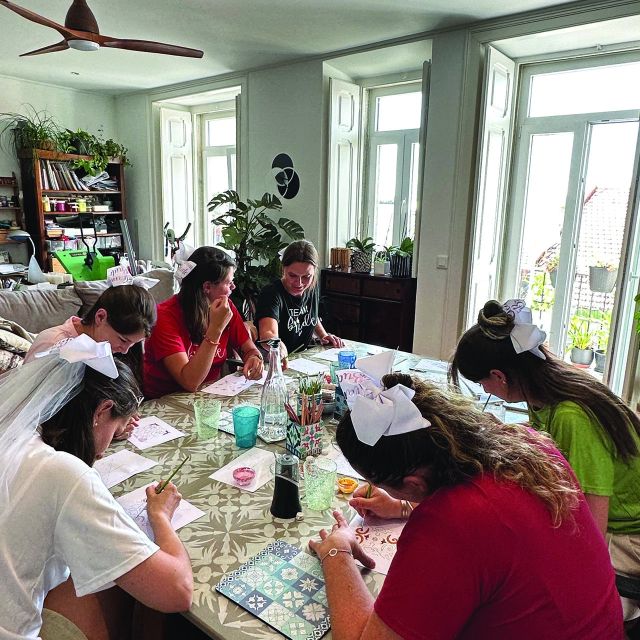
Your first step is drawing with a pencil. This is the stage where you can test ideas, adjust shapes, and decide how your pattern should look.
The pencil stage is forgiving. You can erase and try again before anything becomes permanent. Take your time here, since a clear design will make the later stages easier.
Next, you trace the drawing with a fine black marker. Once the lines are complete, the pencil marks are erased. This leaves a clean outline for coloring.
That two-stage method is one of the workshop’s best features. You do not have to commit immediately, and you do not need a steady hand from the very first line. The process gives you a chance to improve the drawing before the permanent marker appears.
If you are worried about making mistakes, ask Agathe for advice before tracing. She can help you simplify a crowded design or strengthen lines that may not transfer clearly. The goal is not to produce a museum piece. The goal is to create a pattern that works as a small ceramic tile.
Same base, a different kind of day out:
- Lisbon City Center Tour – The Unmissable Lisbon
★ 5.0 · 22,234 reviews - Lisbon: Sintra, Pena, Regaleira, Cabo da Roca & Cascais
★ 4.7 · 19,656 reviews - Lisbon: Jerónimos Monastery Entrance Ticket
★ 4.1 · 14,164 reviews - Lisbon: History, Stories and Lifestyle Walking Tour
★ 4.8 · 10,902 reviews
Adding color with watercolor
After the black outline is finished and the pencil has been removed, you color the design with watercolor. This is where the tile begins to look like your own.
Watercolor gives you room to experiment. You can choose a traditional-looking palette or create something more personal. The class does not force you into one style, so you can keep the pattern neat and geometric or make it looser and more expressive.
The color stage is also where the instructor’s guidance helps. A design may look good on paper but become too dark, too pale, or too crowded once color is added. Agathe can suggest ways to make the pattern clearer while still leaving the creative decisions to you.
You should know that your watercolor drawing is not the final ceramic tile. It is the artwork used for the next stage. That means you can focus on the composition and color without needing to paint directly onto a fired surface.
The activity works for people with different comfort levels. If you love drawing, you have plenty of freedom. If you normally avoid art classes, the Formettes structure and step-by-step guidance keep the task approachable.
How the paper design becomes a ceramic tile
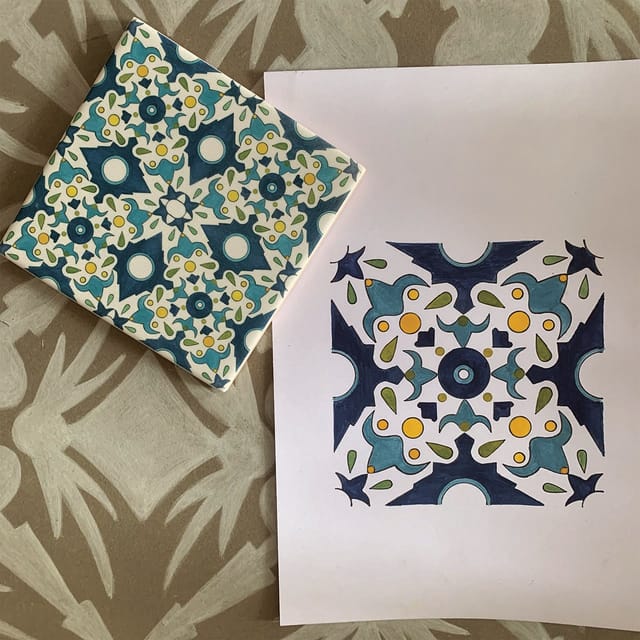
After the drawing is finished, the workshop includes a post-session preparation stage. Each design is worked on in Photoshop, corrected slightly if needed, and multiplied.
Multiplying the design means your artwork can form the repeating arrangement associated with decorative tile patterns. This is an important detail because the final result is not simply a single sheet of painted paper placed on a tile. Your design is prepared so it can be transferred cleanly and create a more finished look.
The prepared design is then transferred onto a ceramic tile measuring 10 by 10 centimeters. A thermal press bonds the image to the tile.
This process explains why you get to leave with your tile right away. You are not waiting days for a kiln firing or returning later to collect a finished piece. For a short holiday in Lisbon, that makes a real difference. You can pack the tile for home, give it as a gift, or keep it as a small reminder of your time in the city.
The final product is compact, but do not dismiss it as a minor souvenir. A 10-by-10-centimeter tile is easy to carry and large enough to display on a shelf, use as a decorative piece, or add to a collection of Lisbon mementos.
What the $64 price includes
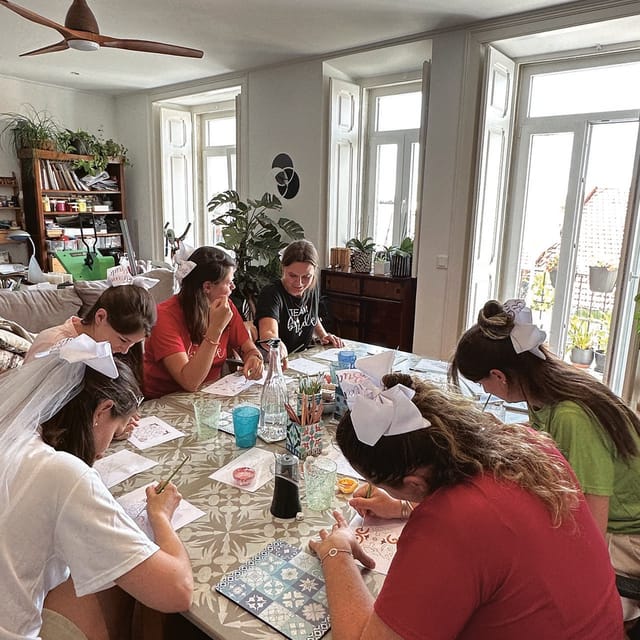
The price is $64 per person. That is not the cheapest creative activity in Lisbon, but the cost covers more than a basic painting lesson.
You receive the instructor’s guidance, drawing and painting materials, tea or coffee, cookies, and one finished ceramic tile. The digital preparation and thermal pressing are also part of the service, even though you do not do those technical steps yourself.
I consider the price reasonable if you value a personal souvenir and a guided activity rather than simply a product. A shop-bought tile may cost less, but it will not carry your own pattern or the memory of making it.
The value is strongest for people who want a calm cultural activity with a physical result. If you are only looking for a quick introduction to Lisbon’s tile decoration, the workshop may feel too long or expensive. If you enjoy making things and want a souvenir that is not generic, the included tile makes the cost easier to justify.
Extra personalized objects and additional tiles are not included. An extra tile has been available for an additional 10 euros, but confirm the current price when booking rather than assuming that rate will always apply.
Who will enjoy this workshop most
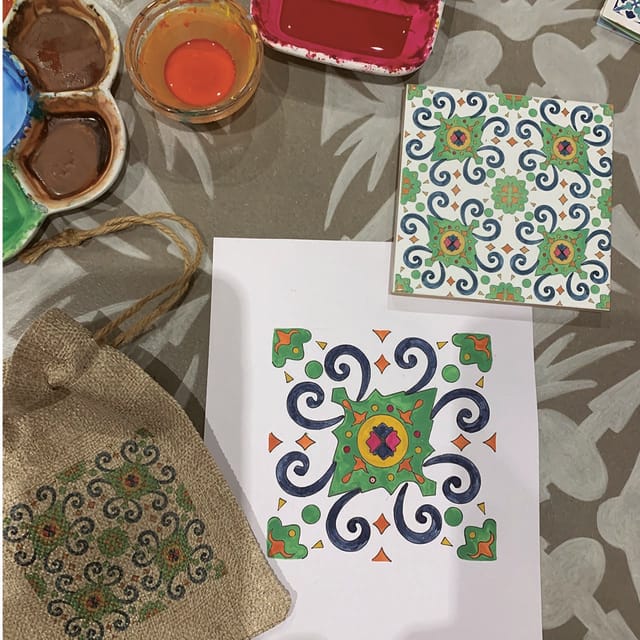
This is a good choice for couples, friends, families with older children, and solo visitors. People can work independently while still sharing a table and seeing how different designs develop.
The minimum age is 10. Older children and teenagers can take part, especially if they enjoy drawing or craft activities. The structure also works for adults who describe themselves as not artistic, since you receive clear instructions and help at each stage.
Solo visitors should feel comfortable booking. The small-group format gives you something to do without requiring a companion, and the workshop naturally creates conversation without forcing it.
I would also recommend it for a rainy day or a break from sightseeing. One participant was able to change the schedule because of bad weather, although you should confirm the available options before relying on a change. The activity is indoors and gives you a useful alternative when Lisbon’s streets are less inviting.
This may not suit someone seeking a traditional pottery class. You are designing and transferring an image to a ceramic tile, not shaping wet clay or painting a glaze that will be kiln-fired. Know the difference before booking.
Practical details that affect your choice
Plan on spending 2.5 hours at the workshop. That is long enough to work through the design without rushing, but short enough to fit into a morning or afternoon of Lisbon sightseeing.
Starting times vary, so check availability for your date. The meeting point is Bell Number 2, and the experience can be arranged as a private or small-group session.
The free-cancellation policy allows cancellation up to 24 hours in advance for a full refund. You can also reserve now and pay later, which helps if your Lisbon plans are still shifting.
Wear something comfortable and suitable for drawing and painting. The supplied information does not list a specific dress requirement, but any art activity is easier when you are not worried about your sleeves or belongings. The materials are provided, so you do not need to bring your own art kit.
At the end, carry the tile carefully even though it is ready to take home. Its small size makes packing simple, but placing it between clothing in your suitcase is sensible.
Should you book the azulejo workshop?
I would book this if you want more than a quick photo stop and prefer a souvenir you helped create. The combination of cultural context, beginner-friendly design tools, a personal studio setting, and a finished tile in your hand makes good use of a half day in Lisbon.
Book it especially if you are traveling solo, visiting during poor weather, or looking for an activity that works across several age groups. It is also a strong choice for anyone who likes the city’s azulejos but feels unsure about artistic ability.
Skip it if you want a full ceramics course, a long historical lecture, or a bargain-priced craft session. For everyone else, the $64 fee buys a thoughtful, hands-on experience, not just a decorative object. The fact that you leave with the tile the same day is the practical bonus that makes this workshop easy to fit into a short Lisbon stay.
FAQ
How long does the azulejo workshop last?
The workshop lasts 2.5 hours. Starting times vary, so check availability for your preferred date.
What languages does the instructor speak?
Instruction is available in French, English, and Portuguese.
Is the finished tile included in the price?
Yes. The $64 price includes one ceramic tile measuring 10 by 10 centimeters.
Can I take the tile home immediately?
Yes. The design is transferred onto the ceramic tile with a thermal press, allowing you to leave with it after the workshop.
Are children allowed to join?
Children under 10 are not suitable for this activity. Children aged 10 and older may take part.
Are extra tiles included?
No. Additional tiles and other personalized objects are not included in the listed price. Extra tiles may be available for an added fee.
Just added in Lisbon
- Half day Spa Water Therapy experience at THE SPA at Corinthia Lisbon★ 4.5 · 51 reviews
- Lisbon Cinematic Photoshoot with Top-Rated Photographer★ 5.0 · 76 reviews
- Central Lisbon E-Bike Tour★ 5.0 · 168 reviews
- Small-Group Sailing Tour on the Tagus River from Lisbon★ 5.0 · 78 reviews
- Lisbon Sailing Catamaran Public Cruise with drinks★ 5.0 · 304 reviews
- Alfama and the Castle of Saint George Skip the line Tour★ 5.0 · 53 reviews
- City Centre Run in Lisbon★ 5.0 · 164 reviews
- Boat tours in the Óbidos Lagoon★ 5.0 · 100 reviews
Pastel de Nata Workshops, compared.
Pastel de Nata Cooking Class with Grandma’s Recipe
Read our review →

Pastel de Nata Cooking Class with Port Wine – Sé
Read our review →



Browse the lists this tour appears in