

Reviewed · PORT WINE CELLAR TOURS
Porto: Tile Painting Workshop with Tea and Port Wine
Porto’s famous tiles are not just decoration. They cover churches, railway stations, house fronts, and public buildings, turning ordinary walls into works of art. This two-hour workshop lets you learn why they matter, then create two tiles of your own using traditional Portuguese motifs.
I like the mix of short cultural introduction and hands-on work, and I like that your tiles are fired and packaged for collection the next day. The main thing to plan around is the pickup. You need to return around 11:00 or 12:30 the following day, so this works best if you have at least two days in Porto.
- Paint two tiles per person, more than many visitors expect from a short craft class.
- Learn traditional techniques with guidance, examples, stencils, and studio materials.
- Collect your fired tiles 24 hours later, properly packaged for the journey home.
- Meet near Campanhã station, close to Porto’s new intermodal bus station.
- Enjoy tea and biscuits, with Port wine also associated with the experience.
- Choose English, French, or Japanese instruction, with a small-group option available.
Why Porto’s Tiles Deserve Two Hours
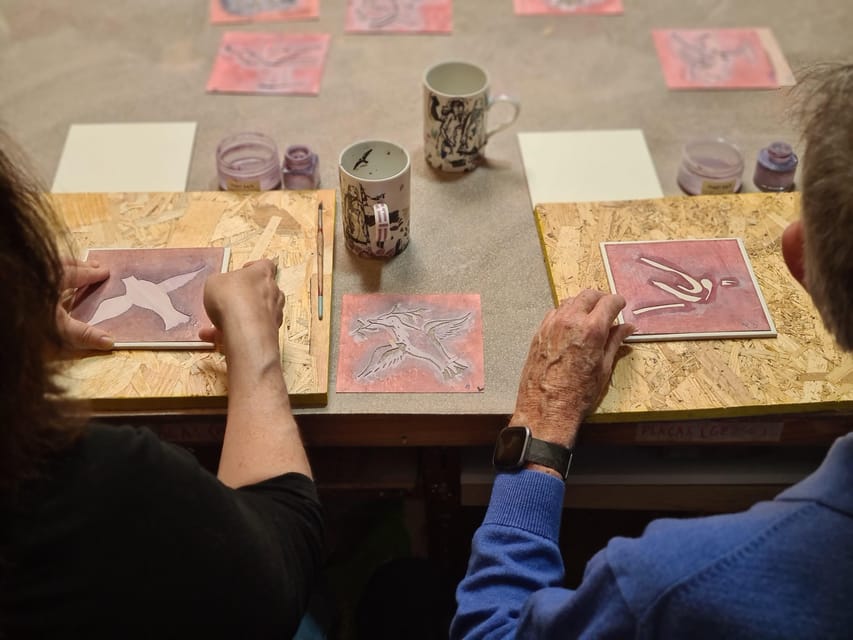
Tiles are one of the quickest ways to read Porto. Look at a church facade or a railway station wall and you are seeing more than a pretty blue pattern. Tilework carries religious scenes, local stories, geometric design, and the practical need to protect building surfaces from damp weather.
The workshop begins with an introduction to the history and cultural role of Portuguese tiles. You will see how tile decoration appears across Portugal, from monuments to ordinary houses. That context matters because it gives your painting a sense of place. You are not simply decorating a blank square. You are borrowing shapes and ideas from a tradition you have already started to notice around town.
I like this opening because it helps you look at Porto differently after class. The next time you pass a tiled building, you may pay attention to the repeated borders, the color choices, or the way a whole wall forms one large picture.
One caution: the introduction includes tea and biscuits, and at least one family found that this part lasted longer than they wanted. If you are eager to start painting, you may prefer a brisk explanation. If you enjoy context and conversation, the slower opening will feel useful rather than wasted.
Finding the Workshop Near Campanhã

The studio is near Porto’s Campanhã train station and the TIC, the Terminal Intermodal de Campanhã bus station. A school and a taxi rank are beside the station, which gives you useful landmarks when finding the meeting point.
This location is practical if you arrive by train or bus. It is less convenient if you are driving. Parking is not especially friendly in the area, so I would avoid building your plan around arriving by car. Public transport or a taxi is the simpler choice based on the location.
Give yourself time to find the store, especially if you are carrying luggage or connecting from another part of the city. The exact meeting point is near a major transport hub, but a busy station area can still cost you a few minutes of orientation.
The workshop lasts two hours, not including the next-day collection. Starting times vary, so check the available slot before booking. A morning class leaves more of the day open, while an afternoon session can fit neatly after sightseeing. The important part is not the exact start time. It is remembering that the fired tiles are not available immediately.
More tastings within reach of Porto:
- From Porto: Douro Valley w/ Boat Tour, Wine Tasting & Lunch
★ 4.7 · 19,061 reviews - Complete Douro Valley Wine Tour with Lunch, Wine Tastings and River Cruise
★ 5.0 · 12,920 reviews - Porto: Live Fado Show with Glass of Port Wine
★ 4.8 · 6,498 reviews
Meeting a Local Artist and Seeing the Materials
Once you are settled in the atelier, your instructor explains the basic process and shows you examples of tilework and decorative objects used in Portugal. Francisco Pessegueiro is the listed experience provider. David is also associated with the instruction and is described as warm, helpful, and good at answering questions.
The teaching is designed for beginners. You do not need to arrive with an art background, and you are not expected to know how ceramic paint behaves. The instructor explains the process, provides the required materials, and remains available while you work.
You can use traditional motifs for inspiration, along with stencils supplied by the studio. The stencils are a helpful starting point, particularly if you want a tidy geometric pattern, but they do not turn the activity into a paint-by-numbers exercise. You still choose your colors and make the design your own.
I appreciate that the guidance is supportive without taking over. The best souvenir here is not a perfect professional tile. It is a tile that shows you made it during your time in Porto.
Painting Two Tiles With Traditional Motifs
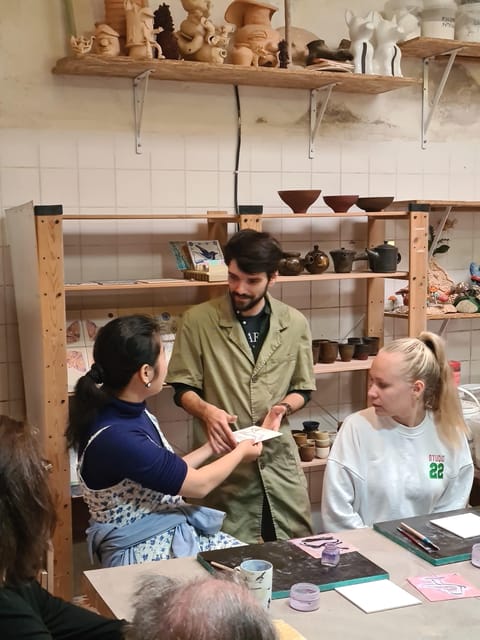
The creative part is the heart of the activity. Each person receives two tiles, and you paint them using motifs inspired by Portuguese design. You learn how the painted surface is prepared and how the workshop’s firing process will finish the work.
Two tiles give you room to experiment. You might make a pair with matching designs, create two related patterns, or use one as a careful first attempt and the second to try something bolder. The extra tile is especially useful for children and first-time painters because the pressure is lower.
Families are well served by this setup. An eight-year-old and a teenager can both take part, and the process allows different levels of skill. Adults who want more control can work on detail, while children can enjoy the simple pleasure of putting color on ceramic.
You should wear comfortable clothes and shoes. Paint is part of the activity, and you will be working with your hands, so this is not the time for your best outfit. The supplied materials are included, and the instructor or assistant can offer creative advice as you work.
Do not expect a long studio session with unlimited time. The total class lasts two hours, and that includes the introduction, explanation, and painting. If you spend a lot of time choosing a design, your final painting period may feel short. I suggest deciding on a simple idea before you arrive, even if you later change it.
Tea, Biscuits, and a Taste of Porto
Tea and biscuits are included, and the workshop also features Port wine. The supplied details do not specify exactly when Port wine is served, so check the current arrangement when booking if that matters to you.
The refreshments help set a relaxed tone. This is not a rushed production line where you sit down, paint, and leave. You have time to look at the studio, ask questions, and connect the craft with Portuguese culture.
The tradeoff is time. If you are mainly interested in painting, the refreshments and introduction may seem to take away from your brushwork. One family would have preferred less tea and history and more time with the tiles. I would keep that in mind if you are booking around a tight sightseeing schedule.
For most people, though, the slower pace is part of the appeal. The class is as much about learning how Portuguese tile art works as it is about taking home a finished object.
More tastings and estates within reach of Porto:
- Douro Valley: Wine Tour with Lunch, Tastings & River Cruise
★ 4.6 · 6,081 reviews - Douro Valley: Historical Sites, Wine Experience, Lunch & Cruise
★ 5.0 · 5,133 reviews - Authentic Small Group Douro Wine Tour with Lunch & River Cruise
★ 5.0 · 4,775 reviews - Porto: Cálem Cellar Tour, Interactive Museum & Wine Tasting
★ 4.5 · 4,113 reviews
What Happens After the Paint Dries
Your tiles are not finished when you put down the brush. The studio fires them in a kiln, which gives the painted surface its final result and makes the object feel like a proper ceramic souvenir rather than a temporary craft project.
You collect the tiles about 24 hours later, usually around 11:00 or 12:30 the next morning. They are packaged properly for transport, a small but important detail if you are flying or continuing by train.
This pickup rule shapes the whole booking decision. If you leave Porto the same evening, the activity is not suitable. If you stay one more night, it becomes much more practical. You should also leave enough space in your luggage for two flat, packaged tiles. The supplied information does not state the exact package size, so avoid packing your suitcase completely full.
The next-day collection adds a pleasant return visit to the workshop. You get to see the result after firing, and the souvenir carries your own time and effort rather than simply showing a famous Porto image bought in a store.
Is $53 Good Value?
At $53 per person, the workshop is not the cheapest way to buy a tile in Porto. It is also not just a shopping stop. The fee covers two hours of instruction, two tiles, all painting materials, firing, packaging, tea, and biscuits.
The strongest value is the combination of activity and object. You receive the materials and teaching during the class, then take home two fired pieces. A single tile bought from a shop may cost less, but it will not include the cultural explanation, the making process, or the memory of painting it yourself.
The price makes the most sense for people who enjoy practical activities. It is a good choice for a family, a couple, or anyone who wants a break from churches, viewpoints, and walking tours. It is less compelling if you only want a quick souvenir or if your Porto schedule is too short for the collection visit.
Small groups can be available, which should make it easier to ask questions and receive help. Group size may vary, so confirm the current setup if a quiet class is important to you.
Who Will Enjoy This Workshop Most
I would recommend it most strongly to:
- Families looking for an activity that works across age groups
- Couples who want a shared souvenir
- First-time painters who appreciate clear instruction
- Anyone interested in Portuguese design, buildings, and craft
- Visitors staying in Porto long enough for next-day collection
- People who prefer making a souvenir to buying one
You do not need to be artistically skilled. The instructor provides direction, and stencils can help you begin. You should still expect to make choices and accept that handmade work will not look identical to a professional tile.
This is also a good rainy-day plan. The workshop gives you a warm indoor activity with a clear purpose, although the supplied information does not promise a particular indoor seating arrangement or accessibility features. If you have mobility or access needs, ask the provider before booking.
Language is another practical point. Instruction is available in English, Japanese, and French. If you want French or Japanese, state that when you book. Otherwise, your preferred language may not be arranged.
Planning the Experience Around Your Porto Stay
The simplest plan is to book the class on a day when you will remain in Porto overnight and keep the following morning flexible. Do not schedule an early departure before the tile collection unless you have confirmed another arrangement with the provider.
Campanhã is a useful transport location, but it may not be beside the sights you are visiting that day. Check your route from the city center and allow time for the trip. The station and bus terminal make the area easy to identify, but the workshop is not a sightseeing attraction that you can casually find while wandering the historic center.
Comfortable clothing is enough. You do not need to bring paint or tools because all materials are supplied. Bring a little patience, a simple design idea, and room in your luggage for the finished pieces.
Cancellation is free up to 24 hours before the activity, and you can reserve now and pay later. The class requires at least two participants. If that minimum is not reached by the day before, the experience may be canceled, so keep an eye on booking updates if your plans depend on it.
My Verdict: Book It If You Can Stay Overnight
Book this workshop if you want a personal Porto souvenir, enjoy learning through making, and can return the next day for collection. The two tiles, kiln firing, packaging, and friendly instruction give the $53 price a fair value, especially for families and small groups.
Skip it if you are leaving Porto the same day, dislike craft activities, or want a fast stop with no fixed follow-up. The next-day pickup is the only real inconvenience, but it is not a minor one.
For most visitors with enough time, this is a thoughtful way to connect with Porto’s tile tradition. You leave with more than a painted object. You leave with a better eye for the tiled buildings around the city and two small pieces that you made yourself.
FAQ
How long does the tile painting workshop last?
The class lasts two hours. Tile collection the following day is separate and takes place after the firing is complete.
How many tiles does each person paint?
Each participant paints two tiles.
When can I collect the finished tiles?
The tiles are ready about 24 hours after the class. Collection is scheduled for the next morning, around 11:00 or 12:30.
Is firing included in the price?
Yes. Firing of the painted tiles and proper packaging are included.
Are painting materials provided?
Yes. All materials needed for tile painting are included.
What languages are available?
Instruction is available in English, Japanese, and French. If you want the experience in French or Japanese, state this when booking.
Where is the meeting point?
The workshop store is near Porto’s Campanhã train station and the TIC Terminal Intermodal de Campanhã bus station. A school and taxi rank are beside the station.
Can I cancel the booking?
You can cancel up to 24 hours in advance for a full refund. You can also reserve now and pay later.
More pastel de nata workshops in Porto
- Porto: Pastel de Nata Pastry-Making Workshop
★ 4.9 · 1,542 reviews - Porto: Pastel de Nata Cooking Class with Port Wine – Sé
★ 4.8 · 888 reviews - Porto: Tile Painting and Cocktails in Downtown Porto
★ 4.9 · 484 reviews - Porto: Pastel de Nata Cooking Class from Scratch
★ 4.9 · 468 reviews
More port wine cellar tours in Porto
- Porto: Taylor’s Port Cellars & Tasting
★ 4.6 · 3,374 reviews - Porto: Bridges Cruise with Wine Cellar Tour or Sunset Option
★ 4.1 · 2,758 reviews - Porto: Authentic Fado Show, Port Wine & Handmade Instruments
★ 4.8 · 2,737 reviews - Porto: City Train Tour, River Cruise & Wine Cellar
★ 3.9 · 2,601 reviews
Just added in Porto
- Wine experience with a sommelier★ 5.0 · 55 reviews
- Winery Tour and Wine Tasting Quinta da Portela de Baixo in Lamego★ 5.0 · 81 reviews
- Porto: Tuk tuk Tours with Port Wine Tasting★ 4.5 · 65 reviews
- The Beautiful Story of Porto: Guided Tour with Entry Tickets★ 4.8 · 111 reviews
- Porto: Royal Oporto Tour na Real Companhia Velha★ 4.8 · 395 reviews
- Porto: Entry Ticket at WOW – The Wine Experience Museum★ 4.7 · 356 reviews
- Porto Wine Tasting Experience with Portuguese Tapas Plate★ 4.7 · 356 reviews
- Porto: WOW Daily Ticket★ 4.7 · 42 reviews
Port Wine Cellar Tours, compared.


Live Fado Show with Port Wine in Historic Center
Read our review →

Bridges Cruise with Wine Cellar Tour or Sunset Option
Read our review →
Authentic Fado Show, Port Wine & Handmade Instruments
Read our review →

Live Fado Concert with Glass of Tawny Port Wine
Read our review →
Port Wine Lodges Tour Including 7 Port Wine Tastings (English)
Read our review →Browse the lists this tour appears in