
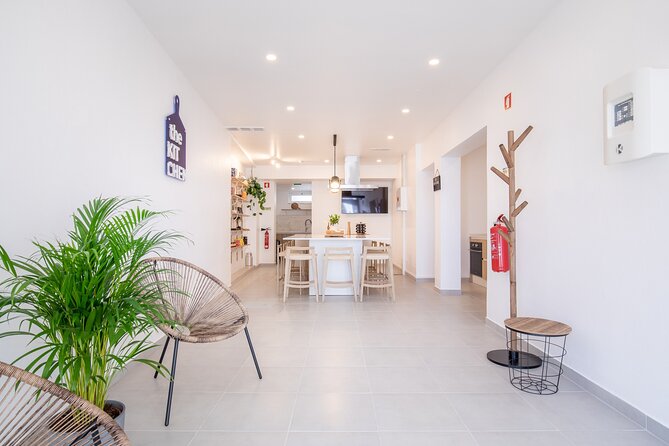
Reviewed · PASTEL DE NATA WORKSHOPS
Pastel de Nata Baking Class – Portugal’s Famous Custard Tart
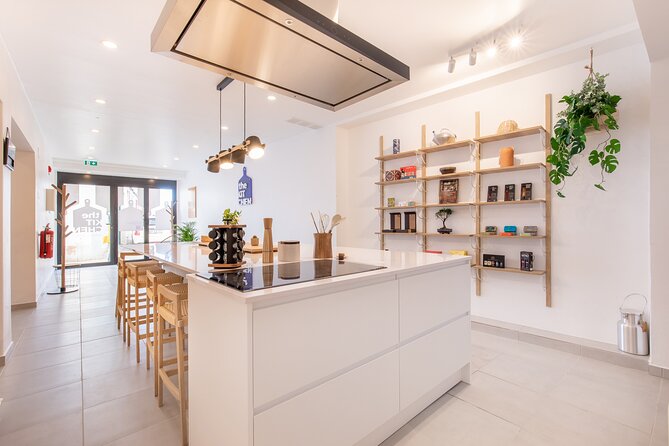
Portugal’s famous custard tart is simple to eat and surprisingly tricky to make. At The Kitchen in Lagos, Joana Glória leads a small, hands-on class through the custard, pastry, assembly, and baking. I like the small group of up to 10 and the relaxed teaching style. I also like that you leave with a recipe PDF, not just a sweet memory.
The main thing to understand is that you may not make every pastry case from scratch during your own two hours. Some prepared pastry can be used so the class fits its schedule and reduces waste. If your goal is to learn the custard and the full assembly process, this is a strong choice. If you want to roll and shape every layer yourself, ask about that point before booking.
Key points at a glance
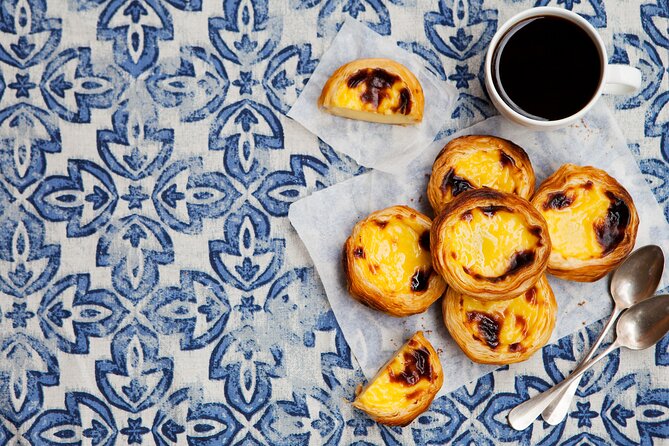
- A focused two-hour pastry lesson: You make the custard, work with the pastry, fill the cases, and bake the tarts.
- Joana Glória leads the experience: Her lively, patient approach helps beginners take part without feeling rushed.
- A small Lagos kitchen: With a maximum of 10 people, you get a more personal class than a large demonstration.
- Fresh pastéis de nata at the end: You eat the tarts made during the session, with some pastries available to take away.
- A recipe for your own kitchen: The Kitchen sends a PDF afterward so you can try the recipe at home.
- A useful cultural stop: The class adds food, local conversation, and Algarve tips to a sightseeing day.
What happens during the two-hour class
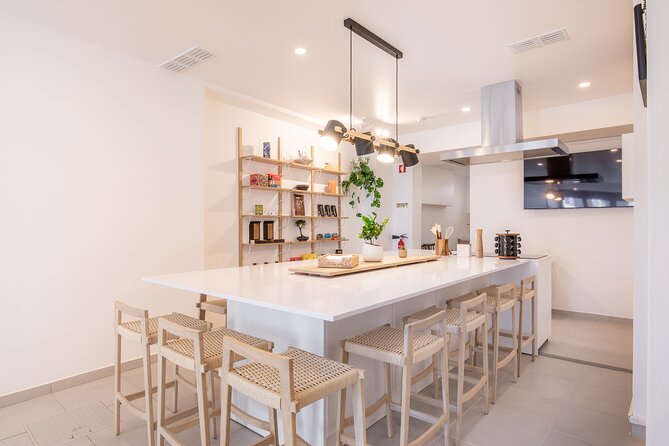
The class begins at The Kitchen on Rua Lucinda Anino dos Santos in Lagos. It is close to public transportation, and the activity finishes at the same meeting point. Since the session lasts about two hours, it fits neatly into an afternoon or morning without taking over your day.
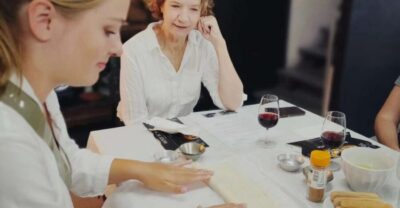
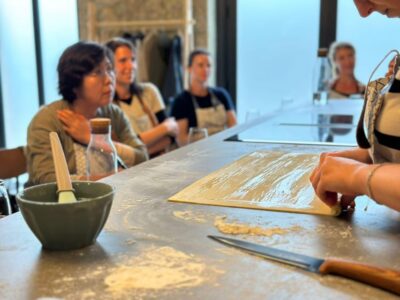
You do not simply watch Joana make one perfect tart while you stand back. The class divides the work among the group. You help prepare the creamy custard, handle the pastry, fill the cases, and get the pastéis ready for the oven.
That division makes sense for a small teaching kitchen. Custard preparation gives you the most useful lesson, since the filling needs the right texture and balance. You also see how the pastry and custard come together, which is the part that turns two separate components into the familiar Portuguese tart.
The process is beginner-friendly. No cooking background is required, and the instructions are given in English. You can ask questions as you go, rather than trying to copy a recipe later from memory.
Other classes where you cook in Lagos:
- Lisbon: Pastel de Nata Baking Class
★ 4.9 · 2,106 reviews - Porto: Pastel de Nata Cooking Class with Grandma’s Recipe
★ 5.0 · 1,565 reviews - Porto: Pastel de Nata Cooking Class with Port Wine – Sé
★ 4.8 · 888 reviews
The pastry question you should know before booking
Pastéis de nata have two key parts: a flaky pastry shell and a smooth custard center. The description of the class includes preparing puff pastry, but the practical setup can be a little different from what you might expect.
One participant explained that the full pastry case was not made from scratch during the session because that takes too much time. Instead, the group used pastry prepared in an earlier class, then took part in making the custard and filling the cases.
The Kitchen’s explanation is practical. Pastry made in one class can be reused rather than thrown away, which cuts food waste and lets the class focus on the steps that fit its two-hour format. This also means more time for each person to take part in the filling and baking.
I see this as a reasonable compromise, but it matters if pastry technique is your main reason for booking. You will learn how the pieces fit together, yet you may not personally complete every stage of rolling and shaping the dough. If you want a full pastry workshop, contact The Kitchen before paying. If you want a social cooking lesson centered on the custard, assembly, and final bake, the arrangement works well.
Learning the custard and filling the cases
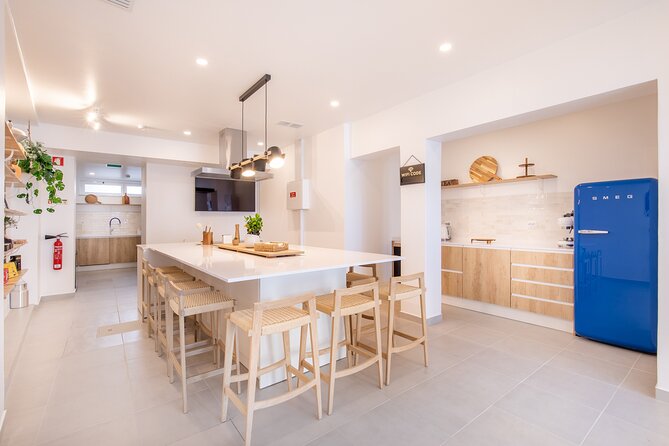
The custard is the heart of the pastel de nata. During the class, you help prepare it and learn how the ingredients become the familiar creamy filling. The group setting means each participant may handle one part of the process, then share the work as the recipe moves forward.
That setup keeps the class active without making the pace hectic. You get a close look at the method, and you can see how the custard should look before it goes into the pastry. The goal is not to produce a restaurant-scale batch. It is to give you a method that you can repeat at home.
Once the pastry cases are ready, everyone gets a turn filling them. This is a small but useful detail. It gives you direct practice with the final assembly instead of leaving the most important step to the instructor.
Expect a few imperfect tarts. Pastry can split or let the custard escape, especially when beginners are learning. That is not a disaster. The finished tart can still taste good, and the mishaps are part of the lesson. This is a cooking class, not a pastry competition.
Baking, tasting, and the little finish
The most satisfying part comes when the filled tarts go into the oven and the class waits for the result. The Kitchen sometimes uses games during this pause, which keeps the group involved while the pastries cook.
At the end, you eat the pastéis de nata made during the class. Some participants receive two tarts, and you may be able to take the pastries with you instead of eating them all on site. One class also included a small glass of port with the tasting, a fitting Portuguese touch, though you should confirm current serving details if that matters to you.
The tasting is more than a snack. It lets you compare the finished texture with what you saw during preparation. You get the crisp pastry, warm custard, and the satisfaction of knowing which steps produced the result.
A birthday celebration has even been accommodated with a candle placed in one tart. That gives you a sense of the tone here: friendly and flexible rather than stiff or formal.
Other places to bake your own in Lagos:
- Lagos: Bake Pastel de Nata – Class in Lagos, Algarve
★ 4.9 · 198 reviews - Porto: Pastel de Nata Pastry-Making Workshop
★ 4.9 · 1,542 reviews - Porto: Tile Painting and Cocktails in Downtown Porto
★ 4.9 · 484 reviews - Porto: Pastel de Nata Cooking Class from Scratch
★ 4.9 · 468 reviews
Joana’s teaching style and the group atmosphere
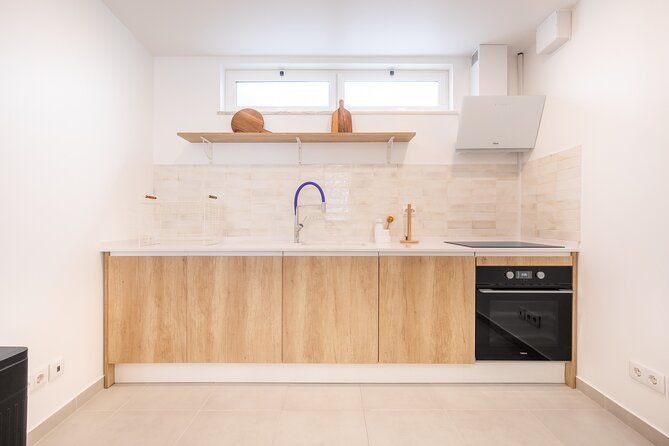
Joana Glória is the central personality of the class. The strongest praise focuses on her energy, patience, humor, and clear English. She also shares local suggestions about Lagos and the Algarve, so the session can help you plan the rest of your stay.
I like this kind of teaching because it connects the recipe to the place. You are not only learning how to mix custard. You are hearing about a Portuguese food tradition while standing in a local kitchen in Lagos.
The group size helps. With no more than 10 participants, you should have a better chance to ask questions and get a turn at the work. It is still a shared class, so you will not control every step from start to finish. Still, it is small enough to feel social without becoming a crowd.
The atmosphere also suits people who do not think of themselves as cooks. Several activities in Portugal assume some kitchen confidence. This one is built around simple instructions, shared tasks, and a final treat. You can come with friends, as a couple, alone, or with a family group, provided the minimum number for the class is met.
Why the cultural side matters in Lagos
Pastel de nata is more than a dessert found in every Portuguese café. Learning to make it gives you a direct way to connect with an everyday part of Portuguese food culture.
The class also adds a local angle to a visit based in the Algarve. Lagos is often used as a base for beaches, boat outings, and old-town walks. A cooking session gives you a different kind of afternoon, one built around conversation and a shared task rather than sightseeing from one place to the next.
Joana’s local tips can be useful here. You may get suggestions for other places to visit around Lagos and the Algarve while you work. The class does not replace a proper walking tour or a food tour, but it adds context that a quick pastry stop cannot provide.
For me, the best value is the combination of food and place. You learn a recipe associated with Portugal, meet people who are also curious about the country, and spend time in a working kitchen rather than only consuming the finished product.
Is the $78.44 price fair?
At $78.44 per person, this is not the cheapest way to eat pastéis de nata in Portugal. You can buy a tart at a café for a small fraction of that price. The fee makes sense only if you want the instruction, participation, social setting, and recipe to take home.
The class includes all ingredients and cooking tools, so you do not need to shop or bring equipment. You also receive a PDF recipe by email afterward. That helps the experience retain some value after you leave Lagos, especially if you actually bake the tarts at home.
The maximum group size of 10 adds value. You are paying for access to a guided activity, not just a demonstration with a large audience. Still, the price will feel high if you mainly want a tasting or expect to leave with a large box of pastries.
I would book it for a special afternoon, a birthday, a couple’s activity, or a rainy-day plan. I would skip it if you have a very tight budget, dislike group cooking, or only want to taste the dessert.
Who should book this class?

This experience suits you best if you:
- Want a hands-on food activity in Lagos
- Enjoy meeting people while cooking
- Are new to pastry and want clear guidance
- Like learning a recipe you can repeat at home
- Want local conversation along with a Portuguese dessert
- Have about two hours free in your schedule
It is also a good choice for a celebration. The birthday candle detail shows that the team may help make a special occasion feel personal, though you should arrange any request ahead of time.
Families may enjoy the activity, but the supplied information does not specify a minimum age. If you are booking with children, ask The Kitchen about age requirements and how much of the cooking they can do.
People with service animals can bring them, according to the activity information. The location is near public transportation, which helps if you are staying in Lagos without a car.
What to bring and how to plan the day
You do not need to bring ingredients or cooking tools. The class supplies both. Wear something comfortable for a kitchen activity, and avoid scheduling a rushed transfer immediately afterward. The official duration is about two hours, and shared cooking can run at a natural pace.
The start and finish point are the same: Rua Lucinda Anino dos Santos F, 8600-722 Lagos, Portugal. Check the exact meeting details on your confirmation before setting out, especially if you are using public transportation.
This activity is often booked well ahead, with an average booking lead time of about 26 days. That is useful planning information for a popular Lagos itinerary. If your dates are fixed, reserve early rather than waiting until the last day.
You can cancel for a full refund up to 24 hours before the start time. Changes or cancellations inside that window are not accepted for a refund. The class also requires a minimum number of participants. If The Kitchen cancels because that number is not reached, you will be offered another date or activity, or receive a full refund.
The main strengths and the one real limitation
The highest praise is consistent around three points: Joana’s warm teaching, the attractive kitchen, and the pleasure of eating the finished tarts. The class feels organized without losing its social side. You learn, work with your hands, and have something warm to taste at the end.
The recipe PDF is another real strength. Many food activities end when the plate is empty. Here, you have a chance to recreate the tarts after returning home, which makes the fee easier to justify.
The one important limitation is the pastry work. Do not assume that you will roll and shape every pastry case yourself. The class may use pastry prepared by an earlier group so that the schedule works and food is not wasted.
That is not a reason to reject the experience. It is simply a reason to book it for the right purpose. Think of it as a sociable pastel de nata workshop with practical pastry lessons, not a full professional pastry course.
Should you book the Pastel de Nata Baking Class?
I would book this class if you want more than a quick sweet stop in Lagos. The two-hour format is manageable, the group is limited to 10, and Joana Glória gives the experience a personal, local feel. You get to prepare the custard, fill the cases, bake the tarts, taste them fresh, and take the recipe home.
At $78.44, the value depends on your interest in the activity itself. You are paying for an afternoon of instruction and conversation, not for the cheapest dessert in town. Ask about the pastry preparation if making dough from scratch is essential to you.
For most visitors who enjoy food, culture, and a relaxed hands-on class, this is a worthwhile Lagos addition. If your ideal souvenir is a recipe you can use again, the experience earns its place on your itinerary.
FAQ
Where does the Pastel de Nata Baking Class take place?
The class starts and ends at The Kitchen, located at Rua Lucinda Anino dos Santos F, 8600-722 Lagos, Portugal.
How long does the class last?
The experience lasts approximately two hours.
What does the class include?
All ingredients and cooking tools are included. You also receive a PDF of the recipe by email after the class.
Is the class offered in English?
Yes. The activity is offered in English.
How many people can join the class?
The class has a maximum of 10 participants.
Will I make the custard and pastry?
You learn how to make the creamy custard, prepare or work with the pastry, combine the two parts, and bake the tarts. Some sessions may use pastry prepared by an earlier class because making the full pastry cases takes too long for the scheduled session and reusing the pastry helps reduce waste.
What happens if I need to cancel?
You can receive a full refund if you cancel at least 24 hours before the local start time. Cancellations or changes made less than 24 hours before the experience are not accepted for a refund.
Just added in Lagos
- TUK TUK Tour around Lagos Old & New Town & beaches – Best way to know Lagos★ 5.0 · 488 reviews
- Wild and Wonderful West Coast Full Day Tour★ 5.0 · 92 reviews
- Small group Wine Tasting Tour from Lagos★ 5.0 · 145 reviews
- NEW Lagos-Watching Dolphins and Benagil Cave with Biologists★ 4.5 · 147 reviews
- Sunset Yoga at Lagos’s beautiful beach by el Sol Lifestyle★ 5.0 · 52 reviews
- Sunrise SUP Caves Tour in Lagos – Small Group Experience★ 5.0 · 49 reviews
- Sagres Sunset Small Group Tour from Lagos★ 5.0 · 94 reviews
- Sagres & Cape St. Vincent Half-Day Tour★ 5.0 · 116 reviews
Pastel de Nata Workshops, compared.
Pastel de Nata Cooking Class with Grandma’s Recipe
Read our review →
Pastel de Nata Cooking Class with Port Wine – Sé
Read our review →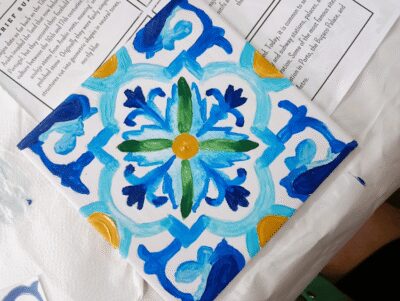

Browse the lists this tour appears in