
Reviewed · TOURS IN COIMBRA
Coimbra: A Local’s Tour of the University + Skip-the-Line
The best part of this Coimbra tour is not simply seeing an old university. It is hearing how royal power, student customs, religion, and academic rules all meet inside the Paço das Escolas. A guide such as José, a Coimbra history graduate, can turn statues, azulejos, and old prison cells into a story you can follow.
I like two things here: the Biblioteca Joanina is included, and the tour gives you a local voice instead of leaving you to decode the buildings alone. I also like the small details, from students tying academic clothes to the Porta Férrea to bats helping protect rare books.
The main drawback is the stairs. The university sits high above Coimbra, and this tour is not suitable for wheelchair users or people with mobility impairments. Library entry is also limited to 50 people per time slot, so the timing can shift.
Key points to know before booking
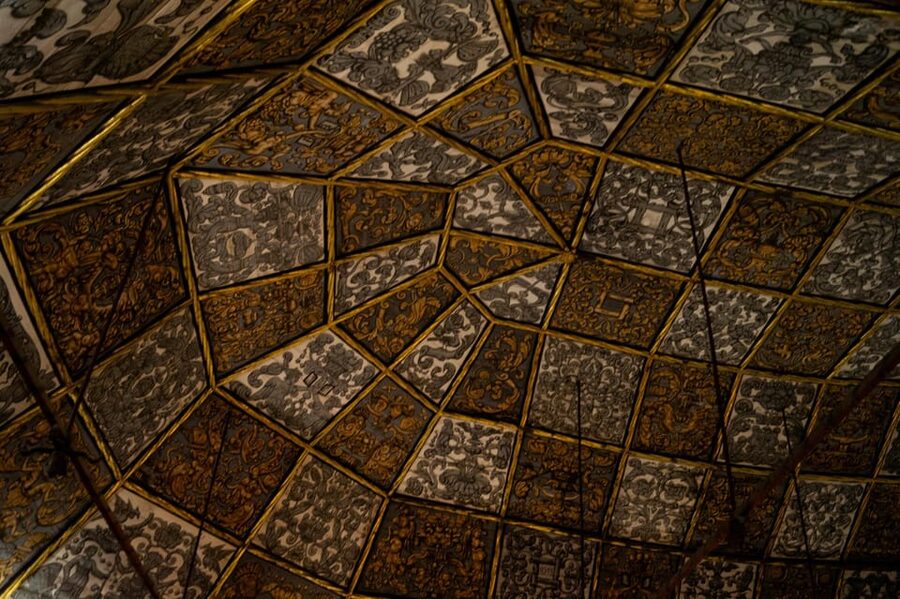
- The Joanina Library is the star attraction: You see its gilded woodwork, painted ceilings, rare books, and famous insect-eating bats.
- Your guide adds student life to the monuments: José, Rogério, David, and Jorge are among the guides connected with this experience.
- The tour covers more than the library: Expect the Paço das Escolas, Porta Férrea, academic prison, chapel, Sala dos Capelos, and Via Latina.
- The price is $76 per person: That is a fair rate if you want the library, skip-the-line access, and detailed interpretation in one short visit.
- Plan for stairs and a brisk 90 minutes: This is a focused historic tour, not a slow visit with long free time in each room.
- Book early if the library matters most: Access is controlled in small time slots, and the schedule may need adjustment.
Why Coimbra’s university deserves a guided visit
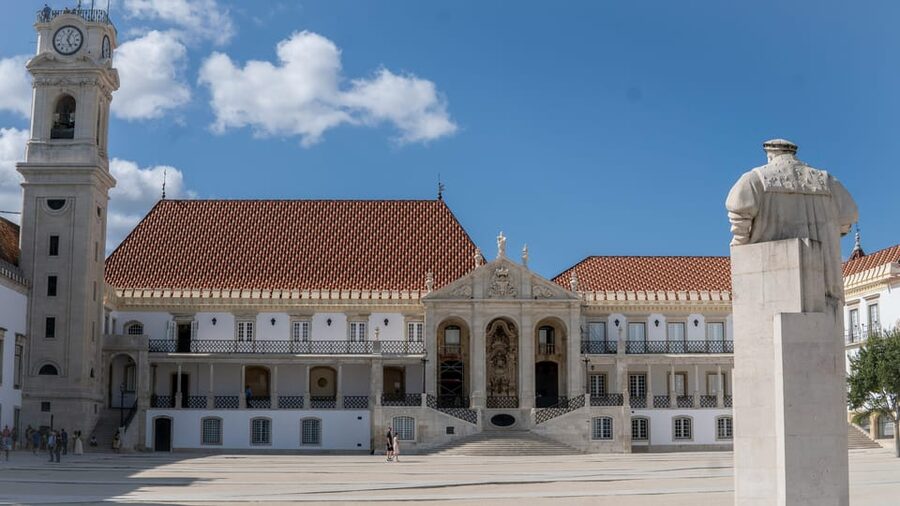
Coimbra’s university is one of Portugal’s great historic sights, but its importance can be easy to miss if you only walk through the courtyard and take photographs. The site has been tied to Portuguese education since 1537, when the university moved from Lisbon to Coimbra and took over a former royal palace.
That royal connection gives the visit much of its character. You are not touring a single purpose-built campus. You are walking through rooms that once served kings, priests, professors, and students. The old palace courtyard became the center of academic life, and the buildings around it still carry that mix of ceremony and authority.
I would choose a guide here because the architecture needs explanation. The university’s stories involve Portuguese kings, changes in teaching language, student rituals, academic discipline, and religious ceremony. A good guide also helps you notice things you might otherwise walk past, such as the figures carved into the entrance gate or the odd role played by bats in the library.
The experience is offered in English or Portuguese. Private groups are available, and the group size can sometimes feel personal. Some scheduled visits have been particularly small, even allowing the guide to answer questions at length and adjust the pace.
A few more things to do in Coimbra worth a look
- Sintra: Castle of the Moors Skip-the-Line Ticket
★ 4.6 · 2,893 reviews - Lisbon: Sao Jorge Castle Skip-the-Line Ticket with Guide
★ 4.6 · 1,191 reviews - Sintra: National Palace and Gardens Skip-the-Line Ticket
★ 4.3 · 1,144 reviews
Meeting at the Dom Dinis entrance
The meeting point is Dom Dinis, outside the iron gate. Your guide waits in front of the Porta Férrea, the formal entrance to the Paço das Escolas.
Give yourself enough time to find the meeting point. Coimbra’s university area sits uphill, and the approach involves steep streets and steps. Once you reach the entrance, the iron gate is a clear landmark, but you do not want to arrive breathless and hurried at the start of a short tour.
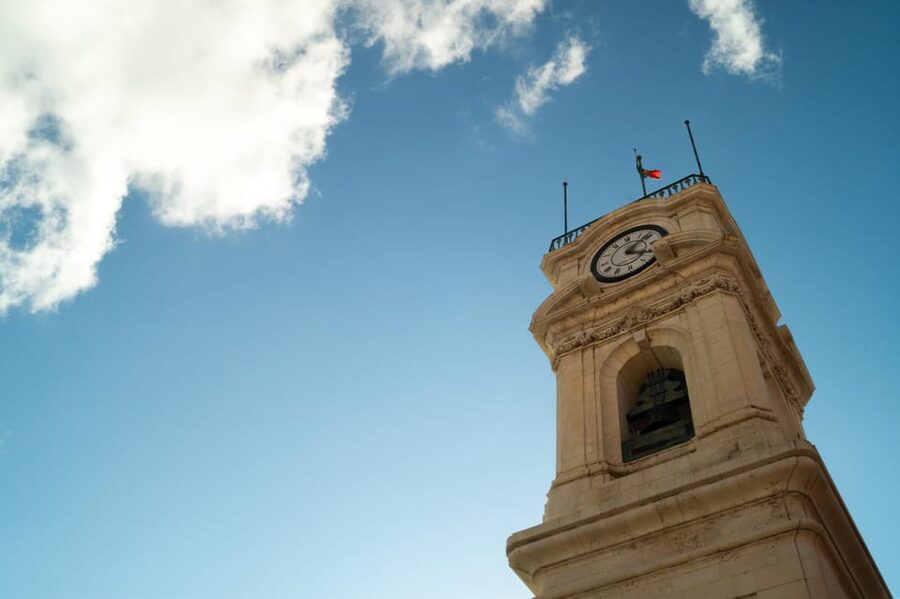
The Porta Férrea dates from 1634 and functions as more than a gateway. It is a symbolic welcome to the university, with statues of D. Dinis, who founded the university, and D. João III, who moved it to Coimbra. Look closely at the decoration and you can find references to the original faculties.
Your guide may also explain a student tradition connected with the gate. Students have tied parts of their academic clothing to it after completing their studies. This is the kind of detail that gives the stonework a human side. You see the formal entrance, then learn how generations of students have used it as part of their own rituals.
Crossing the Paço das Escolas

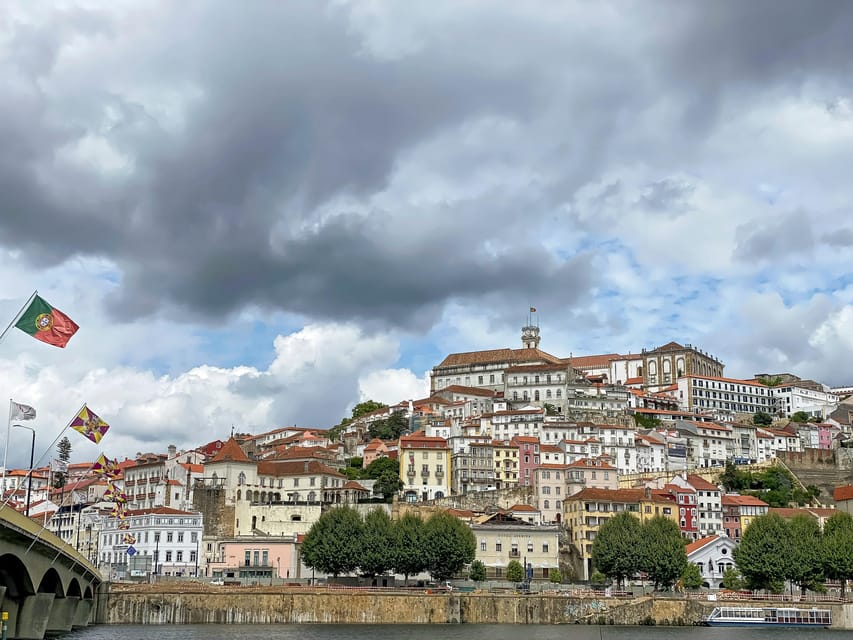
Once inside, you are in the Paço das Escolas, the university’s historic core. The courtyard is the visual anchor of the tour, with grand buildings arranged around an open space high above Coimbra.
This is a good place to get the larger story before moving indoors. Your guide can explain how the old royal palace became the center of a university that shaped Portuguese public life. The site reflects both learning and power: academic ceremonies took place here, but royal authority is present in the rooms, portraits, symbols, and carefully planned architecture.
I appreciate that the tour does not treat the Paço das Escolas as a backdrop for photographs only. It explains why the courtyard matters and how the university developed within the former palace. That context makes the later rooms easier to understand.
You will also get views over Coimbra from the university complex. The height is part of the appeal, but it is also why the visit involves stairs and uphill walking. If you have limited mobility, this is a serious consideration rather than a minor inconvenience.
Inside the Biblioteca Joanina
The Biblioteca Joanina is the chief reason to book this experience instead of simply exploring Coimbra on your own. Built between 1717 and 1728 during the reign of D. João V, the library is a Baroque interior filled with gilded wood, painted ceilings, and rare books.
More than 60,000 volumes are kept here. The collection is not displayed in a plain reading room. The decoration is deliberately grand, with exotic hardwoods and carefully finished surfaces that make the library feel closer to a royal ceremonial room than a modern study space.
Your guide will help you look beyond the first burst of decoration. You can learn how the design supports book preservation, and why the library uses bats. The bats control insects that could damage the books. It is a strange but practical partnership, and one of the most memorable details of the visit.
Photography is allowed, but flash photography is not permitted inside the library. Keep your camera settings ready before entering, since you will want to protect the books and the interior finishes. The library also limits access to 50 people per time slot. The tour schedule may be adjusted so your group can enter at the right time.
This access limit is one reason the skip-the-line element has real value. You are not guaranteed a completely private room, but the arranged entry helps reduce the uncertainty of showing up independently and finding that the next available slot does not fit your day.
Same base, a different kind of day out:
- Coimbra: Live Fado Show with Glass of Port Wine
★ 4.7 · 998 reviews - University of Coimbra guided tours without queue
★ 5.0 · 518 reviews - Guided tour of the University and city of Coimbra.
★ 5.0 · 377 reviews - Coimbra: Mondego River Kayaking Tour
★ 4.7 · 324 reviews
Below the library: the Prisão Acadêmica
The route continues beneath the library to the Prisão Acadêmica, a medieval academic prison. The university once had its own authority to discipline students who broke its rules, and this underground space was used to hold them.
The cells are narrow and secluded. You can picture how different this punishment was from ordinary student life above in the courtyard and lecture rooms. The contrast is useful: the university was not just a place of study, but an institution with its own rules and powers.
This stop is not as visually polished as the library or chapel. Its value comes from what it explains. It shows the university’s independence and gives the tour a slightly darker edge. Your guide can share stories of students spending time here and being left to reflect on their conduct.
The stairs and confined spaces also make this one of the less comfortable parts of the visit for anyone with mobility concerns. The route is not designed for wheelchair access.
The azulejos and organ of São Miguel Chapel
The Real Capela de São Miguel brings a different mood. The chapel combines 12th-century origins with later Baroque decoration, including gilded altars, detailed azulejos, and a large organ with more than 2,000 pipes.
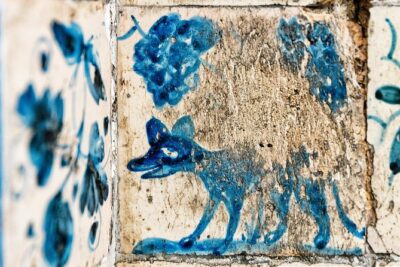
The blue-and-white tilework is especially important here. It is easy to focus only on the gold, but the azulejos give the chapel much of its Portuguese character. Your guide can point out how the decoration, religious use, music, and royal setting come together.
The chapel remains part of university life. It is still used for religious ceremonies, concerts, and weddings. That current use matters because the room is not only a preserved historic interior. It continues to serve the institution that grew around it.
This is also a place where you should be respectful about photography and noise. The tour information specifically prohibits flash photography inside the Biblioteca Joanina, but careful behavior is sensible throughout the university’s ceremonial and religious spaces.
Sala dos Capelos and the old throne room
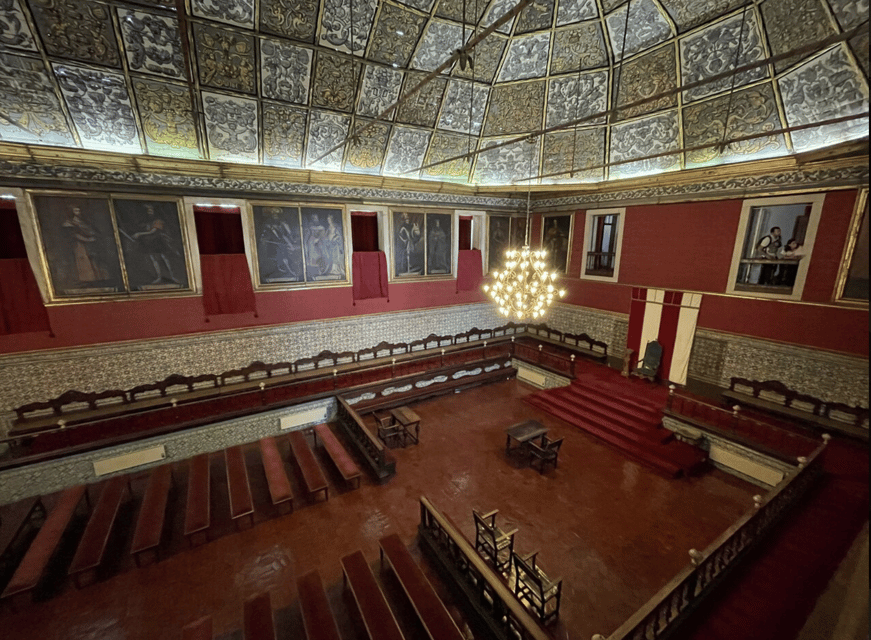
The Sala dos Capelos is the university’s ceremonial hall and one of the most impressive rooms on the route. It was once a royal throne room, and its decoration still reflects that role.
Inside, look for blue azulejos, ceiling designs with grotesque motifs, and portraits of Portuguese monarchs. The room’s importance is not only decorative. It has hosted royal proclamations and continues to be used for major academic rituals, including doctoral defenses.
This is where the university’s past and present meet most clearly. The room once expressed royal power, while today it remains tied to academic achievement. A guide can explain what happens during university ceremonies and why the hall carries such weight for students and graduates.
If you enjoy history, this stop may be more rewarding than a quick look at the grander library. It connects the university to Portugal’s rulers and to the rituals that still shape academic life.
The Via Latina and the final view
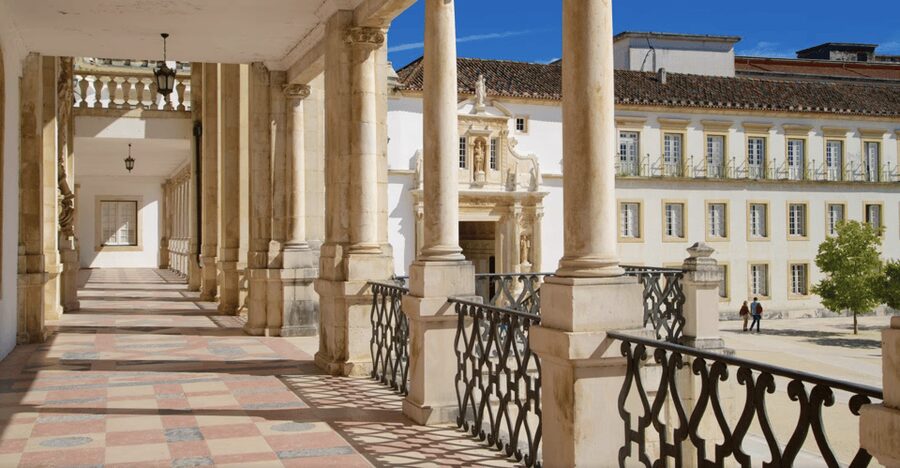
The tour ends at the Via Latina, an 18th-century neoclassical colonnade overlooking the Paço das Escolas. The columns frame the courtyard and open views across Coimbra.
The name refers to a major change in university life: the shift from Latin to Portuguese as the official teaching language. That change made education more accessible to Portuguese speakers and marked a new stage in the institution’s development.
This is a fitting final stop because it returns you to the wider view after the smaller rooms and enclosed spaces. You have seen the royal palace, the library, the prison, the chapel, and the ceremonial hall. From the Via Latina, you can look back across the courtyard and connect those pieces.
The tour is advertised at 1.5 hours, with the library visit listed as about 30 minutes. That gives you a focused introduction rather than unlimited time in each room. If you like lingering over every ceiling and portrait, you may want additional time at the university after the guided portion, if the access arrangements allow it.
What the $76 price includes
At $76 per person, this is not Coimbra’s cheapest university visit. The price makes more sense if you value three things: a live guide, the entrance ticket, and arranged access to the Joanina Library.
The library is the key value test. Some cheaper visits may not include it, and missing the Joanina interior would leave out the most distinctive room on the route. If you would otherwise buy admission separately and try to manage the timed entry on your own, the tour combines those tasks with interpretation.
The guide is also central to the price. José has a history degree from Coimbra, and other named guides include Rogério, David, and Jorge. The strongest part of this format is the chance to hear about student rituals, university life, and Portuguese history from someone with a direct connection to Coimbra rather than relying only on signs.
I would be less likely to pay $76 if you only want a quick look at the courtyard and a few photographs. For that purpose, a guided 90-minute visit may feel too structured. I would be more comfortable recommending it to a first-time visitor who wants to understand why the university matters and who would be disappointed to miss the library.
The booking terms also reduce some risk. You can cancel up to 24 hours before the tour for a full refund, and you can reserve now and pay later. Starting times vary, so check availability when choosing your date.
Who will enjoy this tour most
I would recommend this tour to you if you enjoy architecture but want the stories behind it. The route has enough visual variety to keep a general sightseeing day interesting, yet enough political, religious, and academic detail for people who like history.
It suits:
- First-time visitors to Coimbra who want the essential university sights in one visit
- History fans interested in Portuguese kings, education, and student traditions
- People who specifically want to enter the Biblioteca Joanina
- Families with older children who can manage stairs and a focused 90-minute tour
- Visitors who prefer asking questions instead of reading room plaques alone
- Anyone who values a small or private group format
You should think twice if stairs are difficult for you, if you use a wheelchair, or if you prefer a slow visit with long stretches of independent time. The university’s hilltop setting and interior stairways are built into the experience.
Practical advice for a smoother visit
Wear comfortable shoes with good grip. The route includes stairs, and the walk to the university is uphill. The tour is short enough to fit into a busy Coimbra day, but you will get more from it if you are not rushing in from another appointment.
Arrive at the iron gate in front of the Porta Férrea with a little spare time. The guide waits outside, and the starting point is clear once you reach the university complex.
Bring a camera, but switch off the flash before entering the library. The tour allows photography, yet the library’s books and finishes need protection.
If the library is your main reason for booking, confirm the available time slot and expect some flexibility. Entry is limited to 50 people at a time, so the schedule may shift to fit the university’s access rules.
Finally, ask questions. Guides such as José have been described as especially strong on Portuguese history, student customs, and the small stories that do not appear in a basic self-guided visit. This is a tour where curiosity pays off.
Should you book the Coimbra University tour?
Book it if the Biblioteca Joanina is high on your Coimbra list and you want the building’s story explained clearly. The combination of skip-the-line entry, the library, and a guide with a connection to the university makes $76 reasonable for a short, focused visit.
Skip it if stairs are a serious problem or if you are content to see only the exterior spaces. For most first-time visitors who want more than photographs, I would choose this tour, especially in a private group or with an early starting time.
FAQ
Where does the tour meet?
The meeting point is outside the Porta Férrea, in front of the iron door, at the Dom Dinis location.
How long does the tour last?
The advertised duration is 1.5 hours. The Joanina Library visit is listed as approximately 30 minutes within the university visit.
What languages are available?
The live guide is available in English and Portuguese.
Is the Biblioteca Joanina included?
Yes. The entrance ticket and a visit to the Joanina Library are included.
Does the tour skip the ticket line?
Yes. Skip-the-line access is included, although library entry is controlled by time slots and the schedule may need adjustment.
Can I take photographs?
Photography is allowed. Flash photography is prohibited inside the Biblioteca Joanina.
Is the tour suitable for wheelchair users?
No. The tour involves stairs and is not suitable for wheelchair users or people with mobility impairments.
Can I cancel the booking?
You can cancel up to 24 hours in advance for a full refund. The reserve-now, pay-later option is also available.
Just added in Coimbra
- Schist Villages at Lousa Mountain★ 5.0 · 127 reviews
- Lousa Mountain Private Tour★ 5.0 · 88 reviews
- Schist Villages of Lousã Mountain, half-day from Coimbra★ 5.0 · 42 reviews
- Time travel at the Convent of Christ Tomar★ 5.0 · 56 reviews
- Soft Canyoning, river Ceira, Góis, Serra da Lousa, Coimbra★ 5.0 · 48 reviews
- University of Coimbra – more complete and private visit, ticket included★ 5.0 · 53 reviews
- Discovering the charms and places of Coimbra★ 5.0 · 78 reviews
- Joanina Library & Coimbra University | Private Former Alumni Tour★ 5.0 · 135 reviews
Tours in Coimbra, compared.
University of Coimbra guided tours without queue
Read our review →
Guided tour of the University and city of Coimbra.
Read our review →


Joanina Library & Coimbra University | Private Former Alumni Tour
Read our review →
Browse the lists this tour appears in