
Reviewed · TOURS IN COIMBRA
Schist Villages at Lousa Mountain
The best part of this Coimbra excursion is the sudden change from city streets to quiet mountain villages built from dark schist. In a few hours, you move through restored hamlets, abandoned settlements, forest roads, springs, and high viewpoints, with guide Alfredo handling the driving and explaining how these communities are coming back to life.
I like the private format, which lets you slow down for photographs, add questions, or take a breather on steep village steps. I also like the mix of culture and nature: you may hear about old village life, spot plants and animals, and even stop for a local drink or meal if you choose.
The main drawback is the terrain. Several villages require walking up and down uneven steps, while the mountain roads can be narrow, steep, and unpaved. This is not a sit-back-and-see-everything-through-the-window outing, so wear sturdy shoes and expect some physical effort.
Key points to know before booking
- Cerdeira feels like a storybook village, with a small bridge, leafy paths, and a spring hidden in the greenery.
- Alfredo’s local knowledge adds real value, especially when he explains village restoration, wildlife, plants, and daily life.
- The private vehicle matters, since some roads are rough, steep, and not comfortable for a driver unfamiliar with the mountains.
- The half-day route covers several standout villages, while the full-day option adds Aigra Velha, Aigra Nova, and Pena.
- A coffee or local meal can make the day more memorable, but food and drinks are not included unless arranged separately.
- The tour suits curious, reasonably mobile visitors, not anyone seeking a completely flat or passive sightseeing trip.
Why Lousã Mountain makes a fine change from Coimbra

Coimbra gives you grand university buildings, old lanes, and river views. Lousã Mountain gives you something quieter and less polished: small communities made from local stone, woodland, springs, livestock, and houses restored one by one.
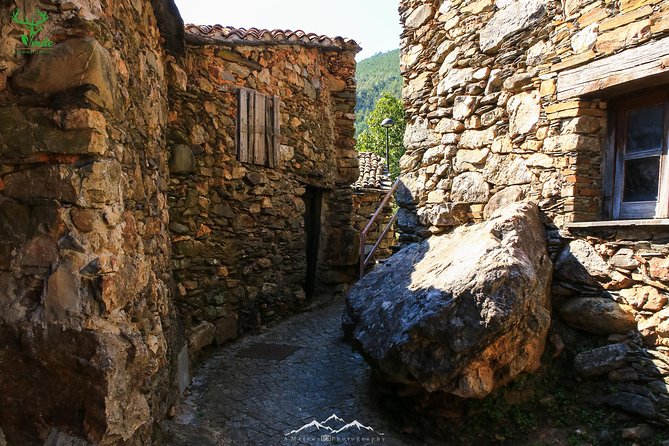
Schist is the dark, layered rock used for walls and roofs throughout these villages. The buildings fit tightly into steep hillsides, often with narrow paths and stairways between them. Some places have been carefully restored and now welcome visitors. Others are partly abandoned, showing what happens when mountain communities lose their working population.
That contrast is one of the strongest reasons to take this tour. You are not simply visiting one pretty village, taking a few photographs, and leaving. You see several versions of the same rural tradition: artistic revival at Cerdeira, tourism and easier access at Candal, carefully restored homes at Talasnal and Gondramaz, and near-abandoned settlements at Cadaval Cimeiro and Cadaval Fundeiro.
The tour has a 4.9 rating from 127 reviews, with 98 percent recommending it, but the useful point is not the number alone. The repeated strengths are clear: Alfredo’s friendly manner, his ability to explain both local history and the natural setting, and his calm handling of mountain roads. One critical account raised concerns about driving, so I would still advise you to mention any worries before setting out and to make sure you feel comfortable with the route.
Other trips people book in Coimbra:
- Coimbra: Live Fado Show with Glass of Port Wine
★ 4.7 · 998 reviews - University of Coimbra guided tours without queue
★ 5.0 · 518 reviews - Guided tour of the University and city of Coimbra.
★ 5.0 · 377 reviews
Cerdeira begins with a bridge into the forest
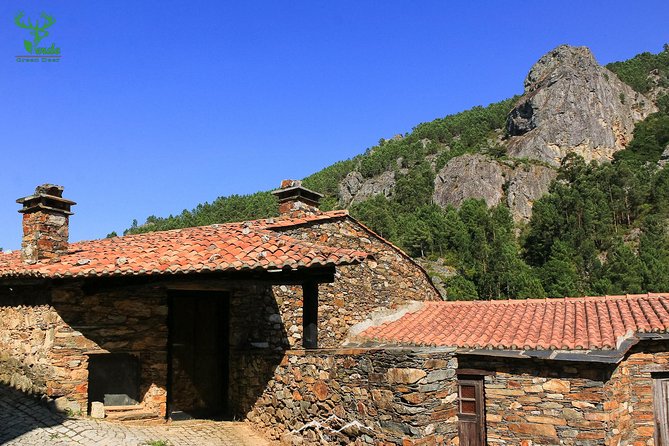
Cerdeira is an excellent first stop because it sets the tone. You cross a small bridge and follow a slate path toward a handful of houses partly screened by foliage. The village has a quiet, almost theatrical quality, but it is not merely a preserved set for photographs.
Art and creative work have helped bring Cerdeira back to life. At certain times of year, events connect art with the plants and woodland around the village. You may also see how water shaped the settlement, with steep slopes and channels running down from higher ground.
Allow around 30 minutes here. That is enough for a short walk, photographs, and an explanation of the village. The path and surrounding slopes mean you should not expect perfectly level footing. If you enjoy small details, ask Alfredo about the spring, the building methods, and the way the village has changed.
Candal shows the more social side of mountain life
Candal is generally the most developed and most visited of the mountain villages on this route. Its easier access from the national road has made it more accustomed to weekend visitors and holiday traffic.
That makes Candal a useful contrast with Cerdeira. Cerdeira feels secluded and artistic, while Candal has more of a lived-in, social character. You can get a sense of how mountain communities adapt when visitors arrive in search of fresh air, walking routes, and local food.
The stop is scheduled for about 30 minutes. Do not expect a long hike here. Instead, use the time to look at the houses, compare the setting with the other villages, and ask how access has affected local life. The road access is convenient, but it also means Candal can feel less remote than the other stops.
Talasnal is the tour’s classic postcard village
Aldeia do Talasnal is likely to be the village you remember most clearly. It is the best-known schist village on Lousã Mountain, helped by the careful restoration of many of its houses and by the way the village fits into the surrounding hills.
Nature remains close here. Stone walls, steep paths, and restored buildings combine into a place that feels connected to the mountain rather than placed on top of it. The village also has a reputation for food, and the phrase seduces us through the mouth points to an important part of the visit: local cooking is part of the experience, not an afterthought.
You have around 30 minutes, so the visit is more about seeing the layout and hearing the story than making a long exploration. The paths can be steep, with steps up and down. If you have limited mobility, tell the guide before the tour so the pace can be adjusted.
Same base, a different kind of day out:
- Coimbra: Mondego River Kayaking Tour
★ 4.7 · 324 reviews - Coimbra: Guided tour with a local student
★ 5.0 · 170 reviews - Portugal dos Pequenitos entry ticket
★ 4.2 · 167 reviews - Joanina Library & Coimbra University | Private Former Alumni Tour
★ 5.0 · 135 reviews
Casal Novo appears briefly beside the rough road

The route passes Casal Novo on an unpaved road. It sits in a fold of a steep, north-facing hillside, and the surrounding woodland can hide it almost completely.
This is a small but telling part of the drive. Not every village announces itself with a sign or a broad viewpoint. Some are tucked into folds of land and reveal themselves only when you know where to look. The private vehicle and local guide are especially useful here because a self-drive visitor could easily pass without understanding what is below the trees.
There is no separate timed visit listed for Casal Novo. Treat it as part of the mountain journey rather than a full stop.
Gondramaz combines restoration with a coffee stop
Aldeia de Gondramaz is a fully restored shale village with about 50 houses. It also has a tourist resort, making it one of the easier places on the route to pause and take stock.
A coffee stop is planned here. That small break matters. The tour includes several walks and rough-road sections, so a chance to sit down makes the day more comfortable. It also gives you time to look closely at the restoration work instead of rushing from one village to the next.
Gondramaz shows what a mountain settlement can become when restoration, tourism, and local identity work together. At the same time, it may feel more visitor-oriented than the abandoned villages later in the route. I see that as a benefit if you want comfort, but less so if your main goal is solitude.
Cadaval Cimeiro and Cadaval Fundeiro show the harder story

The two Cadaval villages were abandoned after burning twice in the 1980s. Here, you hike between the settlements, making this one of the more active sections of the half-day route.
The walk gives the tour emotional weight. Restored villages can be beautiful, but abandoned ones show the cost of rural decline more plainly. You see the remains of places that once supported families, work, and daily routines, rather than only the successful side of the restoration effort.
Plan for uneven ground and a pace set by your group. The supplied route gives this section about 30 minutes, so it is not a long trek, but you still need comfortable shoes. If rain has made the paths slick, the guide may need to adjust the timing or route.
The full-day route reaches higher, quieter villages

The half-day tour is a good choice if you want the main villages without giving up most of your day in Coimbra. The full-day version adds Aigra Velha, Aigra Nova, and Pena, and gives the mountain more room to unfold.
Aigra Velha sits at 770 metres, making it the highest schist village on the route. It is close to the higher summits of Lousã Mountain but remains relatively easy to reach. The village is small, with broad views and a simple relationship with the surrounding environment.
Aigra Nova is also small, with three streets and low schist buildings. Its spring and mild climate support gardens and pasture. This is a living village, with market gardens, livestock, donkeys, and everyday activity. If you want to see more than restored stone houses, Aigra Nova is an important addition.
Pena has a different visual character. Its houses combine schist and quartzite, and a very old chestnut tree marks the entrance. The settlement follows a promontory, so the buildings appear to cling to the slope. A clear stream runs beside the village, while the nearby Penedos de Góis offer more outdoor possibilities for people seeking adventure.
Each full-day stop is listed at about 30 minutes, but the longer format gives you more driving time, more scenery, and less pressure to hurry. I would choose the full day if you have a strong interest in rural architecture, nature, and quiet mountain communities.
What Alfredo adds to the experience

The guide can make or break a mountain tour. Here, Alfredo is repeatedly praised for his warm, relaxed approach and for connecting the villages with the surrounding plants, animals, and people.
His role is more than explaining dates and building styles. He has been described as a historian, naturalist, and interpreter of local society. He points out trees, flowers, and wildlife, and one outing included a close sighting of a large deer in the forest. Binoculars are included, which makes the nature side of the trip more useful.
The private format also allows for conversation. One booking had only one participant with Alfredo, while another group had four people. The maximum is 10 people, and only your group participates, so you are not being moved through the villages with a large crowd.
You can ask for a slower pace, spend longer at a favorite stop, or adjust the schedule within the available time. The tour is offered in English, and it may be operated by a multilingual guide. Alfredo has also helped keep mixed-language groups involved through translation, according to the supplied experience details.
Price, transport, and what you actually receive
At $102.80 per person, the half-day experience is not the cheapest way to see a few mountain villages. It is also not simply a transfer. The price includes a private vehicle, driver-guide, all listed activities, one souvenir photo, binoculars, and a professional photographer guide.
The value comes from access and ease. The roads into the mountain villages can be steep, narrow, and unpaved, with some sections lacking guardrails. You could drive yourself, but the route would demand concentration and local confidence. Hiring a driver lets you look outward instead of at the road.
Pickup is offered from most central hotels in Coimbra, as well as selected locations in Lousã, Miranda do Corvo, Condeixa-a-Nova, and Penela if parking is available. Pickup from other places costs an extra 10 to 20 euros. The standard meeting point is Largo da Portagem in Coimbra, and the tour returns there.
Food and drinks are not included unless specifically arranged. Meals can be paid for separately on site. A local lunch can add a lot to the day, especially if you want to try regional food such as chanfana, which appears in the experience details. Budget extra time and money for that rather than assuming the $102.80 covers it.
Who should book this mountain outing
I would recommend it to you if you want a break from city sightseeing and enjoy rural architecture, short walks, forest scenery, and local stories. It is especially suitable for people who want a private tour but do not want to plan a complicated mountain drive.
The full-day version suits nature lovers and anyone who prefers an unhurried day. The half-day route works better if Coimbra is your base and you want to fit in the university area, old town, or another activity afterward.
You should think twice if you want a completely flat route, dislike unpaved roads, or prefer a large organized group with a fixed script. The itinerary includes steep steps, uneven village paths, off-road driving, and weather exposure. Most people can participate, but physical comfort matters.
The tour operates in all weather conditions, and you should dress appropriately. Poor weather can lead to cancellation, in which case you are offered another date or a full refund. You can cancel for a full refund up to 24 hours before the start time. Cancellations or changes within 24 hours are not refunded or accepted.
Should you book the Schist Villages at Lousã Mountain tour?
Book it if you want to see a quieter side of central Portugal and value a guide who can connect stone houses with wildlife, farming, restoration, and village life. The strongest reason to go is not any single viewpoint. It is the sequence of contrasts, from Cerdeira’s leafy creativity to Cadaval’s burned and abandoned homes, then on to the higher villages of the full-day route.
Choose the half-day option if your time is limited or you mainly want Cerdeira, Candal, Talasnal, Gondramaz, and the Cadaval walk. Choose the full day if Aigra Velha, Aigra Nova, and Pena sound like the part you would regret missing.
Wear sturdy shoes, bring water, allow extra money for food, and tell Alfredo about your preferred pace at the start. With those expectations in place, this is one of the more distinctive excursions you can make from Coimbra.
FAQ
Where does the tour start?
The standard meeting point is Largo da Portagem, 3000-337 Coimbra, Portugal.
Does the tour return to Coimbra?
Yes. The activity ends back at the meeting point in Coimbra.
Is hotel pickup available?
Pickup is available from most hotels in central Coimbra, Lousã, Miranda do Corvo, Condeixa-a-Nova, and Penela when parking is available. Other pickup locations may cost an additional 10 to 20 euros.
How long does the tour last?
The tour lasts about four hours for the shorter option. A full-day option is also available.
Which villages are included in the half-day route?
The route includes Cerdeira, Candal, Talasnal, Casal Novo along the drive, Gondramaz, and the Cadaval Cimeiro and Cadaval Fundeiro area.
Which villages are available only on the full-day tour?
Aigra Velha, Aigra Nova, and Pena are listed as full-day-only stops.
Is this a private tour?
Yes. Only your group participates, with a maximum of 10 people per booking.
Is food included?
Food and drinks are not included unless specifically stated. Meals may be paid for separately on site.
Is the tour offered in English?
Yes. The experience is offered in English, and it may also be operated by a multilingual guide.
What happens if the weather is poor?
The experience requires good weather. If it is canceled because of poor weather, you can choose another date or receive a full refund.
Just added in Coimbra
- Lousa Mountain Private Tour★ 5.0 · 88 reviews
- Schist Villages of Lousã Mountain, half-day from Coimbra★ 5.0 · 42 reviews
- Time travel at the Convent of Christ Tomar★ 5.0 · 56 reviews
- Soft Canyoning, river Ceira, Góis, Serra da Lousa, Coimbra★ 5.0 · 48 reviews
- University of Coimbra – more complete and private visit, ticket included★ 5.0 · 53 reviews
- Discovering the charms and places of Coimbra★ 5.0 · 78 reviews
- Joanina Library & Coimbra University | Private Former Alumni Tour★ 5.0 · 135 reviews
- A tour between Cascades and Schist Villages, Piodão★ 5.0 · 46 reviews
Tours in Coimbra, compared.
University of Coimbra guided tours without queue
Read our review →
Guided tour of the University and city of Coimbra.
Read our review →

Joanina Library & Coimbra University | Private Former Alumni Tour
Read our review →
Browse the lists this tour appears in