
Reviewed · LISBON NEIGHBOURHOOD WALKS
Belém District and the Salazar Dictatorship Legacy – Private Walking Tour
The most revealing part of this Belém walk is not the postcard view of the tower. It is the story of how Portugal used this waterfront district to present a heroic national image during Salazar’s dictatorship. I like the way the tour links the 1940 Portuguese World Exhibition to monuments you might otherwise see as simple symbols of exploration. I also like the private format, which lets Luís Maio adjust the pace, answer questions, and use photos and old images to explain how Belém changed.
The main drawback is that this is a serious history walk, not a quick monument checklist. You cover a fair distance in about three hours, and most of the experience takes place outdoors. If you want to tour the monastery interiors or spend time in museums, you should plan extra hours in Belém after the walk.
Key points to know before booking
- The 1940 exhibition is the tour’s main thread: Belém’s monuments become clues to Salazar’s political message, not just scenic backdrops.
- Luís Maio shapes the walk around your interests: He has adjusted explanations for visitors from South Africa, answered questions about Portuguese politics, and used visual material from different periods.
- You walk from the river station to Belém Tower Garden: The route covers about three hours and includes several stops of 10 to 20 minutes.
- The private format offers real flexibility: Only your group takes part, with a minimum booking of two people.
- The focus is historical and educational: Wear comfortable shoes, expect plenty of explanation, and do not treat this as a fast photo tour.
- The price is modest for a private experience: At $33.55 per person, the value is strongest for two or more people who want context rather than transport or entry tickets.
Why Belém tells a complicated Portuguese story
Belém is one of Lisbon’s easiest districts to misread. You see the Jerónimos Monastery, the Discoveries monument, the river, and the Tower of Belém. The usual story is one of ships, trade, explorers, and Portugal’s overseas empire.
This tour asks you to look again. Many of the sights were used, restored, or reinterpreted during the Estado Novo, the authoritarian regime led by António de Oliveira Salazar. The 1940 Portuguese World Exhibition turned Belém into a grand public stage for national pride, Catholic tradition, empire, and the supposed virtues of the Portuguese people.
That political use of history is the heart of the walk. You learn how architecture, gardens, lettering, statues, monuments, and public ceremonies can shape a national story. It is a useful way to understand why modern Lisbon sometimes seems to jump from the 1755 earthquake straight to democracy, with the decades of dictatorship left in the shadows.
Luís is especially good at connecting broad political ideas to small physical details. The route may pause at a flower bed, a fountain, a piece of lettering, or an old structure that most people walk past. These details help you see that public space is rarely neutral.
Other guided walks in Lisbon:
- Lisbon: History, Stories and Lifestyle Walking Tour
★ 4.8 · 10,902 reviews - Best of Lisbon Small-Group Guided Walking Tour
★ 5.0 · 4,869 reviews - Lisbon: Food and Wine Small Group Walking Tour
★ 4.9 · 4,082 reviews
Starting at Afonso de Albuquerque Square
The meeting point is Belém River Station on Avenida Brasília. From there, the first stop is Afonso de Albuquerque Square, where the tour begins with Belém’s changing public image.
You look at the area through several periods, from the Age of Discoveries to the 1940 exhibition. This opening gives you the framework for the rest of the walk. Instead of treating Belém as one fixed historic quarter, you see how each era added its own layer.
The stop lasts about 15 minutes and requires no admission ticket. It is a useful beginning because the guide can explain the political and visual goals behind the district before you reach its most famous monuments.
You should arrive ready to listen. This is not simply a meet-up followed by a quick stroll to the first landmark. The guide sets up the central question of the tour: who gets to decide which parts of history are celebrated, and which parts are left out?
Vasco da Gama Garden and the old town
The second stop is Vasco da Gama Garden, where Luís discusses old Belém and what remains of the earlier town.
This is one of the less obvious parts of the route. The famous monuments can make Belém seem like a carefully planned ceremonial zone, but the district also had an older local life. The tour helps you consider what was retained, altered, or erased as the waterfront took on a larger national role.
The stop is scheduled for about 15 minutes. Since much of the explanation happens outside, your comfort depends on the day’s weather. On hot days, shade matters. On wet days, rain gear matters. Luís has been attentive about choosing shade, sun, and places where people can sit when possible, but this remains an outdoor walk.
Jerónimos Monastery, viewed through two eras
At the Mosteiro dos Jerónimos, you spend about 20 minutes examining the facade and discussing the church’s late Gothic design, religious meaning, and connection to Portugal’s maritime past.
The monastery is the tour’s strongest link between older Portuguese history and the later political use of that history. Its grand style gave the 1940 exhibition an impressive backdrop, while its associations with voyages and empire helped support the regime’s preferred national story.
The description of this stop includes the facade and interior spaces, but the practical focus of the walk is outside. One useful piece of advice is to return later if you want time inside the monastery, its cloisters, or nearby museums. Three hours is not enough to combine a detailed outdoor history walk with full visits to every major site.
This is also where the guide’s approach matters. A basic city tour may tell you when the monastery was built and point out its famous doorway. Here, you are encouraged to consider why the building mattered to Salazar’s Portugal, and how religious imagery and national pride worked together.
Same base, a different kind of day out:
- Lisbon City Center Tour – The Unmissable Lisbon
★ 5.0 · 22,234 reviews - Lisbon: Sintra, Pena, Regaleira, Cabo da Roca & Cascais
★ 4.7 · 19,656 reviews - Lisbon: Jerónimos Monastery Entrance Ticket
★ 4.1 · 14,164 reviews - Lisbon: Sunset Boat Party Cruise with DJ and Open Bar
★ 4.5 · 10,378 reviews
Imperial Square and the 1940 exhibition
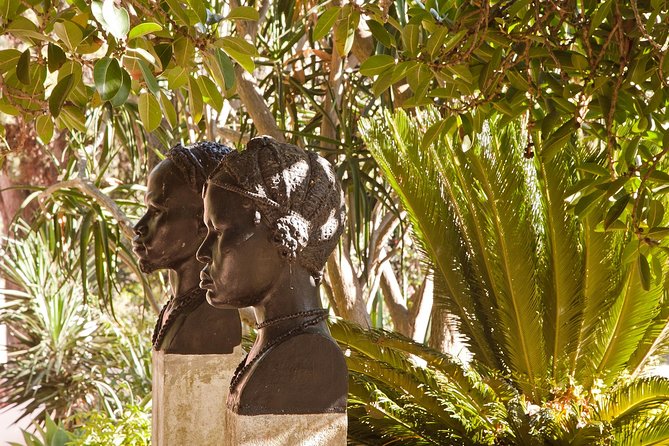
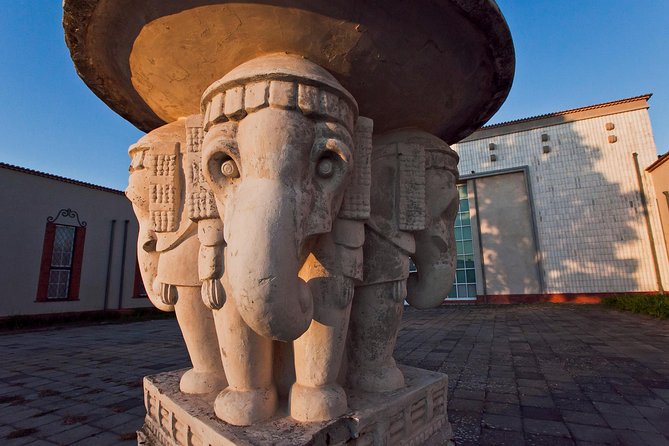
Jardim da Praça do Império was the hub of the Portuguese World Exhibition. The tour spends around 20 minutes here, looking at the heraldic flower beds, monumental fountain, and seahorse details.
This is the point where the exhibition’s design becomes especially clear. The square was not just decoration. Its layout and symbols helped turn the waterfront into a stage for a carefully managed version of Portugal’s past and present.
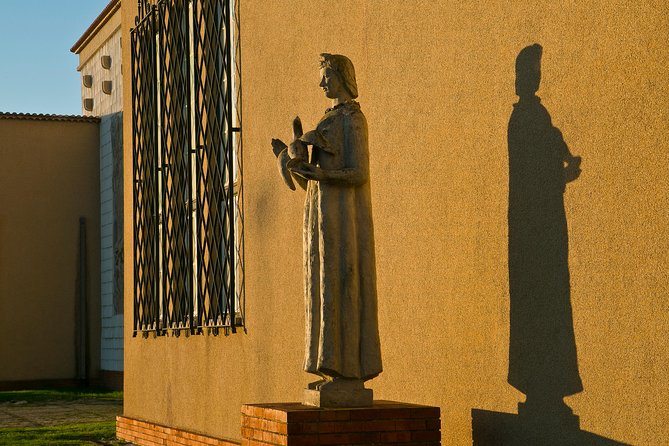
The tour also brings out the tension between the exhibition’s polished image and the political reality behind it. The event praised order, tradition, empire, and national unity while Portugal lived under censorship and repression. You may also hear about the way the exhibition presented women, including the regime’s effort to cast them mainly as homemakers rather than public creators.
That detail gives the discussion a human scale. You are not only learning about official speeches and monuments. You are seeing how an authoritarian government tried to define ordinary roles and acceptable identities.
The Discoveries monument and its wind rose
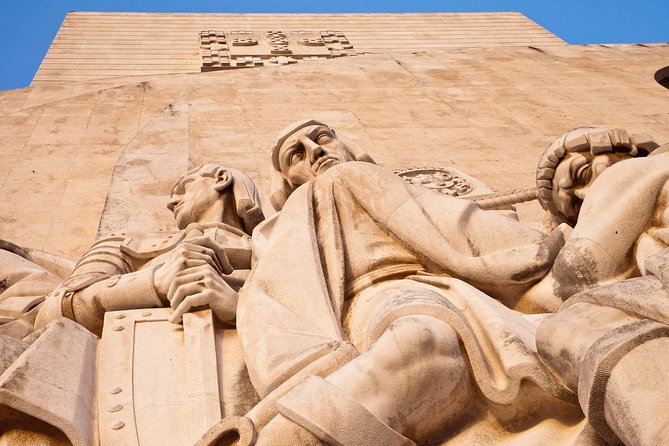
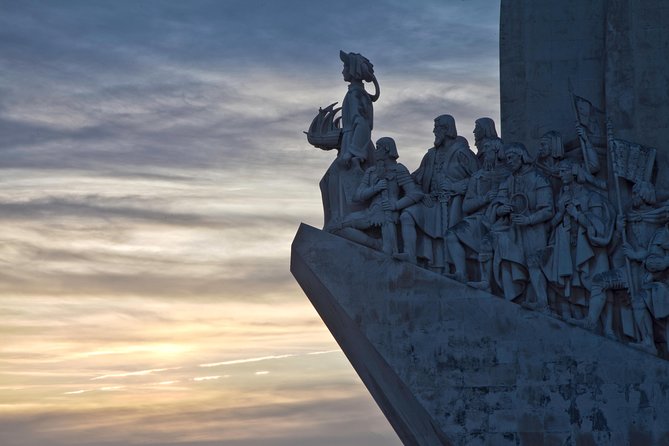
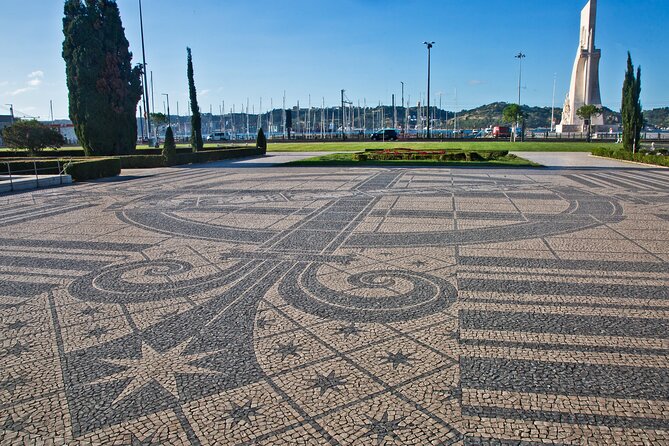
The Padrão dos Descobrimentos is one of Belém’s most recognizable sights. The tour spends about 20 minutes walking around the monument and examining the large wind rose set into the pavement.
The monument was built as a major symbol of the 1940 exhibition. Its carved figures present a heroic procession of Portuguese exploration, with Prince Henry the Navigator at the front. Luís explains who the figures are and how the monument fits the political message of the period.
This stop is especially useful if you have already photographed the monument but never understood its full purpose. The sculpture can look like a straightforward tribute to navigation. In this setting, it becomes part of a much larger claim about Portugal’s place in the world.
The wind rose is also more than a pleasant design on the pavement. It reinforces the geographic and imperial reach of the story being told. You get a good photo here, but the explanation gives the image more weight.
The tour also addresses uncomfortable parts of the exhibition, including its colonial display and the use of a human zoo. That subject is not treated as a side note. It shows how the event presented empire through the prejudices of its time, and why the monument deserves a more careful reading than a simple celebration of exploration.
The Museum of Popular Art, a modernist oddity
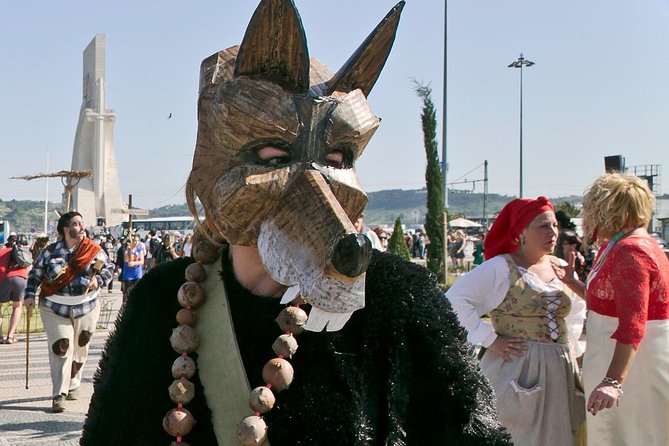
The Museu de Arte Popular receives a shorter stop of about 10 minutes. The building and its purpose offer a change from the grand symbols of empire and religion.
Luís presents the museum as an odd and puzzling part of modernist Belém. Its role in the exhibition helps explain how the regime used folk culture to create an image of a unified, traditional Portugal. Rural crafts, regional customs, and local identity could be presented as proof of national character.
This is a quick stop, but it adds balance. The 1940 exhibition was not only about ships and kings. It also tried to define the everyday Portuguese person, often in tidy and highly controlled terms.
You may want more time here than the route provides, especially if folk art and modern architecture interest you. The walk is designed to explain the building’s place in the larger story, not to replace a museum visit.
Belém Tower and Restelo’s later development
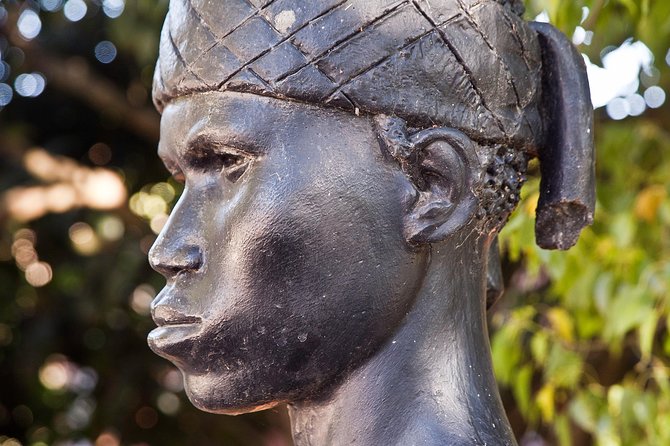
The final stop is the Torre de Belém Garden, reached after about 15 minutes of discussion around the other great monument of the Discoveries Age.
Belém Tower is a powerful ending because it brings the tour back to the river. Its military design and maritime setting are easy to admire, but the guide places it within the broader image of Portugal that was revived and polished during the dictatorship.
The route also touches on the Restelo upper-class neighborhood that developed after the 1940 exhibition. This helps you see Belém as a living district, not only a collection of historic buildings. The tour ends in the garden near the tower, giving you a useful place to continue exploring on your own.
At this point, you will have walked from the river station through squares, gardens, major monuments, and exhibition sites. The route is not physically extreme, but three hours on foot can feel long in strong sun or rain. Good shoes are essential, and a hat or rain jacket may make the day much easier.
A private guide who teaches, not just points
The strongest part of this experience is Luís Maio’s teaching style. He brings historical images and other visual material to help explain how places looked in different periods. That matters in Belém because the current monuments alone cannot show you the full story.
A private guide can also adjust the balance between architecture, politics, colonial history, and daily life. If you already know the Age of Discoveries, you can spend more time on Salazar’s regime. If modern Portuguese history is new to you, Luís can build the background before discussing the exhibition.
The tour has also been adapted to personal interests and national backgrounds. Questions about South African history, other authoritarian regimes in Europe, Portuguese culture, and political change have all fit naturally into the discussion.
This flexibility is more valuable than a large group’s fixed script. You can stop to ask why a monument was built, who it was meant to impress, or what the regime wanted people to believe. You are not limited to the guide’s prepared speech.
The guide is also listed as a professional photographer guide. That does not turn the walk into a formal photography lesson, but you should have many useful photo points, from the riverfront to the wind rose and the tower garden.
Price, timing, and what you actually receive
The price is $33.55 per person, with group discounts available. For a private three-hour walk, that is a fair price if you are traveling with at least one other person and care about historical explanation.
The value comes from the guide’s time and preparation. You are not paying for transportation, meals, hotel pickup, or admission to attractions. You are paying for a focused interpretation of Belém, with a route that ties familiar sights to a less familiar period of Portuguese history.
The tour is commonly reserved well ahead of time, with an average booking lead time of about 89 days. That suggests you should not leave it until the last morning of a short Lisbon visit, especially if your dates are fixed.
Morning and afternoon departures are available. Choose based on heat, light, and your plans for the monastery or museums. If you want to continue sightseeing afterward, a morning departure leaves more time. An afternoon walk may suit you if you prefer a slower start.
The minimum booking is two people. Only your group participates, which makes the per-person cost more attractive for couples, friends, or families. Solo visitors cannot book this experience under the stated terms.
Confirmation arrives when you book. The meeting point is near public transportation, and the walk ends at Belém Tower Garden. No hotel pickup or drop-off is provided, and any parking fee is separate and payable at check-in.
Who will enjoy this walk most
I would choose this tour if you like political history, architecture, public monuments, or the way governments shape national memory. It is also a good fit if you have visited Lisbon before and want to understand the gap between the city’s famous older history and its 20th-century dictatorship.
History buffs will get the most from the detail. Luís can discuss dates, political ideas, cultural policy, and small visual clues without reducing the subject to a basic timeline.
You should also book it if you want a private pace. The guide has been careful about shade, seating, temperature, and the amount of information. That is useful for couples with different levels of interest, or for groups that want to ask many questions.
This may not suit you if you want mostly free time, interior visits, or a short highlights tour. One less enthusiastic experience found the guide spent too much time on subjects that did not match the group’s interests, and the monastery visit did not happen. The private format reduces that risk, but you should tell Luís what you want to focus on at the start.
Smart-casual clothing is requested. Service animals are allowed, and most people can participate, but the walk still requires several hours outdoors. Plan for changing weather and wear comfortable shoes.
Is the Belém dictatorship tour worth booking?
Yes, if you want more than the usual Lisbon postcard. The best reason to book is the way the tour makes Belém’s familiar monuments speak about Salazar’s Portugal, the 1940 exhibition, empire, religion, gender roles, and the careful design of public memory.
At $33.55 per person, the tour offers good value for a private group of two or more. You get a professional guide, a photographer guide, a flexible route, and a clear three-hour focus. You do not get hotel transport, meals, or guaranteed interior visits, so plan those separately.
Book it for the questions it raises, not just for the photographs. If you want to know who the figures on the Discoveries monument are, why the exhibition mattered, and where Portugal’s dictatorship fits into the city you are seeing, this is a strong choice. If your priority is entering every monument, spend a morning on your own instead, or add those visits after the walk.
FAQ
How long does the Belém and Salazar dictatorship tour last?
The walking tour lasts approximately three hours.
What is the price of the tour?
The listed price is $33.55 per person. Group discounts are available.
Is this a private tour?
Yes. Only your group participates in the activity.
How many people are required to book?
A minimum of two people per booking is required.
Who guides the tour?
The experience includes a local professional guide and professional photographer guide. Luís Maio is identified in the tour information and responses as the main guide.
Where does the tour begin?
The tour begins at Belém River Station, Avenida Brasília, 1300-598 Lisbon, Portugal.
Where does the tour end?
The tour ends at Belém Tower Garden, Avenida Brasília, 1400-038 Lisbon, Portugal.
Are morning and afternoon departures available?
Yes. You can choose a morning or afternoon departure.
Are meals, transportation, and hotel pickup included?
No. Food and drinks, hotel pickup and drop-off, transportation to and from attractions, and any parking fee are not included.
Can I cancel the tour for a full refund?
Yes, if you cancel at least 24 hours before the experience start time. Cancellations made less than 24 hours in advance are not refunded. If poor weather causes the tour to be canceled, you will be offered another date or a full refund.
More neighbourhood walks in Lisbon
- Alfama Tour in Lisbon Old Town
★ 5.0 · 4,936 reviews - Private Lisbon Sightseeing Tuk-Tuk Tour: Alfama, Belém & More
★ 5.0 · 4,277 reviews - Lisbon: Hills, Alfama, and Mouraria Tour by Electric Bike
★ 4.8 · 3,438 reviews - Lisbon: Fado in Chiado Live Show
★ 4.6 · 3,095 reviews
More walking tours in Lisbon
- Best of Lisbon Walking Tour: Rossio, Chiado & Alfama
★ 4.9 · 2,700 reviews - Age of Discoveries Walking Tour in Belém
★ 5.0 · 1,513 reviews - Lisbon Roots – Small group Food & Culture Walking Tour w/tastings
★ 5.0 · 910 reviews - Lisbon: Starter Walking Tour to the highlights in German
★ 4.9 · 781 reviews
Just added in Lisbon
- Half day Spa Water Therapy experience at THE SPA at Corinthia Lisbon★ 4.5 · 51 reviews
- Lisbon Cinematic Photoshoot with Top-Rated Photographer★ 5.0 · 76 reviews
- Central Lisbon E-Bike Tour★ 5.0 · 168 reviews
- Small-Group Sailing Tour on the Tagus River from Lisbon★ 5.0 · 78 reviews
- Lisbon Sailing Catamaran Public Cruise with drinks★ 5.0 · 304 reviews
- Alfama and the Castle of Saint George Skip the line Tour★ 5.0 · 53 reviews
- City Centre Run in Lisbon★ 5.0 · 164 reviews
- Boat tours in the Óbidos Lagoon★ 5.0 · 100 reviews
Lisbon Neighbourhood Walks, compared.

Private Lisbon Sightseeing Tuk-Tuk Tour: Alfama, Belém & More
Read our review →
Hills, Alfama, and Mouraria Tour by Electric Bike
Read our review →

Best of Lisbon Walking Tour: Rossio, Chiado & Alfama
Read our review →
Lisbon Small-Group Food Tour with 18 Tastings in Alfama District
Read our review →
Baixa District Food Tour with Dinner and Drinks
Read our review →
Lisbon E-Bike Tour Commerce Square, Mouraria and Alfama
Read our review →Browse the lists this tour appears in