
Reviewed · TOURS IN COIMBRA
Schist Villages of Lousã Mountain, half-day from Coimbra
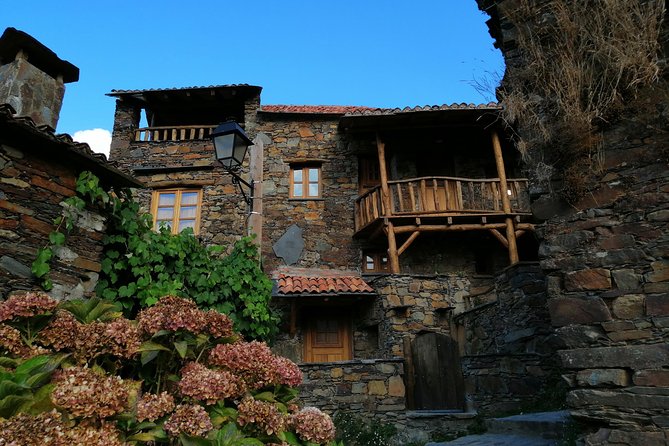
The most appealing part of this trip is the change of scene. In about an hour, Coimbra gives way to mountain roads, streams, hiking signs, and villages built from dark schist, clay, and brown wood. Cerdeira, Candal, and Talasnal each have a different feel, so this is more than a quick photo stop.
I like the small-group format, capped at eight people, and the fact that guides such as Pedro and Xavier tailor their explanations to your questions. I also like having a careful local driver on narrow roads with hairpin turns. The main caution is simple: these villages sit on steep hills, with many stairs and uneven streets, so you need a moderate level of fitness and comfortable shoes.
Key points at a glance
- Three very different villages: See artistic Cerdeira, viewpoint-rich Candal, and the larger village of Talasnal.
- A smart way to handle mountain roads: Round-trip minivan transport means you do not need to drive the narrow, twisting route yourself.
- Personal guiding: Pedro and Xavier are praised for explaining local culture, village history, and Portugal beyond the standard script.
- Steep walking is part of the visit: Expect uphill streets, stairs, and climbs to viewpoints.
- Flexible timing: Choose a morning or afternoon departure for a four-hour outing.
- Strong value for a private-style tour: At $102.12 per person, the cost covers transport, guide, water, and taxes, but not lunch.
Why these schist villages are worth your half-day
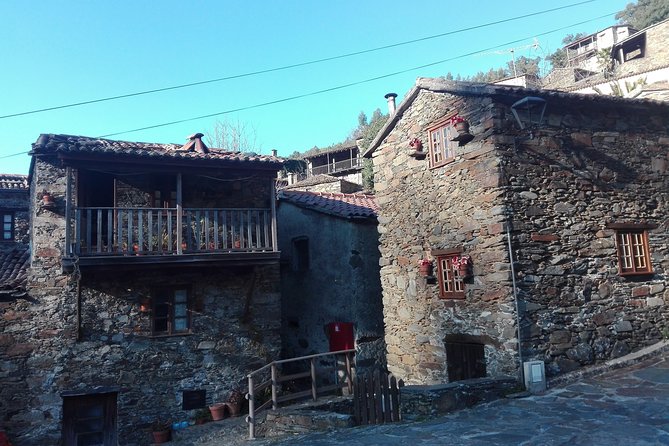
The Schist Villages of Lousã Mountain offer a side of central Portugal that is easy to miss if you stay on the main sightseeing route. The villages are tied together by their use of local schist, a dark stone that gives the buildings a distinctive, earthy look. Clay and brown wood complete the traditional feel.
You are not simply looking at old houses. The villages show how architecture, mountain terrain, and village life fit together. Some buildings have been carefully rebuilt, which keeps the villages attractive and usable today. That also means you should not expect every corner to look untouched or frozen in medieval times.
This distinction matters. If you want ruins and untouched remains, the restored sections may feel too polished. If you want to see how an old mountain settlement can be repaired while keeping its character, the visit makes more sense.
The tour lasts about four hours, including the drive from Coimbra and time in three villages. That gives you a useful overview without taking a full day away from Coimbra. You will not have hours for long hikes or a slow lunch, but you will see enough to understand why the area is special.
A few more things to do in Coimbra worth a look
- From Albufeira: Half-Day Algarve Jeep Safari
★ 4.7 · 2,039 reviews - Madeira: Nuns Valley Half-Day Tour
★ 4.5 · 1,955 reviews - Lisbon: 7 Hills Half-Day Electric Bike Tour
★ 4.9 · 1,592 reviews
Leaving Coimbra for the Lousã mountains
The meeting point is at Av. Emídio Navarro 21 in Coimbra, and the tour returns there at the end. Hotel transfers are listed among the highlights, so check the exact pickup arrangement when booking if you prefer collection from your accommodation rather than meeting in the city.
Transport is one of the strongest reasons to choose this excursion. The route includes narrow mountain roads, switchbacks, and hairpin turns. Guides such as Xavier and Pedro handle the driving, leaving you free to look out at the scenery instead of concentrating on every bend.
The air-conditioned minivan is a practical choice for a small group. The maximum is eight people, which is large enough to keep the price from reaching private-car levels but small enough for direct conversation. Bottled water is included.
Road conditions or local events can sometimes require a change of route. One guide had to adjust the normal plan during a car rally, but still visited the villages and kept the outing moving. That flexibility is useful in a mountain area, where a fixed plan may not always be realistic.
Cerdeira, where stone meets art
Your first stop is Cerdeira, with about 45 minutes to explore. Its appeal comes from the combination of mountain setting and creative work. The village is linked to a School of Arts and Crafts, and art remains part of its identity.
Cerdeira has been rebuilt with houses fitted into the slope rather than imposed on it. Schist, clay, and brown wood help the buildings sit naturally among the surrounding trees and rock. The result is a quiet place with a strong sense of design, but it is not just a pretty collection of houses.
Your guide can help explain why Cerdeira matters and how its artistic role differs from the other villages. Pedro is noted for giving context about the villages and Portugal more broadly, while Xavier has been praised for adjusting his explanations to specific interests.
Forty-five minutes is enough to walk around and take photographs, but it is not enough for a long mountain walk. Keep your expectations focused on the village itself. You will be moving over uneven ground, and the peaceful setting may tempt you to linger longer than the schedule allows.
Candal, the easiest village to reach
The second stop is Candal, also planned for about 45 minutes. Of the three villages, it is described as the most developed and most visited, largely because access is easier.
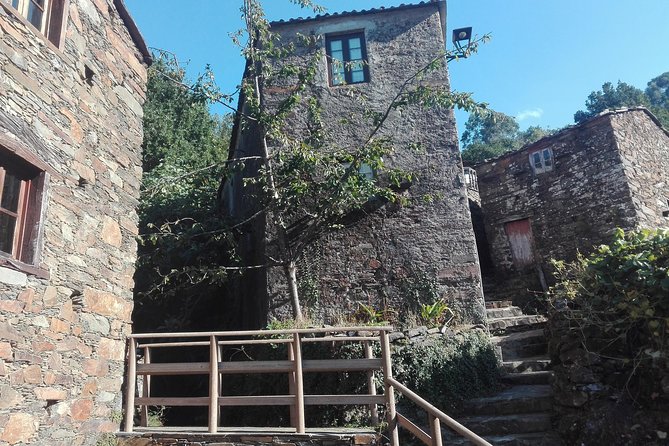
Candal sits on a south-facing hill, and the streets are narrow and steep. The reward comes at the viewpoint, where you can look over the valley. This is the stop that most clearly shows how the villages use their position on the mountain rather than trying to hide it.
You will have time to walk through the lanes and climb toward the viewpoint. That climb is not optional if you want the best views, so pace yourself. The steep streets are manageable for many people with moderate fitness, but they can be tiring if you have mobility limits or are unused to hills.
Candal may feel less secluded than Cerdeira or Talasnal because it is easier to reach and receives more visitors. That is also its advantage. You get a clear introduction to the village style without the same sense of remoteness, and the viewpoint gives you a strong visual break from the close stone lanes.
Same base, a different kind of day out:
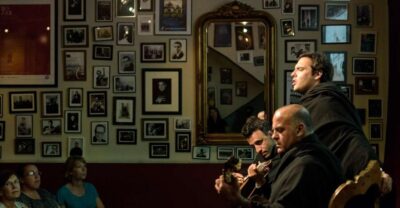
- Coimbra: Live Fado Show with Glass of Port Wine
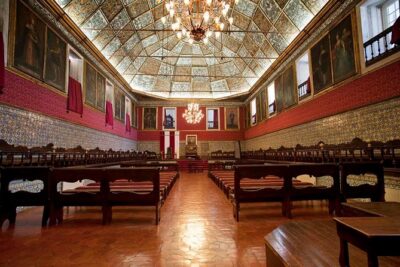
★ 4.7 · 998 reviews - University of Coimbra guided tours without queue
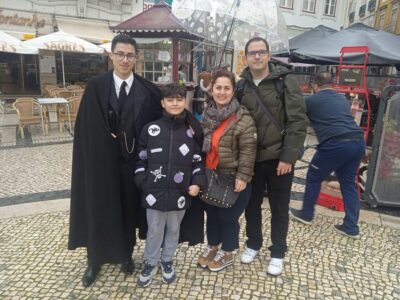
★ 5.0 · 518 reviews - Guided tour of the University and city of Coimbra.
★ 5.0 · 377 reviews - Coimbra: Mondego River Kayaking Tour
★ 4.7 · 324 reviews
Talasnal, the most atmospheric stop
Talasnal is the largest and best-preserved of the three villages, with another 45 minutes set aside. It is also the place where the steep terrain is most central to the experience.
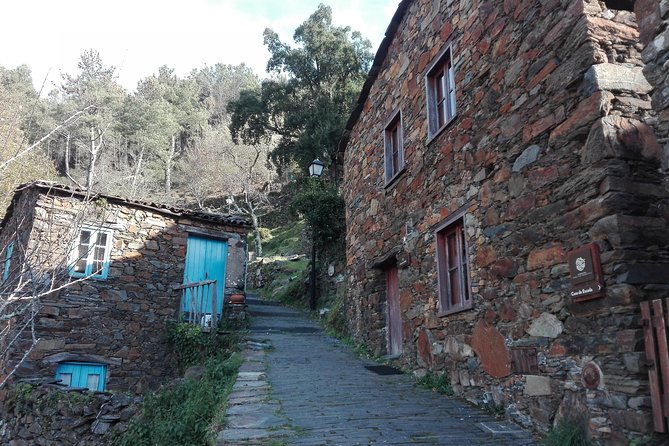
The village unfolds along a hillside, with alleys, stairways, balconies, and small turns that encourage you to explore on foot. You do not simply walk along one street and finish. You go up, down, and around, finding different angles on the houses and the mountain beyond them.
Talasnal has the strongest sense of a complete settlement. Nature and human construction meet at every turn, with stone walls and buildings following the contours of the slope. The setting gives it an almost storybook quality, though the stairs and uneven surfaces are real rather than decorative.
This is also where the physical demands may be most obvious. One past participant described the climb as long and arduous, while another considered the many steps part of what made the outing worthwhile. Both impressions can be true. Wear sturdy shoes, take your time, and do not judge the tour by how quickly you can reach the top.
The 45-minute stop gives you a good introduction, not an exhaustive exploration. If you want to hike between villages or spend a relaxed afternoon photographing architectural details, you would need a longer visit.
What the guides add to the experience
The guide is important here because the villages can look similar at first glance. A local guide can point out the differences in building methods, restoration, access, and cultural purpose.
Pedro is described as offering broad explanations about the villages and Portugal, while Xavier is praised for his friendly manner, careful mountain driving, and ability to follow questions. The guiding style appears conversational rather than rigid. You can ask about architecture, village life, hiking routes, or the region’s past.
The tour also allows time to stop for a coffee break. One visit included coffee and Beirão liqueur, although this should not be treated as a guaranteed part of the published inclusions. Lunch is not included, and the four-hour schedule is better suited to a morning or afternoon outing than a full meal stop.
Another useful detail is the red and yellow hiking signs found around the villages. These mark mountain routes and help explain how the villages connect to the surrounding trails. You will see more than buildings if you pay attention to the paths and streams around them.
The walking: beautiful, steep, and worth planning for
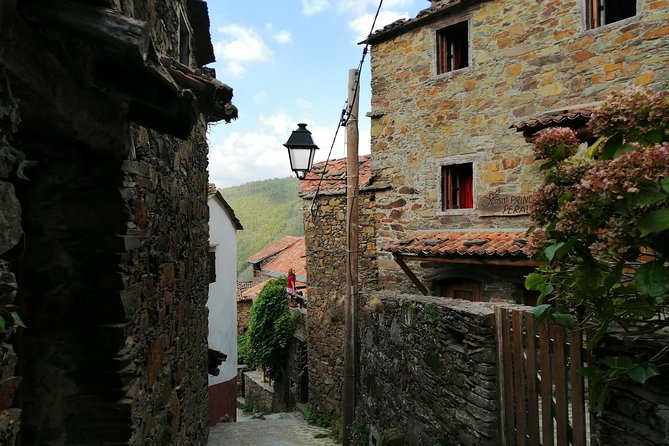
The physical rating is moderate, and that description should be taken seriously. The villages have narrow, steep streets, stairs, and climbs to viewpoints. You should be comfortable walking uphill for short stretches and standing or walking for most of the four-hour experience.
This is not presented as an accessible sightseeing circuit. The provided information does not give accessibility details, so anyone with mobility concerns should ask the operator before booking. A minivan can bring you close to the villages, but it cannot remove the slopes once you begin exploring.
I would bring supportive shoes and keep your bag light. Water is supplied, but having a small personal bottle may still be useful. Choose morning or afternoon based on your energy and the rest of your plans, since both options are offered.
The climbing is part of the reward. From higher points, you get better views across the valley and a clearer sense of how the villages cling to the mountain. Still, you should not book this as a passive ride with occasional photographs.
Is $102.12 a fair price?
The cost is $102.12 per person. That is not a budget bus excursion, but the value is reasonable if you want a small group and do not want to drive the mountain roads yourself.
The price includes the driver-guide, air-conditioned transport, bottled water, and all taxes, fees, and handling charges. It also gives you a four-hour visit to three villages that would be awkward to combine independently without a car and confidence on narrow roads.
The value improves for people who care about explanation rather than transport alone. Guides such as Pedro and Xavier add local context, answer questions, and can adjust the emphasis to your interests. The small maximum of eight also makes this feel closer to a private outing than a large coach tour.
The price is less attractive if you want a long hike, a leisurely meal, or several hours in each village. Lunch is not included, and the schedule is designed as an overview. You are paying for access, driving, and interpretation, not an entire day in the mountains.
Group discounts may be available. Since the exact discount is not provided, check the price for your party before you make the final comparison.
Who should book this half-day tour?
I would choose this outing if you are staying in Coimbra and want to see rural Portugal without giving up a full day. It is also a good fit if you prefer a guide who can explain what you are seeing instead of simply dropping you at a viewpoint.
It suits:
- Couples and families who want a manageable mountain outing
- Small groups that value direct contact with a guide
- Visitors who do not want to drive narrow roads
- People interested in architecture, village culture, and mountain scenery
- Anyone looking for a change from Coimbra’s historic center
It is a weaker match if you need step-free access, dislike steep walking, or want untouched medieval buildings. The villages are restored, and one criticism of the experience was that this restoration did not provide a full picture of how the settlements looked in medieval times.
The excursion is also not ideal for a slow, unplanned day. Each village receives roughly 45 minutes, so you need to keep moving.
Practical details before you reserve
Confirmation is provided when you book. The tour is offered in English, with morning and afternoon departures. It starts and finishes at the Coimbra meeting point, with hotel transfers noted among the tour features.
Free cancellation is available if you cancel at least 24 hours before the local start time. Cancellations or changes made inside that window are not refunded or accepted.
The experience is operated by Viajeportugal. Because the tour is often reserved well ahead of time, booking roughly three to four weeks before your preferred date is sensible if your schedule is fixed. The average advance booking period is 27 days.
Should you book the Schist Villages of Lousã Mountain?
Book it if you want an efficient, well-guided introduction to three unusual mountain villages near Coimbra. The combination of local driving, a small group, and clear explanations gives you access to places that are less convenient to reach alone.
Just plan for the hills. Cerdeira offers art and careful rebuilding, Candal delivers the easiest viewpoint experience, and Talasnal provides the most complete village walk. If you accept the stairs and the short stop times, this is a memorable half-day with real value.
Skip it if you want a long hike, a substantial lunch, or untouched ruins. For most visitors with moderate fitness, though, the tour is a smart way to see a quieter corner of Portugal without wrestling with mountain roads yourself.
FAQ
How long does the Schist Villages of Lousã Mountain tour last?
The tour lasts approximately four hours.
Where does the tour start and finish?
It starts at Av. Emídio Navarro 21, 3000-150 Coimbra, Portugal, and ends back at the same meeting point.
Which villages are included?
The tour visits Cerdeira, Candal, and Talasnal.
Is transport included?
Yes. Transport is provided in an air-conditioned minivan, with round-trip transport from the Coimbra meeting point. Hotel transfers are also listed among the tour features.
How many people can join the tour?
The maximum group size is eight people.
Is the tour available in English?
Yes, the experience is offered in English.
Is lunch included?
No. Lunch is not included in the price.
How physically demanding is the tour?
A moderate level of physical fitness is recommended. The villages have narrow, steep streets, stairs, and climbs to viewpoints.
Can I cancel for a full refund?
Yes, if you cancel at least 24 hours before the experience start time. Cancellations or changes made less than 24 hours in advance are not accepted, and the payment is not refunded.
Just added in Coimbra
- Schist Villages at Lousa Mountain★ 5.0 · 127 reviews
- Lousa Mountain Private Tour★ 5.0 · 88 reviews
- Time travel at the Convent of Christ Tomar★ 5.0 · 56 reviews
- Soft Canyoning, river Ceira, Góis, Serra da Lousa, Coimbra★ 5.0 · 48 reviews
- University of Coimbra – more complete and private visit, ticket included★ 5.0 · 53 reviews
- Discovering the charms and places of Coimbra★ 5.0 · 78 reviews
- Joanina Library & Coimbra University | Private Former Alumni Tour★ 5.0 · 135 reviews
- A tour between Cascades and Schist Villages, Piodão★ 5.0 · 46 reviews
Tours in Coimbra, compared.
University of Coimbra guided tours without queue
Read our review →
Guided tour of the University and city of Coimbra.
Read our review →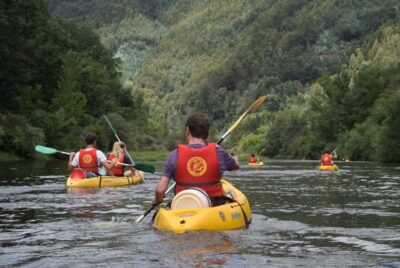

Joanina Library & Coimbra University | Private Former Alumni Tour
Read our review →
Browse the lists this tour appears in