

Reviewed · STREET ART
Lisbon: Kickstart Street Art Walking Tour
Lisbon’s Graça neighborhood is more than a pretty hilltop district. Its walls tell stories about local artists, political ideas, neighborhood identity, and the rules that shape street art. This 90-minute walk takes you beyond the postcard views and into back alleys where large-scale work can be easy to miss.
I like two things here: you see major names such as Vhils and Obey Giant, but you also get a look at newer and freshly painted pieces on streets such as Rua Josefa de Obidos; and guides such as Igor and Cátia explain how to read the work, not simply decide if you like it. The main consideration is the terrain. Graça means hills and stairs, and this tour is not suited to people with mobility impairments.
Key points to know before you go
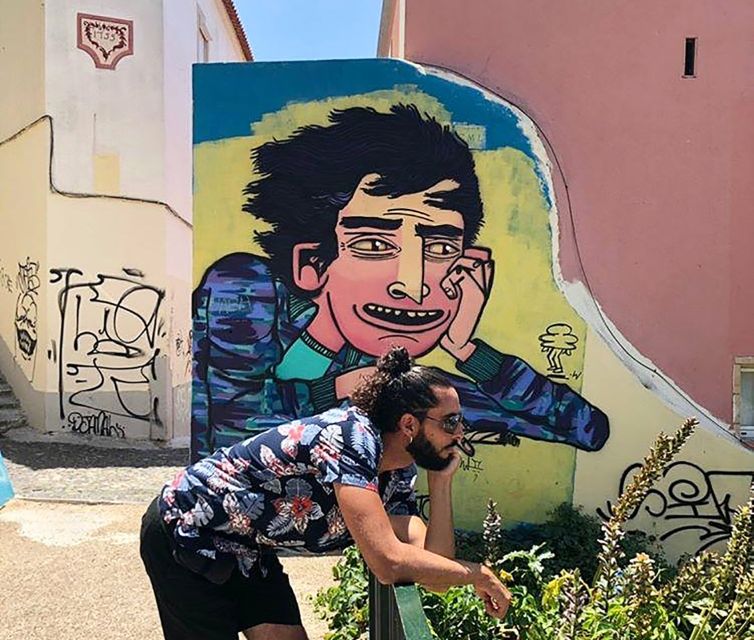
- Graça is the main stage: Start near Largo da Graça and explore a historic district where city-backed art projects have transformed public walls.
- The art changes: Fresh work can appear on streets such as Rua Josefa de Obidos, while older murals may be altered or covered.
- Big names, local context: Look for Vhils, Obey Giant, Add Fuel, Isa Silva, Daniel Eime, Ozearv, Jorge Romão, Lili Marlit, and Moami.
- The women artists’ gallery is a highlight: A special group of works made for International Women’s Day 2025 gives the walk a clear social and cultural focus.
- Your guide matters: Igor and Cátia are artists or closely involved with Lisbon’s art scene, and their explanations add context about technique, rivalries, and local practice.
- Bring light gear: Wear comfortable shoes, carry sun protection, and leave large luggage behind.
Why Graça is the right place to study Lisbon street art
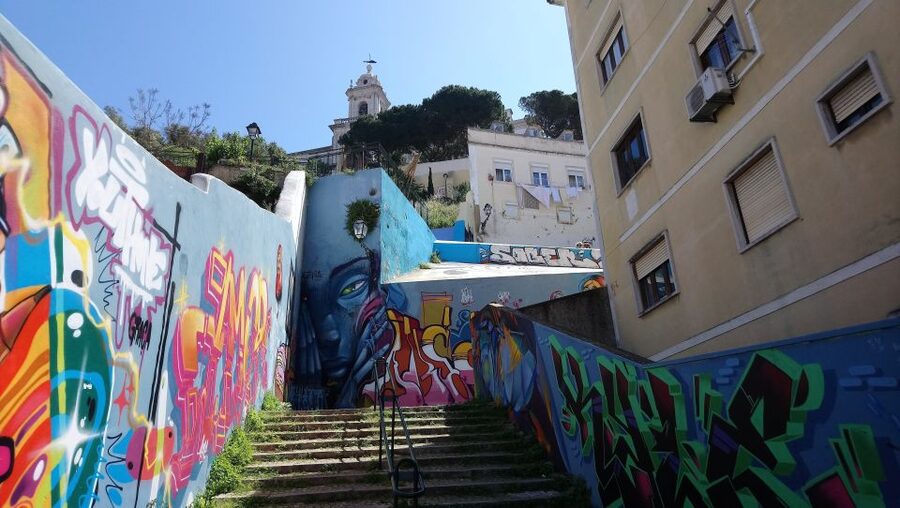
Graça gives you two Lisbons at once. You walk through an old neighborhood with steep streets and traditional surroundings, while the walls carry bold contemporary work. That contrast is the point. The art does not sit in a sealed gallery. It shares space with homes, shops, streets, and daily life.
The meeting point is in front of the Coreto da Graça at Largo da Graça, about 50 meters from Desgraça Restaurant. This is a useful starting place because you are already in the district where much of the walking takes place. You are not spending the first part of the tour on transport.
The guide uses the neighborhood to explain how street art functions in Lisbon. Some works are supported by the city council, while others reflect the personal choices, style, or disputes of individual artists. That gives you a better way to understand why one wall is carefully planned and another looks more spontaneous.
I especially like this kind of setting for first-time visitors. After the walk, you start noticing details across the city. A painted doorway, a small stencil, or a piece tucked into an alley can look different once you understand the visual language behind it.
Other guided walks in Lisbon:
- Lisbon: History, Stories and Lifestyle Walking Tour
★ 4.8 · 10,902 reviews - Best of Lisbon Small-Group Guided Walking Tour
★ 5.0 · 4,869 reviews - Lisbon: Food and Wine Small Group Walking Tour
★ 4.9 · 4,082 reviews
What you see in the first 90 minutes
This is a compact tour, but the route is packed with examples. The precise order can change because street art is temporary and new pieces appear. The central focus is the Graça area and the art found on its walls, side streets, and less obvious corners.
Expect the guide to point out works by established Portuguese and international artists. Vhils is one of the key names. His work is associated with carved and layered wall surfaces, so you may find yourself looking at a wall differently after the explanation. Instead of seeing only paint, you begin to notice texture, removal, depth, and the way a face or figure has been formed.
Obey Giant brings another perspective. The artist’s bold visual language is widely recognized, and seeing that work in Lisbon helps place the city within an international street art network. Add Fuel, Isa Silva, Daniel Eime, and Ozearv add more local variety, with different approaches to color, line, portraiture, and pattern.
The guide also introduces artists such as Jorge Romão, Lili Marlit, and Moami. That wider mix matters. A tour focused only on famous names would give you a shallow picture of the scene. Here, the well-known work acts as an entry point, while lesser-known artists show how broad Lisbon’s urban art community can be.
You may also visit freshly painted spots, including Rua Josefa de Obidos. This is one of the most useful parts of the experience because it reminds you that street art is always changing. A wall you photograph today may not look the same on a later visit.
The International Women’s Day 2025 gallery
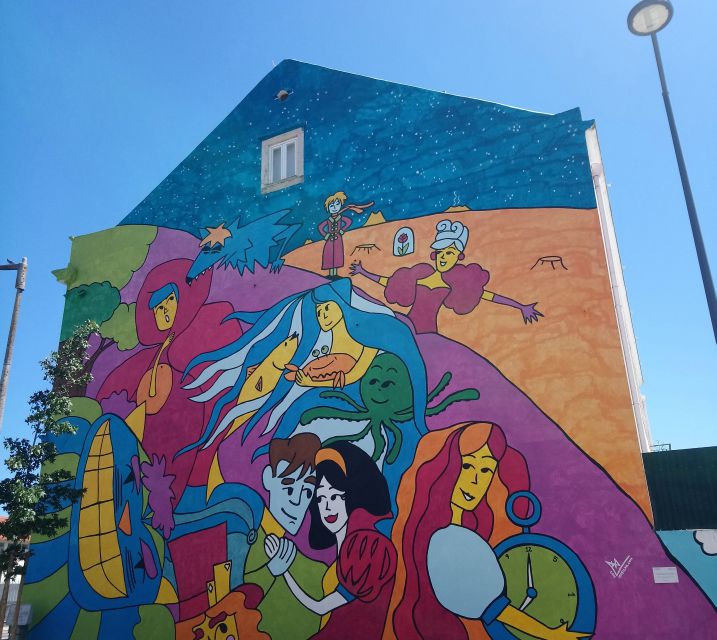
One of the most memorable sections is the gallery made for International Women’s Day 2025. It brings together work by women artists and gives the tour a clear point of social meaning, not just visual appeal.
The project also shows how public art can reshape the way a neighborhood is seen. Instead of treating a wall as empty space, the artwork gives it a new role. You are looking at art, but you are also seeing a public statement about women’s voices and their place in Lisbon’s creative life.
This stop is especially useful if you are new to street art. A large group of related works lets you compare styles side by side. The guide can help you notice choices in composition, subject, scale, and technique that might otherwise blur together.
The exact condition of the work can change over time. Weather, repainting, construction, and new artwork all affect the walls. That is part of the nature of this art form, but it also means you should treat the route as a current view of Lisbon rather than a permanent museum collection.
Learning the rules behind the walls
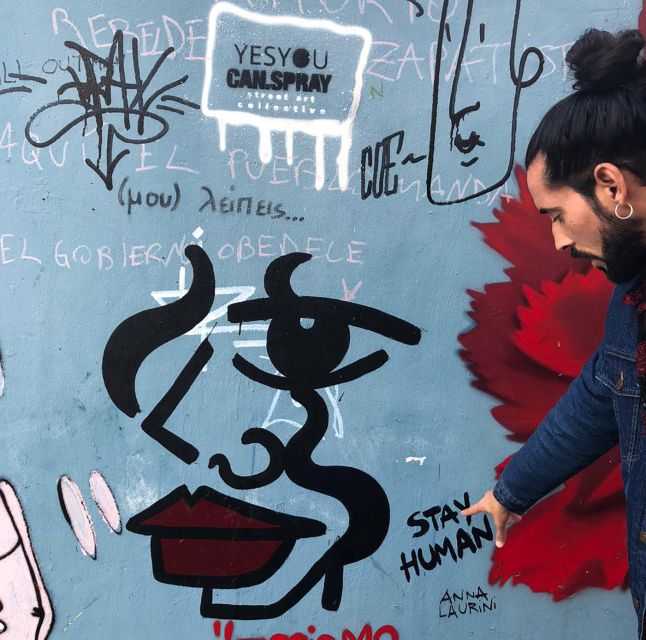
The tour is not just a march from mural to mural. A major benefit is the introduction to street art etiquette and codes. This helps explain how artists share walls, how work can be respected or challenged, and why some marks carry meaning beyond their appearance.
The distinction between graffiti and street art is also part of the discussion. You may hear about the different aims, methods, and public responses connected with each. The subject becomes more interesting when the guide explains the relationships between artists and how rivalries can sometimes be read through the work itself.
Igor is described as an artist with strong connections to the local scene, and his approach includes analysis, stories, and examples from other cities. Cátia also brings artistic experience and local knowledge. Their styles may differ, but both are presented as energetic guides who can answer questions and connect the work to Portuguese culture and history.
Ask questions as you go. The tour has enough material to support a simple introduction, but curious participants can get much more from it. You might ask why a certain wall was chosen, how a piece was made, or what local artists think about a particular image. The more you look closely, the less the art feels like decoration.
Same base, a different kind of day out:
- Lisbon City Center Tour – The Unmissable Lisbon
★ 5.0 · 22,234 reviews - Lisbon: Sintra, Pena, Regaleira, Cabo da Roca & Cascais
★ 4.7 · 19,656 reviews - Lisbon: Jerónimos Monastery Entrance Ticket
★ 4.1 · 14,164 reviews - Lisbon: Sunset Boat Party Cruise with DJ and Open Bar
★ 4.5 · 10,378 reviews
How much walking and climbing is involved
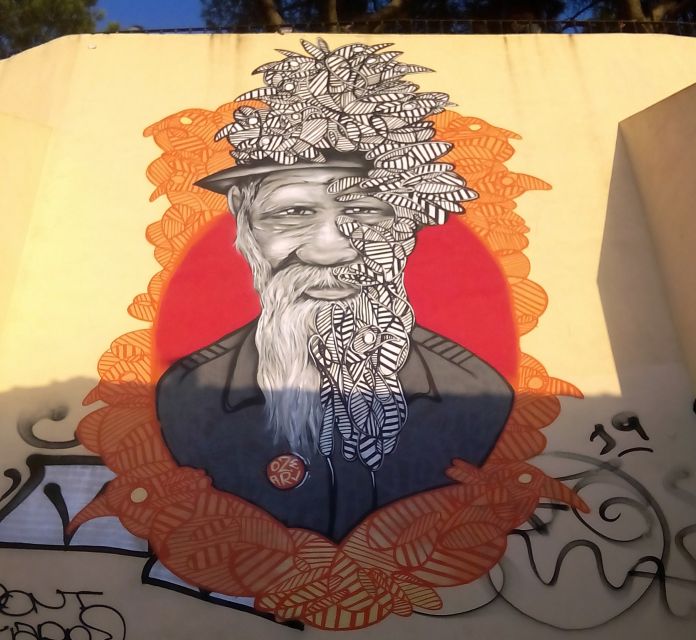
The route lasts 90 minutes, which is a good length for an introduction. It gives you enough time to see a range of work without turning the experience into an exhausting half-day outing.
Still, Lisbon is not flat, and Graça is not flat either. Be ready for hills, stairs, and uneven walking. Comfortable shoes are essential. Sunglasses, a sun hat, and sunscreen are also recommended, particularly because parts of the route are outdoors and the city can feel bright and exposed.
The tour is not suitable for people with mobility impairments. Large bags and luggage are not allowed, so do not arrive with airport cases or bulky shopping. Hand sanitizer is included, along with an exclusive street art souvenir.
The meeting point is easy to identify if you check the map in advance. For emergencies, the local partner can be reached at +351 910720946.
Is $23 a fair price?

At $23 per person, this is a sensible price for a 90-minute walk with a live English-speaking guide. The value is not in the number of walls alone. You are paying for access to places you might pass without seeing and for explanations that give the art meaning.
You could walk around Graça independently and spot plenty of painted surfaces. The harder part is knowing which artists you are seeing, how the pieces relate to the neighborhood, and what details deserve a closer look. The guide supplies that missing layer.
The price also compares well with the tour’s small-group or private options, though the exact setup depends on availability. A private walk could suit families or friends who want more time for questions. A small group may give you a livelier exchange of ideas while keeping the experience more personal than a large city tour.
The included souvenir is a pleasant extra, but it should not be the reason you book. The real value comes from the guide’s explanations and the access to tucked-away work.
Who will get the most from this walk?
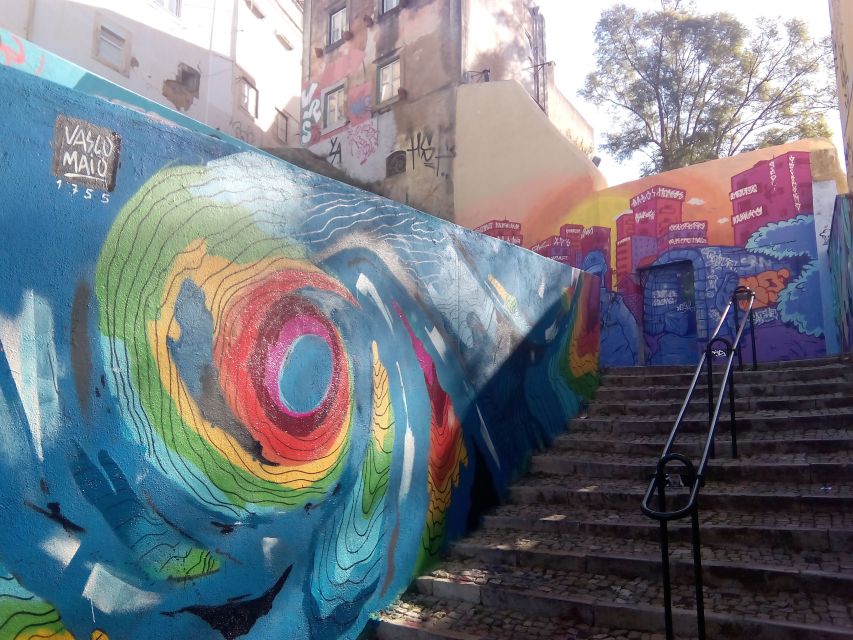
You do not need an art background. Several participants have found the experience worthwhile even when street art was not previously a major interest. The guides explain the basics clearly, then add more detail for people who want it.
I would recommend it to:
- First-time visitors who want a different view of Lisbon
- People interested in murals, graffiti, illustration, or public art
- Families with older children who can manage hills and stairs
- Photographers looking for large-scale walls and unusual details
- Visitors who want neighborhood history alongside art
- Anyone who plans to explore street art in other cities
It may be less suitable if you prefer a slow museum visit, dislike walking uphill, or want a tour centered on food and architecture. This experience uses street art as the main subject, with history and neighborhood context woven around it.
The guides have also worked well with mixed ages and families. Their energy helps keep the pace moving, but you should still be ready to walk continuously for an hour and a half.
Planning the timing of your Lisbon art walk

You can check available starting times when booking. I would place this tour early in your Lisbon stay if street art interests you. It gives you a visual map of Graça and may help you spot additional work later on your own.
It also pairs well with independent exploration after the tour. You could return to a wall for photographs, compare works in another district, or follow the artists introduced during the walk. One useful result is that the city begins to feel less random. You start scanning walls instead of walking past them.
Because pieces can change, avoid treating the route as a fixed checklist. The best approach is to enjoy the current selection and listen for the stories behind it. A freshly painted wall may be just as important to the local scene as a famous signature.
The tour runs in English. Free cancellation is available up to 24 hours before the start, and you can reserve now and pay later. Those terms help if your Lisbon schedule is still shifting.
Should you book the Kickstart Street Art Walking Tour?
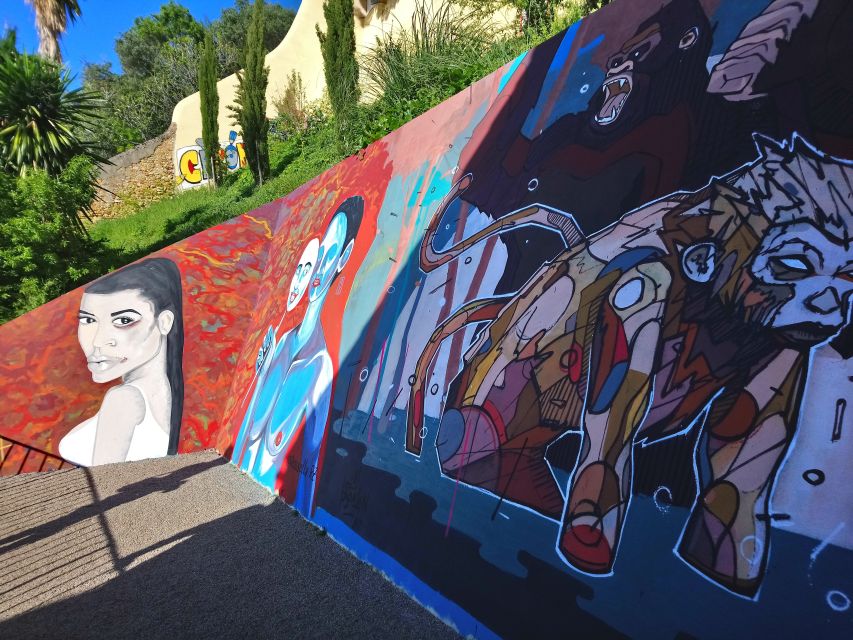
I would book it if you want a lively introduction to Lisbon’s urban art and do not mind hills. The strongest reasons are the mix of major artists and newer work, the International Women’s Day gallery, and guides such as Igor and Cátia who explain the culture behind the walls.
At 90 minutes, it is short enough to fit into a busy Lisbon plan, yet detailed enough to change how you see the city. Just wear proper shoes, leave your luggage behind, and arrive ready to ask questions.
Skip it if stairs are a serious problem or if you want a seated cultural activity. For everyone else, $23 buys more than a wall-by-wall stroll. It gives you a practical way to read Lisbon’s streets.
FAQ
Where does the street art tour meet?
Meet in front of the Coreto da Graça at Largo da Graça, about 50 meters from Desgraça Restaurant.
How long does the tour last?
The walking tour lasts 90 minutes.
What language is the tour in?
The live tour guide speaks English.
Which artists might I see?
The tour includes works by Vhils, Obey Giant, Add Fuel, Isa Silva, Daniel Eime, Ozearv, Jorge Romão, Lili Marlit, and Moami, among others.
Does the tour include the International Women’s Day 2025 gallery?
Yes. The route includes an art gallery created for International Women’s Day 2025.
Is the tour suitable for people with mobility impairments?
No. You should be prepared to climb stairs and hills, and the activity is not suitable for people with mobility impairments.
What should I bring?
Bring comfortable shoes, sunglasses, a sun hat, and sunscreen. Large bags and luggage are not allowed.
Can I cancel or pay later?
You can cancel up to 24 hours in advance for a full refund. You can also reserve your place and pay later.
More street art tours in Lisbon
- Lisbon: Street Art Tour
★ 4.9 · 1,324 reviews - Lisbon: Street Art Tuk Tuk Tour
★ 4.9 · 372 reviews - LISBON Street Art Tour
★ 5.0 · 371 reviews
More walking tours in Lisbon
- Best of Lisbon Walking Tour: Rossio, Chiado & Alfama
★ 4.9 · 2,700 reviews - Age of Discoveries Walking Tour in Belém
★ 5.0 · 1,513 reviews - Lisbon Roots – Small group Food & Culture Walking Tour w/tastings
★ 5.0 · 910 reviews - Lisbon: Starter Walking Tour to the highlights in German
★ 4.9 · 781 reviews
Just added in Lisbon
- From Lisbon: Horseback Riding on Comporta Beach★ 4.7 · 167 reviews
- Lisbon: City Highlights Segway Tour★ 4.9 · 422 reviews
- Lisbon: Street Art Tuk Tuk Tour★ 4.9 · 372 reviews
- Lisbon: Segway Medieval Tour of Alfama and Mouraria★ 4.9 · 420 reviews
- LISBON Street Art Tour★ 5.0 · 371 reviews
- Évora and Monsaraz with Regional Wine Tasting from Lisbon★ 4.5 · 229 reviews
- Lisbon Private Transfer to Airport★ 5.0 · 278 reviews
- Private Lisbon-Arrábida Wine Tour: 3 Wineries, Coast & Heritage★ 5.0 · 450 reviews