Reviewed · STREET ART
Lisbon Street Art Lovers Walk
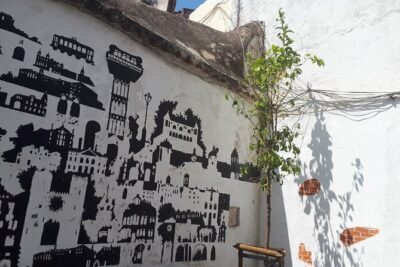
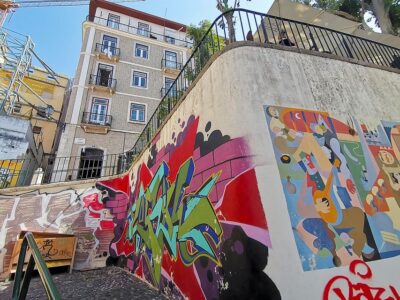
Lisbon’s street art is not confined to one gallery or polished avenue. It appears on old walls, stairways, shutters, and forgotten corners, and this walk connects those pieces with the social story of the city. You move from Mouraria to Graça, reading Lisbon through its walls as much as through its monuments.
I like the small groups, limited to eight people, and the way the tour mixes major names such as Vhils and Shepard Fairey with local artists and less formal graffiti. I also like that part of the price supports the yesyoucan.spray collective, which helps keep new street art projects going in Lisbon.
The main drawback is physical: Lisbon is the city of seven hills, and this route includes uphill walking, stairs, and a near-daily step count. Rain does not cancel the walk, so bring proper shoes, water, sunscreen, and a jacket suited to the forecast.
Key points to know before you book
- Mouraria gives the tour its local character: Begin among small streets, old neighbourhood buildings, and art tied to Portuguese traditions and the area’s multicultural life.
- Graça supplies the grand finish: The walk ends near Miradouro da Graça, with broad city views and the tour’s own Wall(s) of Fame.
- Artists range from global to local: Look for work by Shepard Fairey, Vhils, Bordalo II, PichiAvo, Add Fuel, Andrea Tarli, Camilla Watson, and others.
- The guide explains more than technique: You learn how political, social, and economic issues shape Lisbon’s graffiti and mural scene.
- The group stays small: A maximum of eight people makes it easier to hear the guide and ask about particular pieces.
- Your ticket supports local art: The experience contributes to the yesyoucan.spray street art collective and comes with local deals through the #whatsuplisboa card.
Why this Lisbon street art walk is different
Many city art walks simply point at painted walls and name the artist. This one aims to explain why the work is there, what it says, and how it fits the neighbourhood around it.
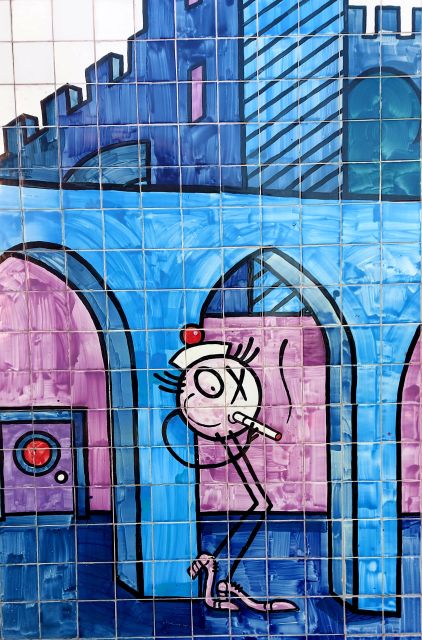
That matters in Lisbon, where street art can sit beside worn façades, tiled buildings, narrow alleys, and steep public steps. A mural is not just a bright patch of colour. It may comment on housing, politics, city change, local identity, or the daily life of a particular district.
The tour follows an edu-tainment approach, which means the guide keeps the information lively rather than turning the walk into a lecture. You learn about styles and techniques, but also about Lisbon’s neighbourhoods and city development. One guide named Ben is an artist himself, giving him a direct connection to the work and the people who make it.
This is also a social activity. The operator describes it as a way to bring people together from different parts of the world, and the group cap of eight keeps that promise practical. You are not following a large crowd with a flag raised above your head. You can stop, look closely, and ask why a piece is legal, illegal, temporary, political, or tucked into a place most people would walk past.
More murals and painted walls in Lisbon:
- Lisbon: Street Art Tour
★ 4.9 · 1,324 reviews - Lisbon: Kickstart Street Art Walking Tour
★ 4.9 · 717 reviews - Lisbon: Street Art Tuk Tuk Tour
★ 4.9 · 372 reviews
Starting in Mouraria, where old streets meet new art
The walk begins in or around Lisbon’s Mouraria district, depending on the option you book. Mouraria is a fitting starting point because it combines old Lisbon character with a mix of cultures, people, buildings, and street scenes.
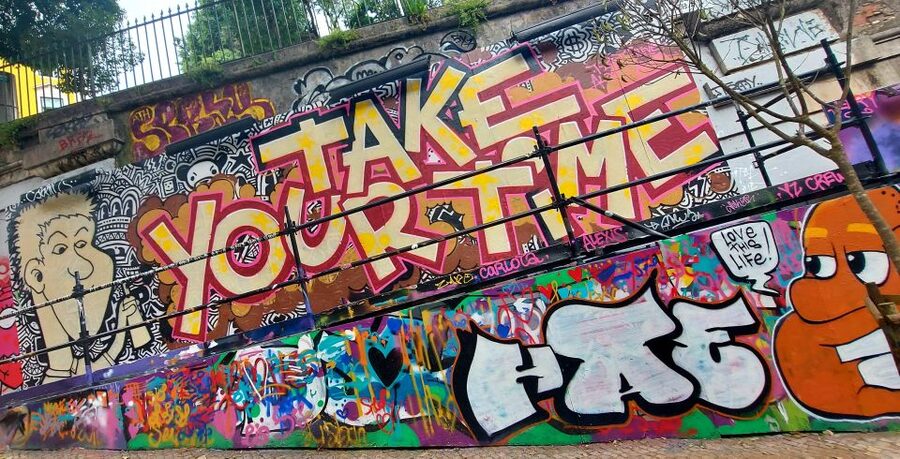
Here, expect smaller pieces as well as larger wall paintings. The guide points out how the art reflects Portuguese traditions and the character of local residents. That makes the first section less about chasing famous names and more about learning how street art works as part of a neighbourhood.
The route passes through streets, alleys, and squares. That variety keeps the walk moving, but it also means you need sensible footwear. Old districts rarely offer smooth, level pavement for long, and the hills begin to make themselves known.
Mouraria is especially useful for first-time visitors who want a side of Lisbon beyond the postcard sights. You still get the city’s historic setting, but the walls become the main guide. Instead of simply passing through an old quarter, you look at how residents and artists use its public spaces.
The guide also explains the difference between forms of urban art. You may see large murals, smaller interventions, painted lettering, stencils, and work that sits in the less official part of the city. The exact pieces can change over time, which is part of street art’s nature. Some work fades, gets painted over, or makes way for something new.
From artist names to the stories behind the walls
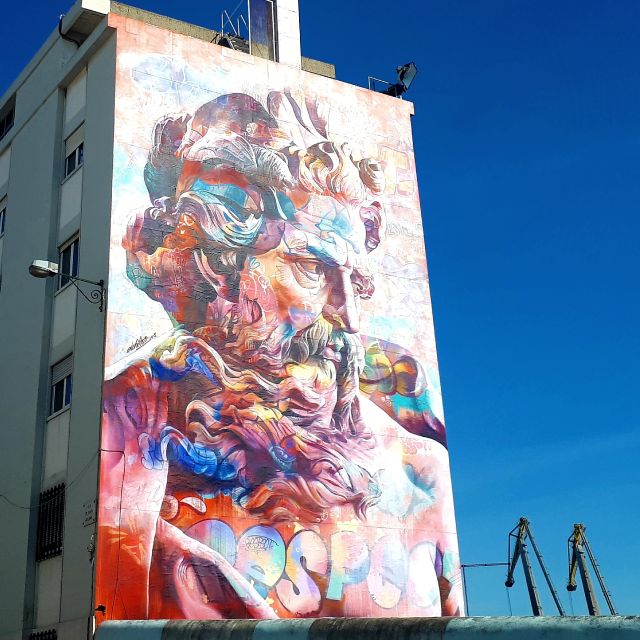
The artist list is one of the tour’s strongest features. You may encounter work connected with international figures such as Shepard Fairey, known for bold graphic imagery, and Vhils, whose wall pieces are associated with carved and damaged surfaces rather than paint alone.
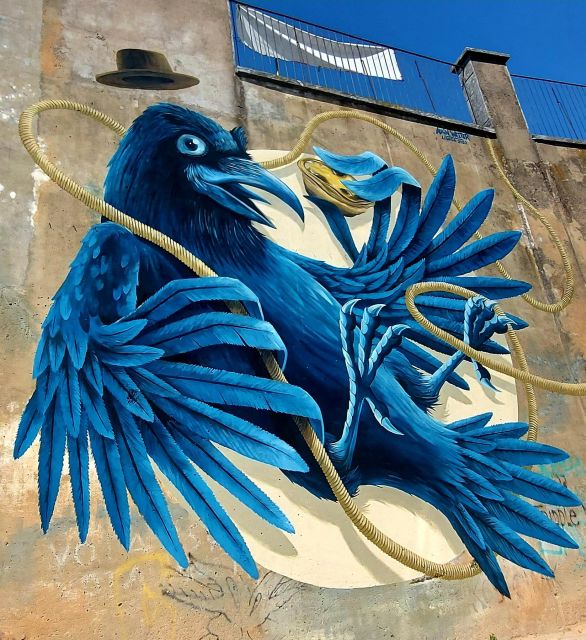
Portuguese and Lisbon-based artists also receive attention. Bordalo II is known for making animal forms from discarded materials, while Add Fuel often draws on tile patterns and Portuguese visual traditions. PichiAvo, Andrea Tarli, Ozearv, PixiAvo, Camilla Watson, and Mario Belem are also included among the artists and makers discussed.
You should not treat that list as a guaranteed checklist of every surviving piece. Street art changes, and the route varies by option. The value is in seeing several approaches in one walk and learning how different artists use walls, texture, colour, symbols, and public space.
I like that the tour does not treat famous names as the whole story. The guide also explains the local setting and the issues behind the work. You hear about political, social, and economic pressures that shape Lisbon’s graffiti and mural scene. That gives the art more weight than a quick photo stop.
A good guide can also help you look at work you might otherwise dismiss. A large wall painting is easy to notice. A small tag, a layered poster, or a piece partly covered by newer work may need explanation. The tour helps you understand the city as an ongoing conversation, not a fixed open-air museum.
Climbing toward Graça and the city viewpoint

The route continues toward Graça, one of Lisbon’s hilltop neighbourhoods. This is where the walk becomes more demanding. You will go up and down streets and stairs, and the operator warns that you may reach almost your full daily step count.
That warning is worth taking seriously. The walk lasts about 150 to 210 minutes, depending on the option, and much of that time is on foot. Comfortable shoes are essential. Water and sunscreen matter on clear days, while rain protection matters because the tour runs in wet weather as well as sunshine.
The uphill effort has a payoff. The tour ends near Miradouro da Graça, one of Lisbon’s well-known viewpoints. You get a photo stop and time to take in the city from above, with street art supplying the route and the viewpoint providing a natural final scene.
The viewpoint also gives you a chance to understand the city’s shape. Lisbon’s hills are not just a physical challenge for this tour. They help explain why different neighbourhoods can feel so distinct even when they are close together. You see how the route has climbed from the tighter streets of Mouraria toward a more open view over Lisbon.
At the end, you may finish around Graça, the Moorish Quarter, or Largo da Graça 13, depending on the option booked. Check the exact meeting and drop-off details when you reserve, since the starting point can vary.
Same base, a different kind of day out:
- Lisbon City Center Tour – The Unmissable Lisbon
★ 5.0 · 22,234 reviews - Lisbon: Sintra, Pena, Regaleira, Cabo da Roca & Cascais
★ 4.7 · 19,656 reviews - Lisbon: Jerónimos Monastery Entrance Ticket
★ 4.1 · 14,164 reviews - Lisbon: History, Stories and Lifestyle Walking Tour
★ 4.8 · 10,902 reviews
The Wall(s) of Fame and the value of a changing route

Near Graça, the tour includes the group’s own Wall(s) of Fame. These walls are part of the operator’s work in the local street art scene and give the walk a more direct connection to the artists it supports.
This is one reason I would choose this experience over a generic city stroll. The tour is not only about observing art already on the walls. Your participation helps the yesyoucan.spray collective fund new artistic projects and preserve space for creativity in Lisbon.
The route can also change because the art changes. A piece may be replaced, covered, damaged, or newly added. If you return to Lisbon later, the same streets may offer a different set of details. That makes the walk useful as an introduction, but it also means you should focus on the explanations and the way the guide teaches you to look.
You receive a #whatsuplisboa card with special deals at local partner spots, along with a city guide offering more things to do. The exact value depends on which deals interest you, so I would view this as a helpful extra rather than the main reason to book.
Is $23 a fair price for the experience?
At $23 per person, the walk is priced below many long guided city activities, while lasting up to three and a half hours. The value comes from the combination of a small group, a specialist guide, local history, art interpretation, and the city viewpoint at the end.
You are not paying simply for a route between two neighbourhoods. You are paying for someone to identify the artists, explain styles and techniques, place the work in its social setting, and lead you through streets that may be hard to interpret on your own.
The price also has a direct local benefit because part of the experience supports the yesyoucan.spray street art collective. If you care about spending money in ways that help local creative work continue, that adds real weight to the ticket.
Still, value depends on your interests. If you want a fast tour of Lisbon’s main monuments, this is not the right choice. If you dislike hills, stairs, or standing around while a guide explains a wall, the low price will not fix the mismatch.
The #whatsuplisboa card may add value if you plan to use its partner deals. But book this walk for the art, stories, and route first. Treat the card as a bonus.
What the small group changes

The tour accepts no more than eight participants. That is a useful size for street art because the group can gather around a wall without blocking the pavement or losing the guide in a crowd.
You can also ask focused questions. If you want to know why an artist uses a certain technique, how a piece was made, or what a local symbol means, a small group gives you a better chance to ask before the route moves on.
The format is social without being unwieldy. The tour is open to people who are new to street art, serious art hunters, and those who simply want a different way to see Lisbon. You do not need specialist knowledge.
Guiding is offered in English and French. If you need another language, a private tour may be possible on another day, but the provided options are English and French. Private tours can also be arranged with or without a workshop, according to the operator.
Who should book this walk?
I would recommend it to a first-time Lisbon visitor who wants an introduction to Mouraria and Graça without following only the standard monument route. It is also a good fit if you already know the city and want to understand its walls, artists, and neighbourhood changes.
Art students, photographers, design fans, and people who enjoy urban culture should get plenty from it. So should anyone who likes a guide who can connect a painted wall with local history and current city issues.
The tour also works for people who want to meet others in a small setting. Since the walk brings together an international group, it has a social side as well as an art focus.
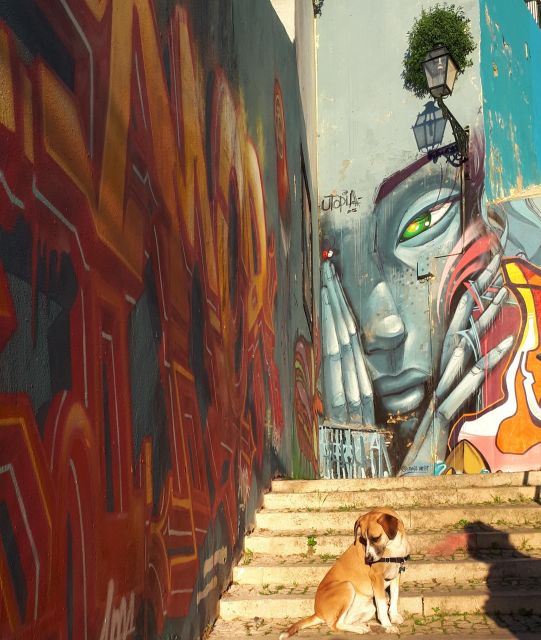
I would hesitate to recommend it to anyone with limited walking ability, a stroller, or a strong dislike of stairs. The operator advises against using a baby stroller because of the steps. Dogs are welcome, but you should tell the operator ahead of time.
Simple ways to prepare for the hills
Wear shoes with good support. Lisbon’s paving and stairways can be hard on your feet, and this is not a short flat stroll.
Bring water and sunscreen. You will be outside for two and a half to three and a half hours, and the route includes exposed uphill sections.
Check the weather before you leave. The tour runs in rain or sunshine, so your clothing should match the conditions. A light rain layer can be more useful than an umbrella on narrow streets and stairs.
Keep your schedule flexible after the tour. The walk ends near Graça, with several possible drop-off points, so you may want time to explore the area or stop for a drink rather than rushing to another timed attraction.
My verdict on the Lisbon Street Art Lovers Walk
Book this tour if you want Lisbon explained through its public art, not just its famous buildings. The combination of Mouraria’s local feel, Graça’s uphill streets, a small group, strong artist coverage, and the final viewpoint gives the experience a clear shape.
The strongest feature is the guide’s interpretation. You learn to spot styles, techniques, artists, and social messages that you might miss alone. The fact that guide Ben is an artist adds useful personal insight, though guides can vary by date and language.
The walk asks something of you physically. Expect hills, steps, weather, and plenty of time on your feet. If you are prepared for that, $23 is a fair price for a focused city experience that also supports Lisbon’s independent street art scene.
FAQ
How long does the Lisbon Street Art Lovers Walk last?
The experience lasts between 150 and 210 minutes, depending on the option you choose.
What neighbourhoods does the tour visit?
The route includes Mouraria and Graça. It ends near Miradouro da Graça, with possible drop-off points in Graça, the Moorish Quarter, or Largo da Graça 13.
Which languages are available?
The tour is offered in English and French.
How large is the group?
The group is limited to eight participants.
Is the tour suitable for people who do not know much about street art?
Yes. The walk is designed for first-time visitors, street art hunters, art lovers, and people who simply want to learn through a different kind of Lisbon city walk.
How difficult is the walking?
Expect a moderate level of walking up and down Lisbon’s hills, including stairs. The operator notes that you may reach almost your daily step count.
Can I bring a dog?
Yes. Dogs are welcome, but you should notify the operator in advance.
What should I bring?
Bring comfortable shoes, sunscreen, and water. The tour operates in both rain and sunshine, so prepare for the weather on the day.
Just added in Lisbon
- Half day Spa Water Therapy experience at THE SPA at Corinthia Lisbon★ 4.5 · 51 reviews
- Lisbon Cinematic Photoshoot with Top-Rated Photographer★ 5.0 · 76 reviews
- Central Lisbon E-Bike Tour★ 5.0 · 168 reviews
- Small-Group Sailing Tour on the Tagus River from Lisbon★ 5.0 · 78 reviews
- Alfama and the Castle of Saint George Skip the line Tour★ 5.0 · 53 reviews
- City Centre Run in Lisbon★ 5.0 · 164 reviews
- Lisbon Sailing Catamaran Public Cruise with drinks★ 5.0 · 304 reviews
- Boat tours in the Óbidos Lagoon★ 5.0 · 100 reviews