
Reviewed · WALKING TOURS
Lisbon: History, Stories and Lifestyle Walking Tour
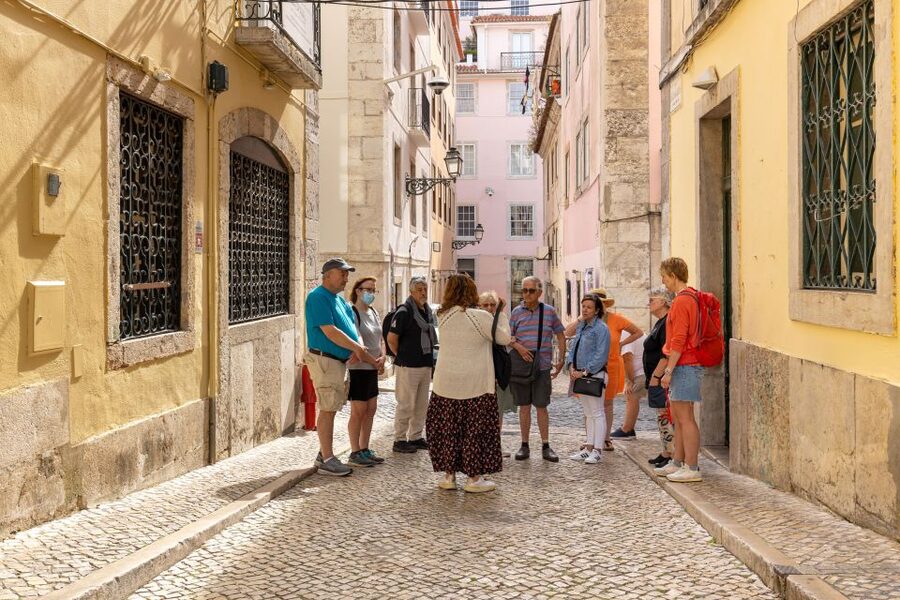
Lisbon reveals itself best on foot, one hill, stairway, viewpoint, and tiled church at a time. This three-hour tour links Bairro Alto, Baixa, and Alfama with an iconic tram ride, so you get both a useful city orientation and a taste of Lisbon’s everyday rhythm.
I like the mix of big stories and small pleasures: the Carnation Revolution at Carmo, sweeping views from São Pedro de Alcântara, and a coffee with pastel de nata. I also like the guides’ personal touch. Paulo, Ricardo, Beatrice, Anna, and João are among the guides praised for clear storytelling and warm humor. The main drawback is the terrain. Lisbon’s hills and uneven streets require comfortable shoes, and the tour may run a little over three hours.
Key points to know before you book
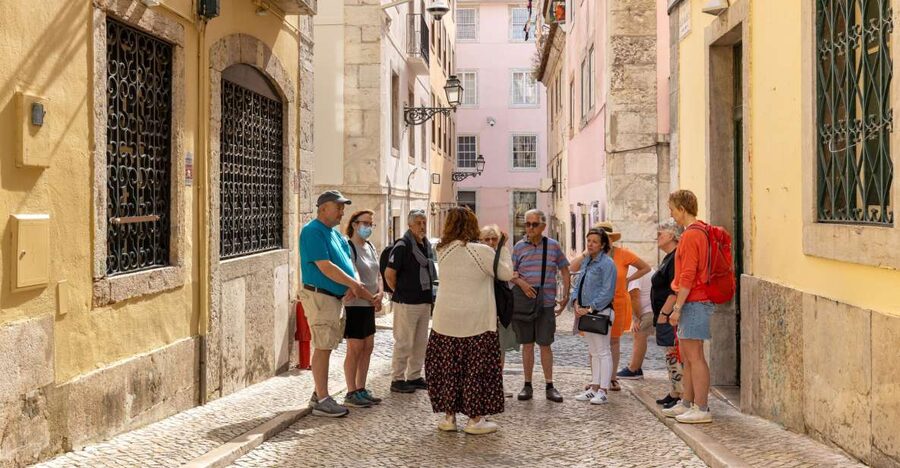
- Bairro Alto begins the story: See how a 16th-century district changed after the 1755 earthquake.
- São Pedro de Alcântara gives you the view: Look across Baixa toward the south bank of the Tagus.
- Carmo connects architecture with politics: Learn how the convent became linked to the 1974 Carnation Revolution.
- The tram ride adds local flavor: Ride one of Lisbon’s iconic streetcars as part of the route.
- Alfama supplies the atmosphere: Walk narrow lanes through Lisbon’s oldest traditional neighborhood.
- Coffee and pastry make a useful break: Your booking includes coffee and cake, generally a pastel de nata.
Why this tour works as a first look at Lisbon
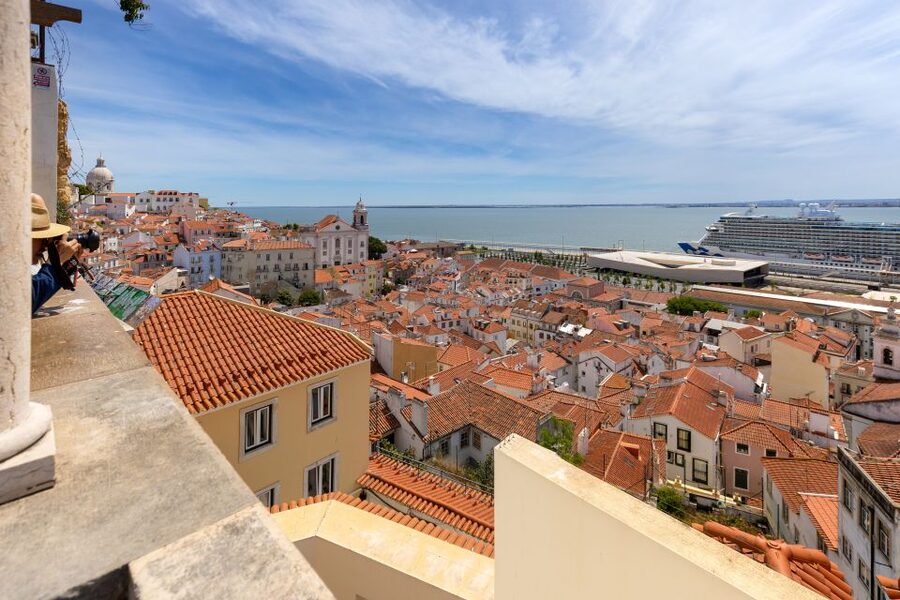
Lisbon can feel scattered at first. The city spreads across several hills, and its most memorable sights are often separated by steep lanes rather than broad, easy avenues. This tour gives you a sensible first map of the center, moving through neighborhoods that tell different chapters of the city’s story.
You begin in Bairro Alto, continue toward the viewpoints and central Baixa, then reach the older districts near the castle and Tagus. By the end, you should have a better sense of where you want to return for a longer visit.
I especially like the way the tour joins political history to ordinary city life. You are not only looking at façades. You are hearing about the 1755 earthquake, the city’s rebuilding, the end of dictatorship in 1974, religious art, fado, local festivals, and the way Lisbon residents use their streets.
The pace is usually relaxed, with frequent stops for explanations and photographs. That helps if you want context rather than a brisk checklist. It also means the route covers a lot of ground, so you should expect steady walking rather than a gentle wander with little effort.
Other guided walks in Lisbon:
- Best of Lisbon Small-Group Guided Walking Tour
★ 5.0 · 4,869 reviews - Lisbon: Food and Wine Small Group Walking Tour
★ 4.9 · 4,082 reviews - Best of Lisbon Walking Tour: Rossio, Chiado & Alfama
★ 4.9 · 2,700 reviews
Starting in 16th-century Bairro Alto
Bairro Alto is a good place to begin because its name can mislead you. It is not simply an old nightlife quarter. The district dates from the 16th century and reflects an important stage in Lisbon’s growth.
Your guide explains how the area changed after the 1755 earthquake, when families from Baixa and nearby districts moved into or helped renew this part of the city. That gives you a useful way to read the streets. Lisbon’s neighborhoods are not frozen museum pieces. They have shifted with disaster, migration, religion, nightlife, and changing patterns of work.
This is also where the tour’s storytelling style matters. Guides such as Paulo have been praised for using humor and personal memories rather than reciting dates. One guide, who grew up in Lisbon and experienced the 1974 revolution as a child, was able to explain the period from a local point of view. Your assigned guide will vary, but the strongest part of this experience is the human scale of the history.
Bairro Alto’s lanes can be uneven, and the route involves hills. If you have limited stamina, tell your guide early. The tour includes many pauses, but it remains a walking tour through old streets.
Views from São Pedro de Alcântara
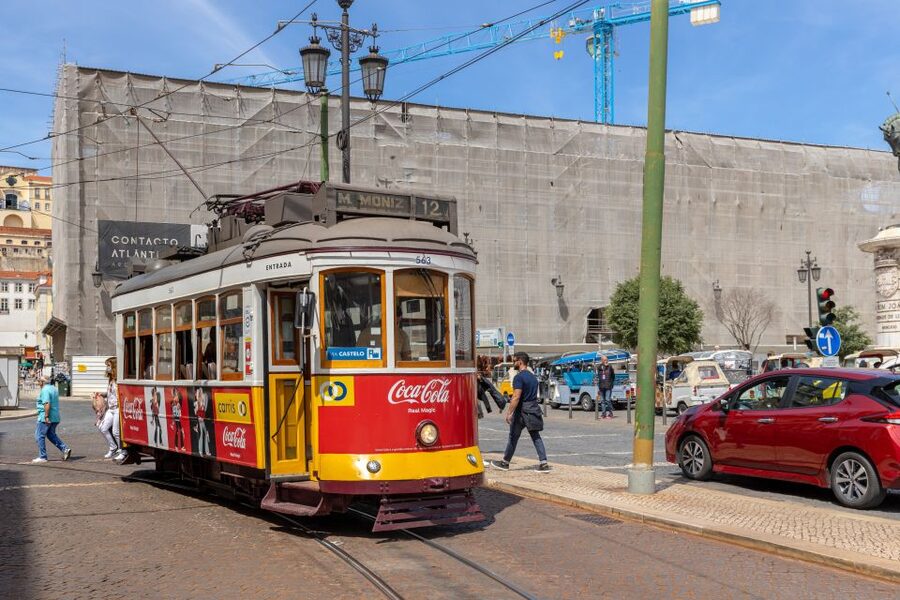
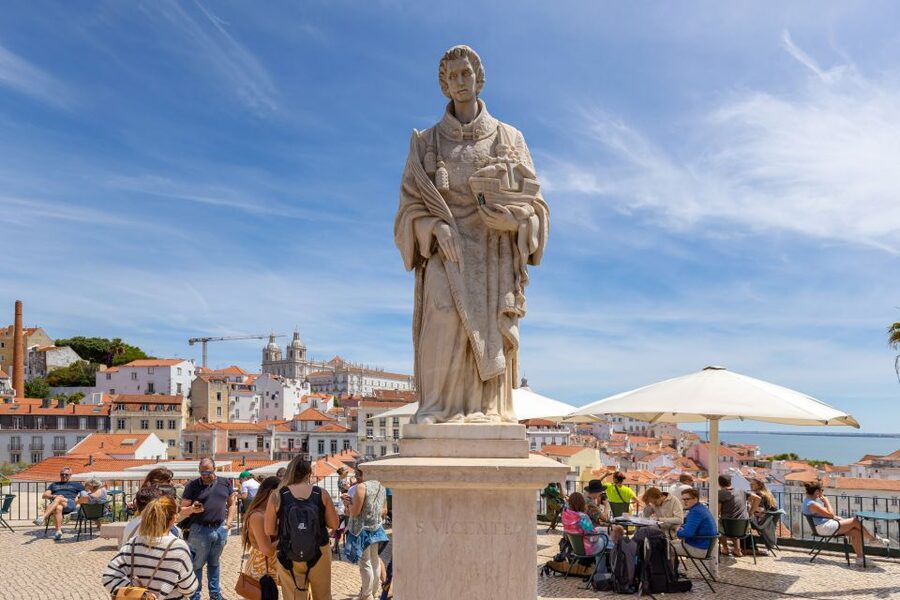
The garden and viewpoint of São Pedro de Alcântara are among the tour’s best photographic stops. From here, you look across Baixa and toward the south bank of the Tagus River.
This is the kind of pause that helps you understand Lisbon’s shape. The city is built in layers, and the viewpoint lets you match the guide’s explanation to what you can see below. Rather than hearing a list of districts in isolation, you can place Baixa, the river, and the surrounding hills in one picture.
Take a moment here, even if the group is ready to move on. Viewpoints are easy to rush through, but this one provides a useful orientation for the rest of the walk.
The stop also shows why Lisbon sightseeing can be tiring. You gain the view by climbing, and the route continues through hilly streets. Good footwear is not a minor suggestion here.
San Roque and Lisbon’s religious art
The tour continues to San Roque Church, a Jesuit church with a plain exterior and a much more elaborate interior. That contrast is part of its appeal.
Inside, you can see gilding, tiles, and paintings linked to Mannerist and Baroque styles. Your guide helps explain why the church matters rather than leaving you to look at decoration without context. The building works almost like a compact museum, especially for anyone interested in Portuguese religious art.
This stop also breaks up the street walking. You move from open views and city lanes into a quieter interior space. Ask questions if a particular tile panel, painting, or architectural detail catches your eye. The tour’s strongest guides, including Beatrice, Ricardo, and Anna, are repeatedly praised for taking time with questions instead of rushing from one stop to the next.
Same base, a different kind of day out:
- Lisbon City Center Tour – The Unmissable Lisbon
★ 5.0 · 22,234 reviews - Lisbon: Sintra, Pena, Regaleira, Cabo da Roca & Cascais
★ 4.7 · 19,656 reviews - Lisbon: Jerónimos Monastery Entrance Ticket
★ 4.1 · 14,164 reviews - Lisbon: Sunset Boat Party Cruise with DJ and Open Bar
★ 4.5 · 10,378 reviews
Carmo Convent and the 1974 revolution
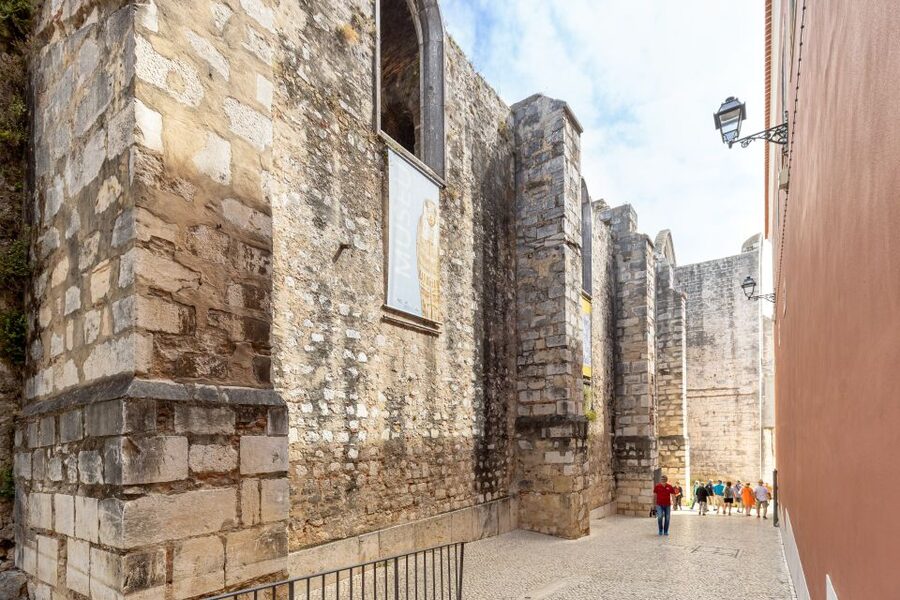
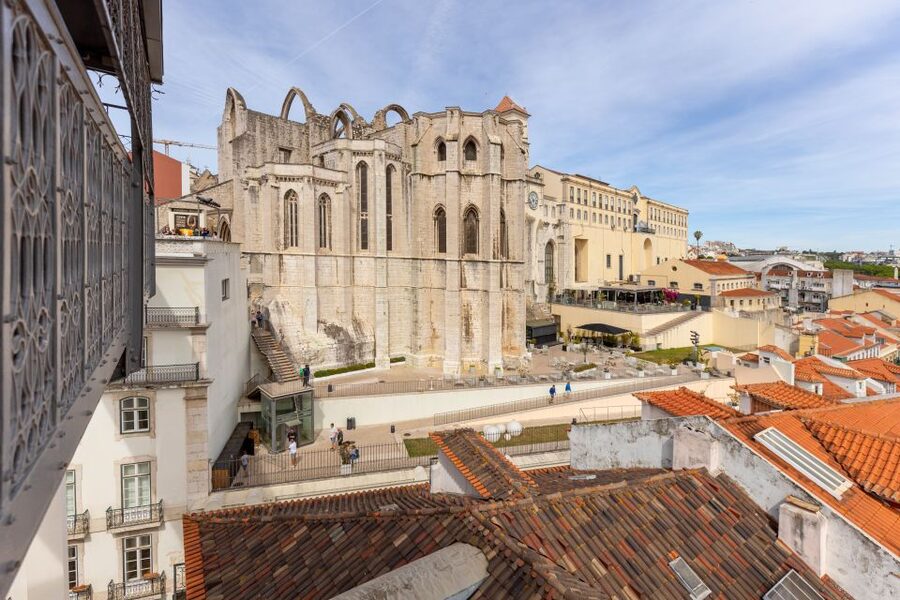
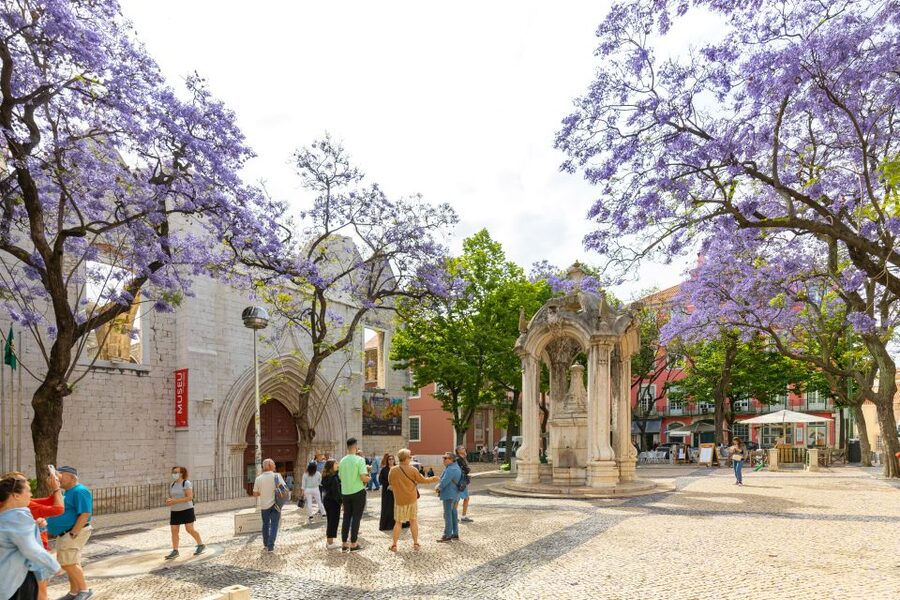
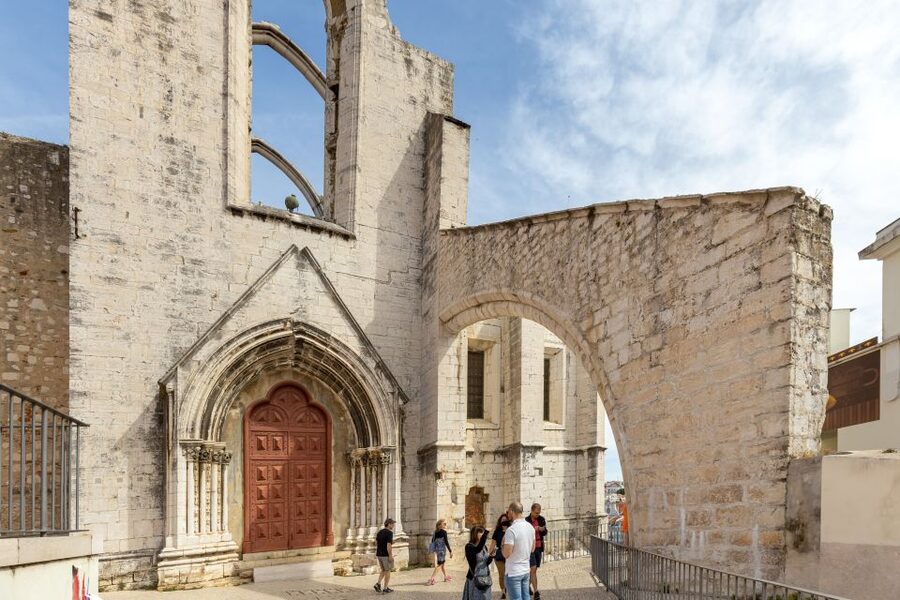
Heading down toward Carmo, you reach one of Lisbon’s most striking historic sites. The Carmo convent and church are important examples of Gothic architecture, but the site also carries modern political meaning.
The Carnation Revolution began here in 1974. The uprising ended nearly five decades of dictatorship, making Carmo more than an architectural stop. It connects medieval Lisbon with the country’s recent past.
This section is especially useful because the guide can explain the event in a way that a plaque cannot. Several guides are praised for covering both the older history of the city and Portugal’s political changes, including the 25 April revolution. If modern history interests you, this may become the most meaningful part of the walk.
The route down to Carmo can feel easier than the uphill sections, but Lisbon’s paving remains uneven. Keep your attention on the ground while listening. You can always pause for a photograph once the group stops.
Santa Justa and the rebuilt Baixa
A little farther on, you reach the Santa Justa elevator, one of Lisbon’s most recognizable structures. Its Gothic Revival design makes it look like a tall iron church tower placed in the middle of the city.
The elevator is associated with one of Lisbon’s best viewpoints, although this walking tour does not promise a separate ride to the top. Your guide will show you the structure and explain its place in Baixa. The surrounding area gives you a chance to understand the city center as a planned space shaped by the 1755 earthquake.
Baixa is the practical heart of central Lisbon, and the tour uses it as a bridge between the upper neighborhoods and the older districts near the castle. This is where the route can feel most urban, with more people, shops, and traffic than in the narrow lanes of Alfama.
A short break follows in the general itinerary. Coffee and cake are included, usually a bica, Lisbon’s small espresso, with a pastel de nata. It is a modest treat, but it gives you a chance to sit, reset, and ask your guide for restaurant or sightseeing suggestions.
The tram ride toward the old neighborhoods
The tram segment is short, but it adds something a walking-only tour cannot. Lisbon’s old streetcars are part of the city’s identity, and riding one gives you a quick taste of how the hills are connected.
The route information describes a ride going up from the castle area toward Portas do Sol. Some experiences also identify tram 12. Exact timing and sequence can vary, so do not plan a tight appointment immediately after the tour.
A tram can also be affected by ordinary city problems. One guide had to alter the route when a tram broke down and heavy rain arrived. The guide adapted the plan and kept the group moving. That is useful to know: the tram is a fun part of the experience, but it is not the whole point of the booking. If service changes, the walking route and local explanations still carry the tour.
The streetcar may be crowded, and you may not get a perfect window view. Treat the ride as a short local experience rather than a private sightseeing vehicle.
Portas do Sol, São Vicente, and the Tagus
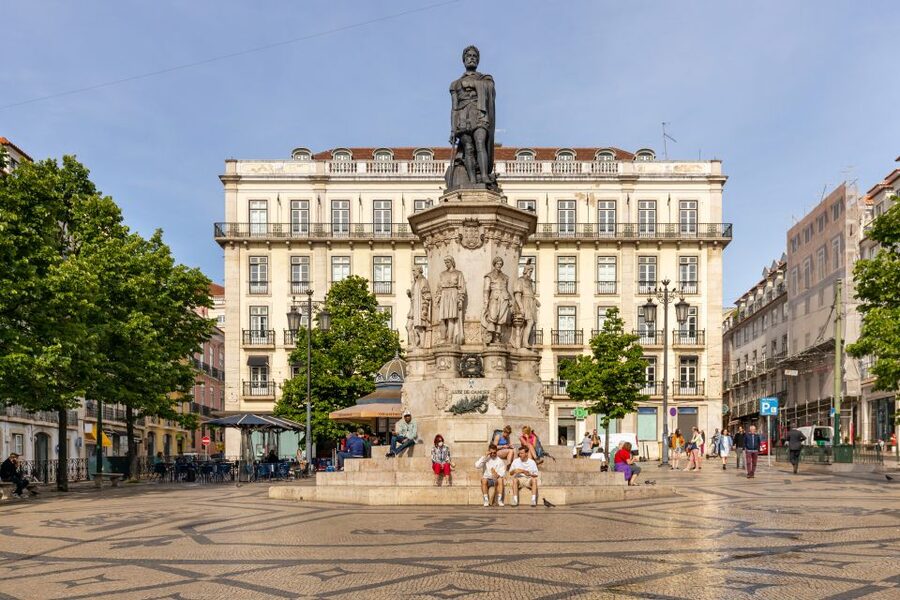
Portas do Sol is another major viewpoint, with views toward the Monastery of São Vicente de Fora, the National Pantheon, Alfama, and the Tagus.
This stop gives you a strong visual introduction to the old eastern side of Lisbon. From above, Alfama looks compact. On foot, its narrow streets and steps make the neighborhood feel much larger.
The guide can point out the relationship between the river and the city’s older districts. Lisbon’s connection to the Tagus is central to its development, and the viewpoint makes that relationship easy to see.
It is worth taking a few minutes here for photographs, but stay aware of the group. The tour covers several areas in three hours, and lingering too long at every viewpoint may mean the final section feels rushed.
Walking through Alfama
Alfama is the atmospheric heart of the route. It is one of Lisbon’s oldest and most traditional neighborhoods, with narrow streets leading toward the river.
This is where the tour feels least like a standard city-center walk. You pass through lanes that can seem too tight for modern traffic, and your guide explains the district’s connection to fado and the popular festivals of Lisbon’s saints, especially St. Anthony.
The value of having a local guide here is practical as well as historical. Alfama is easy to wander through, but harder to understand. A guide can give the streets a story and help you notice details you might otherwise pass without a second look.
Do not expect a long fado performance. The tour introduces the neighborhood’s musical and festival traditions rather than providing a dedicated fado evening. If fado is a major reason for your Lisbon visit, use the guide’s suggestions to plan a separate night.
Alfama includes uneven pavement, slopes, and steps. One guide was praised for adjusting the pace for older members of the group without leaving others waiting too long. That suggests the tour can work for a range of fitness levels, but it is not fully effortless. If you have mobility concerns, ask about the exact route before booking because the meeting point and route can vary by option.
Ending at Lisbon Cathedral
The tour ends at Lisbon Cathedral, built in 1150, just three years after the city was retaken from the Moors. The cathedral has changed over time, so its architecture reflects more than one period.
That makes it a fitting final stop. In one building, you can discuss the medieval city, religious change, later repairs, and Lisbon’s habit of carrying several eras at once.
Ending here also gives you a useful base for further exploration. You are in the older part of the city, close to Alfama and the castle area. If your guide has time, ask for ideas on what to see next. Several guides, including Ricardo and João, are praised for giving practical suggestions as well as historical explanations.
Guides, group size, and the human side
The guide makes a major difference on a history tour. The strongest names associated with this experience include Paulo, Ricardo, Beatrice, Anna, Ana, João, Lucie, Lucia, and Raquel. You cannot select a particular person unless your booking option allows it, but the guide language can be Portuguese, Spanish, Italian, German, French, or English.
The experience is available as a private tour or in a small group. A small group is useful here because Lisbon’s lanes can be tight, and it is easier to hear explanations at viewpoints and in busy streets. One group had only three people and found the experience close to a private tour. Another had eight people and still found it easy to stay together.
Guides are often praised for humor, patience, and personal stories. That matters because three hours is long enough for a dry lecture to become tiring. The best version of this tour feels like a conversation while walking, with plenty of room for questions.
Is $29 good value for three hours?
At $29 per person, the price is reasonable for the amount packed into the route. You get a live guide, a three-hour walking tour, an iconic tram ride, coffee, and cake.
You are also paying for orientation. If this is your first visit, a guide can help you understand how the main central neighborhoods connect, which saves time later. The tour covers enough ground to help you decide where to return for a slower visit.
The value is lower if you dislike group walking, already know central Lisbon well, or want long interior visits at each church and monument. This is an overview with stories, not a series of extended museum visits.
The reserve-now, pay-later option and free cancellation up to 24 hours before the start add flexibility. The meeting point may vary by booking option, so check your confirmation carefully.
Who should book this Lisbon walk?
I would choose this tour for a first or second day in Lisbon. It gives you a practical mental map, introduces several major districts, and leaves you with ideas for later meals, viewpoints, churches, and evening plans.
It suits people who enjoy history but do not want a formal lecture. It also works well for solo visitors who want a social setting, couples seeking an easy introduction, and families with older children who can manage hills and uneven streets.
I would hesitate if you want a slow, photography-first walk, a dedicated food tour, or a deep visit inside every monument. The route is broad and active. You will see many places, but you will not explore each one at length.
Should you book it?
Book it if you want a lively introduction to Lisbon that combines history, views, neighborhoods, a tram ride, and a simple local snack. The strongest value comes from the guides’ ability to connect the 1755 earthquake, the 1974 revolution, fado, religious art, and daily life in one clear route.
Wear comfortable shoes, allow a little extra time after the scheduled finish, and avoid placing an important reservation immediately afterward. If you accept the hills and the possibility of a changed tram plan, this is a smart, good-value way to get your bearings fast.
FAQ
How long does the Lisbon walking tour last?
The tour lasts three hours, though the finish may run slightly later depending on the pace, questions, weather, or changes to the tram portion.
What is the price of the tour?
The listed price is $29 per person.
What is included in the booking?
The booking includes a live guide, the walking tour, a tram trip, coffee, and cake.
Is hotel pickup included?
No. Hotel pickup and drop-off are not included.
Which Lisbon neighborhoods does the tour visit?
The route includes Bairro Alto, Baixa, the area around Carmo and Santa Justa, Portas do Sol, Alfama, and Lisbon Cathedral.
Does the tour include a tram ride?
Yes. A tram trip is included as part of the experience. The exact sequence can vary by tour option and local conditions.
Which languages are available?
The tour is available in Portuguese, Spanish, Italian, German, French, and English.
Can I cancel the tour for a refund?
You can cancel up to 24 hours in advance for a full refund. The booking also offers a reserve-now, pay-later option.
More Historical Tours in Lisbon
- Lisbon: Live Fado Show with Port Wine in Historic Center
★ 4.7 · 4,166 reviews - Lisbon: Fado Show with Wine in a Historic Venue
★ 4.8 · 1,294 reviews - Explore Lisbon by Tuk Tuk: History and Viewpoints
★ 5.0 · 840 reviews - Lisbon: Daytime or Sunset Boat Cruise with History and Wine
★ 4.9 · 819 reviews
Just added in Lisbon
- From Lisbon: Horseback Riding on Comporta Beach★ 4.7 · 167 reviews
- Lisbon: City Highlights Segway Tour★ 4.9 · 422 reviews
- Lisbon: Street Art Tuk Tuk Tour★ 4.9 · 372 reviews
- Lisbon: Segway Medieval Tour of Alfama and Mouraria★ 4.9 · 420 reviews
- LISBON Street Art Tour★ 5.0 · 371 reviews
- Évora and Monsaraz with Regional Wine Tasting from Lisbon★ 4.5 · 229 reviews
- Private Lisbon-Arrábida Wine Tour: 3 Wineries, Coast & Heritage★ 5.0 · 450 reviews
- Évora and Megaliths Full-Day Tour from Lisbon★ 4.7 · 456 reviews
Walking Tours, compared.

Best of Lisbon Small-Group Guided Walking Tour
Read our review →
Porto Walking Tour, Lello Bookshop, River Cruise and Cable Car
Read our review →

Best of Lisbon Walking Tour: Rossio, Chiado & Alfama
Read our review →
Experience Porto’s Charm: 3-Hour Guided Walking Tour
Read our review →

Browse the lists this tour appears in