
Reviewed · DOLPHIN WATCHING
Small Group Dolphin and Wildlife Watching Tour in Faro
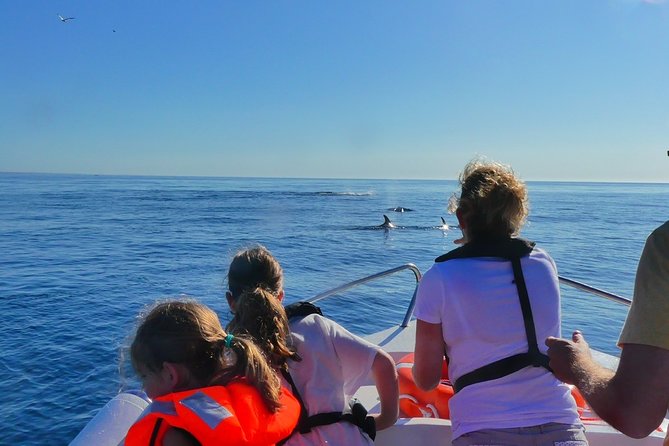
The best part of this Faro excursion is that you are not simply taken to a pretty stretch of sea and told to hope for dolphins. Marine biologists help search for wildlife, explain what you see, and record data after an encounter. The small RIB carries no more than nine people, so you get a clear view and direct contact with the crew.
I like two things in particular: the early start, when the sea is cooler and wildlife can be active, and the careful approach to animals. Guides have kept a respectful distance from dolphin pods, letting the animals decide how close to come. The main consideration is the boat itself: a RIB with jockey-style seating can feel rough on a choppy Atlantic day, especially if you have back or neck trouble.
Key points at a glance
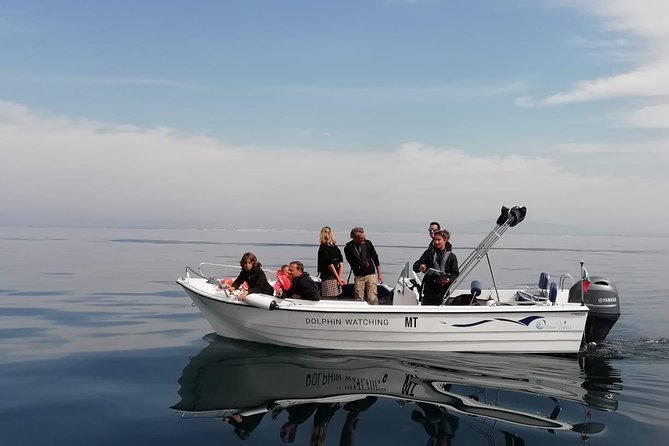
- A maximum of nine people: The small group gives you room to see and ask questions without fighting for attention.
- Marine biologists on board: Guides explain dolphin behavior and collect research data after sightings.
- Ria Formosa to open Atlantic: The trip begins among Faro’s protected coastal waters before heading offshore.
- Wildlife is never guaranteed: Dolphins are common targets, but whales, sharks, turtles, and sunfish depend on season and luck.
- Morning departure: The 8:30 a.m. outing can mean cooler temperatures and a fresh start before the sun gets strong.
- Expect a firm ride: The RIB is built for speed and open water, not lounge-chair comfort.
Leaving Faro through Ria Formosa
Your meeting point is Ginásio Clube Naval on Estrada do Passeio Ribeirinho, close to central Faro. The activity begins and ends at the same place, which keeps the day simple. You do not need to arrange a second pickup point or figure out how to return from another port.
The first section takes you through Ria Formosa Natural Park, a coastal maze of islands, channels, and shallow water. This part is slower and more scenic than the offshore run. You get views of the Algarve shoreline while the crew prepares for the main search.
That transition matters. You are not teleported straight into open water. The trip gives you a useful sense of Faro’s protected coastal setting before the boat reaches the Atlantic, where the water can become much more exposed and the ride more physical.
The central departure point also helps if you are building a day around Faro’s old town. Allow enough time to reach the club without rushing. The operator sends confirmation when you book, and the trip is offered in English.
Other trips out to look for dolphins from Faro:
- Faro: Dolphin and Wildlife Watching in the Atlantic Ocean
★ 4.8 · 637 reviews - Albufeira: 2.5-Hour Benagil Caves & Dolphin Watching
★ 4.6 · 10,710 reviews - Albufeira: Benagil Caves & Dolphin Watching Speed Boat Tour
★ 4.6 · 6,316 reviews
Why the small RIB changes the experience
The boat carries up to nine people, a real advantage for wildlife watching. You have fewer heads blocking your view, and the marine biologists can speak to the whole group without shouting across a crowded deck. If you want to ask about a dolphin’s markings, a seabird’s flight, or the difference between two species, this setup gives you a fair chance to do so.
This is a working wildlife boat, not a floating café. The RIB is designed to move quickly toward likely sightings and handle open water. Seating is the jockey style common on rigid inflatable boats. You straddle a padded seat rather than stretch out on a bench, and your body moves with the boat.
That arrangement has benefits. It helps you stay secure when the boat accelerates or crosses waves, and it gives the skipper good control. But it can be tiring. One outing had high waves on the return, and the boat slowed down to make the ride safer, which extended the trip. That is sensible seamanship, but rough conditions can still be uncomfortable.
I would not choose this tour if you strongly dislike small boats or have serious neck and back sensitivity. Children can enjoy it, and a three-year-old and six-year-old were able to take part, but the open sea is unpredictable. If your family is prone to motion sickness, think carefully before booking.
Bring a sweatshirt or light jacket even on a warm Algarve morning. Once the RIB is moving at speed, the wind can make the ocean feel much cooler than Faro’s streets. Wear clothing you can move in, and keep your expectations focused on wildlife rather than comfort.
Searching the Atlantic for dolphins
Once outside the sheltered waters, the crew begins scanning. This is not a fixed route with a guaranteed animal at a marked point. The team reads the water, watches for movement and birds, and checks likely areas for cetaceans.
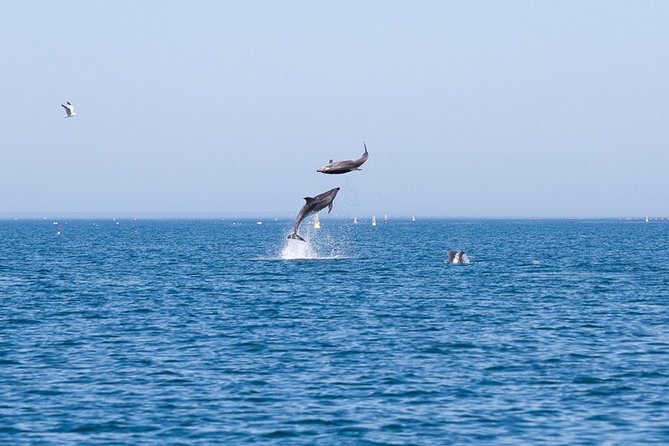
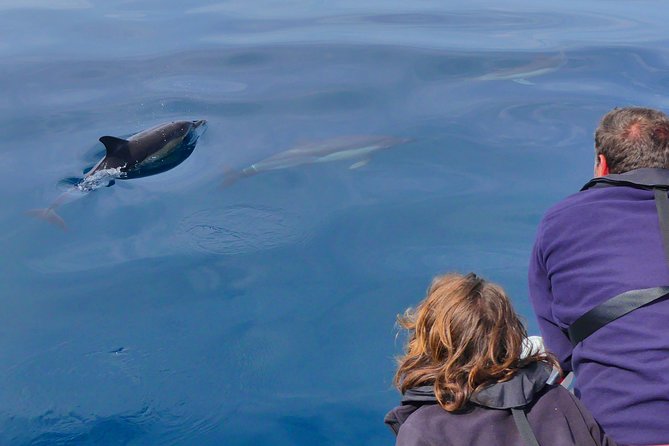
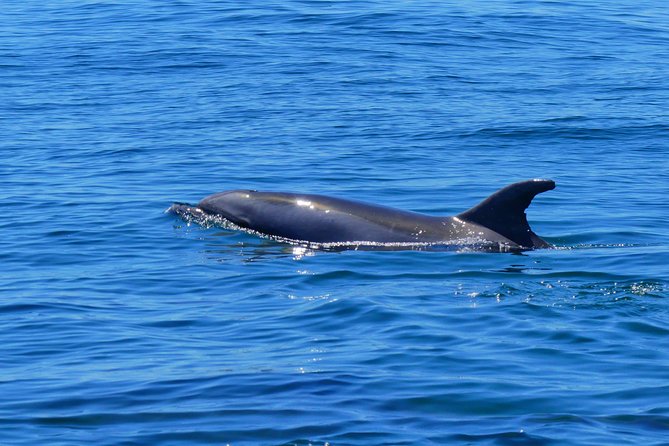
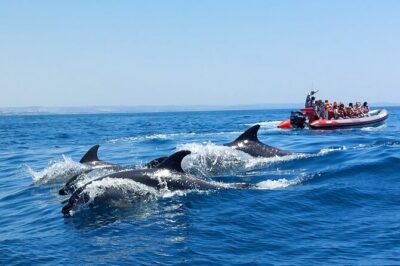
The most common targets are common dolphins and bottlenose dolphins. Other sightings have included porpoises and striped dolphins. On a good morning, you might see a small group or a huge gathering. Sightings have ranged from several pods to hundreds of dolphins, including mothers and young.
The boat may slow or circle carefully once animals are found. Guides keep their distance and avoid forcing the encounter. Dolphins may approach the RIB, swim alongside it, or pass underneath, but they may also remain farther away. That uncertainty is part of seeing wild animals rather than visiting a marine park.
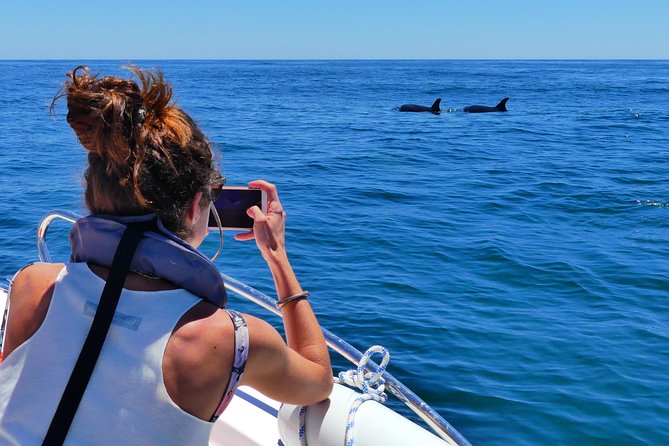
The viewing period can feel short if you are busy taking photos, so I would advise putting your phone down from time to time. A video can preserve the memory, but watching through a screen makes it easy to miss the next surfacing. The best moments may last only seconds.
The crew has also found porpoises before heading farther offshore, then located dolphins in deeper water. That gives the trip some variety even when one species is not immediately available. You are watching the search process as well as the animals.
What else might appear beyond the dolphins
Dolphins receive the attention, but the Atlantic can produce a longer list of sightings. Marine birds may include northern gannets, shearwaters, storm petrels, and ospreys. Their flight patterns can help the crew read the sea and spot activity at a distance.
Other possible animals include ocean sunfish, Atlantic bluefin tuna, sharks, and marine turtles. One outing included a Portuguese man-of-war, while others produced a turtle and a sunfish. These sightings are less predictable than dolphins, but they add interest to the time between pods.
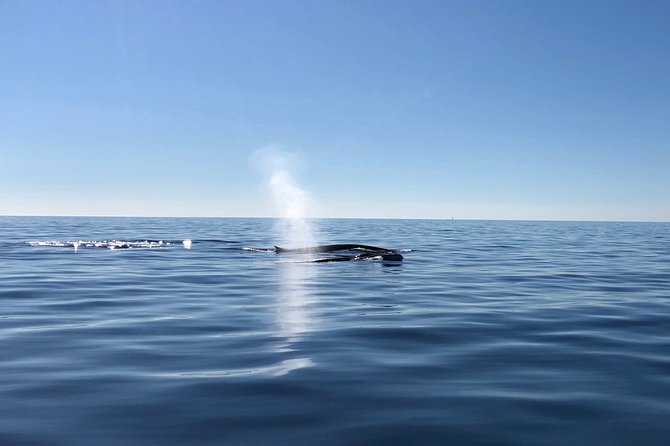
Whales are possible, too. Fin whales and minke whales have been seen, and orcas are mentioned as a rare possibility. The season affects your chances. A guide has clarified that whale sightings are stronger in spring, while some warmer-water species may also appear in summer and autumn.
Still, no one can promise you a whale, shark, or turtle. Even dolphins are not guaranteed on every departure. One trip found common dolphins and a basking shark but no whales. That does not make the outing a failure. It simply reflects the nature of a wildlife trip.
You should book this with the right goal: a chance to observe free-ranging marine life with a skilled search team. If you need a certain animal for the trip to feel worthwhile, a zoo or aquarium provides more certainty, but a very different experience.
Same base, a different kind of day out:
- 4 Stops | 3 Islands & Ria Formosa Natural Park – From Faro
★ 5.0 · 3,080 reviews - From Faro: Benagil Cave, Marinha Beach, Algar Seco & More
★ 4.7 · 2,027 reviews - Ria Formosa – Boat trip to the 3 Islands: Armona | Culatra Island | Lighthouse
★ 5.0 · 1,872 reviews - Ria Formosa Natural Park and Islands Boat Cruise from Faro
★ 5.0 · 1,314 reviews
Marine biology instead of animal chasing
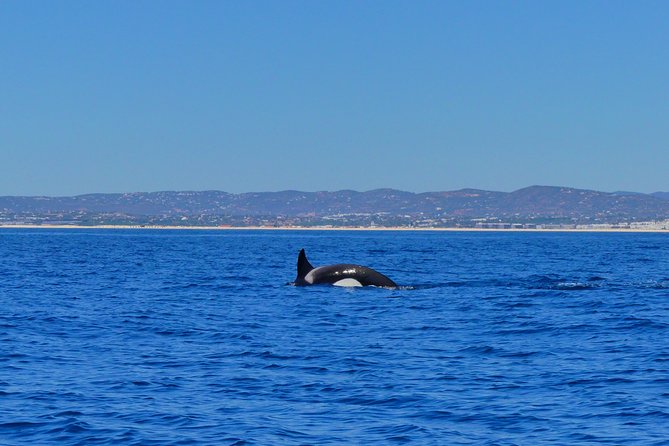
The guides do more than point toward fins. They explain the species you encounter and provide context about how the animals live in the Algarve’s waters. Crew members including Diogo, Pedro, Miguel, and Susanne have been praised for clear explanations, warm manners, and strong enthusiasm for the work.
That enthusiasm matters. A good wildlife guide notices the small details: the shape of a dorsal fin, the way a pod travels, or the difference between a gannet and a shearwater. You are more likely to remember what you saw when someone helps you understand it.
After finding cetaceans, the crew collects information for research. This gives the trip a useful purpose beyond sightseeing. The guides follow wildlife protection rules and avoid pushing animals into repeated interactions. The boat does not treat dolphins as performers that must jump on command.
That approach also means you need patience. The crew may take time to watch behavior rather than race from one animal to another. The animals set the terms. A dolphin can pass close to the boat one day and remain distant the next.
For me, this is the strongest reason to choose this operator over a cheaper, larger outing. Your money supports an experience built around observation and data collection, not only the fastest possible photo opportunity.
How much value do you get for $66.51?
At $66.51 per person, the tour costs more than a basic sightseeing ride, but the comparison is not quite fair. You are paying for a small group, a fast open-water boat, trained marine staff, and about two and a half hours on the sea.
The group size is a major part of the value. With no more than nine people, you have a better chance of seeing over the shoulders of others and speaking with the crew. A crowded boat may offer a lower price, but the experience can feel less personal and less focused.
The price also includes the possibility of a long wildlife search with no dramatic result. That may sound obvious, but it is worth accepting before you book. Your fee pays for the boat, skipper, crew time, and responsible search effort, not a guaranteed dolphin performance.
Some outings have lasted close to three hours when conditions or wildlife made it worthwhile. In rough water, the crew may slow down for safety, and the return can take longer. I would view that flexibility as a practical benefit, though anyone with a tightly packed schedule should leave room after the stated 2.5 hours.
The tour is often booked about 11 days ahead, so it is sensible to reserve early during a busy Faro visit. You can cancel for a full refund up to 24 hours before the start time. Poor weather or failure to meet the minimum number of participants can lead to a new date or a full refund.
Who should book this Faro wildlife trip?
I would recommend it to anyone who wants a real marine wildlife outing rather than a harbor cruise. It suits couples, families with children who can manage a small boat, and travelers who care about animal welfare and want more than a quick photo.
It is especially good for people who enjoy asking questions. The small group and science-led format give you more contact with the guides than a large excursion usually allows.
You should hesitate if you dislike open water, want soft seating, or need a guaranteed whale sighting. The RIB can be lively, and the Atlantic can change quickly. One trip involved high waves and motion sickness for two children, even though the group still saw dolphins.
Service animals are allowed, the meeting point is near public transportation, and most people can participate. The operator lists the outing as suitable for most travelers, but that does not remove the need to judge your own comfort with a small boat and changing sea conditions.
Practical advice before you go
Book a morning departure if your schedule allows. The 8:30 a.m. outing offers cooler conditions before the day heats up, and early hours can be a pleasant time to search for wildlife.
Wear layers. A jacket or sweatshirt is useful once the boat gains speed. Choose secure footwear and avoid carrying loose items that can blow away. Keep your camera or phone ready, but give yourself time to watch without filming.
Arrive at the naval club with enough time to identify the correct meeting point. One person found it confusing when the office was empty because the crew was still out on an earlier trip. A confirmation message gives you the basic details, but you may need a little patience if staff are finishing another departure.
Most important, accept that nature controls the timetable. A slow return, a distant sighting, or a day with dolphins but no whales can all be part of the deal. The crew can improve your chances, not command the sea.
Should you book Ocean Vibes Algarve?
Yes, if you want a small, serious wildlife outing from Faro. The marine biologists, limited group size, research work, and respectful viewing rules give this trip a stronger purpose than a standard boat ride. The chance of seeing common or bottlenose dolphins is good, and the possible extras include sunfish, turtles, seabirds, porpoises, sharks, and whales.
Choose another type of excursion if you need a calm, cushioned ride or a guaranteed animal encounter. For everyone else, this is a strong use of a Faro morning, provided you dress for wind, accept the RIB seating, and let the wildlife set the pace.
FAQ
Where does the dolphin tour begin?
It begins at Ginásio Clube Naval, Estrada do Passeio Ribeirinho 58, 8000-541 Faro, Portugal.
Where does the activity finish?
The boat returns to the same meeting point in Faro.
How long does the tour last?
The scheduled duration is approximately 2 hours and 30 minutes.
How many people can join the boat?
The activity has a maximum of nine participants.
Is the tour offered in English?
Yes, the tour is offered in English.
What animals might I see?
Possible sightings include bottlenose dolphins, common dolphins, porpoises, whales, orcas, northern gannets, shearwaters, storm petrels, ocean sunfish, bluefin tuna, sharks, and marine turtles.
Are dolphins guaranteed?
No. The crew searches for wildlife, but sightings depend on natural conditions and animal behavior.
Are marine biologists on board?
Yes. Marine biologists provide information about the animals and collect data for research after cetacean sightings.
Is the tour suitable for most people?
Most people can participate, and service animals are allowed. You should still consider your comfort with a small RIB boat and possible rough sea conditions.
Can I cancel for a refund?
You can cancel at least 24 hours before the start time for a full refund. Cancellations or changes made less than 24 hours before departure are not refunded or accepted. If weather or minimum numbers cause the operator to cancel, you are offered another date or a full refund.
Just added in Faro
- Ria Formosa & Ilhas: Sunset Boat Trip★ 5.0 · 322 reviews
- Ria Formosa Sunset 1 hour Boat Trip in Faro★ 5.0 · 323 reviews
- From Faro: Ria Formosa Sunset Boat Trip★ 4.8 · 315 reviews
- Boat Tour of 2 Ria Formosa Islands: Culatra and Armona★ 5.0 · 426 reviews
- Faro Airport Private Transfer to or from Alvor★ 5.0 · 287 reviews
- From Faro: Benagil, Marinha, 7 Valleys, and Algar Seco Tour★ 5.0 · 587 reviews
- Faro: Dolphin and Wildlife Watching in the Atlantic Ocean★ 4.8 · 637 reviews
- Faro Airport Private Transfer to Albufeira★ 5.0 · 785 reviews
Dolphin Watching, compared.
Benagil Caves & Dolphin Watching Speed Boat Tour
Read our review →
Dolphins Search and Benagil Caves from Albufeira
Read our review →
Benagil Caves & Dolphins Watching with Biologist
Read our review →
Tagus River Cruise to the Ocean & Dolphin Watching
Read our review →Browse the lists this tour appears in