
Reviewed · DOLPHIN WATCHING
Faro: Dolphin and Wildlife Watching in the Atlantic Ocean
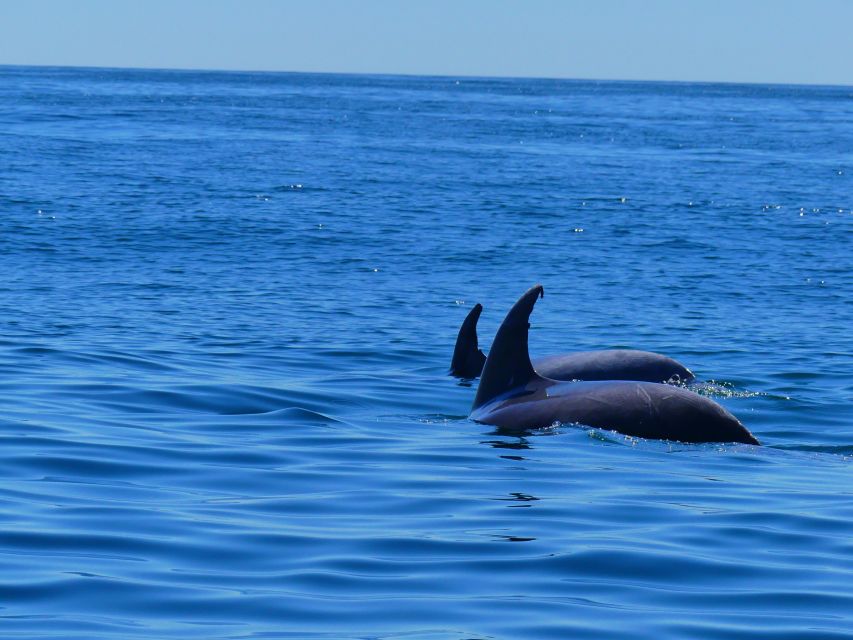
Faro’s Atlantic coast can deliver the sort of wildlife encounter you cannot stage: a pod of dolphins racing beside the boat, a whale surfacing with its calf, or, on a very lucky day, orcas moving through open water. The tour is led by marine biologists, so you get more than a fast boat ride and a quick look at fins.
I especially like the strict 30-minute observation limit for a dolphin group and the guides’ clear respect for wild animals. I also like the route itself, which begins among the Ria Formosa’s barrier islands before reaching the open Atlantic. The tradeoff is simple: wildlife is never guaranteed, and the ride can be cold, wet, and quite bumpy.
Key points to know before booking
- Wild dolphins are the main possibility: Dolphins live in the area year-round, while whales are more likely between February and May.
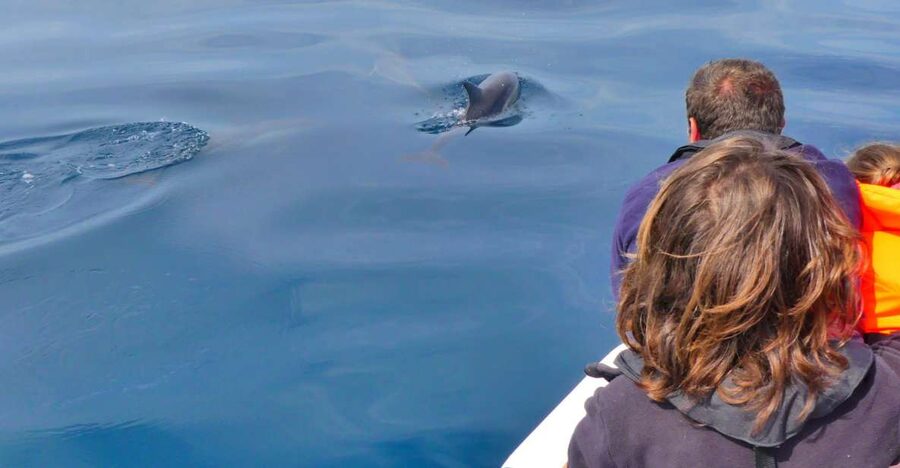
- Marine biologists lead the trip: Guides such as Miguel, Pedro, Ines, Alfredo, and Susanna explain animal behavior and how sightings support research.
- The route has two very different moods: You begin in the calmer Ria Formosa and then cross into open Atlantic water.
- The boat ride is lively: Expect wind, spray, swell, and firm seating, especially once you reach the ocean.
- Sightings vary: Around nine out of ten trips are successful, but nobody can promise dolphins, whales, or orcas.
- The price reflects a focused outing: At $76 per person for 2.5 hours, you are paying for a small, specialist wildlife trip rather than a simple harbor cruise.
From Faro Marina to the Ria Formosa
You meet at the Ocean Vibes Algarve office in Faro harbor. Look for the shared shop with the Ocean Emotions banner. Hotel pickup is not included, so plan your route to the marina before departure and allow enough time to find the right storefront.
The trip begins in the Ria Formosa Natural Park, a broad waterway of marshes, channels, sandbanks, and barrier islands. As the boat moves toward the Atlantic, you can look across to Deserta and Culatra islands. This opening section is more than a transfer to the sea. It gives you a close look at the protected coastal setting that supports birds and marine life before the boat reaches deeper water.
The transition matters. Inside the Ria Formosa, the water can feel sheltered and calm. Outside the barrier islands, the Atlantic brings more wind and movement. The boat ride becomes part of the experience, not merely transportation.
The guides give a short safety briefing and explain how to use your life jacket. They also set the ground rules for wildlife watching: do not feed animals, touch them, or try to force an encounter. That approach is important because dolphins are free animals, not performers waiting for a cue.
Other trips out to look for dolphins from Faro:
- Small Group Dolphin and Wildlife Watching Tour in Faro
★ 5.0 · 578 reviews - Albufeira: 2.5-Hour Benagil Caves & Dolphin Watching
★ 4.6 · 10,710 reviews - Albufeira: Benagil Caves & Dolphin Watching Speed Boat Tour
★ 4.6 · 6,316 reviews
Reaching the Atlantic and starting the search
Once the boat reaches open water, the guides begin scanning for signs of life. They watch for fins, blows, groups of birds, and other movement on the surface. The crew may check several areas before finding anything, so you need to be comfortable with a period of searching.
That waiting time can feel slow if you expect nonstop action. It can also be fascinating. You are looking at the same water as the biologists, learning how small clues can point to an animal below the surface. Several trips have taken about 45 minutes or more to find wildlife, while others have reached dolphins sooner.
The boat is fast, which helps the crew cover a useful stretch of ocean within the 2.5-hour schedule. It also means the ride can be rough. People with back problems, limited mobility, or a strong dislike of bouncing boats should think carefully before booking. Pregnant women and children under two are not permitted on the tour.
Bring a jacket even on a warm Algarve day. Wind feels much colder once the boat is moving, and spray can make you damp. Water, sunscreen, and comfortable clothing are practical essentials. Smoking and pets are not allowed, although assistance dogs are permitted.
Dolphins in their natural setting
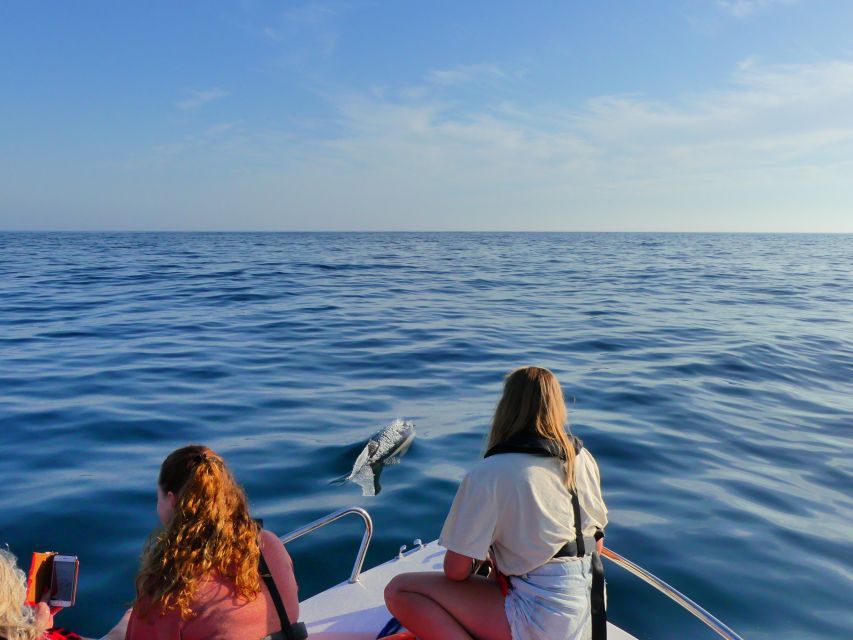
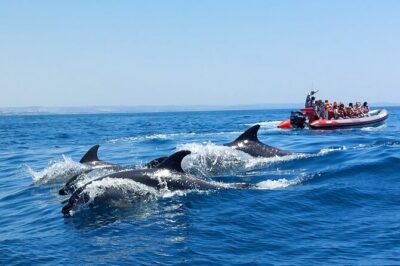
Dolphins are resident in the area all year, making them the most realistic wildlife target. Possible species include common dolphins and bottlenose dolphins, and the trip may also produce sightings of striped dolphins. The exact encounter depends on where the animals are and how they behave that day.
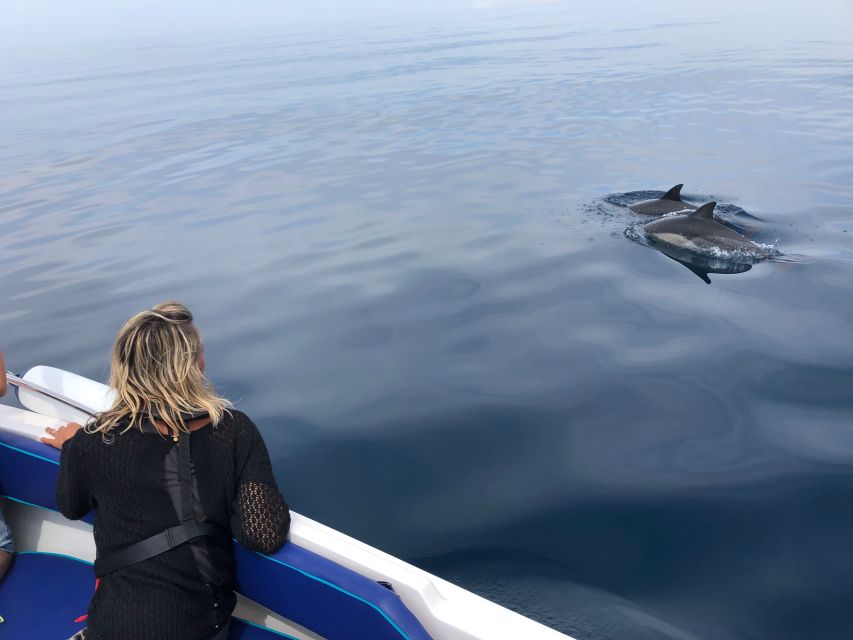
When a group is found, the boat keeps a respectful distance and allows the dolphins to decide how close they want to come. They may pass beneath the boat, swim alongside it, jump, or disappear without warning. That uncertainty is part of the appeal. You are watching an animal choose its own movements rather than following a fixed show.
The planned observation time is about 30 minutes with a group of dolphins. This limit helps prevent prolonged pressure on the animals and keeps the experience within responsible wildlife-watching rules. In some cases, dolphins may continue alongside the boat for part of the return journey, but that is not something you should count on.
The guides use the sighting to explain dolphin behavior, social groups, and the way marine biologists collect data on populations. The strongest part of the experience is often this connection between the sighting and the science. You begin to notice how the animals travel, surface, and interact, rather than simply counting how many appear.
Whales, orcas, and the lucky surprises
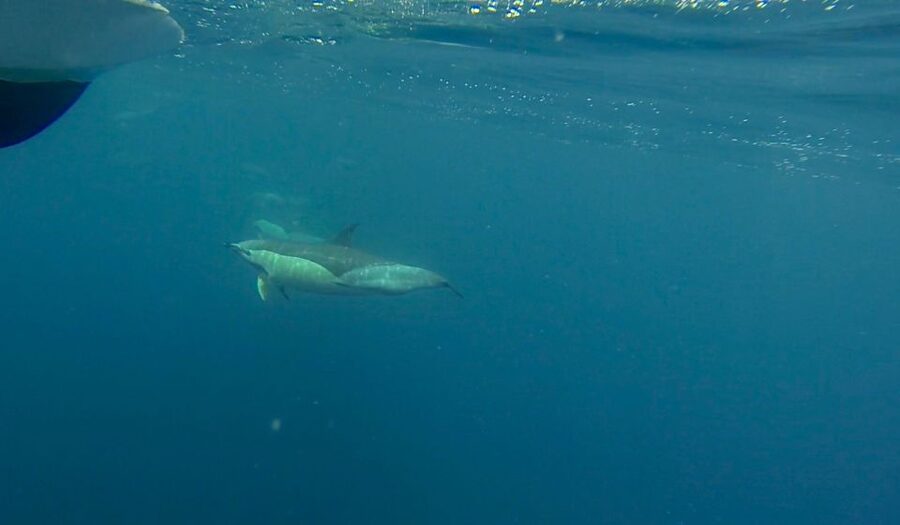
Whales are more seasonal than dolphins. The best stated period for whale sightings is February through May, though sightings have also occurred outside that window. Species reported on trips include fin whales and Bryde’s whales, with some especially memorable encounters involving a mother and calf.
Whale watching requires patience. A fin whale may surface at a distance, vanish, and reappear several minutes later. If the crew spends extra time searching, that is usually because the animals are worth following carefully, not because the boat has a fixed display to reach.
Orcas are possible but much less predictable. A June trip produced a pod that included an adolescent and a baby, while other outings have found no whales at all. The same applies to rare sightings such as a whale and calf being observed for an extended period. These are exceptional moments, not promised features of the tour.
Other possible wildlife includes porpoises, ocean sunfish, blue sharks, hammerhead sharks, marine turtles, gannets, shearwaters, and large tuna. You may see only a few of these, or you may see several kinds during one outing. The guide’s role is to help you notice animals that are easy to miss, especially seabirds and distant surface movement.
Same base, a different kind of day out:
- 4 Stops | 3 Islands & Ria Formosa Natural Park – From Faro
★ 5.0 · 3,080 reviews - From Faro: Benagil Cave, Marinha Beach, Algar Seco & More
★ 4.7 · 2,027 reviews - Ria Formosa – Boat trip to the 3 Islands: Armona | Culatra Island | Lighthouse
★ 5.0 · 1,872 reviews - Ria Formosa Natural Park and Islands Boat Cruise from Faro
★ 5.0 · 1,314 reviews
The marine biologists make the difference
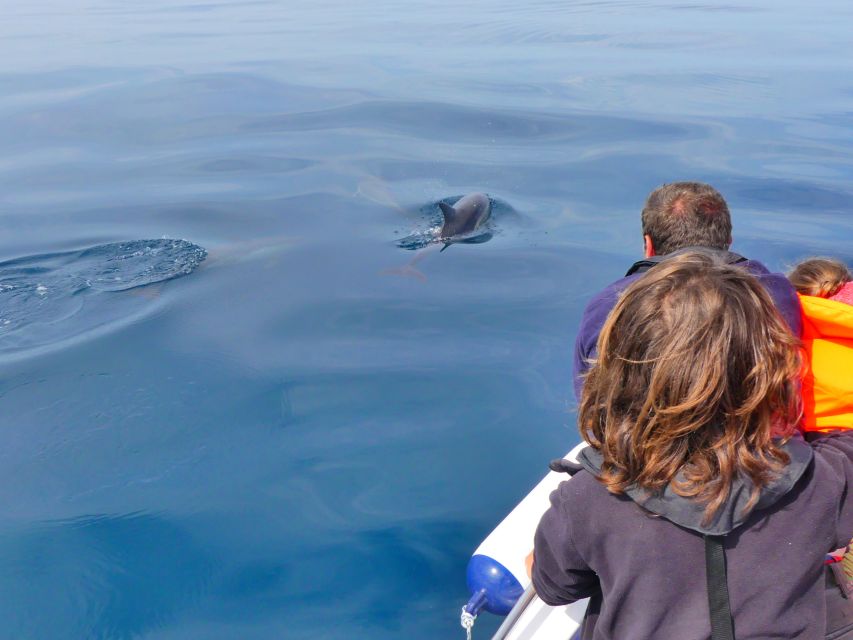
This tour’s strongest feature is the guide team. Names appearing among the guide and skipper teams include Miguel, Pedro, Ines, Alfredo, Susanna, and others. The guides speak English, French, Portuguese, and Spanish, and the information is woven into the search rather than delivered as one long lecture.
You can ask questions about dolphin behavior, feeding, breeding, social life, and conservation. The guides also explain how researchers gather information about local dolphin populations. That gives the trip a purpose beyond taking photographs.
I value the team’s apparent willingness to keep searching when the first part of the outing produces nothing. Several trips lasted longer than expected when the crew had a good reason to continue looking. Still, do not build your schedule around an extension. The advertised duration is 2.5 hours, and you should leave a little spare time afterward if you have dinner, a train, or another booking.
The guides’ enthusiasm is another plus, but it should not be confused with a guarantee of sightings. A cheerful and committed crew can search well, explain the ecology, and follow good wildlife rules. They cannot control the ocean.
What the boat ride feels like
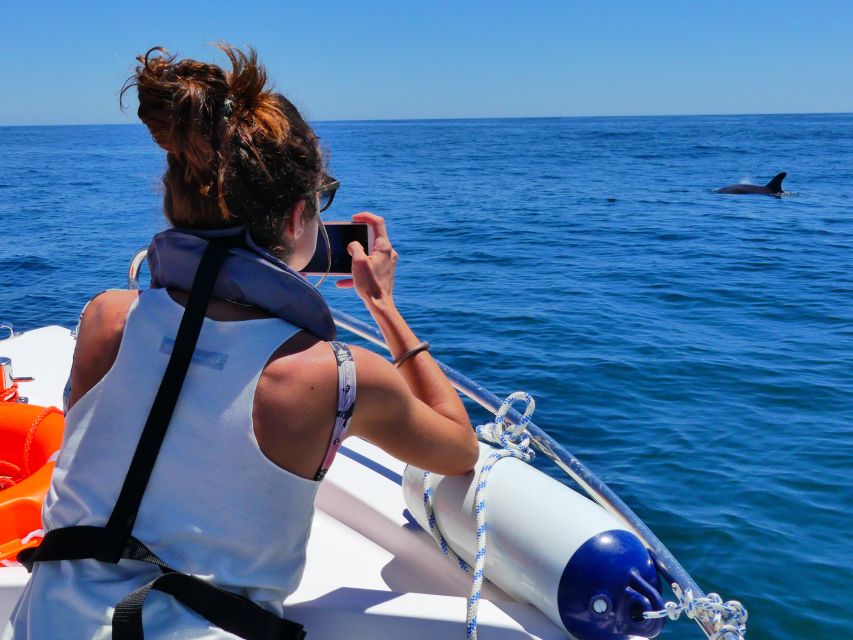
This is an active boat trip, not a gentle sightseeing cruise. The ride across the open ocean can be fast and bumpy, with spray on windy days. Some people describe the movement as exciting, while others may find the seats uncomfortable by the end.
You will usually spend time seated while scanning the water. Once a pod appears, attention shifts quickly as everyone tries to follow the animals without crowding them. Bring a jacket that can handle wind and consider protecting your phone from spray. The supplied information asks you to bring comfortable clothes, water, and sunscreen.
Life jackets are included. The tour is not recommended for people with mobility impairments, and the operator also excludes people with back problems and pregnant women. It is worth taking those limits seriously because getting to and remaining on a moving boat may be demanding.
If you are prone to seasickness, the Atlantic swell may be a concern. The tour information does not include motion-sickness medication, so you would need to plan that for yourself. The ride can be part of the fun, but the ocean is not always gentle.
Is $76 a fair price?
At $76 per person, this is not the cheapest way to get on the water in Faro. The price makes more sense if you want a specialist wildlife outing with marine biologists, rather than a standard cruise around the lagoon.
You are paying for a guided search in open Atlantic waters, a fast boat capable of covering ground, safety equipment, multilingual guidance, and time devoted to observing wild animals responsibly. The educational side also adds value. You learn why the crew approaches animals carefully and how sightings can contribute to population research.
The value depends heavily on your expectations. If you require a guaranteed dolphin encounter, the price may feel risky. The stated success rate is around nine out of ten tours, but one in ten can still produce no sighting. One outing had no wildlife sightings and was still enjoyed for the boat ride and ocean conditions, but you should decide in advance if that would be enough for you.
The free cancellation policy helps reduce the risk. You can cancel up to 24 hours ahead for a full refund, and the reserve-now, pay-later option lets you keep plans flexible.
The best time to choose
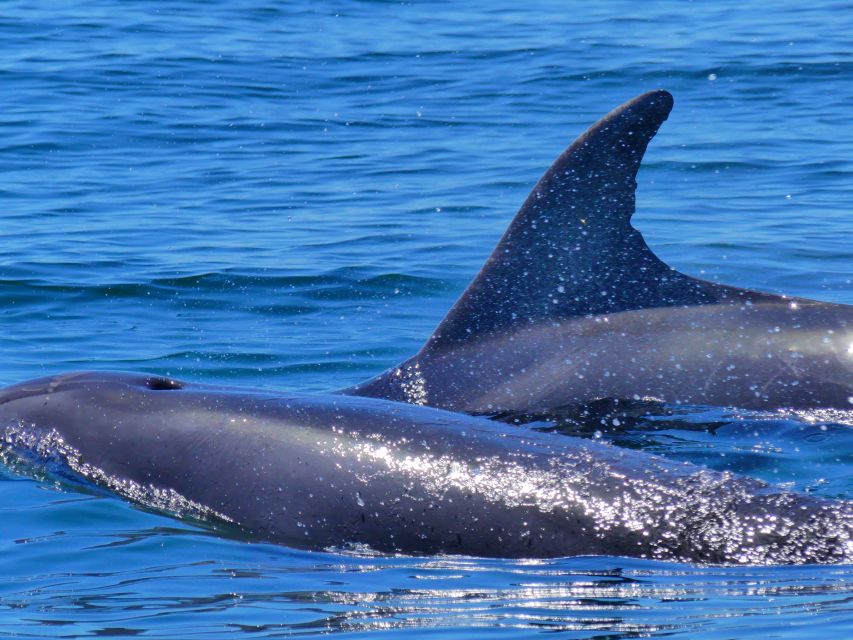
Dolphins are present throughout the year, so you have a reasonable reason to book in any season. February through May is the more promising period for whales, although no month guarantees them.
Spring outings can bring whales, dolphins, seabirds, and other marine life, but you will want warm layers. Summer often offers pleasant conditions on land, though the boat can still feel cold once it speeds into the wind. Several summer trips produced large dolphin groups and even rare orca sightings, but those events remain dependent on animal movement.
Sunset light can add a memorable finish when timing allows, and one outing received extra time to watch the sunset. Treat that as a possible bonus, not a scheduled part of the trip.
Who should book this experience?
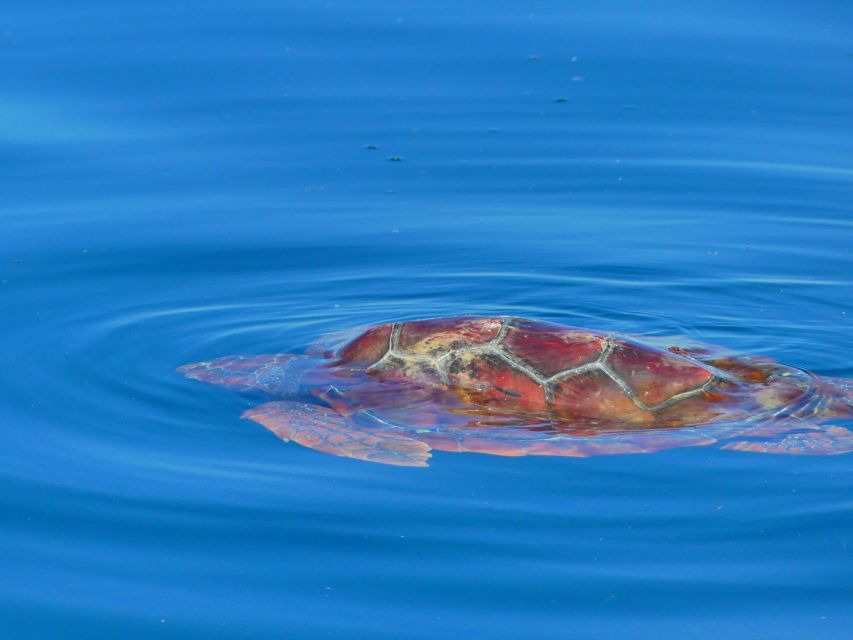
You should book if you enjoy wildlife, can accept uncertainty, and want to see animals in the wild rather than at a marine park. It suits adults, older children over two, and anyone who likes combining science with outdoor adventure.
It is especially good for visitors who appreciate patient guides. The crew may spend much of the outing looking at empty water before a sudden fin or blow changes everything. That build-up is exciting if you see it as part of the search.
You should think twice if you have back problems, limited mobility, are pregnant, or dislike rough water. The tour is also a poor match for anyone who needs a guaranteed schedule or a guaranteed animal encounter.
Final verdict: book for the search, not a promise
I would book this tour if dolphins are a major wish for your Algarve stay and you can accept that nature makes the timetable. The combination of the Ria Formosa, open Atlantic views, marine biologists, and responsible observation rules gives the trip more substance than a quick boat ride.
Book in February through May if whales matter most, and leave spare time after the 2.5-hour outing. Bring warm layers, water, sunscreen, and a practical attitude toward spray and swell. You may see common dolphins, bottlenose dolphins, a whale, seabirds, or something far rarer. You may also spend much of the trip searching. That is the honest bargain: a well-run chance to meet Atlantic wildlife on its own terms.
FAQ
Where does the dolphin tour leave from?
The meeting point is the Ocean Vibes Algarve office in Faro harbor or marina. Look for the shared shop with a banner reading Ocean Emotions.
How long does the activity last?
The boat trip lasts 2.5 hours. Starting times vary, so check availability when booking.
Are dolphins guaranteed?
No. Dolphins swim freely in the wild, so a sighting cannot be guaranteed. The stated normal success rate is around nine out of ten tours.
What animals might I see?
Possible sightings include dolphins, whales, porpoises, orcas, gannets, shearwaters, ocean sunfish, blue sharks, hammerhead sharks, marine turtles, and tuna.
When is whale season?
The stated whale season is from February through May. Whales can still be seen at other times, but no sighting is guaranteed.
How long can I watch a dolphin group?
After a group is found, the planned observation time is 30 minutes. This limit helps reduce stress on the animals.
Which languages are available?
The live guides can provide the tour in English, French, Portuguese, or Spanish.
What should I bring?
Bring comfortable clothing, a jacket, water, and sunscreen. You may get wet on windy days, and the wind can feel cold even when Faro is warm.
Is the tour suitable for everyone?
No. It is not suitable for children under two, pregnant women, people with back problems, or people with mobility impairments. Smoking and pets are not allowed, although assistance dogs are permitted.
Just added in Faro
- From Faro: Ria Formosa Sunset Boat Trip★ 4.8 · 315 reviews
- Ria Formosa & Ilhas: Sunset Boat Trip★ 5.0 · 322 reviews
- Ria Formosa Sunset 1 hour Boat Trip in Faro★ 5.0 · 323 reviews
- Boat Tour of 2 Ria Formosa Islands: Culatra and Armona★ 5.0 · 426 reviews
- Faro Airport Private Transfer to or from Alvor★ 5.0 · 287 reviews
- Small Group Dolphin and Wildlife Watching Tour in Faro★ 5.0 · 578 reviews
- From Faro: Benagil, Marinha, 7 Valleys, and Algar Seco Tour★ 5.0 · 587 reviews
- Faro Airport Private Transfer to Albufeira★ 5.0 · 785 reviews
Dolphin Watching, compared.
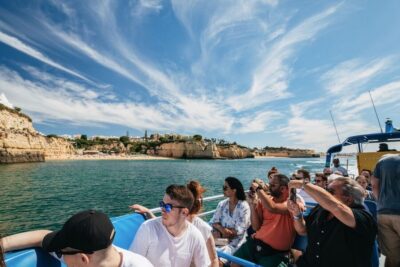
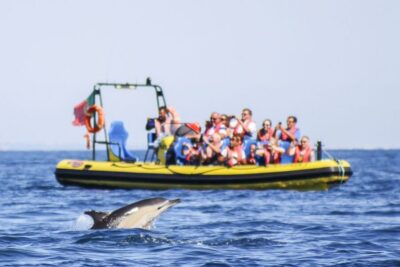
Benagil Caves & Dolphin Watching Speed Boat Tour
Read our review →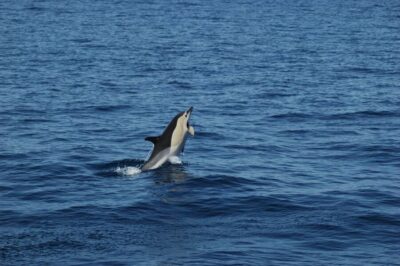
Dolphins Search and Benagil Caves from Albufeira
Read our review →
Benagil Caves & Dolphins Watching with Biologist
Read our review →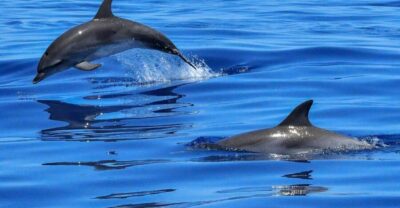
Tagus River Cruise to the Ocean & Dolphin Watching
Read our review →Browse the lists this tour appears in