
Reviewed · HISTORICAL TOURS
Lisbon: Jewish History Tour of Lisbon
Lisbon’s Jewish story is largely written in the city’s streets rather than displayed in museums. This tour follows that story from Praça do Comércio, through Alfama and Mouraria, to Rossio, connecting medieval Jewish quarters, forced conversions, the 1506 Pessah massacre, and the later passage of Jewish refugees during World War II.
I like the way the walk places Jewish history inside the wider story of Lisbon, Portugal, and the Atlantic world. I also like the private format, which gives you room to ask questions and adjust the route. The main drawback is clear: few physical remains survive, so this is an oral and historical tour more than a visit to intact synagogues or Jewish monuments.
Key points to know before booking
- Praça do Comércio begins the story: The tour links this grand riverside square with the Exodus and the wider movement of Jewish communities.
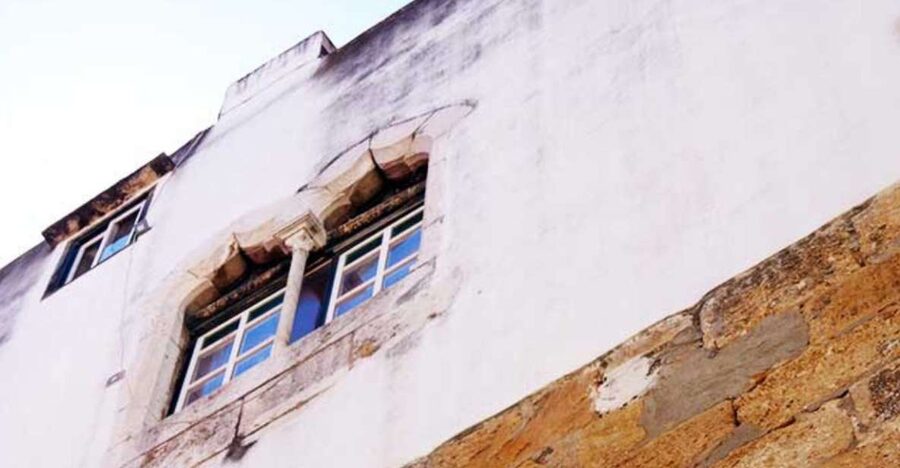
- Alfama reveals the medieval city: Walk the castle hill and old Jewish quarter while learning how medieval segregation shaped daily life.
- Rossio carries a painful memory: The route covers the 1506 Pessah massacre and the persecution that followed.
- Baixa explains forced conversion: You will learn how Jewish residents were pressured into becoming New Christians.
- The story reaches beyond Lisbon: Guides connect Portugal’s Jewish communities with a diaspora that spread toward the Atlantic, Mediterranean, Asia, and northern Europe.
- Expect history more than surviving objects: The walk uses streets, neighborhoods, churches, hidden Roman remains, and explanation because very little Jewish material survives in Lisbon.
A city walk built around memory
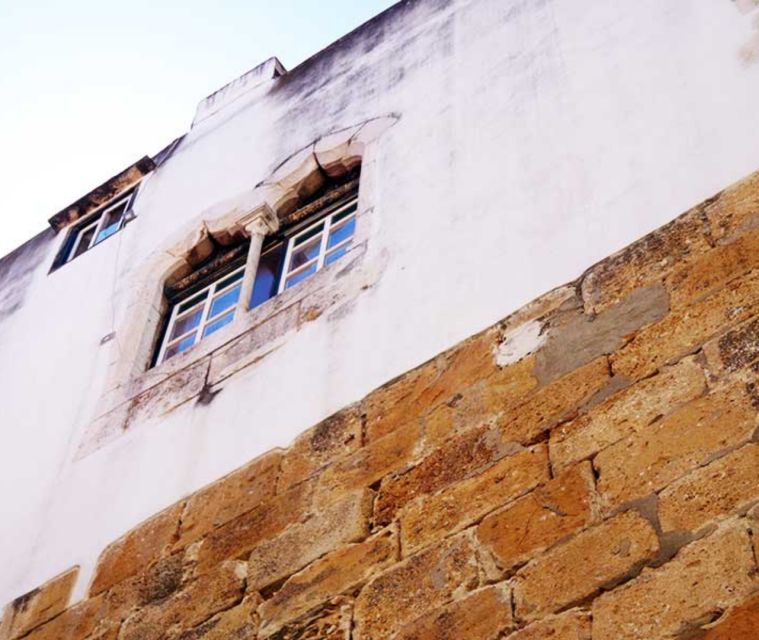
This three-hour tour is not a checklist of Jewish buildings. It is a guided reading of Lisbon itself. You walk through districts that changed dramatically over time, while the guide explains where Jewish communities lived, how they were treated, and how their influence continued after conversion and dispersal.
That approach matters in Lisbon. The city’s Jewish presence before the Inquisition is not easy to see at a glance. There are few surviving artifacts and few obvious markers. You will not spend the whole morning moving from one preserved Jewish site to another. Instead, your guide supplies the missing context.
The strongest guides appear to be those who can make that context clear without turning the walk into a lecture. José Antunes is repeatedly singled out for his command of Portuguese and Jewish history, while Jorge, Filipa, Fellipe, Rita, Sofia, and other guides are described as clear, engaging, and willing to answer questions. The guide assigned to your booking may differ, but the important quality is the ability to explain a complicated past while keeping you oriented in the modern city.
The private-group format is useful here. You can ask about family history, conversion, Portuguese exploration, religion, or local food traditions without worrying about slowing down a large group. The route can also be adapted to different time frames and starting points, though the standard meeting place is beneath the large triumph arch at Praça do Comércio.
A few more things to do in Lisbon worth a look
- Lisbon: History, Stories and Lifestyle Walking Tour
★ 4.8 · 10,902 reviews - Lisbon: Live Fado Show with Port Wine in Historic Center
★ 4.7 · 4,166 reviews - Lisbon: Fado Show with Wine in a Historic Venue
★ 4.8 · 1,294 reviews
Starting at Praça do Comércio and the river
The tour begins beneath the arch at Praça do Comércio. Look for the guide carrying an orange backpack or a tote bag with the large Lisbon Walker logo.
This is a practical meeting point. The square is easy to identify, and the arch gives you a clear landmark in a part of Lisbon where streets, trams, and open space can otherwise make meeting arrangements vague. It also gives the tour a strong opening scene. The former riverside commercial center connects Lisbon’s Jewish story with migration, departure, and the Exodus.
From here, the route passes through Praça do Município, Rua do Comércio, Casa dos Bicos, and the Ribeira area. These stops help establish Lisbon as a port city linked to people and ideas moving across the Atlantic and beyond. The tour also explains how the Jewish diaspora spread from Lisbon toward the Mediterranean, Asia, northern Europe, and other parts of the Atlantic world.
Do not expect each stop to offer a clear Jewish building to enter. The value is in the connection between location and story. A square that looks like a postcard view becomes part of a much larger account of movement, commerce, persecution, and cultural exchange.
The mention of Jewish influence in Portuguese culture, science, and gastronomy also broadens the experience. You are not only hearing about loss. You are hearing how a community’s legacy continued through people who converted, emigrated, or carried traditions elsewhere.
Alfama and the medieval Jewish quarters
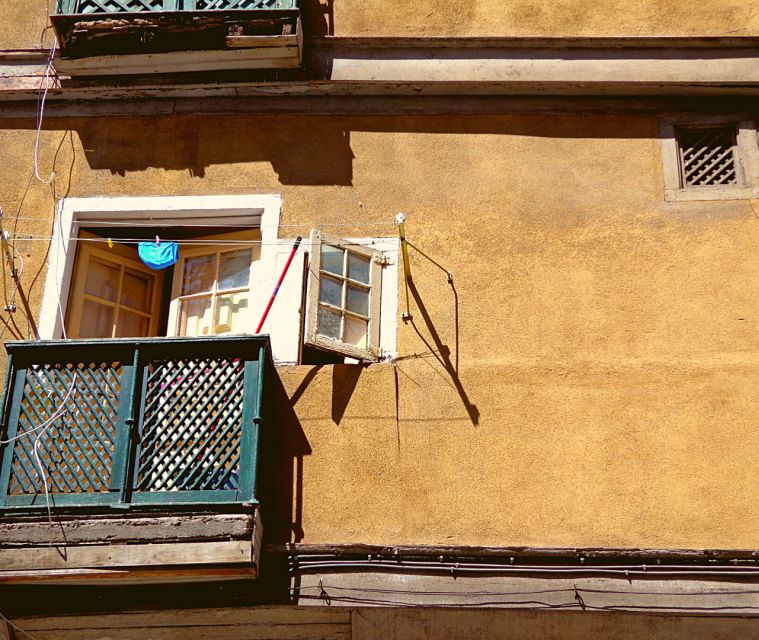
The walk then reaches the castle hill, Alfama, and the old Jewish quarter. Alfama’s steep streets and tightly packed lanes make this one of the most useful parts of the route for understanding medieval segregation.
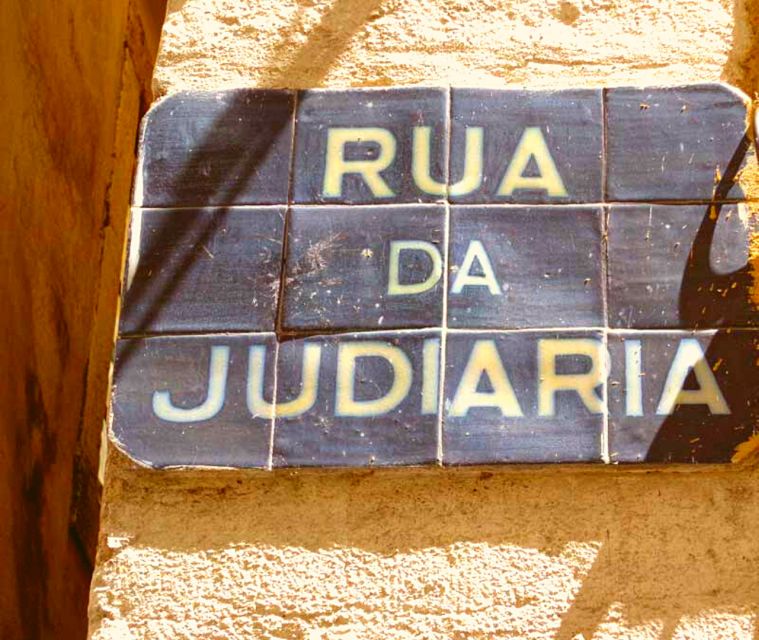
The tour covers the old judiarias, the areas associated with Jewish residents, and explains how separation worked in the medieval city. You will walk through the neighborhood rather than view it from a bus, so the physical setting matters. Narrow streets, slopes, and old urban patterns help you picture how communities occupied particular parts of Lisbon.
This is also where comfortable shoes become essential. The route involves a fair distance and includes Lisbon’s uneven streets and hills, even though some guides have adjusted the pace and offered rest stops during hot weather. One account describes the hill climbing as limited, but you should still expect a walking tour rather than a flat promenade.
Alfama is valuable because the guide can point out historical context that you would probably miss alone. The neighborhood may look simply picturesque, but the tour asks you to see it as part of a system of residence, restriction, religion, and daily life.
The drawback remains the lack of visible remains. You may be standing in an area associated with Jewish life without seeing a preserved synagogue, inscription, or collection of objects. If you need substantial physical evidence, this tour may feel frustrating. If you are willing to use the streets as a starting point for explanation, Alfama becomes one of the walk’s most meaningful sections.
Baixa and the pressure to become New Christians
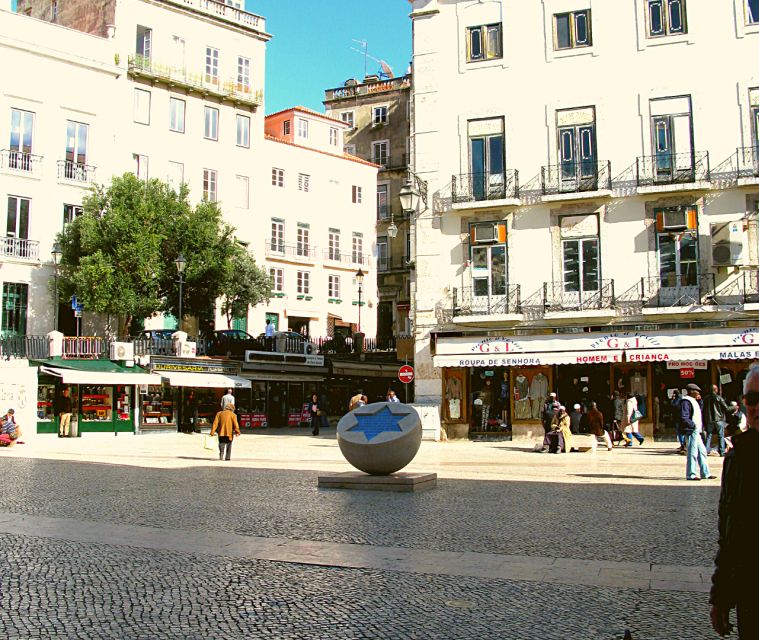
The route continues through Baixa, where the focus shifts toward forced conversions and the changing status of Portugal’s Jewish community.
This part of the tour helps explain a painful transition. Jewish residents were not simply absent from Lisbon after persecution intensified. Many were forced to convert and became known as New Christians. Their identity, family history, and place in Portuguese society could remain complicated for generations.
Baixa is also a useful setting for discussing how little a modern city may reveal about a past community. The district is associated with commerce, rebuilding, and central Lisbon life, yet the Jewish history here is not immediately obvious. The guide’s job is to connect ordinary streets with the political and religious pressures that shaped them.
I would pay close attention during this section if you are interested in Sephardic ancestry or the history of conversion. The tour links local events to the wider diaspora, showing how families and traditions spread after persecution and displacement. It also places Lisbon within Portuguese history instead of treating Jewish history as a separate subject.
The private format is especially helpful here. Terms such as forced conversion, New Christian, Inquisition, and diaspora can raise difficult questions. A good guide can pause, clarify the sequence of events, and explain how the community’s legacy continued even when public Jewish life was suppressed.
Same base, a different kind of day out:
- Lisbon City Center Tour – The Unmissable Lisbon
★ 5.0 · 22,234 reviews - Lisbon: Sintra, Pena, Regaleira, Cabo da Roca & Cascais
★ 4.7 · 19,656 reviews - Lisbon: Jerónimos Monastery Entrance Ticket
★ 4.1 · 14,164 reviews - Lisbon: Sunset Boat Party Cruise with DJ and Open Bar
★ 4.5 · 10,378 reviews
Rossio and the 1506 Pessah massacre
The route reaches Praça da Figueira and Rossio, including the 1506 Pessah massacre. This is one of the most sobering sections of the walk.
The stop at Rossio shows how a central public space can hold a painful history that is easy to overlook. The tour presents the massacre as part of the story of Jewish persecution in Lisbon, not as an isolated event. It connects the violence to the broader treatment of Jewish residents and New Christians during a period of religious pressure.
This section may be emotionally difficult, but it is important. The tour does not reduce Jewish history in Lisbon to architecture or folklore. It deals directly with exclusion, forced change, and violence.
Praça da Figueira and Rossio also help the guide show how the city’s present-day movement sits over older layers of history. You may be looking at busy public squares while listening to an account that is not visible in the surrounding buildings. That contrast is part of the point.
Because artifacts are scarce, storytelling carries much of the weight here. Your experience will depend heavily on the guide’s clarity and tone. The strongest guides described by past participants, including José, Filipa, and Jorge, are praised for keeping the subject engaging while answering questions carefully.
The resistance museum, Mouraria, and modern Jewish Lisbon
The itinerary also includes the Resistance Museum and Mouraria. These stops widen the time frame beyond medieval Lisbon and the Inquisition.
The Resistance Museum brings the discussion toward modern Portuguese history and the years of World War II. The tour covers the passage of Jewish refugees through Lisbon during the 1940s, adding a modern chapter to the story of movement and refuge.
This is an important feature. A tour limited to medieval quarters could leave you with the impression that Jewish history in Lisbon ended centuries ago. The modern section shows that Lisbon continued to matter as a point of passage during another period of upheaval.
Mouraria provides another neighborhood setting for discussing Lisbon’s communities and cultural change. The route does not promise a large collection of modern Jewish sites, so listen for how the guide links neighborhoods, migration, and the city’s changing identity.
Some guides also add nearby material when it helps explain the setting, including churches and hidden Roman remains. That can be useful if you want a broader introduction to Lisbon’s past, though it also means the tour is not limited to Jewish sites at every minute. If your priority is a tightly focused sequence of Jewish buildings, ask about the route when booking. If you appreciate wider historical context, these additions should make the walk more rewarding.
Why the lack of artifacts matters
Several practical reviews of this experience point to the same issue: there are few, if any, physical remains of Lisbon’s earlier Jewish community. The tour description makes that limitation worth understanding before you pay.
You should not book this expecting a museum visit with abundant objects, a preserved medieval synagogue, or a series of clearly marked ruins. The tour is built around neighborhoods, historical locations, oral explanation, and the skill of the guide.
That is not necessarily a weakness. In fact, it can make you more aware of how persecution and forced conversion erase visible traces. The absence of a building becomes part of the historical lesson. Still, the experience will suit you best if you enjoy listening, asking questions, and imagining earlier city life from limited evidence.
The guide may also show churches or Roman remains. These are not substitutes for Jewish artifacts, but they help you understand the layers of Lisbon around the old Jewish quarters. Several guides have been praised for making the broader history of Portugal clear while keeping Jewish life at the center.
Guide quality and the private format
The strongest feature of this experience is the guide. José Antunes receives especially warm attention for his detailed command of Portuguese and Jewish history, his ability to answer questions, and his storytelling. Filipa and Fellipe are also described as engaging and clear, while Rita, Sofia, Jorge, and other guides are noted for friendly presentation and strong preparation.
Your assigned guide may not be one of these names, so I would not book solely on the hope of receiving a particular person. The consistent pattern is more useful: the guides are expected to explain difficult material, keep the walk interactive, and adapt to the group.
The private format gives you a better chance of getting that kind of attention. You can ask for more detail about New Christians, the 1506 massacre, Portugal’s diaspora, or the World War II refugee passage. The route can also be tailored to different starting points and time frames.
The walk has been handled successfully in hot weather and with older participants, with breaks when needed. Even so, bring comfortable shoes and plan for a substantial amount of walking. The tour lasts three hours, not a full day, despite the activity being valid for one day when booked.
Is $106 good value?
At $106 per person, this is not the cheapest way to see Lisbon. Its value depends on what you want from the experience.
For a private three-hour tour with a live English or Portuguese-speaking guide, the price can make sense if Jewish history is a major reason for your visit. You are paying for interpretation, route planning, and the ability to ask questions, not for admission to a collection of major monuments. The tour includes the guided walk, but food, drinks, hotel pickup, and hotel drop-off are not included.
The price is harder to justify if you want a self-guided neighborhood stroll or a tour filled with visible Jewish architecture. There simply are not enough surviving physical remains for that kind of experience. You are paying for a historical account set against the city.
Free cancellation up to 24 hours before the tour and the option to reserve now and pay later reduce the risk of fitting it into a changing Lisbon schedule. Starting times depend on availability. Meet under the arch at Praça do Comércio, and bring water and shoes suited to uneven streets, even though only comfortable shoes are specifically required.
Who should book this Lisbon history walk?
I would recommend this tour to you if you have Jewish family connections, an interest in Sephardic history, or a desire to understand Portugal through the experience of a persecuted and dispersed community.
It is also a good choice if you enjoy walking tours that combine local streets with careful storytelling. You will see several central Lisbon districts, learn how the city’s history connects with the wider diaspora, and hear about both medieval life and twentieth-century refugees.
You may want to skip it if you need extensive physical evidence at every stop. The tour cannot change the fact that very few Jewish artifacts remain in Lisbon. It is also less suitable if you dislike hills, uneven streets, or three hours of walking, although the route can be adapted and guides may allow rests.
Should you book it?
Book this Jewish History Tour of Lisbon if you want a personal, place-based account of Jewish life in Portugal and understand that the city offers more historical clues than surviving monuments.
The best reason to go is the guide’s ability to connect Praça do Comércio, Alfama, Baixa, Mouraria, and Rossio into one story of community, persecution, conversion, migration, and survival. The main caution is just as important: you will spend much of the tour listening and interpreting rather than looking at original Jewish buildings or artifacts.
For most visitors with a serious interest in Jewish history, the private format and strong guide feedback make the $106 price reasonable. Bring good shoes, allow time for questions, and meet beneath the arch with realistic expectations. Lisbon’s Jewish past is not always easy to see, but this walk gives you a way to recognize it.
FAQ
How long is the Jewish History Tour of Lisbon?
The guided tour lasts three hours. The activity is valid for one day, with starting times based on availability.
Where does the tour begin?
Meet the guide under the large triumph arch at Praça do Comércio in Lisbon.
How will I recognize the guide?
The guide will carry an orange backpack or a tote bag with the large Lisbon Walker logo.
What languages are available?
The tour is offered in English and Portuguese.
Is this a private tour?
Yes. The activity is organized for a private group.
Does the tour include hotel pickup or drop-off?
No. Hotel pickup and drop-off are not included.
Are food and drinks included?
No. Food and drinks are not included in the price.
What should I bring?
Bring comfortable shoes. The tour involves walking through areas including Alfama, Baixa, Mouraria, Praça da Figueira, and Rossio.
Can the route be changed?
The tour can be tailored to different time frames and starting points. Ask about the preferred arrangement when booking.
Can I cancel for a full refund?
Yes. You can cancel up to 24 hours in advance for a full refund.
Just added in Lisbon
- Half day Spa Water Therapy experience at THE SPA at Corinthia Lisbon★ 4.5 · 51 reviews
- Lisbon Cinematic Photoshoot with Top-Rated Photographer★ 5.0 · 76 reviews
- Central Lisbon E-Bike Tour★ 5.0 · 168 reviews
- Small-Group Sailing Tour on the Tagus River from Lisbon★ 5.0 · 78 reviews
- Alfama and the Castle of Saint George Skip the line Tour★ 5.0 · 53 reviews
- City Centre Run in Lisbon★ 5.0 · 164 reviews
- Lisbon Sailing Catamaran Public Cruise with drinks★ 5.0 · 304 reviews
- Boat tours in the Óbidos Lagoon★ 5.0 · 100 reviews
Historical Tours, compared.

Historical Sites, Wine Experience, Lunch & Cruise
Read our review →
Live Fado Show with Port Wine in Historic Center
Read our review →

Browse the lists this tour appears in