
Reviewed · PORT WINE CELLAR TOURS
Porto: Magic Train Tour and Port Wine Cellar with Tastings
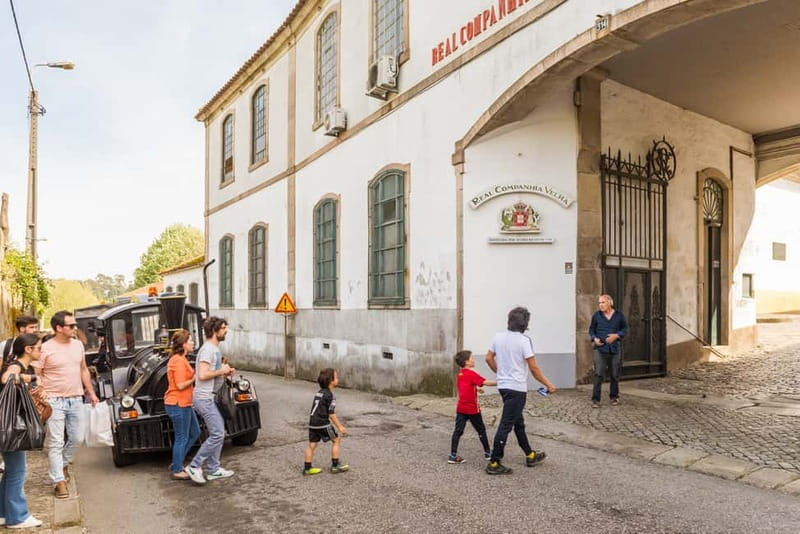
Porto’s Magic Train combines two useful introductions in one short outing: a rolling tour of the old city and a visit to Real Companhia Velha, Portugal’s oldest wine company. You’ll see major monuments from the train, then step into the oldest part of the cellar for a film, guided explanation, and two Port tastings.
I like the sensible $20 price and the way the tour gets you to the wine cellars without asking you to plan your own route. I also like the compact tasting, which gives you a clear first lesson in Port without taking over your day. The main drawback is the train ride itself: Porto’s cobbled streets can make it shake hard, and the audio may be difficult to hear from the back.
Key points to know before booking
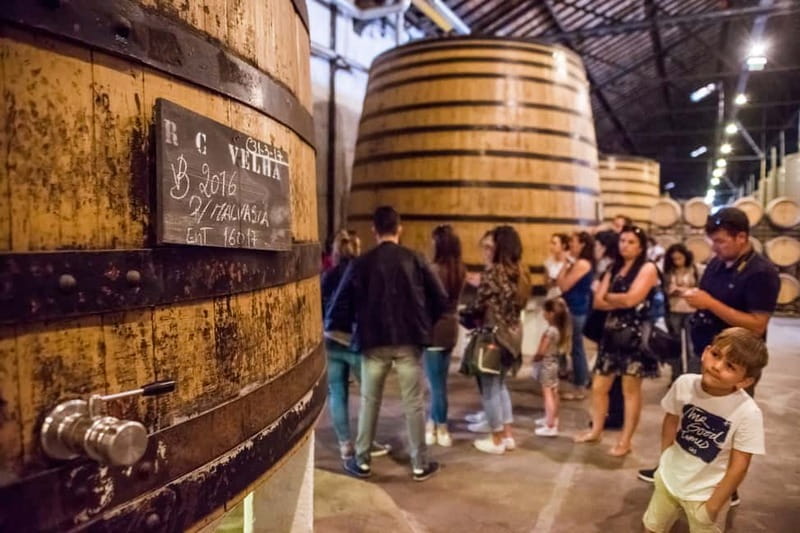
- Real Companhia Velha dates to 1756: Visit one of Portugal’s oldest wine companies and see its oldest cellar area.
- Two Port tastings are included: The tasting is short and focused, useful if you are new to this sweet fortified wine.
- The Magic Train leaves from Porto Cathedral: The route passes Sé, Batalha Square, Avenida dos Aliados, São Bento Station, and the Clérigos area.
- This is not a hop-on hop-off service: You ride the set route, get off for the cellar visit, and return to the train.
- The audio guide uses five languages: English, Portuguese, Spanish, French, and Italian are available.
- An optional lunch adds a Portuguese buffet: The meal is served at Ruela da Villa, a restaurant in a four-star hotel.
The Magic Train is best thought of as a short orientation ride with a wine visit attached, not as a full city sightseeing tour. For $20, you get transport around the historic center, admission to a Port cellar, a 15-minute documentary, a guided cellar visit, and two tastings. That is a fair deal if you want a quick first look at Porto and do not yet know much about its famous drink.
The ride begins at Porto Cathedral, also called Sé Catedral, in the old city. This Romanesque monument is an easy landmark, but do not assume your online voucher is the final ticket. You need to exchange it at the meeting point before boarding, so arrive early. The exact boarding area can be less obvious than the cathedral itself, with the train office and boarding point described as being down the hill and around the corner.
Starting at Porto Cathedral
Porto Cathedral gives the outing a fitting start. You are in the oldest part of the city, surrounded by steep streets, stone buildings, and major sights that are best understood on foot. The train lets you see the area without immediately tackling every hill.
Departures are scheduled every 30 minutes, but check the current availability for the exact times. The last departure that includes the cellar visit leaves about 1.5 hours before the service ends. This matters if you arrive late in the day. You may still see a train running, but not every departure will include the full wine stop.
The train has an audio guide in English, Portuguese, Spanish, French, and Italian. The live host or greeter languages are Portuguese, English, Spanish, and French. In practice, your enjoyment may depend on where you sit. The speakers at the back have not always been easy to hear, and some parts of the ride provide less commentary than you might expect.
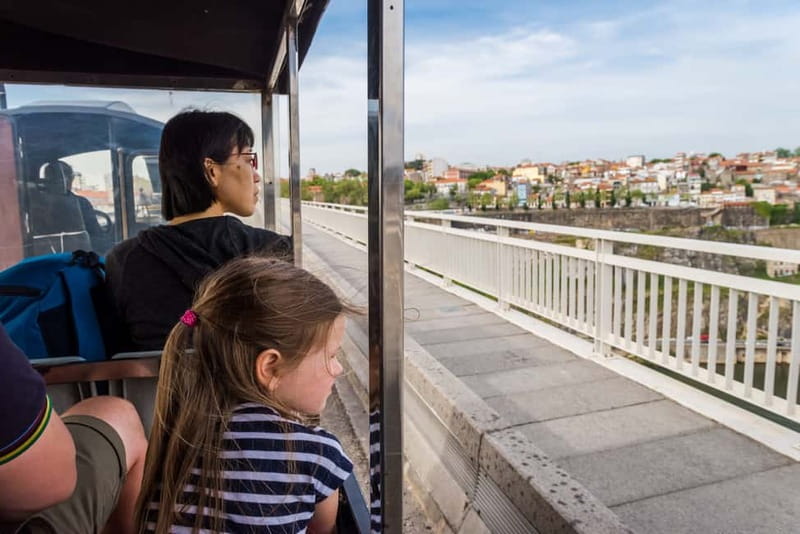
The vehicle is a tourist train rather than a regular city bus. That gives the outing a playful feel, especially for families and anyone who wants something lighter than a formal walking tour. It also means a rougher ride. Porto’s stone streets can make the carriage shake sharply, so this is not the best choice if you need a smooth, quiet journey.
More tastings within reach of Porto:
- From Porto: Douro Valley w/ Boat Tour, Wine Tasting & Lunch
★ 4.7 · 19,061 reviews - Complete Douro Valley Wine Tour with Lunch, Wine Tastings and River Cruise
★ 5.0 · 12,920 reviews - Porto: Live Fado Show with Glass of Port Wine
★ 4.8 · 6,498 reviews
The historic-center route
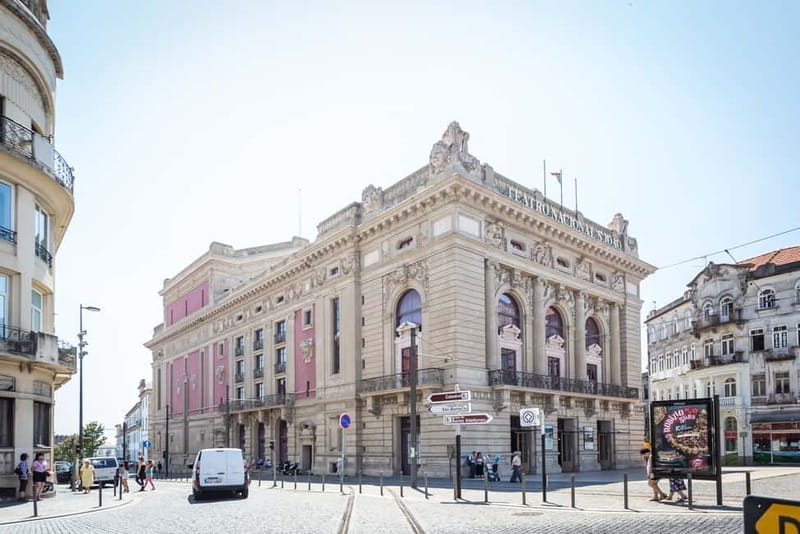
The train circles through the central sights, offering a useful preview of places you may want to visit later. You pass the São João National Theatre at Praça da Batalha, an important square near the upper part of town. From there, the route continues along Avenida dos Aliados, Porto’s grand central avenue.
São Bento Train Station is another highlight. Its exterior is easy to spot from the route, while the famous interior is best seen on foot because the train does not give you time to study the tiled hall. Consider the ride a preview, not a substitute for visiting the station.
The route also passes the Baroque Clérigos bell tower and the twin churches of the Convent and Church of Carmelitas. These lie close to Livraria Lello and a cluster of cafés. Again, the train helps you get oriented, but you will need to return on foot if you want photographs, interiors, or time to examine the architecture.
That distinction is important. The audio commentary can point out the major monuments, but the train keeps moving. You see Porto from the street rather than stopping at each sight. I find that useful on a first day, but less satisfying if you already know the center and want detailed commentary.
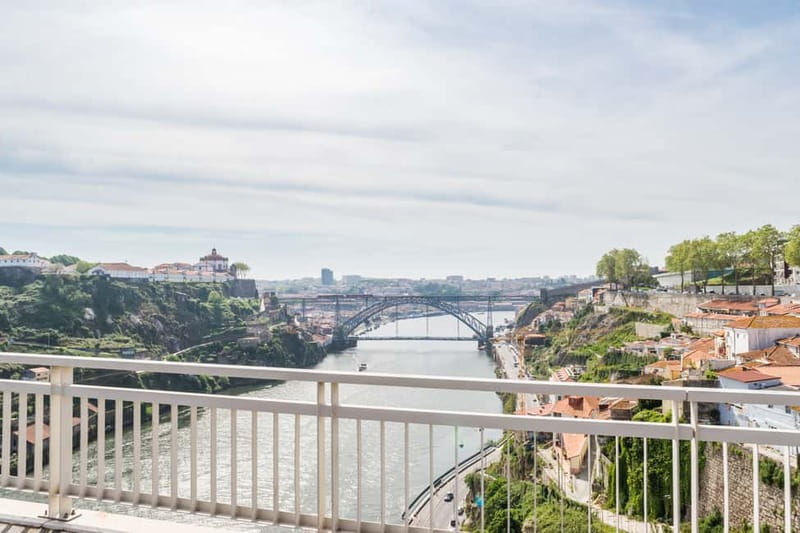
The route also gives you views from both sides of the Douro area, according to the advertised experience and the route description. Do not expect a long river cruise or a dedicated bridge tour. The value lies in seeing how Porto’s old streets, squares, shopping areas, and monuments fit together.
Entering Real Companhia Velha’s old cellar
The wine stop is the strongest part of the experience. The train takes you to Real Companhia Velha, founded in 1756 by King José I. That date gives the visit real context: you are not simply entering a modern tasting room, but one of Portugal’s oldest wine companies.
Inside, you begin with a 15-minute documentary about Port wine and its famous producers. The film keeps the history lesson short, which works well in a two-hour activity. You get the basic story before walking through the older part of the cellar.
The guided visit explains Port production and what makes the wine special. Port is a fortified wine, meaning it is stronger and usually sweeter than ordinary table wine. The tour is designed for beginners, so you do not need previous wine knowledge to follow the explanation.
The cellar visit also gives the tasting some purpose. Instead of simply receiving two glasses with no context, you first hear about the wine’s production and the role of the cellars. That small amount of background can change how you taste the drink. You begin to notice that Port is not just a generic sweet wine, but a product with its own methods and traditions.
The oldest cellar section is not a massive museum spread over many rooms. The stop is fairly compact, and some of your time is spent moving through the scheduled film and tour. If you want a long, technical wine seminar, this will feel brief. If you want a clear introduction during a city break, the length is about right.
Two Port tastings, kept short and useful
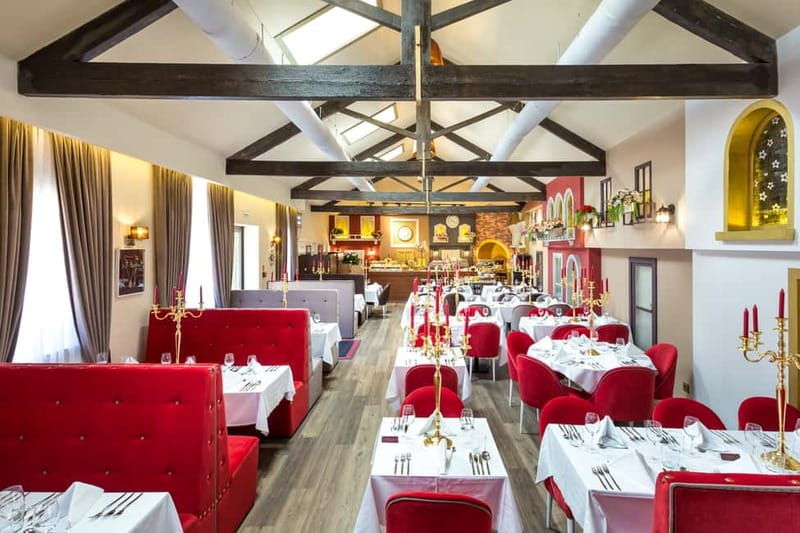
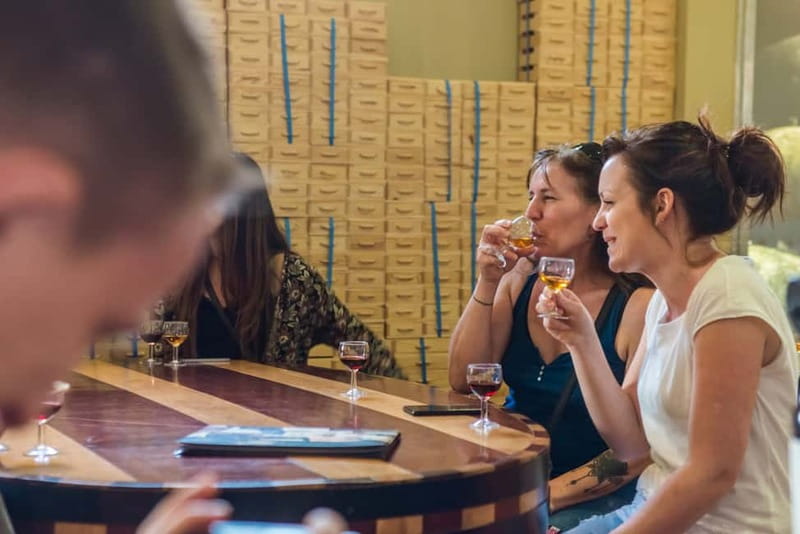
The tour includes two high-quality Port tastings. The tasting is not presented as a long wine class, and that is one of its advantages. You can learn the basics, try the wines, and continue your day without losing half an afternoon.
I would use this tasting as a starting point. Pay attention to the differences between the two pours and listen to the explanation before deciding what styles you prefer. The information is aimed at helping you understand Porto’s wine culture, not at turning you into a specialist.
The tasting also makes the $20 price easier to justify. A simple sightseeing train ride may feel thin on its own, while a cellar visit with two tastings gives the activity a clear purpose. You are paying for an orientation ride, transport to the cellar, entry, a guided visit, and samples.
The experience does not appear to include a large selection of wines or a purchase requirement. The emphasis is on two tastings and a short introduction. If you already have several cellar visits planned in Vila Nova de Gaia, you may find the wine portion familiar. For a first Port tasting, it is a practical choice.
More tastings and estates within reach of Porto:
- Douro Valley: Wine Tour with Lunch, Tastings & River Cruise
★ 4.6 · 6,081 reviews - Douro Valley: Historical Sites, Wine Experience, Lunch & Cruise
★ 5.0 · 5,133 reviews - Authentic Small Group Douro Wine Tour with Lunch & River Cruise
★ 5.0 · 4,775 reviews - Porto: Cálem Cellar Tour, Interactive Museum & Wine Tasting
★ 4.5 · 4,113 reviews
Returning through Porto’s streets
After the cellar visit, you board the train again and continue around the center. The return section is more of a city ride than a second major tour. It can be pleasant, especially if you enjoy watching Porto pass by, but the commentary may feel lighter and some streets may seem repetitive.
Music is part of the ride on at least some departures, and it helps give the return journey a relaxed, informal mood. Still, do not book this activity expecting a detailed explanation of every building. The train is moving, the roads are uneven, and audio quality can vary by seat.
For me, the best way to use this section is as a planning tool. Make a mental list of places to revisit: São Bento Station, Clérigos, the Carmelitas churches, Batalha Square, or the cafés near Livraria Lello. Then explore those areas later at walking pace.
That is also why the activity works well early in a Porto visit. It gives you a broad sense of the center before you spend time in individual neighborhoods. You can see where the main sights sit in relation to one another, then return with a better plan.
Is the optional lunch worth adding?

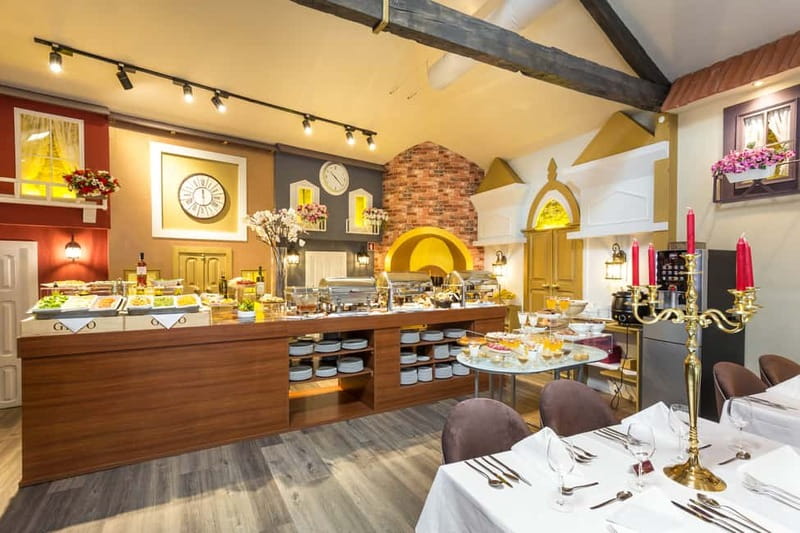
You can upgrade the tour with lunch at Ruela da Villa, the restaurant of a four-star hotel. The meal is an all-you-can-eat buffet with Portuguese dishes and desserts. The train stops in front of the restaurant, so you can get off and later board again at the same place.
This option may suit you if you want to combine sightseeing and a planned meal without finding a restaurant yourself. A buffet also gives you a chance to try several Portuguese dishes rather than committing to one unfamiliar item.
The tradeoff is time. Porto has plenty of independent places to eat, and a buffet meal may feel less personal than ordering in a small local restaurant. The supplied information does not specify the exact dishes served, so I would choose the lunch add-on for convenience, not for a guaranteed list of specialties.
If lunch is included in your booking, confirm the train timing around the meal. The activity is built around the cellar visit and the city route, while the restaurant stop adds another moving part to the schedule.
Practical matters that affect the experience
The full activity lasts about two hours, though the exact start time depends on availability. That makes it easy to fit into a short Porto stay. You can use it on your first day for orientation or later as a lighter activity between longer walks.
The tour ends back at the meeting point near Porto Cathedral. This is useful because you do not need to arrange separate transport after the wine visit. It also puts you close to the upper historic center, where you can continue walking.
The train is not suitable for wheelchair users. You should also expect uneven streets and a fair amount of shaking. If you are sensitive to motion or need a quiet ride, choose a seat where you can hear the speakers clearly and treat the journey as a fun transport experience rather than a polished coach tour.
The online voucher must be exchanged for tickets at the meeting point. This is a small but important detail. Allow time for the exchange, and do not arrive at the last second assuming you can walk straight onto the train.
Free cancellation is available up to 24 hours before the activity for a full refund, and you can reserve now and pay later. Those terms help if your Porto schedule is still changing, but you should still check the departure time and the final cellar-inclusive departure before committing.
Who will enjoy this Magic Train tour?
I would recommend it most to first-time visitors who want a quick introduction to Porto, especially if Port wine is part of the reason for visiting. Families may enjoy the train format, and anyone with limited time gets several sights and a tasting in one booking.
It also suits you if you prefer a gentle overview before walking the steep streets on your own. The train does not remove Porto’s hills, but it lets you see the main areas without spending the entire introduction on foot.
I would be more cautious if you want a detailed architectural tour, a long wine education, or a smooth and quiet ride. You may get more from a dedicated walking tour and a separate cellar visit. The Magic Train offers range, not depth.
Should you book it?
Book this tour if you want a low-cost introduction to Porto and Port wine in roughly two hours. The cellar visit, documentary, two tastings, and central-city route make it good value for a first look, especially at $20.
Skip it if you have already toured several Porto cellars or prefer to explore at your own pace. The train can be noisy and bumpy, the route is not hop-on hop-off, and the commentary may be hard to hear from the rear. For the right visitor, though, it is a cheerful way to get your bearings and sample one of Porto’s defining drinks without giving up a full day.
FAQ
Where does the Magic Train tour start?
It starts at Porto Cathedral, at R. de Saraiva de Carvalho, 4000-520 Porto, Portugal.
Where does the activity end?
The activity ends back at the meeting point near Porto Cathedral.
How long does the tour last?
The stated duration is two hours. Check availability for the specific starting times.
Is this a hop-on hop-off tour?
No. The activity is not a hop-on hop-off service. You ride the set route, leave the train for the cellar visit, and then re-board.
How often does the train depart?
The train departs every 30 minutes. The final departure that includes a visit to the Port wine cellars starts 1.5 hours before the end of the service.
What languages are available on the audio guide?
The audio guide is available in Portuguese, Spanish, French, English, and Italian.
How many Port wines are included?
Two Port wine tastings are included with the cellar visit.
Is lunch included?
Lunch is included only if you choose the lunch option. It is an all-you-can-eat buffet of Portuguese dishes and desserts at Ruela da Villa, a restaurant in a four-star hotel.
Is the tour suitable for wheelchair users?
No. The activity is listed as not suitable for wheelchair users.
More Train Experiences in Porto
- Porto: Douro Valley Full-Day Boat, Train, and Lunch Tour
★ 4.7 · 787 reviews
More port wine cellar tours in Porto
- Porto: Taylor’s Port Cellars & Tasting
★ 4.6 · 3,374 reviews - Porto: Bridges Cruise with Wine Cellar Tour or Sunset Option
★ 4.1 · 2,758 reviews - Porto: Authentic Fado Show, Port Wine & Handmade Instruments
★ 4.8 · 2,737 reviews - Porto: City Train Tour, River Cruise & Wine Cellar
★ 3.9 · 2,601 reviews
Just added in Porto
- From Porto: Gerês National Park Canyoning Trip★ 5.0 · 407 reviews
- Porto: Guided 3-Hour Best of Tour by Segway★ 4.9 · 479 reviews
- From Porto: Braga & Guimarães with Lunch Small Group Tour★ 4.8 · 545 reviews
- From Porto: Aveiro, Paiva Walkways, Suspension Bridge and Lunch★ 5.0 · 434 reviews
- From Porto: Arouca 516 and Paiva Walkways Guided Day Trip★ 4.9 · 456 reviews
- Porto: 6 Bridges Port Wine River Cruise with 4 Tastings★ 4.9 · 586 reviews
- Porto: Small Group Surf Lesson with Transportation★ 4.9 · 594 reviews
- SEA LIFE Porto Full-Day Entrance Ticket★ 4.1 · 637 reviews
Port Wine Cellar Tours, compared.


Live Fado Show with Port Wine in Historic Center
Read our review →

Bridges Cruise with Wine Cellar Tour or Sunset Option
Read our review →
Authentic Fado Show, Port Wine & Handmade Instruments
Read our review →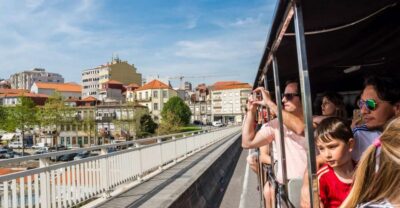

Live Fado Concert with Glass of Tawny Port Wine
Read our review →
Port Wine Lodges Tour Including 7 Port Wine Tastings (English)
Read our review →Browse the lists this tour appears in