
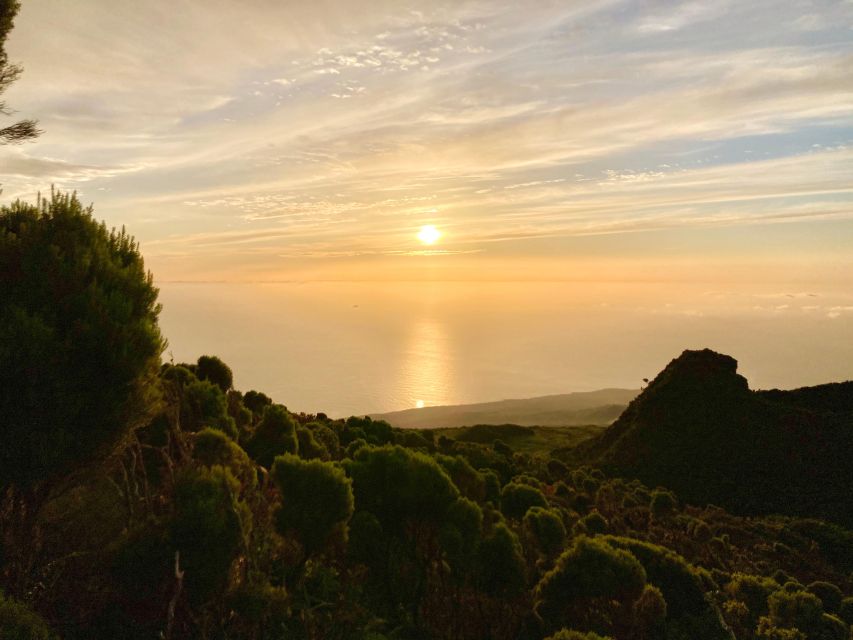
Reviewed · AZORES ISLAND HOPPING
Pico island: Climb Mount Pico, highest mountain in Portugal
Portugal’s highest mountain is a volcanic cone that asks for real effort, not just a sturdy pair of trainers. I like this climb for two clear reasons: a certified Pico Mountain Guide keeps the pace and footing sensible, and the route changes from mud and solid rock to loose volcanic sand before the final scramble. The views, when the clouds open, can reach across the central Azores.
I also like that the $91 price covers the mountain reserve fee, hiking poles, accident insurance, and a completion certificate. The catch is plain: the descent can be harder than the climb, and this is not a good choice if you have low fitness, breathing trouble, heart or back problems, or little experience on steep ground.
Key points before you book
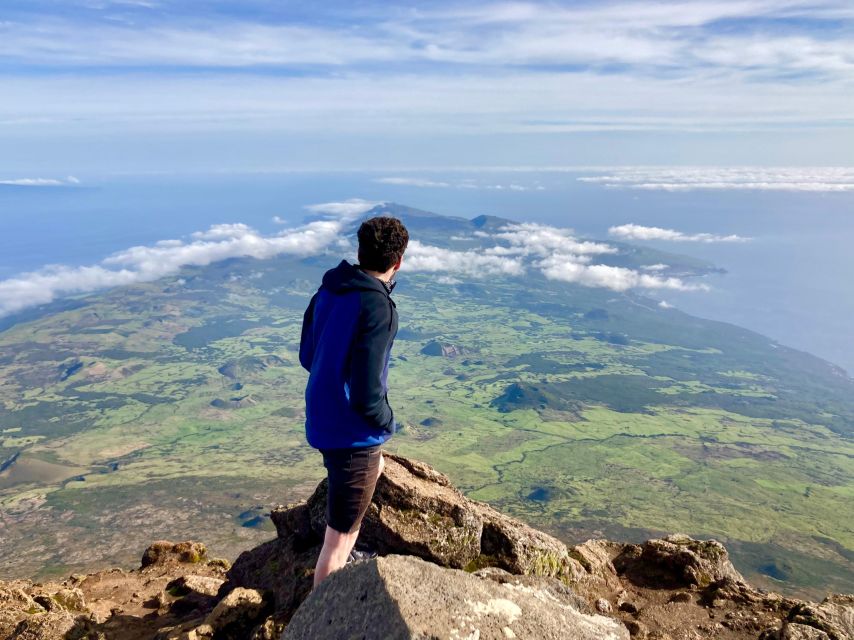
- The summit reaches 2,351 metres, Portugal’s highest point, with possible views of the central Azores islands.
- The route covers about 8 kilometres, with 1,100 metres of ascent and the same amount of descent.
- The final 15 minutes to Piquinho use your hands for balance on steep, rough ground.
- The descent takes three to four hours and is often the most demanding part of the day.
- A guide leads the full climb, with safety advice, geological and plant information, poles, reserve access, insurance, and a certificate included.
- Proper hiking boots are compulsory, and the mountain reserve can refuse access to anyone wearing unsuitable footwear.
Why Mount Pico is worth the effort
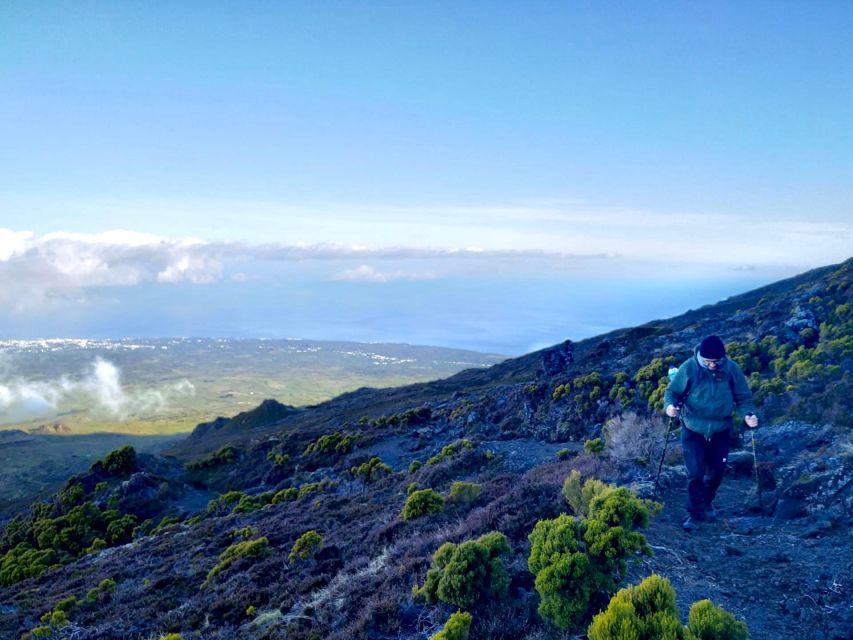
Mount Pico gives you a rare kind of summit day. It is not a long walk through a forest that slowly opens onto a viewpoint. The route rises up a volcanic mountain, and the ground changes under your feet as you gain height.
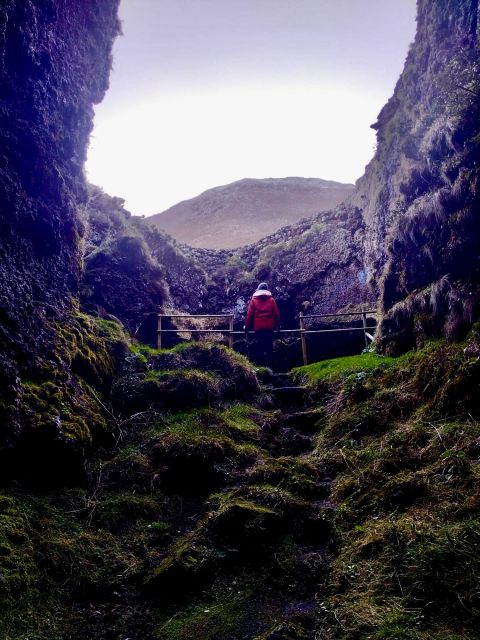
At first, you pass through native vegetation. Higher up, the plants thin out and the mountain becomes more exposed, rocky, and severe. You get a clear lesson in volcanic terrain simply by walking through it. Mud gives way to firm rock, then loose rock and sand, with every step requiring more care.
The summit is Piquinho, the small cone at the top of the mountain. At 2,351 metres above sea level, it gives you a 360-degree view when the weather cooperates. On a clear day, you may see the islands of the central Azores group. With cloud, the view becomes less certain, but reaching the top still gives the climb a strong sense of purpose.
I would not book this for a casual walk or a quick photo. The eight-hour schedule includes a serious ascent and a long return over the same difficult surface. You need to enjoy physical effort, accept changing weather, and stay focused after the excitement of the summit has worn off.
Other islands to reach from Azores:
- Pico Island: Whale Watching Experience from Lajes
★ 4.9 · 492 reviews - Terceira: Algar do Carvão Lava Caves Tour
★ 4.7 · 305 reviews - Azores: Terceira Island Full-Day Tour
★ 4.7 · 291 reviews
Starting at Mountain House
The day begins at Mountain House, where your guide meets you inside and gives a safety briefing lasting about 20 minutes. This is an important part of the experience, not a formality to rush through.
Your guide explains how the climb works, what kind of terrain lies ahead, and how the group should handle the mountain. The first section also gives the guide a useful sense of your fitness and confidence. If you struggle early on, the guide may advise you to stop for your own safety and for the safety of the group.
That early check is one of the best reasons to climb with a guide. Mount Pico is not a place to discover halfway up that your shoes have no grip or that steep ground makes you uncomfortable. A professional guide can help you make a sensible decision before the route becomes more exposed and tiring.
The guides speak English, Dutch, and Portuguese. Specific guides connected with this experience include Steffi, also referred to as Steffie, and Petro. Steffi is known for setting a suitable pace, watching different fitness levels, explaining Pico’s history and natural features, and helping quickly when someone slips on the way down. Petro is also praised for friendly conversation and attentive guiding.
The first three hours: vegetation, mud, and rock
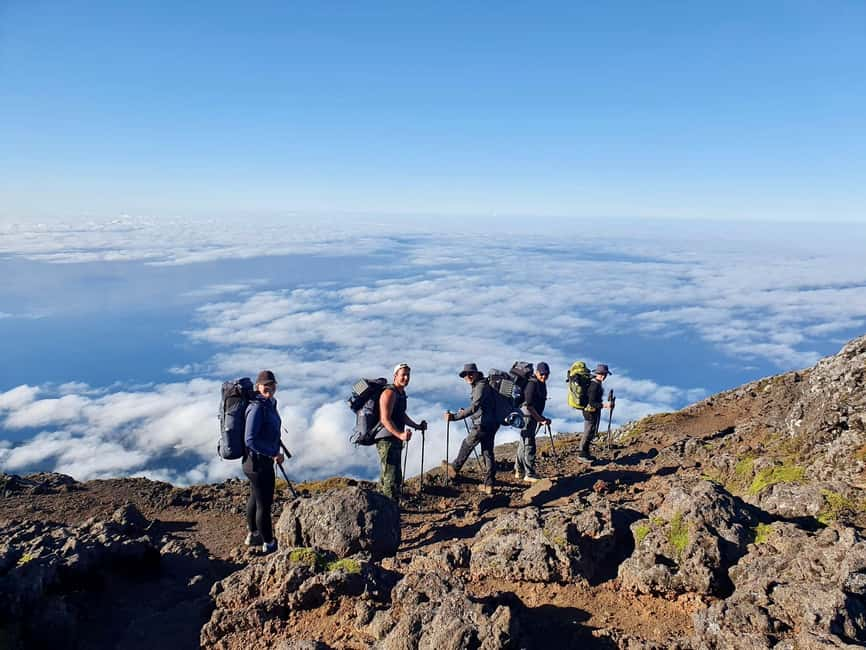
The main climb to the crater takes about three hours. It begins among Pico’s native plants, then moves into increasingly rough volcanic ground. You will not walk on one consistent trail surface all day, so your legs and ankles need to keep adjusting.
The route can include mud, solid rock, loose stones, and sand. That variety makes the climb interesting, but it also means you should not treat the distance of 8 kilometres as the main measure of difficulty. Eight kilometres on ordinary walking paths is one thing. Eight kilometres with 1,100 metres of uphill and downhill travel on unstable volcanic ground is another.
Your poles are useful here. They are included in the price and can help with balance, especially on sections where the surface shifts beneath you. Use them as support rather than as a way to push a faster pace. A steady rhythm saves energy for the upper mountain and the return.
The guide also provides information about the plant life and geology. That adds value to what might otherwise feel like a long physical test. You begin to notice the difference between the lower vegetation and the bare volcanic structures higher up. The mountain becomes easier to understand when you can connect the ground beneath you with its volcanic origin.
The final push to Piquinho
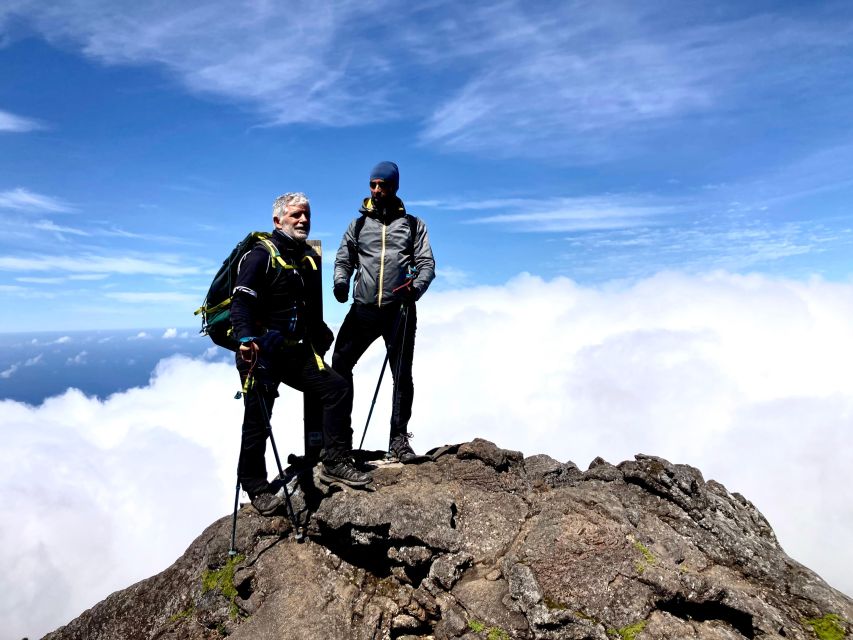
The last 15 minutes to Piquinho require you to use your hands for extra stability. This is not a technical climbing expedition, but it is more than ordinary hiking. You need to feel comfortable placing your hands on rough ground while stepping carefully on a steep slope.
If you are afraid of heights, this section may be uncomfortable. The activity is not suitable for people with a fear of heights, and that warning deserves attention. Even fit hikers can find the upper section demanding if they dislike exposed or steep terrain.
The reward is the summit itself. At the top, you can take in the scale of Pico and, depending on visibility, look toward other islands in the central group. The view is not guaranteed because weather can shift quickly in the Azores. Still, cloudy conditions do not erase the achievement of reaching the highest point in Portugal.
Give yourself time to enjoy the summit, but remember that you are only halfway through the physical work. The return is not a gentle stroll downhill.
Same base, a different kind of day out:
- Islet Tour- Ilhéu de Vila Franca do Campo
★ 4.8 · 471 reviews - Private Terceira Island Full Day Tour
★ 5.0 · 250 reviews - Horta: University Startup Whale and Dolphin RIB Boat Trip
★ 4.9 · 225 reviews - Faial Island: Full Day Tour – Nature and Local Culture
★ 5.0 · 213 reviews
Why the descent deserves respect
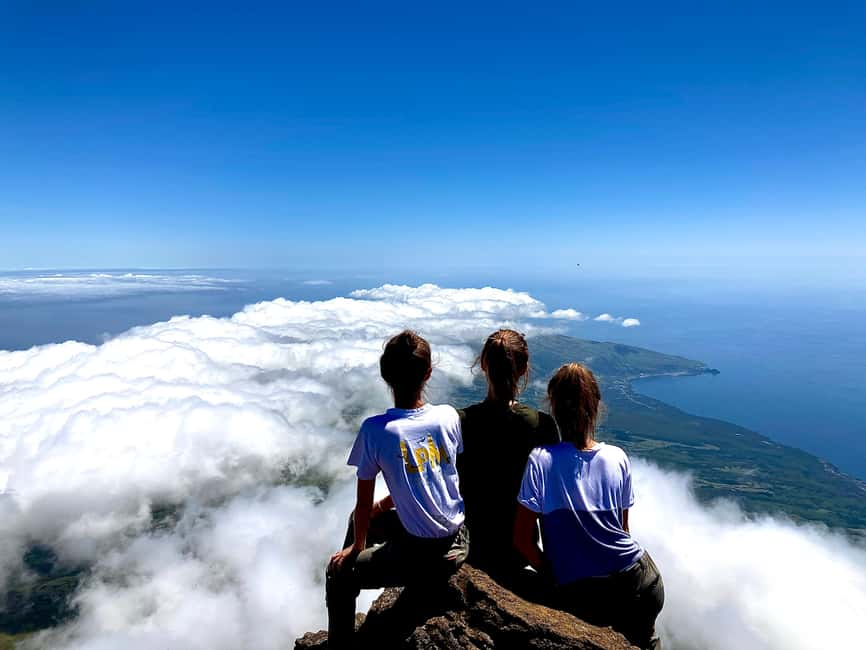
The descent follows the same route and takes about three to four hours. For many hikers, this is the hardest part. Your legs are tired, your concentration may be fading, and loose volcanic rock can make each step less secure.
This is where the guide’s advice matters most. You will receive tips on how to handle the terrain more effectively, and the guide can help you keep a controlled pace. Do not hurry simply because the trail is going downhill. A careful descent protects your knees and reduces the chance of slipping.
The experience includes accident insurance, but that should not be read as a substitute for sensible preparation. Wear boots or hiking shoes with a strong grip, keep your hands available when the ground requires them, and carry enough food and water for a full day outside.
A guide also helps the group manage the final hours. Someone who is fast on the way up may be tired on the way down. The best approach is to follow the pace set for safety, not to treat the return as a race.
What the $91 price really covers
At $91 per person, this is a reasonable price for a demanding guided mountain day, especially because several costs are included. You receive:
- A certified Pico Mountain Guide
- Access to the Mount Pico Natural Reserve
- Hiking poles
- Allianz personal accident insurance
- A certificate after the climb
The reserve access fee matters because the mountain has a daily limit on climbers. Your name, date of birth, and nationality are needed when booking so the mountain house can register you. That daily limit also means you should not wait until the last moment if your dates are fixed.
You are paying for more than company on the trail. The guide handles the safety briefing, judges whether the group should continue, explains the natural features, and offers practical help on difficult ground. For a mountain with changing weather and a tiring descent, those services have real value.
You still need to bring your own food, water, clothing, sun protection, and rain gear. The price is not an all-inclusive day package, and there is no transport listed to or from Mountain House. Plan to reach the meeting point yourself and arrive ready to start.
Clothing, shoes, and food for an eight-hour day
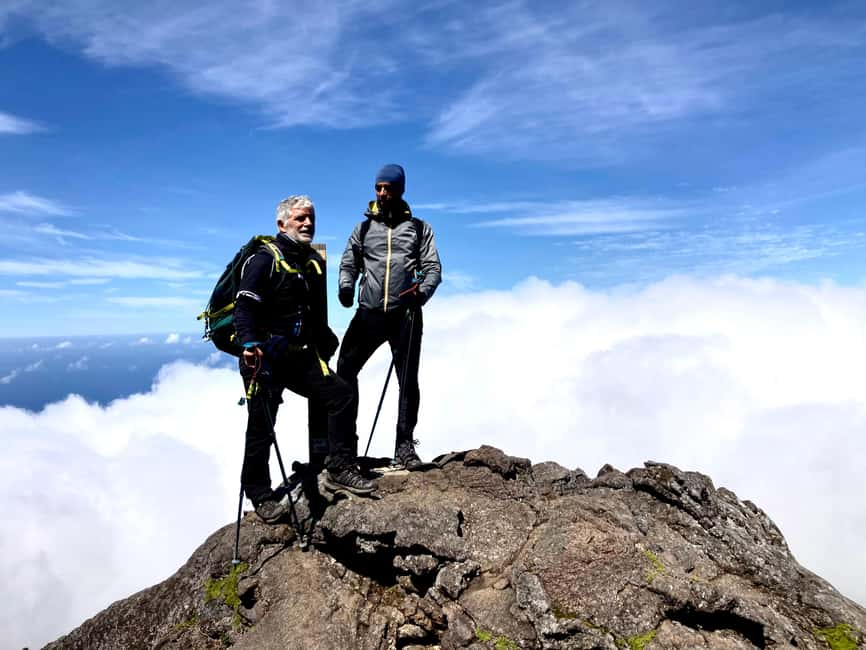
The footwear rule is strict. You must wear hiking boots or hiking shoes with good grip on the sole. Sports shoes are not allowed, and the Natural Park can refuse access to hikers who arrive in unsuitable footwear.
Pack a daypack with water and food, since the climb lasts around eight hours. Bring sunscreen and sunglasses even if the morning looks cloudy. Rain gear and clothing suited to the weather are also essential because conditions can change during the day.
A practical packing list includes:
- Hiking boots or hiking shoes with a strong sole
- Water and food for the full outing
- Sunscreen and sunglasses
- Rain gear
- Weather-appropriate layers
- A small daypack
- Any personal items you need during a long, strenuous hike
Do not rely on the forecast from the coast alone. Weather on the mountain can differ from conditions at lower elevations. The activity can be cancelled shortly before starting if the weather is unsafe, so keep your wider Pico plans flexible.
If you carry a drone, it must be registered with ANAC, the Portuguese Civil Aviation Authority. This is a small detail, but it is better to handle it before arriving at the mountain.
Who should take this climb
This climb suits you if you already exercise regularly, are comfortable with long uphill walks, and want a demanding day in nature rather than a relaxed sightseeing outing. You do not need to be a mountaineer, but you do need good physical preparation and confidence on uneven ground.
It is not suitable for children under 12, pregnant women, wheelchair users, or people with recent surgery. It is also unsuitable for anyone with heart, respiratory, or back problems, or for anyone with a low level of fitness.
The route is rated difficult for physical effort and medium to difficult for technical difficulty. That combination tells you something useful: the hardest part may not be one dramatic move. It is the accumulated strain of steep ground, loose rock, changing surfaces, and a long descent.
If you are unsure about your fitness, pay attention to the first section and listen to the guide. Stopping early can be disappointing, but it is better than turning a challenging day into a dangerous one.
A guide makes the experience better
A self-guided attempt might seem attractive, but a certified guide gives you several practical advantages. You have someone who knows the route, explains how to move over the surface, and can make a safety call when conditions or fatigue become a problem.
The personal side also matters. Petro is noted for friendly conversation, while Steffi brings a careful pace and useful explanations about Pico’s history and natural features. Those details can change the feel of a long day. You are still doing the hard work yourself, but you are not left to solve every problem alone.
The best guide is not the one who simply pushes everyone upward. It is the one who watches the group, keeps the pace realistic, and knows when caution is more important than reaching the summit. This experience is designed around that kind of support.
Booking flexibility and practical limits
You can cancel up to 24 hours before the activity for a full refund, and you can reserve now while paying later. That is useful for an outdoor plan in the Azores, where weather can affect the schedule.
The mountain has a daily limit on the number of climbers. Provide your full name, date of birth, and nationality when you book so the registration at Mountain House can be completed promptly.
The activity starts and ends at Mountain House. There is no separate transfer included in the information provided, so you should arrange your own way to the meeting point and allow enough time to be there before the briefing.
Should you book the Mount Pico climb?
Book it if standing on Portugal’s highest point feels worth eight hours of hard work, loose rock, and a demanding descent. The guide, reserve access, poles, insurance, and certificate make $91 a fair price for a serious mountain outing.
Skip it if you want a gentle walk, dislike steep ground, or have medical or fitness concerns listed in the restrictions. Also skip it if you lack proper hiking boots. For the right person, this is a memorable Azorean challenge with excellent natural detail and a real sense of achievement. For the wrong person, it is simply too much mountain.
FAQ
How long does the Mount Pico climb take?
The full activity lasts about eight hours. The ascent to the crater takes around three hours, and the descent usually takes three to four hours, with additional time for the briefing and summit section.
How high is the summit?
Piquinho, the summit of Mount Pico, reaches 2,351 metres above sea level. The route begins at about 1,250 metres.
Is a guide included?
Yes. A certified Pico Mountain Guide leads the climb, gives the safety briefing, explains the mountain’s plants and geology, and provides advice on difficult terrain.
What footwear is required?
You must wear hiking boots or hiking shoes with good grip. Sports shoes are not allowed, and the Natural Park may refuse access if your footwear is unsuitable.
What should I bring?
Bring sunscreen, a daypack, hiking shoes, weather-appropriate clothing, food, rain gear, sunglasses, and water.
Can the activity be cancelled because of weather?
Yes. The climb is weather-dependent and can be cancelled shortly before it begins if conditions are not suitable.
Just added in Azores
- Full-Day Private Tour of Faial★ 5.0 · 40 reviews
- Faial Island: Full Day Tour – Nature and Local Culture★ 5.0 · 213 reviews
- Faial Island: Half Day Tour★ 5.0 · 99 reviews
- Terceira Island: Full Day Tour★ 5.0 · 63 reviews
- Wines and Moonshines of Terceira★ 5.0 · 55 reviews
- PHOTO TOUR (Full Day Private Tour- Sunrise to sunset)★ 5.0 · 68 reviews
- BEST VIEW TOUR(Full Day Private Tour)★ 5.0 · 106 reviews
- UNDERGROUNDTOUR (Full Day Private Tour)★ 5.0 · 52 reviews
Azores Island Hopping, compared.
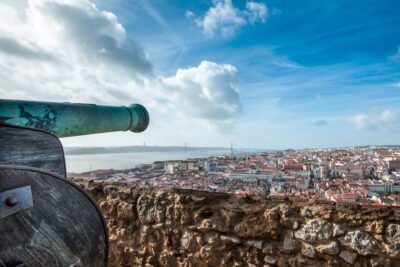
Sao Jorge Castle Skip-the-Line Ticket with Guide
Read our review →
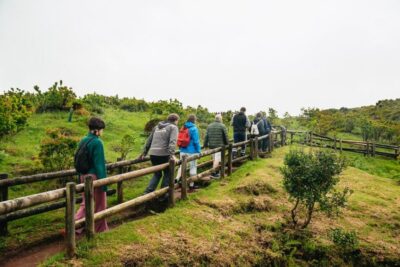
Faial Island: Full Day Tour – Nature and Local Culture
Read our review →
Browse the lists this tour appears in