
Reviewed · PORTUGAL
Marble Tour in Vila Viçosa
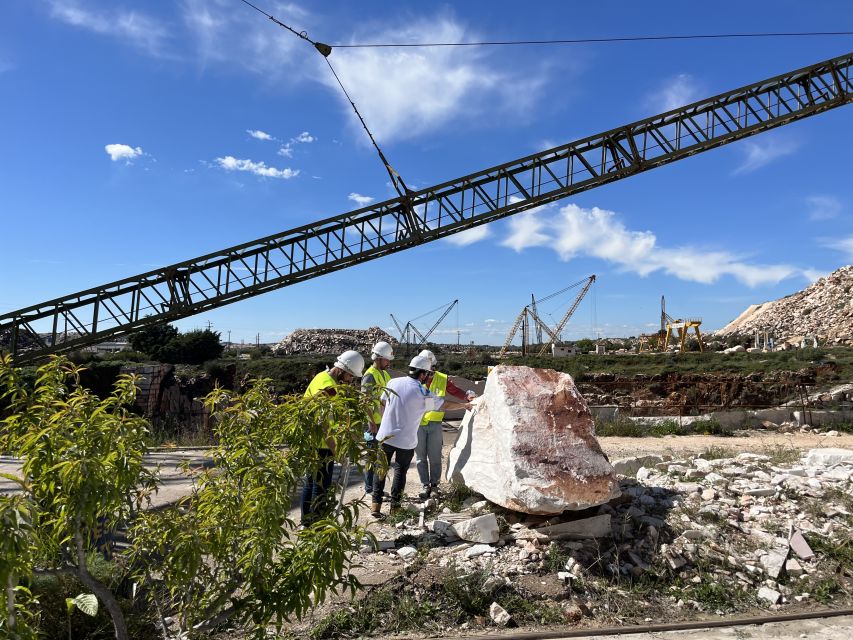
The striking part of this Vila Viçosa tour is that you follow marble from quarry to finished product. You see the stone in the ground, learn how it is cut and handled, then watch artisans and industrial workers turn it into something useful or decorative. I like the clear, practical focus, and I like that the guides connect machinery and geology with real human work.
The main catch is transportation. You must bring your own vehicle between the meeting point and the quarry and workshops, so this is not a walk-and-talk tour. Closed shoes are required, and the quarry setting calls for a moderate level of fitness.
Key points to know
- Three stages of marble production: quarry extraction, handwork in an artisan workshop, and mechanized industrial processing.
- Local guides João and Juaquina: English-language explanations focus on both technical facts and personal stories.
- Small group size: A maximum of 10 people allows room for questions and a closer look at the work.
- Bring your own car: Transport between the meeting point and the separate sites is not included.
- Good value at $30.25: The roughly two-hour visit covers several parts of the marble trade rather than one single attraction.
- Book ahead: The experience is often reserved about 16 days before the date, and free cancellation is available until 24 hours before the start.
Why Vila Viçosa marble is worth your time
Vila Viçosa sits in Portugal’s Alentejo region, in the Évora District, where marble is not just a decorative material. It is an industry, a craft, and a source of local identity. This tour gives you a look at that working world without reducing it to a quick photo stop.
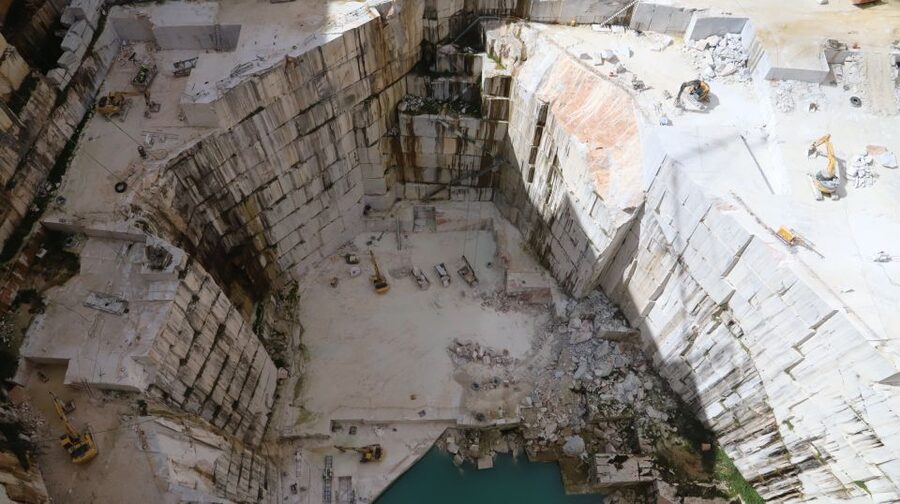
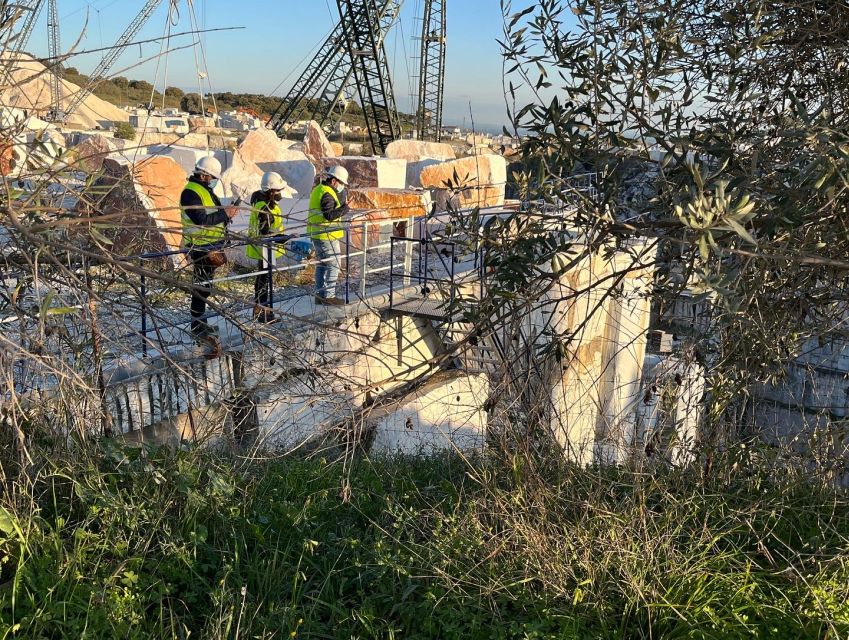
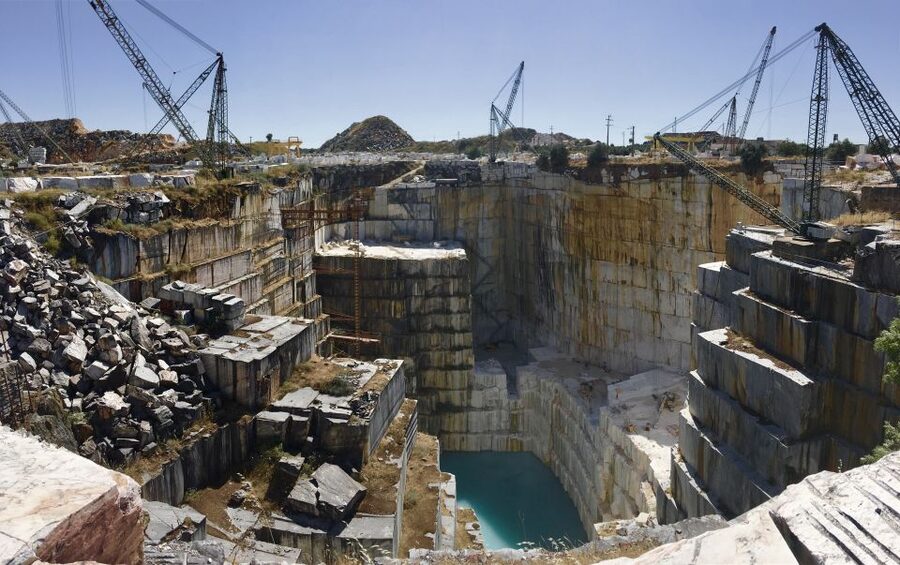
You begin at the Nucleus of the Marble Quarries of the region, where the guide explains the different stones and the basic geology behind them. You also learn how marble is extracted, what dangers workers face, and which machines make the process possible.
That practical angle is the tour’s strength. Instead of simply seeing a block of polished stone, you get the full chain of work behind it. The guide explains the economic side of marble, its artistic uses, and the risks involved in getting it out of the ground.
I find this especially useful if you have already seen marble in Portuguese churches, palaces, and town squares. After the visit, those smooth floors and carved details make more sense. You start to notice the material itself, not just the building around it.
Other trips people book in Portugal:
- The Unvanquished Tour in Porto City Center
★ 5.0 · 26,497 reviews - Lisbon City Center Tour – The Unmissable Lisbon
★ 5.0 · 22,234 reviews - Lisbon: Sintra, Pena, Regaleira, Cabo da Roca & Cascais
★ 4.7 · 19,656 reviews
At the quarry, where the process begins
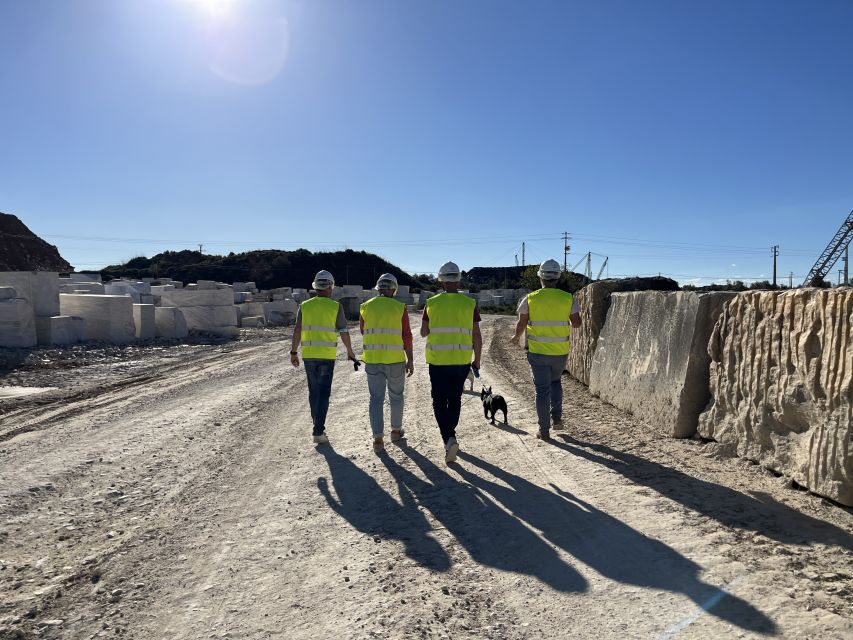
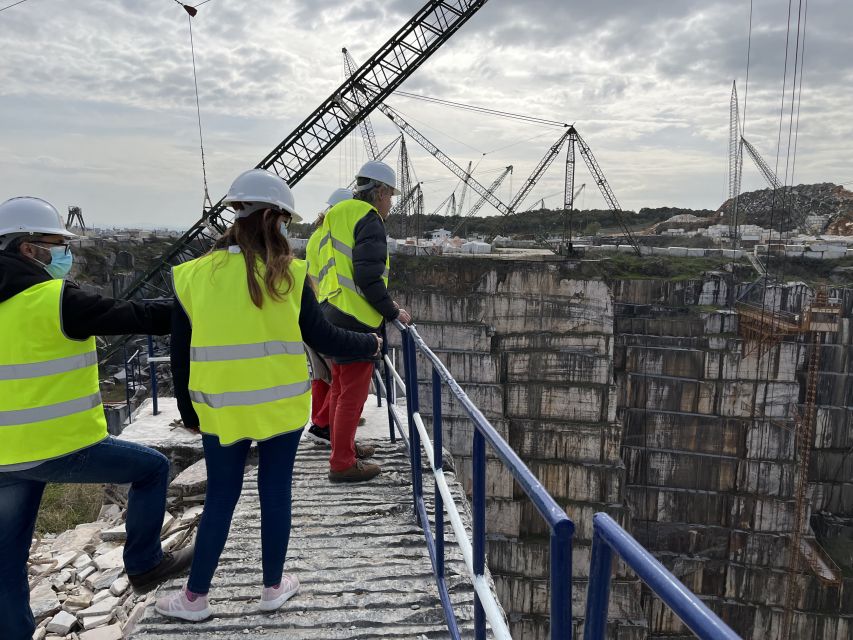
The first stop introduces you to the quarry area and the stones found in the region. You should expect an explanation rather than a formal museum visit. The guide presents the extraction process, the equipment used, and the conditions that make quarry work demanding.
The discussion of hazards is an important part of the experience. Marble extraction involves heavy machinery, large stone blocks, cutting operations, and careful handling. Hearing about these risks gives you a more realistic view of the trade and keeps the visit from becoming a simple celebration of pretty stone.
You will also hear about marble’s economic role. The tour connects the material to local business and employment, while also showing how the stone reaches artistic and architectural projects. That link between industry and design makes the quarry stop more useful than a scenic overlook alone.
You need your own vehicle to reach the quarry from the meeting point. The meeting point is Rota do Mármore AE at Avenida Duques de Bragança 4 in Vila Viçosa. The exact movement between locations is worth planning before you arrive, since private transportation is not part of the tour.
Wear closed footwear. This is a working quarry and workshop experience, not a polished indoor attraction, so sensible shoes are a firm requirement. A moderate level of physical fitness is also advised.
Inside the artisan marble workshop
The second part takes you to a workshop where marble is shaped by hand. Here, the emphasis shifts from large-scale extraction to careful manual work. You learn about the techniques used to transform the stone, the tools and machines involved, and the dangers that remain even in a smaller workshop.
This stop adds a human scale to the quarry story. A huge block of stone can feel anonymous when you see it outdoors. In the workshop, the material passes through individual hands and decisions. The final object reflects skill, patience, and an understanding of how marble behaves when cut or shaped.
The tour also gives attention to the personal stories of the master craftspeople. That detail matters. It shows that marble production is not only about machinery and output. It is also a trade built on experience, repetition, and learned judgment.
Juaquina is one of the guides associated with the experience, and her explanations include the geology of marble as well as the cutting and polishing process. The guide’s enthusiasm is part of what makes the technical material easier to follow. João is also praised for his attention and explanations, so the exact guide may vary by date.
You should not expect a long hands-on craft class. The focus is on seeing the work, understanding the methods, and listening to the people and processes behind the finished pieces. Still, this is likely to be the most personal stop for anyone interested in traditional skills.
How the industrial mill changes the picture
The final stop shows the mechanized side of the business at a marble milling or industrial processing workshop. Here, the guide explains the different machines used to process marble and presents examples of completed products.
This section helps you compare two very different approaches. The artisan workshop relies on manual skill and close control. The industrial mill uses machinery and an organized production process to handle larger quantities and more regular output.
You learn about the operational context of a mill, including the hazards and the stages that bring a raw piece closer to its final form. The point is not just to watch a machine operate. It is to understand how the raw stone becomes a product that can be used in construction, decoration, or art.
The contrast between the two workshops is one of the tour’s best features. The artisan stop shows patience and personal technique. The industrial stop shows scale, speed, and mechanical precision. Together, they make clear that marble can be both an old craft and a modern business.
The final products also give you a better sense of the material’s range. The tour presents different examples rather than treating marble as one uniform substance. Variations in stone, finish, and intended use help explain why the extraction and processing stages require care.
Same base, a different kind of day out:
- From Porto: Douro Valley w/ Boat Tour, Wine Tasting & Lunch
★ 4.7 · 19,061 reviews - Sintra: Pena Palace and Park Entrance Ticket
★ 4.2 · 17,410 reviews - Lisbon: Jerónimos Monastery Entrance Ticket
★ 4.1 · 14,164 reviews - Complete Douro Valley Wine Tour with Lunch, Wine Tastings and River Cruise
★ 5.0 · 12,920 reviews
What the two-hour timing really means
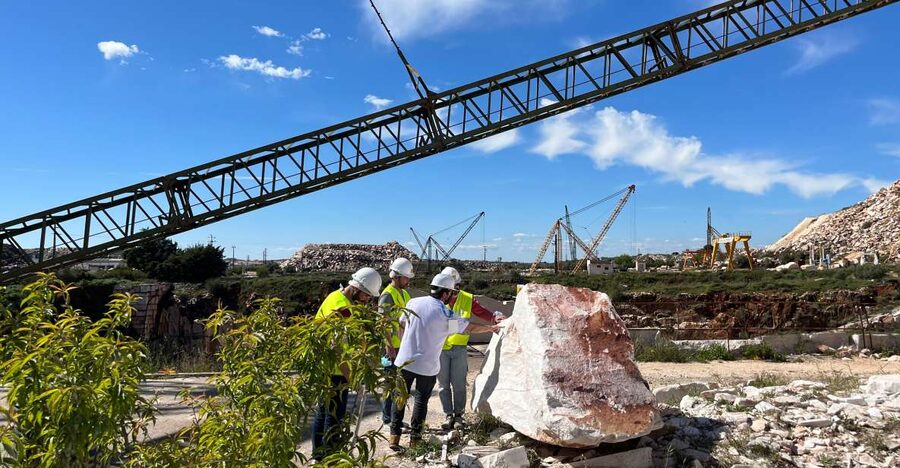
The advertised duration is about two to three hours, while the listed visit is described as taking roughly two hours. I would allow the longer window when planning your day, especially because the group moves between several locations in your own vehicle.
This is a compact experience, but the schedule covers a lot. You see the quarry, an artisan workshop, and an industrial mill. Each stop has a different purpose, so the time does not feel focused on one repeated demonstration.
The small group limit of 10 people is useful here. In a crowded group, explanations about machinery and extraction can be difficult to hear, and it is harder to ask about technical details. A smaller group should make it easier to keep up and speak with the guide.
The tour is offered in English, and the guide’s role is central. The best parts are not only the machinery or the stone. They are the explanations that connect geology, safety, economics, artistry, and everyday work.
Is $30.25 a fair price?
At $30.25 per person, this tour offers good value if you are curious about how things are made. You are paying for a professional local guide and access to several parts of the marble process, not simply admission to one site.
The price is easier to justify because the experience covers three distinct settings. A quarry visit alone might show you where marble comes from. Adding the artisan workshop and industrial mill gives you a fuller understanding of what happens afterward.
The value is less obvious if you only want grand monuments or polished interiors. This is a working-industry visit, and much of the appeal comes from explanations, machinery, and process. If that sounds dry to you, a palace or church visit may be a better use of your time.
Group discounts may be available, and the activity accepts mobile tickets. Food, drinks, hotel pickup, hotel drop-off, and private transportation are not included. You should budget for those separately if you need them.
Who will enjoy this experience most
I would recommend the tour to you if you enjoy local industry, traditional crafts, geology, architecture, or the story behind ordinary materials. It is also a good choice if you have already seen marble in Alentejo and want to understand how it reaches the finished building or object.
The workshop section should appeal to anyone interested in hand skills and family or personal craft traditions. The industrial mill will suit visitors who want to understand modern production rather than only see the artistic side of marble.
The tour is also a practical fit for independent visitors with a car. Since you must drive between the meeting point and the sites, having your own vehicle removes the largest logistical concern.
I would think twice if you need a fully accessible, no-driving activity, or if you prefer a relaxed walking tour in one compact location. The physical setting, closed footwear rule, and movement between stops are important parts of the decision.
How to prepare for the visit
Start at Rota do Mármore AE, Avenida Duques de Bragança 4, 7160-209 Vila Viçosa. The activity ends back at the meeting point, but you are responsible for getting between the separate locations during the visit.
Wear closed shoes and clothing suited to a working environment. The supplied information does not give a dress code beyond footwear, so the sensible approach is to choose practical clothes rather than your finest sightseeing outfit.
Keep the timing flexible. The tour itself is about two hours, but driving between locations can affect the total length. If you have a train, meal reservation, or other timed visit afterward, leave a generous gap.
The tour operates with a maximum of 10 people. It is usually booked around 16 days in advance, so I would not leave it until the last moment if your Vila Viçosa schedule is fixed.
Free cancellation is available until 24 hours before the start time for a full refund. Changes or cancellations made inside that period are not accepted for a refund. The activity also depends on suitable weather and a minimum number of people. If poor weather or insufficient numbers cause cancellation, you are offered another date or a full refund.
Should you book the Vila Viçosa marble tour?
Book it if you want an honest look at Alentejo’s marble trade, from stone in the ground to handmade and industrial finished work. The combination of quarry, artisan workshop, and milling operation gives you more substance than a quick stop at a monument.
I especially like the balance between machines and people. João and Juaquina bring different parts of the process to life, while the small group and English-language format make the technical details manageable.
Skip it if you do not have your own vehicle, cannot manage a moderately physical visit, or want a purely historical sightseeing tour. For the right audience, though, $30.25 buys a focused and unusually local experience that helps you see Vila Viçosa’s marble with fresh eyes.
FAQ
Where does the marble tour begin?
It begins at Rota do Mármore AE, Avenida Duques de Bragança 4, 7160-209 Vila Viçosa, Portugal.
Where does the tour end?
The activity ends back at the meeting point in Vila Viçosa.
How long does the experience last?
The tour lasts about two to three hours, with the listed visit taking approximately two hours.
Do I need my own transportation?
Yes. You need your own vehicle to travel between the meeting point and the quarry and workshop locations. Private transportation is not included.
Is the tour offered in English?
Yes. The experience is offered in English.
What footwear should I wear?
Closed footwear is mandatory. You should also have a moderate level of physical fitness for the visit.
How many people can join the tour?
The group has a maximum of 10 people.
Can I cancel for a full refund?
Yes. You can cancel at least 24 hours before the start time for a full refund. If poor weather or an insufficient number of bookings cancels the activity, you are offered a different date or a full refund.
Just added in Portugal
- Half day Spa Water Therapy experience at THE SPA at Corinthia Lisbon★ 4.5 · 51 reviews
- Lisbon Cinematic Photoshoot with Top-Rated Photographer★ 5.0 · 76 reviews
- Central Lisbon E-Bike Tour★ 5.0 · 168 reviews
- Small-Group Sailing Tour on the Tagus River from Lisbon★ 5.0 · 78 reviews
- Alfama and the Castle of Saint George Skip the line Tour★ 5.0 · 53 reviews
- City Centre Run in Lisbon★ 5.0 · 164 reviews
- Lisbon Sailing Catamaran Public Cruise with drinks★ 5.0 · 304 reviews
- Boat tours in the Óbidos Lagoon★ 5.0 · 100 reviews