

Reviewed · SURF LESSONS
Lisbon: Surfing Lesson on Costa de Caparica Beach
Costa da Caparica is Lisbon’s easy escape to the Atlantic, and this lesson gets you into the water rather than leaving you to watch from the sand. You begin with a board, wetsuit, safety briefing, and beach practice, then work on catching small waves with a certified instructor.
I like the small groups capped at six, which gives Sandro time to correct your stance and help you read the next wave. I also like the friendly Portuguese finish: after stretching, you may receive a pastel de nata as a sweet reward. The main drawback is transport. You must reach the parking-lot meeting point yourself, and summer traffic can make the trip from central Lisbon longer than expected.
Key points to know before booking
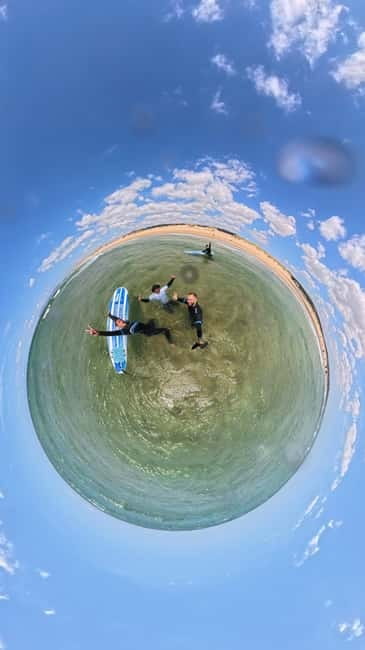
- Three hours at Costa da Caparica: Enough time for a proper introduction, warm-up, beach instruction, water practice, and stretching.
- Personal coaching from Sandro: The instructor is repeatedly praised for patience, clear corrections, humor, and close attention in the water.
- Small group, no wave scramble: The class is limited to six people, with a private lesson available on request.
- Everything needed for the lesson: A surfboard, wetsuit, insurance, certified instruction, and a Portuguese Surfing Federation certificate are included.
- A good first lesson: The format is built for beginners, though people with some experience can also work on technique.
- Plan your own transport: The meeting point is the parking lot, marked by a grey Peugeot van. Transportation is not included.
Why Costa da Caparica works for a first surf lesson

Lisbon gives you a rare choice: spend the morning among tiled streets and viewpoints, or be on an Atlantic beach without making a major day trip. Costa da Caparica sits across the Tagus from the city, and its broad beach provides the setting for this lesson.
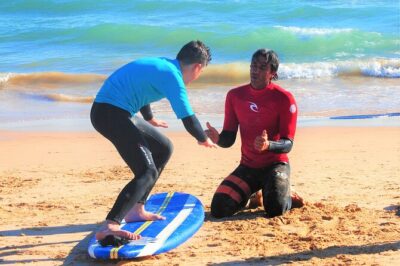
You are not simply handed a board and pointed toward the surf. The session begins on land, where the instructor explains how the board works, how to position yourself, and how to get from lying down to standing. That groundwork matters. The first few minutes in the ocean are far less confusing when you already know what your feet and arms should do.
I like the balance here. The lesson has enough structure to keep beginners safe, but it is not presented as a stiff classroom exercise. The repeated focus is on trying, getting feedback, and trying again. Several people manage to stand during their first session, though you should treat that as a possible reward rather than a promise. Ocean conditions, fitness, timing, and simple luck all matter.
The beach setting also gives the lesson a more genuine feel than an indoor introduction or a short demonstration. You learn in the same Atlantic water that makes Costa da Caparica popular with local surf schools. The tradeoff is that the sea is not a controlled swimming pool. Some days will feel easier than others.
Other days in the surf near Lisbon:
- Lisbon Surf Experience
★ 4.9 · 876 reviews - Lisbon: Surf Experience at Costa da Caparica
★ 5.0 · 376 reviews - Lisbon: 1.5-Hour Surf Lesson
★ 4.8 · 257 reviews
Meeting the grey Peugeot van
The starting point is the parking lot. Look for the grey Peugeot van, which serves as your visual marker and meeting place before you head to the beach with the SurfChamp SurfSchool team.
This is an important practical detail because transportation is not included. You need to arrange your own way to Costa da Caparica and allow enough time to find the parking area. One person specifically found that traffic could make the trip longer than expected, especially in summer. If you are driving from Lisbon, do not plan your arrival down to the last few minutes.
The meeting point is functional rather than scenic. You are there to find the instructor, collect the equipment, and get ready. Bring swimwear, sunscreen, and water. Sandals are also sensible for the hot sand, although they are not listed as required equipment.
The school has more than 15 years of experience, and the session includes insurance and a certified instructor. That does not remove every risk from ocean sports, but it does mean the activity is organized around safety rather than simply getting you standing for a photograph.
Wetsuit, board, and the beach briefing

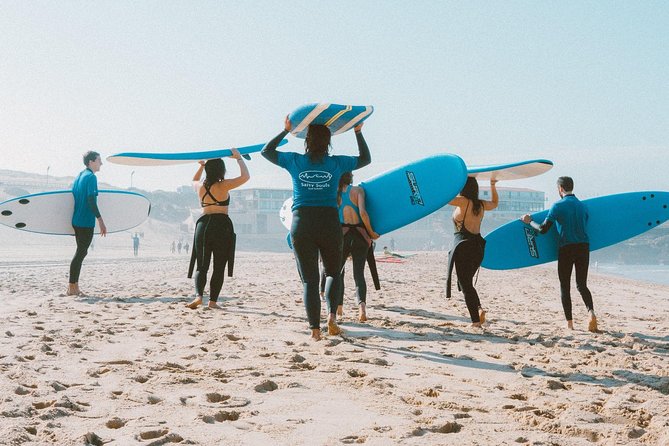
Once you meet the instructor, you get fitted with a wetsuit and receive a surfboard. The equipment is included in the $34 price, so you do not need to rent the basics separately or arrive with surfing gear.
The beach briefing covers the essential movements before you enter the water. Expect instruction on the board, basic technique, and safety. You also warm up before swimming out, with stretching included at the start and again near the end.
This is where the small-group limit makes a real difference. Six people is still a group, but it is small enough for the instructor to see individual mistakes. Sandro is frequently singled out for noticing faults quickly, correcting technique without rushing, and offering encouragement when someone needs another attempt.
For a beginner, that personal attention is worth more than a long lecture. You need to know whether your hands are too far forward, if your feet are landing in the wrong place, or if you are trying to stand before the board has enough speed. Clear, immediate advice helps you make changes while the movement is still fresh.
If you have surfed before, you can still benefit from this section. The instructor can focus less on the basic sequence and more on your stance, timing, and control. A private lesson is available on request if you want the most direct coaching.
Two hours of practice in the Atlantic

The heart of the three-hour session takes place in the water. The published description identifies swimming and safety briefing within the three-hour school visit, while one detailed account describes roughly two active hours in the sea after the preparation. The exact water time can vary with conditions and the group.
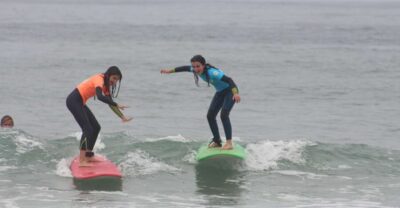
Do not expect every wave to be yours. Surfing requires patience, and part of the lesson is learning when to paddle, when to wait, and how to recover before the next attempt. The six-person cap helps because you are not competing with a large class for every usable wave.
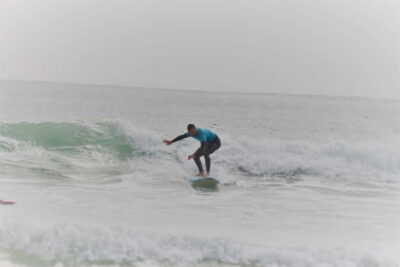
The goal is not to become an accomplished surfer in one morning. The realistic goal is to understand the basic sequence and get a first taste of standing and riding. Many beginners manage at least a few short rides, and some catch more than 20 waves in favorable conditions. Your result will depend on the day and your coordination, but the teaching method gives you a fair chance.
Safety remains central. One session took place after heavy rain, when the waves were described as large, yet the instructor kept the group feeling protected and under control. That is encouraging, but you should still recognize your own limits. If the sea feels intimidating, tell the instructor. The point is to learn with confidence, not to prove anything to strangers.
The school also avoids a hard competitive tone. You are encouraged to improve, but the class is not built around ranking the strongest surfer. That makes it a good fit for couples, families with older children, and friends who want to share a physical activity without everyone needing the same skill level.
Same base, a different kind of day out:
- Lisbon City Center Tour – The Unmissable Lisbon
★ 5.0 · 22,234 reviews - Lisbon: Sintra, Pena, Regaleira, Cabo da Roca & Cascais
★ 4.7 · 19,656 reviews - Lisbon: Jerónimos Monastery Entrance Ticket
★ 4.1 · 14,164 reviews - Lisbon: History, Stories and Lifestyle Walking Tour
★ 4.8 · 10,902 reviews
Sandro’s teaching style
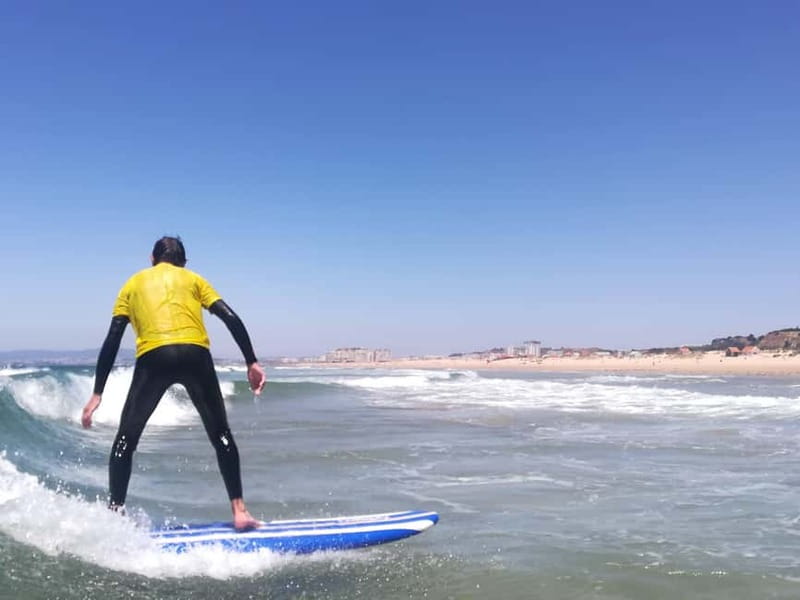
Sandro is the instructor name that appears most often in the supplied information, and his teaching style is a major reason this class earns its strong reputation. He is described as patient, funny, hands-on, and attentive. Those qualities matter more than flashy surf jargon when you are trying to stand on a moving board for the first time.
His approach appears to be practical. He explains the board on the sand, watches what happens in the water, then gives short corrections that you can use on the next wave. Several people found that his advice helped them improve quickly, while others valued the calm atmosphere when they were nervous.
I especially like that the instruction seems to suit different confidence levels. A first-time surfer can get a basic explanation and steady encouragement. Someone who has surfed before can receive more exact advice about technique. The group format limits how much one-on-one time you receive, but six participants is a reasonable ceiling for an introductory class.
The instructors speak English, Portuguese, Spanish, and Italian. That broad language range is useful in a mixed international group, particularly when the lesson turns to safety instructions. Clear communication matters more in the water than polished presentation.
The final stretch and pastel de nata

After the water session, you return for stretching. It is a small part of the schedule, but a welcome one. Surfing uses your shoulders, core, legs, and back, and a few calm minutes at the end help bring the morning down a notch.
Then comes the local touch: a special gift, often described as a pastel de nata. This is a simple reward, not a major part of the value, but it adds warmth to the finish. After a tiring first session, a Portuguese custard tart tastes especially good.
You also receive a Portuguese Surfing Federation certificate. For most people, it will be a pleasant reminder of the day rather than a professional qualification. Still, it gives the session a proper sense of completion and confirms that the lesson was delivered through a recognized surfing framework.
The overall rhythm is well judged: preparation, practice, recovery, and a friendly finish. You are unlikely to leave feeling that the entire session was spent waiting around, though the exact balance between beach instruction and water time depends on conditions.
What $34 gets you
At $34 per person, this is a strong value if you want a real introduction rather than a brief photo opportunity. The price includes the three-hour lesson, certified instruction, surfboard, wetsuit, insurance, certificate, and the final gift.
The most important inclusion is not the equipment. It is the coaching. You can rent a board and stand near the shore on your own, but learning how to fall safely, catch a suitable wave, and correct your stance is much harder without guidance. The small group makes the fee more worthwhile because you are not paying for a crowded demonstration.
You still need to cover your own transportation to the beach. That can affect the total cost, especially if you are not already planning to visit Costa da Caparica. You should also budget time for the journey. If you have only a narrow gap between Lisbon activities, the transfer could be the deciding factor.
The class makes the most financial sense if you are curious about surfing and want to test it properly before paying for several lessons. It also works well as a special morning activity during a Lisbon stay. If you already surf regularly, a private lesson may offer better value than a beginner group.
Who should book this lesson
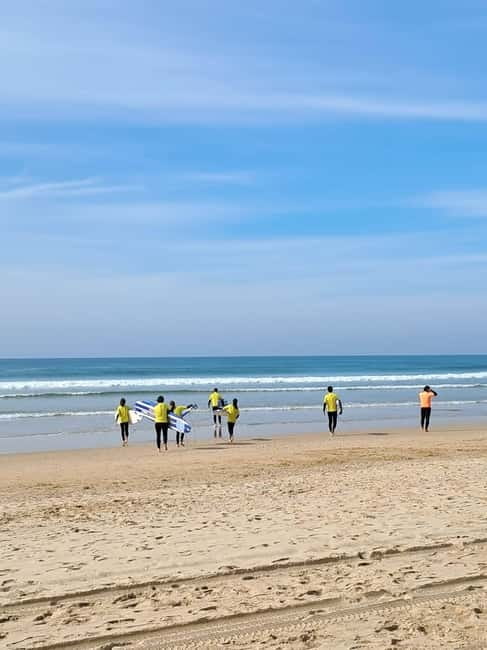
This is aimed at people aged 12 and over. It is not suitable for children under 12 or for pregnant women.
I would recommend it most strongly to first-time surfers, active couples, friends, and families with older children. The instruction is clear, the group is limited, and the atmosphere is encouraging rather than competitive. You do not need to arrive with experience, and the equipment is supplied.
It can also suit someone who has tried surfing once or twice but still wants help with the basics. The instructor can watch your movement and offer corrections instead of simply repeating a standard talk.
I would be more cautious if you dislike cold water, physical exertion, or unpredictable sea conditions. Even with a wetsuit, surfing is tiring. You will spend time falling, paddling, waiting, and getting back on the board. That is part of the sport, not a flaw in the lesson.
You should also think about the day’s weather and waves. The class continues to focus on safety, but the ocean changes. A calm session and a more demanding session can both be useful, though they will not feel the same.
Practical details that matter
Book with the meeting point in mind. You will meet at the parking lot and look for the grey Peugeot van, not at a central Lisbon hotel. Transportation is not included, so arrange your own route and leave room for traffic.
The full activity lasts three hours, and starting times depend on availability. The instructor languages are English, Portuguese, Spanish, and Italian. A small group is limited to six people, and a private lesson can be requested.
Bring:
- Swimwear
- Sunscreen
- Water
I would add sandals for the walk across hot sand and a change of dry clothes for afterward. The supplied information specifically confirms swimwear, sunscreen, and water, so treat the extra suggestions as comfort tips rather than required items.
You can cancel up to 24 hours ahead for a full refund, and the reserve-now, pay-later option keeps your plans flexible. That is useful for a weather-dependent activity, though you should still check the latest start time and meeting instructions before setting out.
Should you book the Costa da Caparica lesson?
Book it if you want a well-supported first attempt at surfing near Lisbon, especially if you value patient instruction and a small group. The combination of equipment, insurance, certificate, hands-on coaching, and a three-hour format gives the $34 price real substance.
The strongest reason to choose it is the teaching. Sandro’s patient corrections and upbeat manner come through clearly, and beginners are given enough guidance to make genuine progress. The pastel de nata at the end is a lovely local touch, but the useful part is the chance to catch a few waves safely and understand what you are doing.
Skip it if you want door-to-door transport, a guaranteed calm sea, or a short activity that requires little physical effort. For everyone else, pack sunscreen, allow time for the drive, find the grey van, and prepare to leave tired, sandy, and possibly able to stand on a surfboard.
FAQ
How long does the surfing lesson last?
The activity lasts three hours, including preparation, safety instruction, time in the water, and stretching.
Where do I meet the instructor?
Meet at the parking lot and look for a grey Peugeot van. Transportation to the meeting point is not included.
How many people are in the group?
The small group is limited to six participants. A private lesson is available on request.
What equipment is included?
The lesson includes a surfboard and wetsuit, along with instruction, insurance, and a Portuguese Surfing Federation certificate.
Which languages does the instructor speak?
Instruction is available in English, Portuguese, Spanish, and Italian.
Can children join the lesson?
The activity is not suitable for children under 12. It is also not suitable for pregnant women.
Just added in Lisbon
- Half day Spa Water Therapy experience at THE SPA at Corinthia Lisbon★ 4.5 · 51 reviews
- Lisbon Cinematic Photoshoot with Top-Rated Photographer★ 5.0 · 76 reviews
- Central Lisbon E-Bike Tour★ 5.0 · 168 reviews
- Small-Group Sailing Tour on the Tagus River from Lisbon★ 5.0 · 78 reviews
- Lisbon Sailing Catamaran Public Cruise with drinks★ 5.0 · 304 reviews
- Alfama and the Castle of Saint George Skip the line Tour★ 5.0 · 53 reviews
- City Centre Run in Lisbon★ 5.0 · 164 reviews
- Boat tours in the Óbidos Lagoon★ 5.0 · 100 reviews
Surf Lessons, compared.
Beginner Surf Lesson at the Beautiful Algarvian West Coast
Read our review →
Browse the lists this tour appears in