
Reviewed · WALKING TOURS
Lisbon: Jewish Quarter Guided Walking Tour
Lisbon’s Jewish story is easiest to understand on foot, where the steep lanes of Alfama, grand Baixa squares, and old waterfront routes reveal how the city’s Jewish communities lived, worked, worshiped, suffered, and spread across the world. This two-hour walking tour connects places that can otherwise feel like separate pieces of Lisbon’s past.
I like the way the tour places Jewish history inside the larger story of Portugal, from medieval segregation to forced conversions and the reforms of the Marquis of Pombal. I also like the small-group format, limited to 10 people, and the guides’ clear, thoughtful answers, with Amber receiving especially strong praise for bringing complicated events to life.
The main drawback is that little physical evidence remains from Lisbon’s old Jewish quarters, so this is primarily a storytelling and historical-context tour rather than a visit to preserved synagogues or major Jewish monuments. You should also expect hills, cobbled lanes, and a brisk pace through several central neighborhoods.
Key things to know before you book

- The route links several districts: You’ll walk from Praça do Comércio through the waterfront, Baixa, Mouraria, Alfama, Praça da Figueira, and Rossio.
- The focus is historical rather than architectural: Much of the Jewish presence survives through records, street patterns, and stories rather than intact buildings.
- The 1506 massacre receives important attention: Rossio becomes a place to understand one of the darkest episodes in Lisbon’s Jewish history.
- The tour reaches beyond medieval Portugal: You’ll hear about forced conversions, New Christians, the Marquis of Pombal, and Jewish refugees passing through Lisbon in the 1940s.
- Amber is a particularly praised guide: Her explanations are described as articulate, detailed, and easy to follow.
- The $57 price buys interpretation, not admission tickets: There is no food, drink, museum entry, or other paid attraction included.
Starting at Praça do Comércio and the waterfront
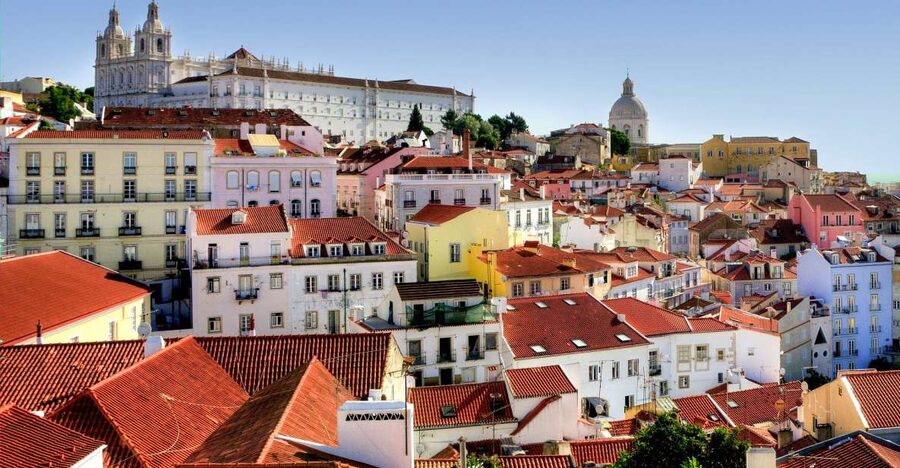
The tour begins at Praça do Comércio, Lisbon’s broad riverfront square. It is an apt starting point because the story here reaches beyond one neighborhood. The tour connects the square with the Exodus, then follows the movement of people, ideas, and families through Lisbon and onward to other parts of the world.
From this open space, you move toward Praça do Município, Rua do Comércio, Casa dos Bicos, and the Ribeira area. These early stops help place Jewish life in the working city, close to trade, government, shipping, and the river.
That wider setting matters. Lisbon’s Jewish story was not confined to religious buildings or one isolated quarter. Jewish residents were part of the city’s commercial and civic life, and the port later became linked to communities spreading across the Atlantic, the Mediterranean, Asia, and northern Europe.
You should not expect a long visit inside Casa dos Bicos or any other attraction. The value is in seeing the locations while your guide explains what happened there and how the city changed around them.
The guide’s role is especially important at this point. A good explanation can turn an ordinary street into a clue. Amber, one of the guides associated with the tour, is praised for speaking clearly and answering questions in detail. That makes the walk useful even if you have only a basic understanding of Portuguese Jewish history.
Other guided walks in Lisbon:
- Lisbon: History, Stories and Lifestyle Walking Tour
★ 4.8 · 10,902 reviews - Best of Lisbon Small-Group Guided Walking Tour
★ 5.0 · 4,869 reviews - Lisbon: Food and Wine Small Group Walking Tour
★ 4.9 · 4,082 reviews
Alfama and the shape of medieval segregation
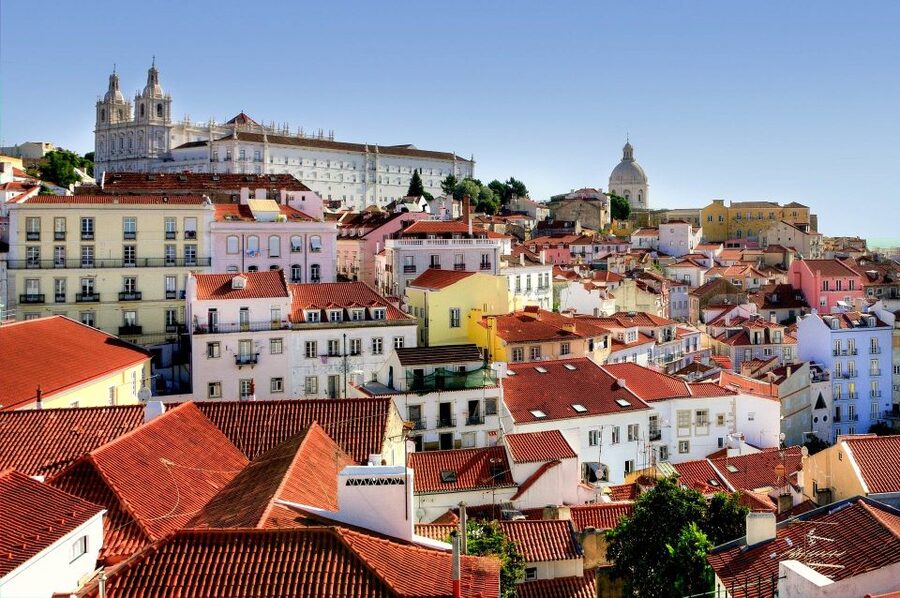
The route continues toward the castle hill and Alfama, where the narrow streets give you a better feel for medieval Lisbon. This is one of the strongest parts of the walk because the setting itself helps explain how neighborhoods once worked.
The tour covers the Alfama Jewish quarter and medieval segregation. You’ll learn how Jewish residents lived within designated areas while remaining connected to the rest of the city. The lanes are steep and uneven, but that physical effort is part of the lesson. Lisbon’s old quarters are much easier to understand when you walk them rather than view them from a modern avenue.
Do not expect a clearly marked Jewish quarter with rows of preserved medieval buildings. Much of what you see has changed over the centuries, and the evidence can be faint. The guide must reconstruct the past through historical accounts, street locations, and the relationship between the old neighborhoods.
That can frustrate visitors hoping for a large collection of visible Jewish monuments. At the same time, it gives the walk an honest quality. You are not being shown a polished historical set. You are being asked to picture a community whose physical traces were damaged, erased, or absorbed into later Lisbon.
The Alfama portion also gives the guide room to discuss Jewish life beyond persecution. The tour connects the community’s legacy with Portuguese culture, science, and gastronomy. Those links help keep the story from becoming only a sequence of disasters.
Wear shoes with a firm sole. The tour covers hills and old paving, and you will get more from the commentary if you are not concentrating on every step.
Baixa, forced conversions, and the New Christian story

In Baixa, the tone shifts from medieval community life to the pressure placed on Jews during periods of religious persecution. The tour covers forced conversions and the complicated history of New Christians, also called conversos.
This is an important part of the experience because a simple division between Jewish and Christian does not explain what happened in Portugal. Conversion could be forced, publicly required, or shaped by fear and survival. The history continued through families whose religious identity was no longer visible in the same way.
The Baixa streets also show how much Lisbon was rebuilt and reorganized. You are walking through a major central district, but your guide connects its modern appearance with older events and changing political power. The contrast between the neat city blocks and the painful history beneath them gives this section weight.
Guides such as Amber are particularly useful here because the subject needs careful explanation. The tour can move from Jewish life in the Iberian Peninsula to the later role of New Christians, then on to reforms that changed the legal and social treatment of these groups.
The account of the Marquis of Pombal is one of the less expected elements. His reforms under King José I helped remove divisions between Old and New Christians. The tour does not present the period as simple or perfect, but it shows how government policy could reshape religious categories that had separated people for centuries.
For you, the benefit is context. If you have read about the Inquisition, forced conversion, or Portuguese Jewish families who later appeared in other countries, the Baixa portion helps connect those subjects to actual streets in Lisbon.
Rossio and the 1506 Pessah massacre
Rossio is one of the most significant stops on the route. Here, the tour addresses the 1506 Pessah massacre, a violent attack on Lisbon’s Jewish and New Christian population.
This is difficult history, and the guide’s manner matters. The subject should be treated plainly, without turning tragedy into spectacle. The open square can feel far removed from the events being discussed, which is precisely why a clear account is useful.
The Rossio section also shows how public spaces can carry several layers of memory. Today, the square is part of everyday Lisbon. During the tour, you are asked to understand it as a place connected with religious tension, mob violence, and the destruction of a community.
This is likely to be one of the most serious moments of the walk. If you want a light sightseeing outing, this tour may feel heavy. If you want to understand how Jewish history fits into Portugal’s wider past, the direct treatment is a strength.
The route also includes Praça da Figueira and Mouraria, giving the guide more room to explain how neighborhoods changed and how different communities occupied Lisbon over time. The walk does not treat the Jewish quarter as an isolated subject. It shows how the story overlaps with the history of the city’s other districts.
Same base, a different kind of day out:
- Lisbon City Center Tour – The Unmissable Lisbon
★ 5.0 · 22,234 reviews - Lisbon: Sintra, Pena, Regaleira, Cabo da Roca & Cascais
★ 4.7 · 19,656 reviews - Lisbon: Jerónimos Monastery Entrance Ticket
★ 4.1 · 14,164 reviews - Lisbon: Sunset Boat Party Cruise with DJ and Open Bar
★ 4.5 · 10,378 reviews
From Portuguese history to a worldwide diaspora
One of the tour’s best features is its reach beyond Lisbon. The guide explains how people connected to the city’s Jewish communities spread across the Atlantic, the Mediterranean, Asia, and northern Europe.
That wider view helps answer a question many visitors have: why does Lisbon matter in Jewish history if so few physical remains are visible today? The answer lies partly in movement. Families, merchants, scholars, and refugees carried language, customs, knowledge, and food traditions far beyond Portugal.
The tour also highlights historical figures who help move the story forward. You’ll hear about the Jewish community’s contribution to Portuguese culture, science, and gastronomy, rather than hearing only about victimhood.
This balance is valuable. The history includes expulsion, forced conversion, segregation, and massacre, but it also includes work, learning, trade, family life, and cultural influence. A strong guide can hold both sides together.
The route reaches into modern history as well. You’ll learn about the contemporary Jewish presence and the passage of World War II refugees through Lisbon in the 1940s. That link between medieval history and the twentieth century gives the tour a longer time span than its old-quarter setting might suggest.
One useful point to clarify before booking: the experience covers modern Jewish history, but the information provided does not promise a detailed survey of today’s Jewish population or current institutions. If present-day Jewish Lisbon is your main interest, ask the guide about it at the start.
What the two-hour format means
Two hours is enough to cover the main sites, but not enough for long interior visits or extended time at every stop. You will spend most of the experience walking and listening, with the guide setting the pace.
The small group, capped at 10 participants, is a real advantage. You can hear the explanation more easily than in a large crowd, and there is room to ask questions. The private-feeling quality is even more likely if weather or booking patterns leave you with only a few people, though you should not count on having a private tour.
The guide speaks English, and the available language is English only. The tour ends back at the meeting point, which makes it easier to plan the rest of your day in central Lisbon.
At the start, look for a dark red umbrella or a sign. You are asked to contact the number on your voucher through WhatsApp or iMessages to confirm the meeting details. That is a small step, but it is worth doing in a busy square.
The route can be adapted to different time frames and starting points. That flexibility may help if you have limited time or want to focus more heavily on Alfama, Baixa, or the modern refugee story. Ask about changes before the tour begins rather than assuming every stop will receive equal attention.
Is $57 a fair price?
At $57 per person, this is not a cheap orientation walk. The price does make more sense if you want a specialist history lesson delivered in a small group, especially with a guide who can answer detailed questions.
You are paying for the guide’s interpretation rather than for admissions. Food, drinks, museum tickets, and transport are not included. That means the value depends on how much you care about the subject and how actively you take part.
For a casual first look at Lisbon, a general city walk may cover more famous sights for less money. For someone tracing family history, studying the Jewish experience in Portugal, or wanting more than surface-level facts, the price can be reasonable.
The strongest value comes from the connections between places. Praça do Comércio, Alfama, Baixa, Mouraria, and Rossio are all easy to visit independently. What is difficult to recreate alone is the chronological thread linking medieval segregation, forced conversion, the 1506 massacre, Pombal’s reforms, diaspora routes, and World War II refugees.
The free-cancellation period up to 24 hours before the start and the reserve-now, pay-later option also make it easier to fit the walk into an uncertain schedule. Those policies do not change the content of the tour, but they reduce the risk of booking ahead.
Who will enjoy this Lisbon Jewish history walk
I would recommend this experience to you if you:
- Want Jewish history explained alongside Portuguese political and social history
- Are comfortable walking uphill on cobbled streets
- Prefer a small group and time for questions
- Want to understand Lisbon’s connection to the wider Jewish diaspora
- Are interested in both medieval events and the World War II refugee passage
- Value a strong guide more than museum interiors or physical remains
You may want another activity if you need wheelchair-friendly routing, extensive indoor shelter, or a tour centered on active synagogues and present-day Jewish institutions. Those features are not identified here.
You should also think about timing. The walk may work well early in your Lisbon stay because it covers Alfama, Baixa, Rossio, and the waterfront, helping you understand how the center fits together. On the other hand, the hills may be tiring if you schedule it after a full day of sightseeing.
Should you book it?
Book this tour if you want the human story behind Lisbon’s old streets and are willing to accept that much of the Jewish past must be explained rather than viewed in preserved buildings. The careful treatment of forced conversion, the 1506 Pessah massacre, New Christians, Pombal, diaspora routes, and World War II refugees gives the walk unusual range.
I would choose it especially if Amber is leading and you enjoy asking questions. Her clear delivery, detailed answers, and ability to connect Portuguese and Jewish history are central to the experience.
Skip it if you want a quick photo walk, a food-focused outing, or a tour with many surviving Jewish landmarks. For an attentive history-minded visitor, though, this is a thoughtful way to read Lisbon’s streets and understand how a community’s influence can remain important even when its buildings have largely disappeared.
FAQ
How long is the Lisbon Jewish Quarter Guided Walking Tour?
The tour lasts two hours. Starting times depend on availability.
What language is the tour in?
The live guided tour is conducted in English.
How large is the group?
The group is limited to 10 participants.
Where does the tour visit?
The route covers Praça do Comércio, Praça do Município, Rua do Comércio, Casa dos Bicos, Ribeira, the Resistance Museum area, Mouraria, Praça da Figueira, Rossio, Baixa, Alfama, and the castle hill.
What is included in the price?
A guide is included. Food, drinks, and other items are not included.
Where does the tour start and finish?
The tour starts at the meeting point, where you should look for a dark red umbrella or sign, and ends back at the meeting point. Contact the number on your voucher through WhatsApp or iMessages to confirm the details.
Just added in Lisbon
- Half day Spa Water Therapy experience at THE SPA at Corinthia Lisbon★ 4.5 · 51 reviews
- Lisbon Cinematic Photoshoot with Top-Rated Photographer★ 5.0 · 76 reviews
- Central Lisbon E-Bike Tour★ 5.0 · 168 reviews
- Small-Group Sailing Tour on the Tagus River from Lisbon★ 5.0 · 78 reviews
- Lisbon Sailing Catamaran Public Cruise with drinks★ 5.0 · 304 reviews
- Alfama and the Castle of Saint George Skip the line Tour★ 5.0 · 53 reviews
- City Centre Run in Lisbon★ 5.0 · 164 reviews
- Boat tours in the Óbidos Lagoon★ 5.0 · 100 reviews
Walking Tours, compared.
Best of Lisbon Small-Group Guided Walking Tour
Read our review →
Porto Walking Tour, Lello Bookshop, River Cruise and Cable Car
Read our review →
Best of Lisbon Walking Tour: Rossio, Chiado & Alfama
Read our review →
Experience Porto’s Charm: 3-Hour Guided Walking Tour
Read our review →
Browse the lists this tour appears in