Reviewed · TOURS IN LISBON
Lisbon: Entry Tickets to Mosteiro de São Vicente de Foram
The best surprise here is the sheer amount packed inside São Vicente de Fora Monastery. One ticket takes you from a grand church to royal tombs, blue-and-white tile panels, a working medieval cistern, and a high viewpoint over Lisbon and the river.
I like the freedom to explore at your own speed, and I like the unusual mix of art, royal history, and everyday monastic details. The La Fontaine exhibition, with 38 fables shown in glazed tiles, is especially memorable. The one drawback is that no guided tour or audio guide is included, so you will rely on the printed map and explanatory panels.
Key points to know
- See one of Lisbon’s greatest tile collections: Much of the monastery’s baroque glazed tile work remains in its original position.
- Visit the Bragança Royal Pantheon: The final resting place of Portugal’s last royal family gives the visit a solemn, personal focus.
- Look for the working medieval cistern: It is a practical piece of the monastery’s older life, not just a decorative relic.
- Save time for the 360-degree view: The panorama reaches over Lisbon and the river and is one of the visit’s strongest rewards.
- Study the 38 La Fontaine fables: The tile panels turn familiar stories into a visual art display.
- Expect a self-guided visit: Panels and a short map leaflet help, but you must set your own pace and make sense of the rooms yourself.
Why São Vicente de Fora deserves your time
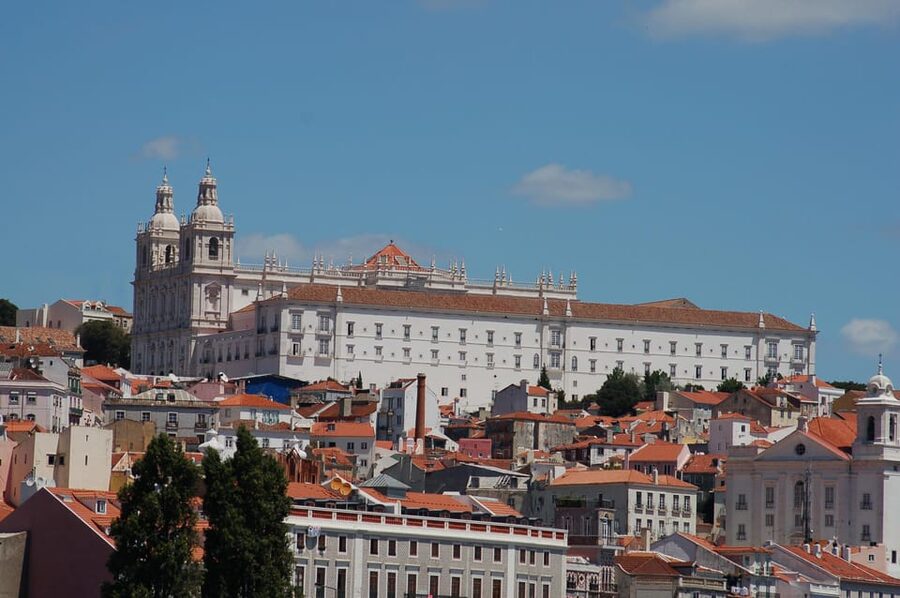
São Vicente de Fora is more than a pretty church. It is a large historic complex tied to Portuguese royal power across several dynasties, and its rooms show how religious, royal, and artistic life overlapped.
The site was founded by D. Afonso Henriques in the 12th century. It was rebuilt in the 16th century under D. Filipe I, known in Spain as Philip II, and the present building is one of Portugal’s notable examples of Mannerist design.
Later kings of the Bragança Dynasty made use of the monastery, leaving behind the royal pantheon and other features that you can see today. I find this layered history more rewarding than a single-period monument because the building keeps changing character as you move through it.
At $9 per person, the ticket is fairly priced for the range of rooms and exhibitions included. You are not paying only to enter a church. You also get access to the monastery areas, exhibitions, royal tombs, tile displays, viewpoint, restroom, information panels, and map leaflet.
A few more things to do in Lisbon worth a look
- Lisbon: Jerónimos Monastery Entrance Ticket
★ 4.1 · 14,164 reviews - Lisbon: Oceanário de Lisboa Entrance Ticket
★ 4.6 · 9,943 reviews - Lisbon: Luz Stadium Tour & SL Benfica Museum Ticket w/Scarf
★ 4.7 · 3,264 reviews
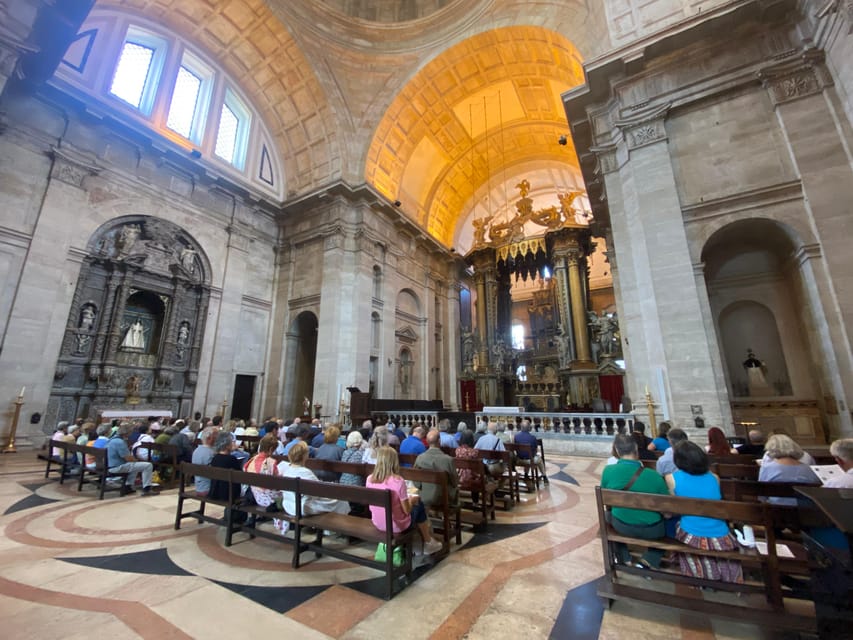
Starting inside the Church of São Vicente de Fora
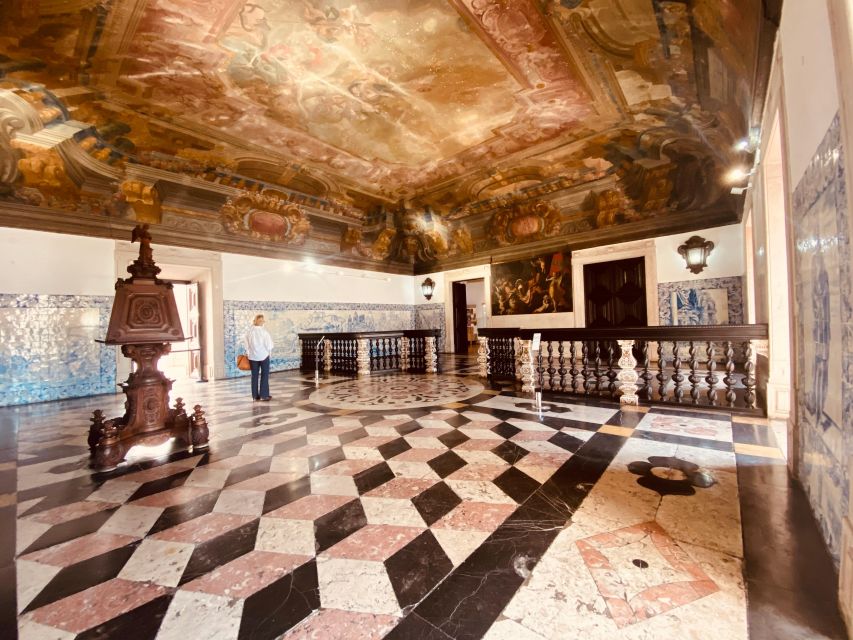
Your visit begins at the ticket office inside the Church of São Vicente de Fora. This matters because the church is part of the experience, not merely a doorway to the monastery.
The church is described as one of Lisbon’s most beautiful, and its Mannerist design gives you an early sense of the building’s formal, royal character. Take a few minutes here before moving on. If you hurry straight toward the other rooms, you may miss how the church sets the tone for the rest of the visit.
The ticket is valid for one day, so you have room to plan the visit around the rest of your Lisbon sightseeing. The information provided does not give a fixed visit length or a timed sequence. That makes the ticket useful for an independent schedule, but you should allow enough time to examine the tile work and exhibitions rather than treating the monastery as a quick stop.
Tile work in its original setting
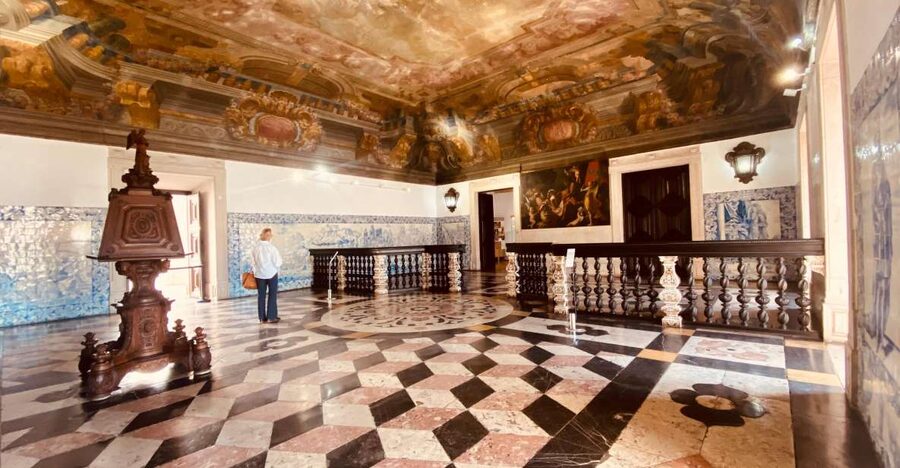
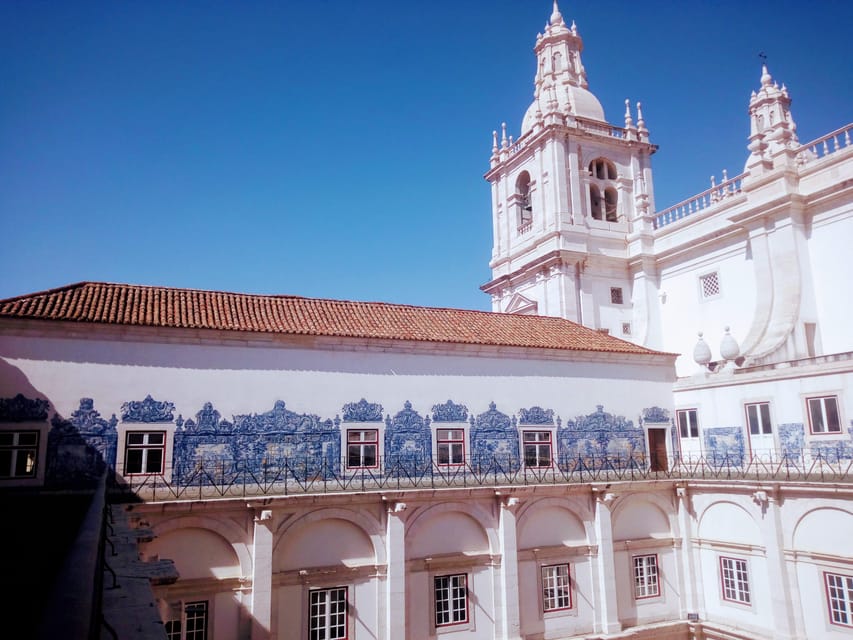
The monastery’s biggest artistic draw is its glazed tile collection. The complex is described as the second monument in the world with the most tiles still in their original place, and it also contains the country’s largest collection of baroque glazed tiles in situ.
The phrase in situ is important. You are not looking at loose panels removed from a building and placed in a museum. The tiles remain part of the rooms and passages they were made to decorate. That gives them a stronger connection to the architecture and to the way people once moved through the monastery.
The blue, white, and patterned surfaces can be easy to skim past in Lisbon, where tiles appear across the city. Here, the scale and concentration make it worth slowing down. Use the explanatory panels to understand what you are seeing, then look at the way the tile scenes work with the walls, doors, and room shapes.
I would give this section more time than you might expect. The main church may catch your eye first, but the tile-covered spaces are likely to be the part you remember most clearly.
The La Fontaine exhibition and its 38 fables
One of the most distinctive displays presents 38 fables by Jean de La Fontaine in glazed tile panels. This is a welcome change from a visit focused only on architecture or royal tombs.
The fables give you a clear way into the tile art. Even if you do not know every story, the scenes provide figures, animals, action, and moral ideas to look for. The panels are not just decoration. They tell stories across a durable surface and show how Portuguese interiors could turn walls into a form of visual reading.
This exhibition has earned particular praise, and it is easy to see why. It gives the visit a lighter and more accessible section after the church and pantheon. Families, art lovers, and anyone who prefers displays with a clear subject may enjoy it most.
The available information does not identify a curator, guide, or special presentation time for the exhibition. You see it as part of the general admission route, using the panels and map to guide yourself.
Same base, a different kind of day out:
- Lisbon City Center Tour – The Unmissable Lisbon
★ 5.0 · 22,234 reviews - Lisbon: Sintra, Pena, Regaleira, Cabo da Roca & Cascais
★ 4.7 · 19,656 reviews - Lisbon: History, Stories and Lifestyle Walking Tour
★ 4.8 · 10,902 reviews - Lisbon: Sunset Boat Party Cruise with DJ and Open Bar
★ 4.5 · 10,378 reviews
The Bragança Royal Pantheon
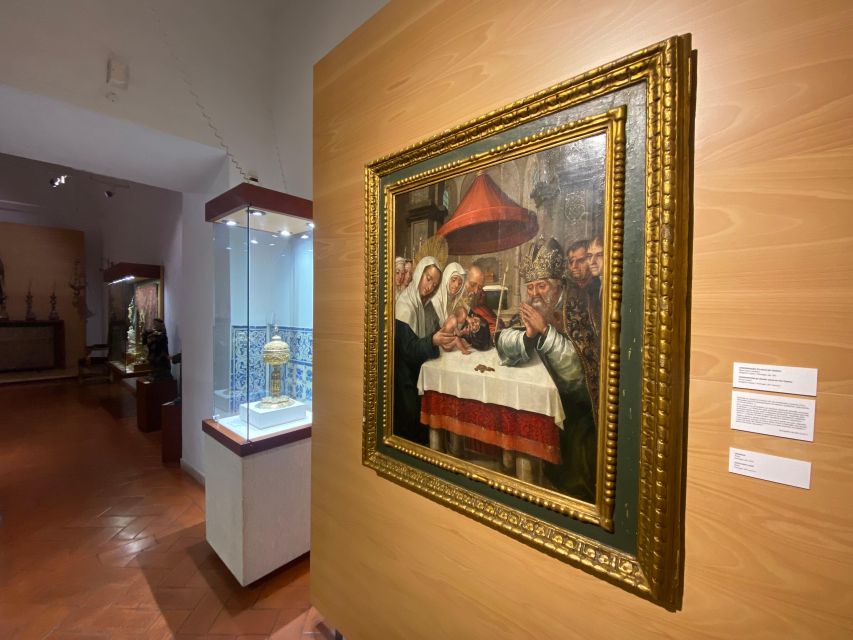
The Royal Pantheon is where the monastery becomes most personal. Members of the Bragança Dynasty are entombed here, including the last Portuguese royal family.
A royal tomb can feel distant when it is presented only as a list of names. The pantheon works better when you connect it to the monastery’s wider story. This was a religious house tied to rulers, and the tombs show how the building continued to serve royal purposes long after its earlier foundation.
Expect a more serious mood in this part of the visit. You are looking at a burial place, so it deserves quiet attention rather than a rushed photo stop. The pantheon also helps explain why São Vicente de Fora mattered to successive Portuguese kings.
The provided details do not specify the exact number of tombs or identify each person individually. You should use the explanatory panels on site for those names and dates.
The marble sacristy and the working cistern
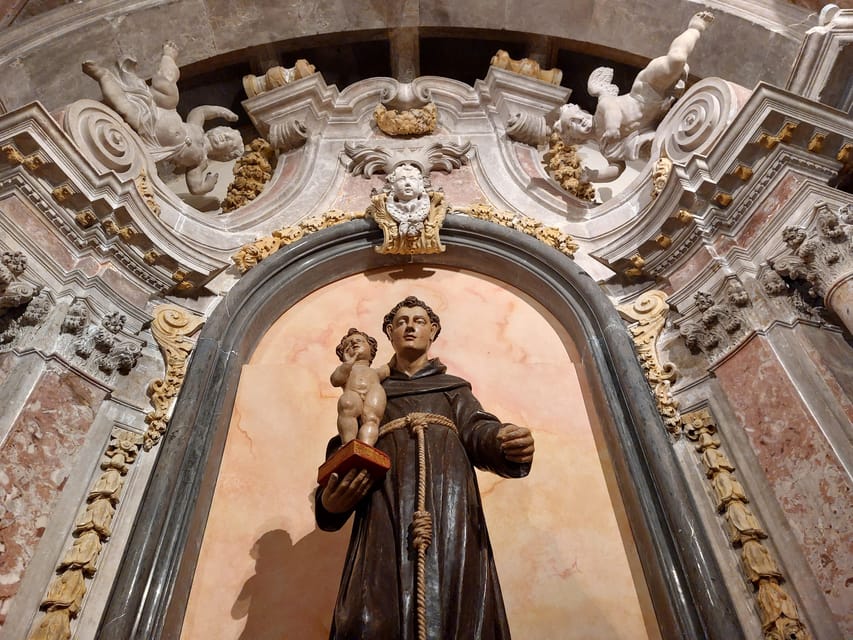
Two smaller details add welcome variety to the grand rooms. The sacristy has walls fully decorated with inlaid marbles, giving it a different look from the glazed tiles elsewhere in the complex.
The marble work is worth comparing with the tile decoration. Tiles create pictures and patterns across broad surfaces, while inlaid marble depends on material, color, and careful fitting. You get a better sense of the monastery’s decorative range by seeing both in the same visit.
The medieval cistern is another unusual feature. It still works, which gives you a glimpse of the practical systems that supported monastic life. It is not simply an old stone object placed behind glass. Its continued function connects the present building with its earlier daily use.
These details may not receive as much attention as the royal pantheon or viewpoint, but they help keep the visit from becoming a parade of grand rooms. I always like monuments better when they reveal how people actually lived and maintained them.
The Lisbon and river panorama
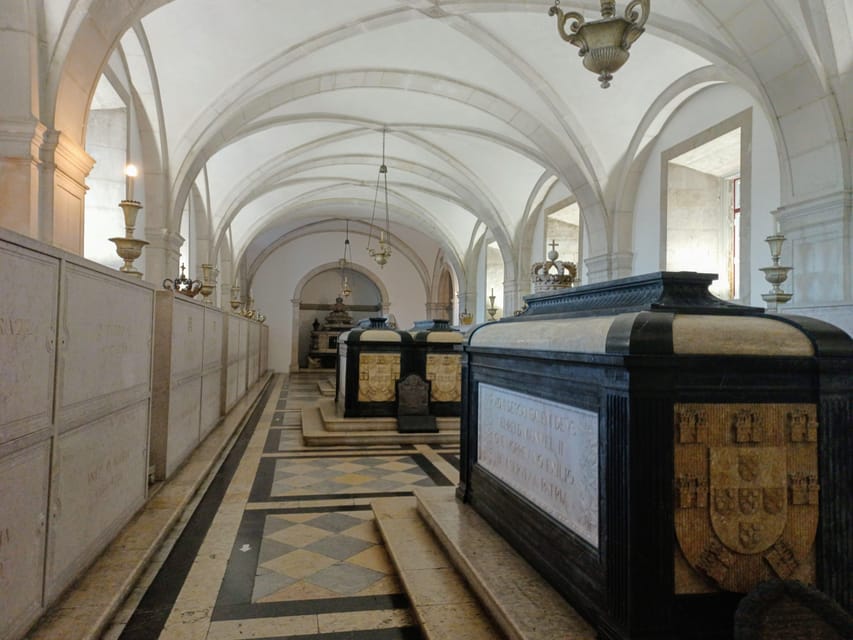
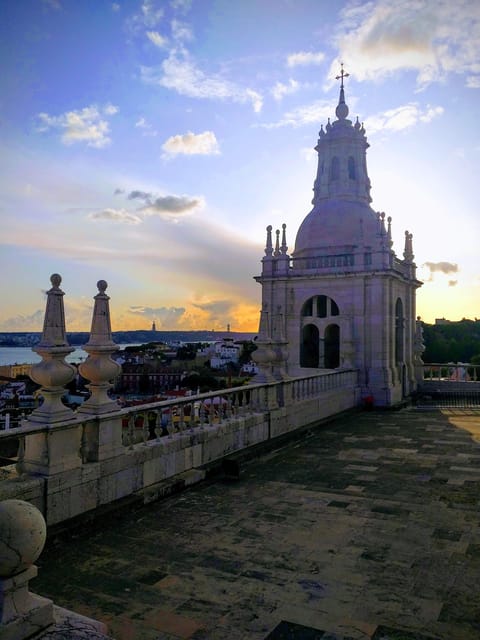
Save the viewpoint for a deliberate stop. The monastery offers a broad panorama over Lisbon and the river, with a 360-degree view that gives you a useful sense of the city’s position.
This is more than a pleasant ending. After seeing the monastery’s interior, the view helps you place the building within Lisbon. You can pause, look outward, and understand why this high site has remained important in the city’s story.
The exact sightlines and visibility can depend on conditions, and no details are provided about seating or the amount of time allowed at the viewpoint. Still, it is one of the clearest reasons to avoid rushing through the complex.
I would visit the interior first and leave the panorama until later if your route allows. The contrast works well: ornate rooms and royal tombs inside, then open city and river views outside.
How the self-guided format works
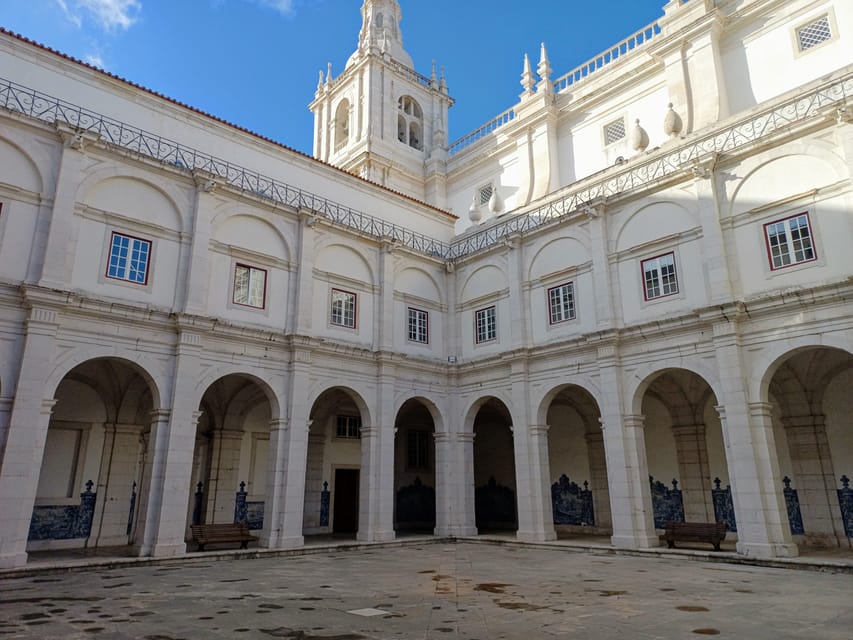
This is an independent entry ticket rather than a guided tour. The ticket includes informative panels throughout the visit and a flyer with a map and short description of the monastery.
The host or greeter service is available in English, Spanish, French, Portuguese, and Italian. That language support may help at the ticket office or starting point, but it does not mean a guide accompanies you through the building.
No audio guide is included. If you like to hear a clear explanation at every stop, this may feel limited. If you prefer to linger over the rooms that interest you and skip the parts that do not, the format gives you useful control.
The visit also avoids the pressure of a set group itinerary. The monument is described as not crowded, which should make it easier to examine the tile panels and take in the viewpoint without being pushed along. Still, crowd levels can change during the day, so the promise should be treated as an advantage, not a guarantee.
Practical details before you go
The meeting point is the ticket office inside the Church of São Vicente de Fora. The activity ends back at that same meeting point, so you do not need to arrange a separate finish point.
The ticket is valid for one day. Starting times depend on availability, so check the available time before booking. The experience includes restroom access, but it does not include access to areas outside the stated visitor circuit.
Food and drinks are not allowed inside, and smoking is prohibited. Large bags and luggage are also not allowed. Alcohol and drugs are prohibited as well, so plan this as a sightseeing visit rather than a stop between major bags or transfers.
Cancellation is free up to 24 hours in advance, and the reserve-now, pay-later option lets you keep your plans flexible. Those terms are useful if your Lisbon schedule is still changing, but the real value remains the breadth of what you can see for $9.
Who will enjoy this visit most
I would recommend São Vicente de Fora to anyone who wants more than a quick church interior. It suits you especially well if you enjoy tile art, royal history, religious buildings, exhibitions, and city views in one stop.
It is also a good choice for independent sightseers. You can set your own pace, return attention to a favorite display, and use the map and panels without committing to a group schedule.
Art lovers should make time for the La Fontaine panels and the baroque tile collection. History-minded visitors will get the most from the foundation, royal rebuilding, Bragança pantheon, and surviving monastic features.
The visit may be less satisfying if you need a detailed spoken explanation or a structured tour. Since there is no audio guide or included guide, you must be comfortable reading the panels and forming your own route through the rooms.
Should you book São Vicente de Fora?
At $9, I think this is a strong-value Lisbon admission. You get a church, a royal pantheon, major tile decoration, the La Fontaine exhibition, a marble sacristy, a working medieval cistern, and a city-and-river viewpoint in one historic complex.
Book it if you want an uncrowded-feeling cultural stop with plenty to examine at your own pace. Skip it only if your schedule is too tight for a self-guided visit or if you strongly prefer a tour with an audio explanation. For most independent visitors, the unusual tile displays and 360-degree view make this a worthwhile addition to Lisbon.
FAQ
How much does entry to São Vicente de Fora Monastery cost?
The entry ticket costs $9 per person.
How long is the ticket valid?
The ticket is valid for one day. Starting times depend on availability.
Is a guided tour included?
No. A guided tour is not included.
Is an audio guide included?
No. The ticket includes informative panels and a flyer with a map and brief description, but no audio guide.
What areas can I visit with the ticket?
You get access to the monastery, its exhibitions, and all areas included in the visitor circuit. Areas outside that circuit are not included.
Where does the visit start and finish?
You start at the ticket office inside the Church of São Vicente de Fora. The activity ends back at the same meeting point.
Can I cancel the booking?
Yes. You can cancel up to 24 hours in advance for a full refund. A reserve-now, pay-later option is also available.
Just added in Lisbon
- Half day Spa Water Therapy experience at THE SPA at Corinthia Lisbon★ 4.5 · 51 reviews
- Lisbon Cinematic Photoshoot with Top-Rated Photographer★ 5.0 · 76 reviews
- Central Lisbon E-Bike Tour★ 5.0 · 168 reviews
- Small-Group Sailing Tour on the Tagus River from Lisbon★ 5.0 · 78 reviews
- Lisbon Sailing Catamaran Public Cruise with drinks★ 5.0 · 304 reviews
- Alfama and the Castle of Saint George Skip the line Tour★ 5.0 · 53 reviews
- City Centre Run in Lisbon★ 5.0 · 164 reviews
- Boat tours in the Óbidos Lagoon★ 5.0 · 100 reviews
Tours in Lisbon, compared.
Lisbon City Center Tour – The Unmissable Lisbon
Read our review →
Sintra, Pena, Regaleira, Cabo da Roca & Cascais
Read our review →

Sunset Boat Party Cruise with DJ and Open Bar
Read our review →
Pena Palace, Sintra, Cabo da Roca, & Cascais Daytrip
Read our review →