
Reviewed · WALKING TOURS
Lisbon by Night: Guided Walking Tour – The Unholy Secrets
Lisbon’s darker past comes alive on this 105-minute evening walk from Rossio to Alfama. The stories focus on real events, including the Portuguese Inquisition, the 1506 New Christian massacre, the 1755 earthquake, Aljube prison, and the rise of Marquês de Pombal. Guides such as Maria, Amanda, and Andreia use theatrical storytelling rather than simply listing dates.
I like the route’s strong sense of place: you begin beside the grand Rossio Square, cross Baixa, and finish among Alfama’s old lanes. I also like the balance between documented history and eerie aftermath. This is not just a ghost walk built around spooky tales. The main drawback is the pace. You will walk uphill and move fairly quickly between stops, so it is not suitable for wheelchair users or anyone with serious mobility limits.
Key points to know before you book
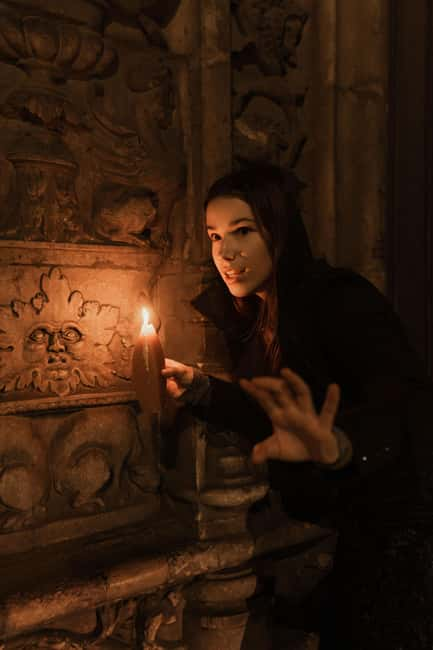
- Real history with a dark edge: Expect the Inquisition, religious persecution, massacres, prisons, earthquakes, and notorious figures.
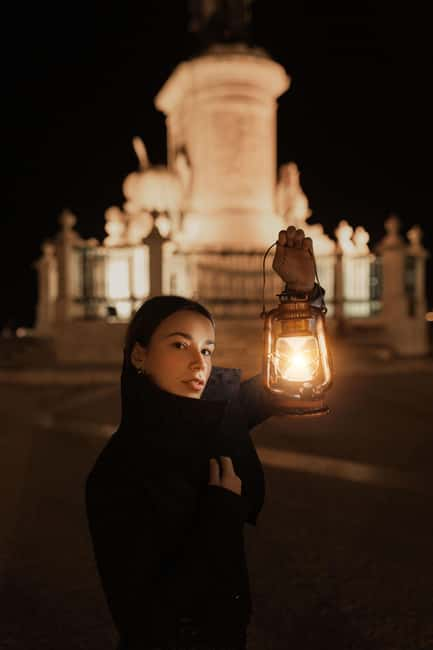
- A theatrical English-language guide: The guide carries a lantern and may act out characters or speak in a dramatic style.
- A useful first-night route: The walk helps you get oriented between Rossio, Baixa, and Alfama.
- A moderate but hilly walk: Comfortable shoes matter, especially as the route rises toward Alfama.
- A small-group feel may be possible: Several departures have been described as intimate, though group size is not guaranteed.
- Good value for history fans: At $23, you are paying for live interpretation, not monument entry or refreshments.
Starting beside the lantern in Rossio
Your meeting point is Praça Dom Pedro IV, commonly called Rossio, beside Joalharia Ferreira Marques, an old jewelry shop on the square’s south side. Look for the guide holding a lantern. That simple signal is useful in a busy central square, especially after dark.
The setting fits the subject. Rossio has long been one of Lisbon’s main public spaces, a place where political power, commerce, punishment, celebration, and ordinary life have crossed paths. The tour uses this central point as a doorway into the city’s less polished past.
You should arrive ready to walk, not just stand and listen. The experience is built around movement through the historic center, with the guide linking each street and square to a story. That makes the past easier to picture than a standard talk in one fixed location.
Maria has received particularly warm praise for turning difficult weather into part of the fun, while Amanda and Andreia have also been noted for clear explanations and strong delivery. Your guide may be someone else, but the advertised format is consistent: English narration, historical context, and a dramatic presentation.
Other guided walks in Lisbon:
- Lisbon: History, Stories and Lifestyle Walking Tour
★ 4.8 · 10,902 reviews - Best of Lisbon Small-Group Guided Walking Tour
★ 5.0 · 4,869 reviews - Lisbon: Food and Wine Small Group Walking Tour
★ 4.9 · 4,082 reviews
Crossing Baixa after Lisbon’s darkest chapters
From Rossio, the route moves through Baixa, the central district rebuilt after the catastrophic earthquake of 1755. The broad streets and ordered blocks here can feel very different from the cramped lanes of older Lisbon, and that contrast gives the guide a natural way to explain the city before and after disaster.
The earthquake is not treated as a detached school lesson. It becomes part of the larger story of how Lisbon changed, how people responded to catastrophe, and how authority shaped the rebuilding of the city. Marquês de Pombal enters this section as one of the major figures connected with Lisbon’s recovery and political direction.
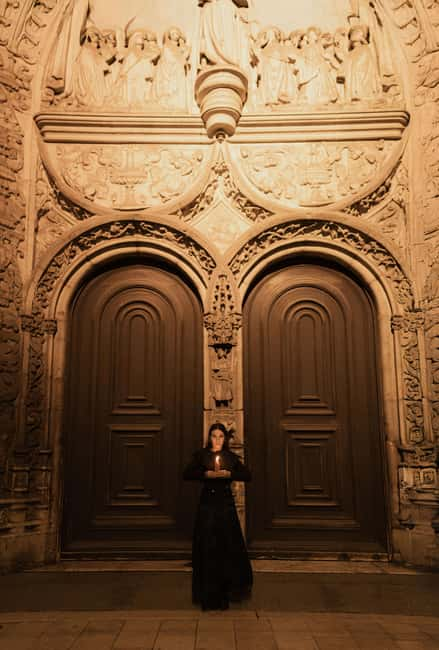
You will also hear about the Portuguese Inquisition and the persecution of New Christians, the term used for Jews who had converted to Christianity, often under pressure. One of the most serious subjects connected with the route is the 1506 massacre of New Christians in Lisbon. This is not light entertainment, and the tour works best if you are prepared for stories about intolerance, violence, fear, and institutional power.
The guide’s performance is important here. The experience is designed to make you picture people from the past rather than simply memorize names. Several guides, including Maria and Ameira, have been praised for dramatic skills and for bringing characters into the story. That style may appeal to you if a plain architectural tour feels too dry.
Praça do Comércio and the city’s changing face
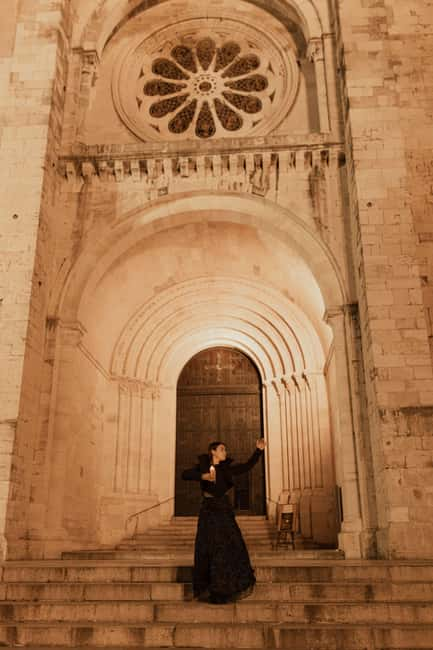
The tour description places Praça do Comércio among the important sights connected with the walk. The enormous riverside square gives you a different view of Lisbon from Rossio and Baixa, with its open space and connection to the Tagus.
The value of hearing history here is that Lisbon’s past feels physical. You are not studying an isolated timeline. You are standing in the central part of a city shaped by trade, religion, state power, disaster, and reconstruction.
The exact order of stops can vary, and the tour does not include entry into monuments. That matters if you expect to go inside historic buildings. You are seeing the streets and public spaces while the guide supplies the background, so plan a separate visit if you want interior access.
I see this as a strength for a first evening in Lisbon. You can note places you want to return to during daylight. One person described the route as a useful way to get the lay of the land, with several stops worth revisiting later.
Into Alfama, where the tone grows more intimate
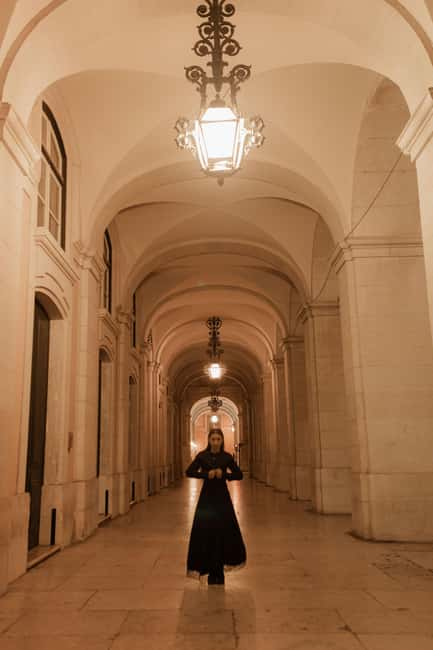
The walk finishes in Alfama, Lisbon’s oldest-feeling district, with narrow lanes and steep sections that contrast sharply with Baixa’s formal grid. Here, the city becomes harder to read from a map. Streets twist, sightlines close in, and the guide can focus on smaller corners and stories that would be easy to miss alone.
This is the part of the route where the phrase hidden corners makes sense in a practical way. You are not promised access to secret buildings or private sites. Instead, the guide points out places whose importance is easy to miss unless someone explains what happened there.
The Aljube prison is one of the darker subjects connected with the experience. The story gives the walk a more recent and personal edge, moving beyond medieval legends and religious persecution into the memory of imprisonment and political repression. The tour also refers to lost souls wandering the medieval streets, but the overall content appears to keep ghost lore in balance with documented events.
That balance is important. If you want a pure supernatural tour, this may feel too historical. If you prefer real events with a chilling atmosphere, the mix should suit you better.
The uphill walk toward Alfama is manageable for many people, but the route is not flat. One account specifically describes fast walking between points and a good hill. Wear shoes with reliable grip, and avoid treating this as a gentle stroll through level streets.
Same base, a different kind of day out:
- Lisbon City Center Tour – The Unmissable Lisbon
★ 5.0 · 22,234 reviews - Lisbon: Sintra, Pena, Regaleira, Cabo da Roca & Cascais
★ 4.7 · 19,656 reviews - Lisbon: Jerónimos Monastery Entrance Ticket
★ 4.1 · 14,164 reviews - Lisbon: Sunset Boat Party Cruise with DJ and Open Bar
★ 4.5 · 10,378 reviews
Storytelling instead of a standard history lecture
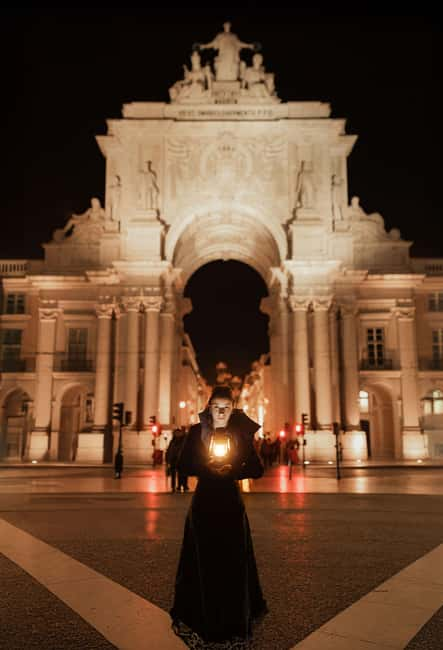
The guide is not simply there to point at buildings. The advertised format uses theatrical narration, and that is the main reason to choose this experience over a basic orientation walk.
A strong guide can change the way you remember a place. Maria has been praised for acting out stories with a large character, while Amanda has been described as both informative and entertaining. Andreia has also been noted for making the subject approachable and answering questions well. These details suggest that delivery matters as much as the route.
You should still expect variation. A live storytelling experience depends on the person leading your group, the weather, the size of the group, and the questions people ask. The guide names associated with past departures include Maria, Amanda, Andreia, Clara, and Ameira, but a particular name is not guaranteed when you book.
The lantern is more than a meeting-point marker. It suits the mood and helps create a clear focus once the group is moving through dark streets. The tone seems playful at times, but the subject matter can be grim. This is best approached as history presented with atmosphere, not as a theatrical show with elaborate staging.
What the $23 price really covers
At $23 per person, the tour is reasonably priced if you want a live guide and a focused introduction to Lisbon’s darker past. You are paying for 1 hour and 45 minutes of guiding, interpretation, and route planning.
The price does not cover monument entry, drinks, or water bottles. That keeps the cost simple, but you should bring your own water. You should also understand that this is a walking tour, not a ticketed attraction with access to interiors.
The value improves if you take it early in your stay. You get historical context for places you may pass again, practical orientation between central Lisbon and Alfama, and ideas for where to return. One person felt the price was a little high for a walking tour, but also found that the experience offered more than simply reading a history book.
That is the right comparison. If you want a cheap stroll with a few facts, there are less expensive options. If you want a guide who connects locations to difficult stories and performs the material, $23 is fair.
Weather, pace, and practical comfort
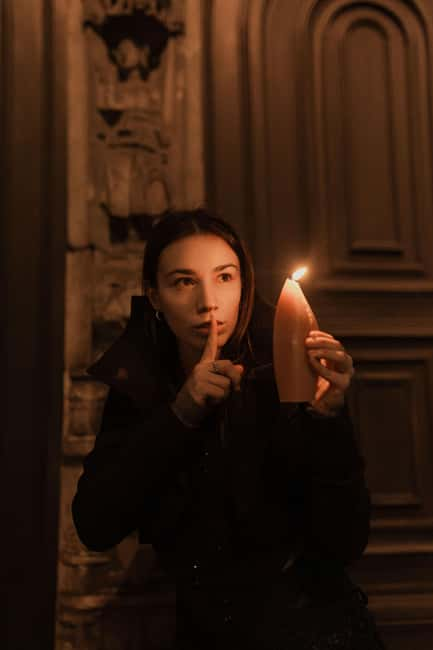
This is an outdoor activity, so weather affects the experience. Rain and wind have not stopped some departures from being enjoyable, especially when the guide keeps the mood lively, but poor weather can make cobblestones and hills less comfortable.
Bring comfortable shoes and water. A light rain layer is sensible if the forecast looks unsettled, though that suggestion is practical rather than part of the tour’s official inclusions. Since the walk takes place at night, clothing that lets you move freely is more useful than dressing for a formal evening.
The tour is not suitable for people with mobility impairments or wheelchair users. The reasons are clear from the route: narrow historic streets, uphill walking, and a fairly active pace. If you need frequent stops or level access, choose a flatter tour instead.
There is no stated age restriction, but the subject matter includes massacre, persecution, imprisonment, and death. I would choose another activity for very young children who may find those themes upsetting.
Who will enjoy this Lisbon walk
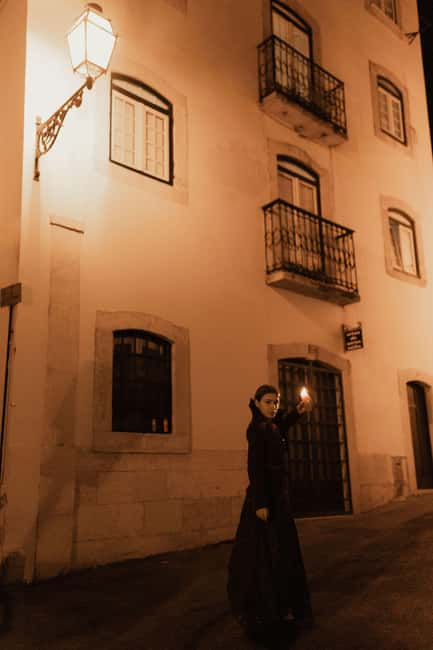
I recommend it most strongly to you if you enjoy history with a human face. The route gives you dates and events, but the guide’s job is to show how those events affected people and changed the city.
It suits first-time visitors who want an evening orientation, especially if you are staying near central Lisbon. Starting at Rossio and ending in Alfama gives you a useful mental map, while the stories provide a reason to pay attention to streets you might otherwise pass without thought.
It also suits people who have already seen Lisbon’s main monuments and want a different angle. The focus is not on famous façades alone. You get the less comfortable parts of the city’s past, including religious persecution, state violence, prison history, and disaster.
You may not enjoy it if you want a relaxed, flat walk, a detailed tour inside monuments, or a conventional overview of Lisbon’s art and architecture. The experience has a clear theme, and it stays close to that theme.
Booking details worth knowing
The tour is offered in English with a live guide. The duration is listed as 105 minutes, although the description refers to a 2-hour walk. In practical terms, plan for about 1 hour and 45 minutes, with a little flexibility for pauses and group movement.
You can cancel up to 24 hours before the start time for a full refund, and the reserve-now, pay-later option lets you hold a place without paying immediately. Starting times vary, so check the available departure when choosing a date.
Since the meeting point is next to a named jewelry store and the guide carries a lantern, finding the group should be straightforward. Still, allow enough time to reach Rossio. The tour begins in a busy central area, and you do not want to start the evening searching the square.
Should you book Lisbon by Night: The Unholy Secrets?
Book it if you want serious Lisbon history delivered with theatrical energy, and if you are comfortable walking uphill through old streets at night. The stories of the Inquisition, the 1506 massacre, the earthquake, Aljube prison, and Marquês de Pombal give the tour more substance than a standard ghost walk.
Skip it if you need level access, dislike grim subjects, or want to spend the evening inside monuments. For most able walkers with an interest in the city’s complicated past, $23 is a fair price for a lively introduction that connects Rossio, Baixa, and Alfama in one compact route.
FAQ
Where does the tour start?
It starts at Praça Dom Pedro IV 7, beside Joalharia Ferreira Marques on the south side of Rossio Square. Look for the guide holding a lantern.
Where does the tour finish?
The walk finishes in Alfama.
How long does the tour last?
The stated duration is 105 minutes, or 1 hour and 45 minutes.
What language is the tour conducted in?
The live tour guide speaks English.
What historical subjects are covered?
The tour covers the Portuguese Inquisition, the 1506 New Christian massacre, the 1755 earthquake, Marquês de Pombal, Aljube prison, medieval legends, and other darker episodes from Lisbon’s past.
Is entry to monuments included?
No. Entrance to monuments at the stops is not included.
Is the tour suitable for wheelchair users?
No. The experience is not suitable for wheelchair users or people with mobility impairments. Comfortable shoes are recommended.
Just added in Lisbon
- Half day Spa Water Therapy experience at THE SPA at Corinthia Lisbon★ 4.5 · 51 reviews
- Lisbon Cinematic Photoshoot with Top-Rated Photographer★ 5.0 · 76 reviews
- Central Lisbon E-Bike Tour★ 5.0 · 168 reviews
- Small-Group Sailing Tour on the Tagus River from Lisbon★ 5.0 · 78 reviews
- Lisbon Sailing Catamaran Public Cruise with drinks★ 5.0 · 304 reviews
- Alfama and the Castle of Saint George Skip the line Tour★ 5.0 · 53 reviews
- City Centre Run in Lisbon★ 5.0 · 164 reviews
- Boat tours in the Óbidos Lagoon★ 5.0 · 100 reviews
Walking Tours, compared.
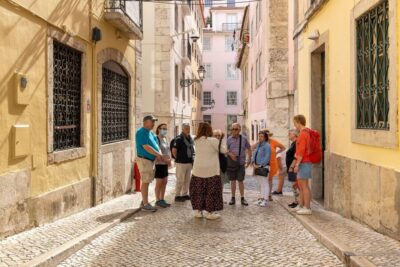
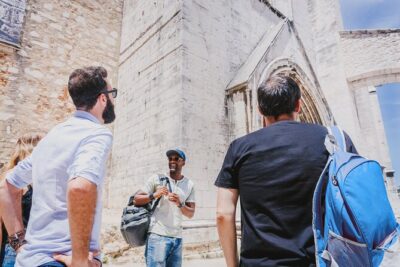
Best of Lisbon Small-Group Guided Walking Tour
Read our review →
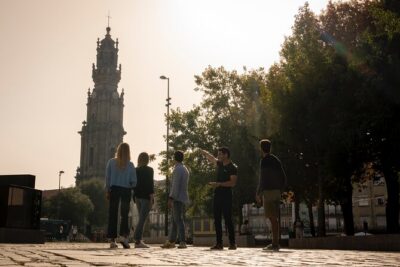
Porto Walking Tour, Lello Bookshop, River Cruise and Cable Car
Read our review →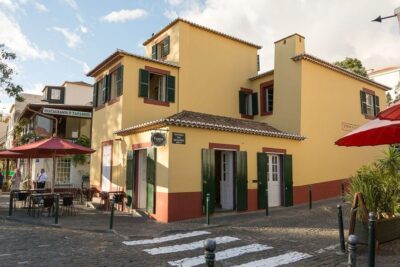
Best of Lisbon Walking Tour: Rossio, Chiado & Alfama
Read our review →
Experience Porto’s Charm: 3-Hour Guided Walking Tour
Read our review →
Browse the lists this tour appears in