

Reviewed · TOURS IN LISBON
Lisboa Story Centre: 1-Day Admission Ticket
Lisbon’s story is told here with theatrical sets, sound, projections, and sensory effects rather than rows of dusty objects. The strongest section is the recreation of the 1755 earthquake, which turns a major historical event into something you can grasp through sight and sound.
I like the clear chronological route, which makes the city’s long past easy to follow, and I like the 16th-century warehouse scene with its references to goods brought from the New World by caravela ships. The audio guide comes in many languages, including child and adult versions in Portuguese, which makes this a useful stop for families.
The main consideration is that the visit lasts about 60 minutes, and the treatment of modern Lisbon is fairly brief. On a hot day, the lack of air conditioning can also affect your comfort.
Key points to know before you go
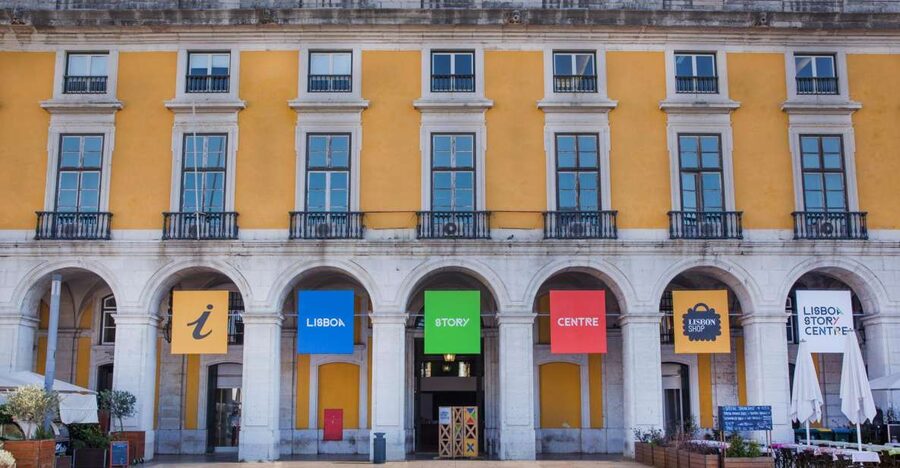
- Six exhibition areas: Five ground-floor sections tell Lisbon’s story in time order, followed by a first-floor city model.
- A vivid 1755 earthquake scene: Sound and staged effects help explain the disaster and its effect on Lisbon.
- A 60-minute visit: The presentation is focused, making it easy to fit into a day around Praça do Comércio.
- Multilingual audio guides: Options include English, Portuguese, Spanish, French, Italian, German, Russian, Mandarin, and Japanese.
- A family-friendly format: The playful presentation gives children more to watch and hear than a standard museum display.
- Practical location: The centre sits at Terreiro do Paço, with skip-the-ticket-line entry and wheelchair access.
Starting at Terreiro do Paço
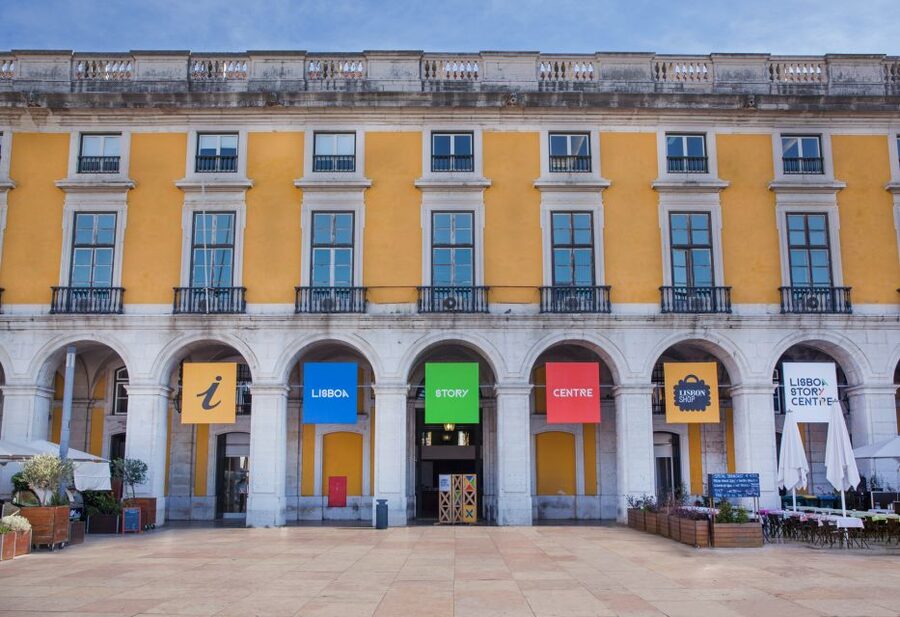
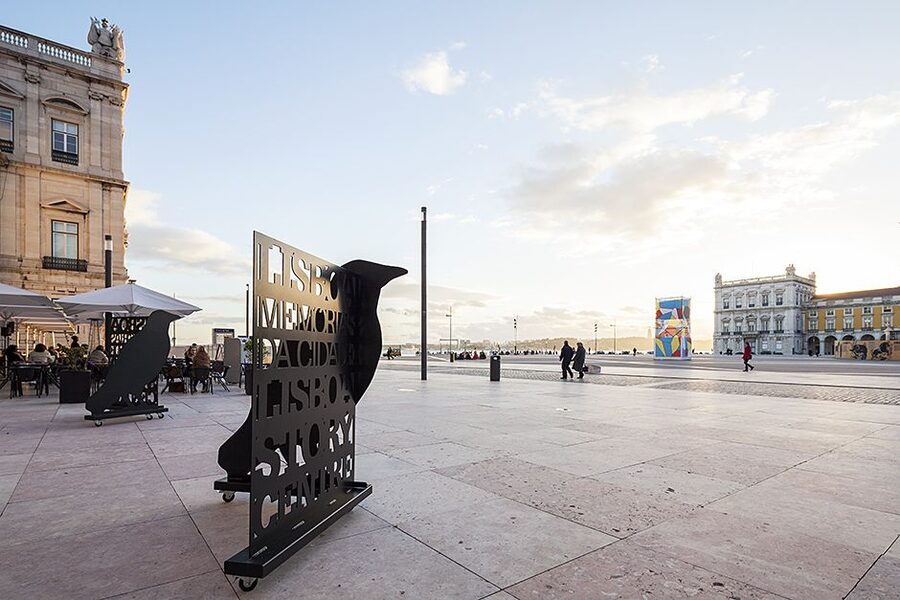
The Lisboa Story Centre sits in the East Wing of the renovated Terreiro do Paço, the grand square better known in English as Praça do Comércio. This is one of the most useful locations for a city-history attraction because you can step outside and immediately see the setting that the centre explains.
The address is Terreiro do Paço, 78 to 81, in Lisbon’s 1100-148 postal area. You do not need to set aside a whole morning or afternoon. The main presentation takes about an hour, so you can place it before a walk through Baixa, after seeing the riverfront, or between other sights in the centre of Lisbon.
Your ticket is valid for one day, but the attraction itself is designed around a single visit rather than repeated entry. The practical benefit is flexibility. You can choose a starting time during the centre’s opening hours, from 10:00 to 19:00, with the final entrance at 18:00.
The skip-the-ticket-line entry is useful if you are keeping to a tight sightseeing plan. It does not mean the centre will be empty, but it removes one small delay at a busy central sight. Wheelchair access is available.
A few more things to do in Lisbon worth a look
- Sintra and Cascais Small-Group Day Trip from Lisbon
★ 5.0 · 7,018 reviews - Three Cities in One Day: Porto, Nazare and Obidos from Lisbon
★ 4.5 · 3,572 reviews - From Lisbon: Day Trip to Porto, Óbidos, and Nazaré
★ 4.5 · 1,311 reviews
Five ground-floor scenes tell the city’s story
The main route takes place across five ground-floor exhibition areas. They are arranged in chronological order, so you move from Lisbon’s earliest settlements toward the city you see today. A recorded storyteller guides you through the route in your selected language.
This structure helps if you know little about Lisbon. You are not expected to read a long wall of text before understanding each section. Instead, the sets and audio narration give you the basic story first, then add details through images, sound, and short explanations.
The presentation is intentionally playful. That works well for children and for adults who prefer history with a sense of place. It also means the centre is not a substitute for a specialist museum or a full historical study. Think of it as a strong introduction that gives the city’s major turning points a clear shape.
The centre covers Lisbon from the earliest civilizations to the present day, but the largest amount of attention goes to the older periods and the events that changed the city’s form. If you want an extended treatment of 20th and 21st-century Lisbon, you will need to add another museum or walking tour.
Seeing Lisbon as a port in the 16th century
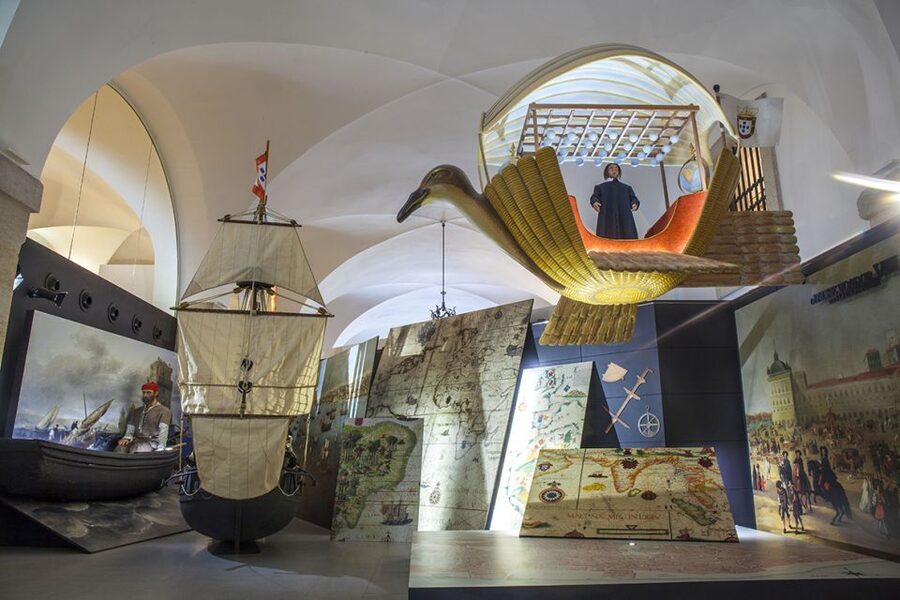
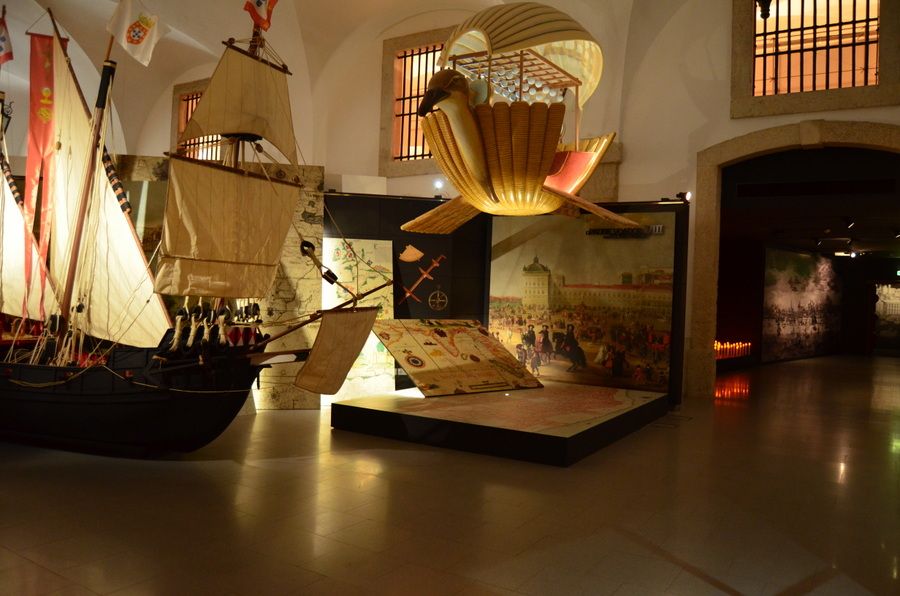
One of the most effective scenes places you inside the atmosphere of a 16th-century warehouse. This section connects Lisbon’s fortunes to maritime trade and to the goods arriving from the New World.
The caravela ships on display help you picture the technology behind those voyages. The point is not just that ships left Lisbon and returned with products. The scene shows how the port shaped the city’s wealth, work, buildings, and contact with distant places.
I find this kind of set more useful than a simple ship illustration because it gives the story a physical setting. You can think about the noise, storage, movement of goods, and dependence on the riverfront. The attraction does not ask you to memorize a list of dates. It gives you a reason to understand why Lisbon became such an important port.
This is also one of the sections that should hold a child’s attention. A warehouse and ship display are easy to grasp, even if the wider political and economic story is new. The narration supplies the context without making you begin with a textbook.
The 1755 earthquake is the emotional centre
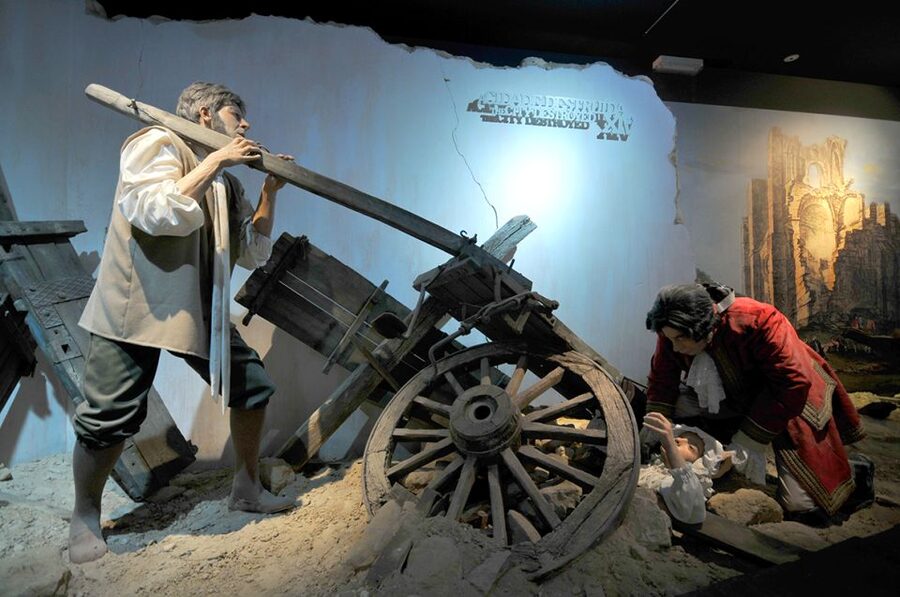
All Saints’ Day in 1755 brought an earthquake and devastating consequences to Lisbon. The centre presents this event through a staged, sensory sequence that uses sound and visual effects to show the scale of the disaster.
This is the point where the experience moves beyond a simple timeline. You see why the earthquake remains central to Lisbon’s identity and why so much of the city was rebuilt afterward. The presentation is designed to create a feeling of disruption, but it remains part of a historical attraction rather than a thrill ride.
If you have already read about the earthquake, the scene still gives useful scale. Dates and descriptions can tell you what happened, but a carefully arranged setting helps you connect the disaster with the city’s buildings, streets, and later rebuilding plans.
The subject may be intense for very young children, particularly because the centre uses sensory effects. Families should decide how their children handle dramatic presentations. The attraction is generally playful in tone, but this section deals with death and destruction, not just colorful city life.
The lack of air conditioning is worth noting here and throughout the building. On warm days, a one-hour visit may feel less comfortable than expected, especially when you are standing through the presentation. Plan your visit with Lisbon’s heat in mind.
Same base, a different kind of day out:
- Lisbon City Center Tour – The Unmissable Lisbon
★ 5.0 · 22,234 reviews - Lisbon: Sintra, Pena, Regaleira, Cabo da Roca & Cascais
★ 4.7 · 19,656 reviews - Lisbon: Jerónimos Monastery Entrance Ticket
★ 4.1 · 14,164 reviews - Lisbon: History, Stories and Lifestyle Walking Tour
★ 4.8 · 10,902 reviews
Following the Marquis of Pombal’s rebuilding plan
After the earthquake section, the story turns toward the Marquis of Pombal and his broad plan for rebuilding Lisbon. This part matters because it links a single disaster to the streets and architectural order you encounter in Baixa today.
The centre shows Pombal as a figure with a strong vision for reconstruction. You get a sense of how rebuilding required more than replacing damaged buildings. It involved planning streets, deciding how the city should function, and shaping a new urban centre.
This is a good moment to connect the indoor presentation with your outdoor sightseeing. Afterward, when you walk through the streets around Praça do Comércio and Baixa, you can look at the regular layout with more awareness. The attraction gives you the background, while the city provides the real-life evidence.
The treatment is concise. You should not expect a detailed architectural lecture or a full political biography of Pombal. Instead, the section explains the basic reason Lisbon looks the way it does in the central districts.
The first-floor model brings the city together
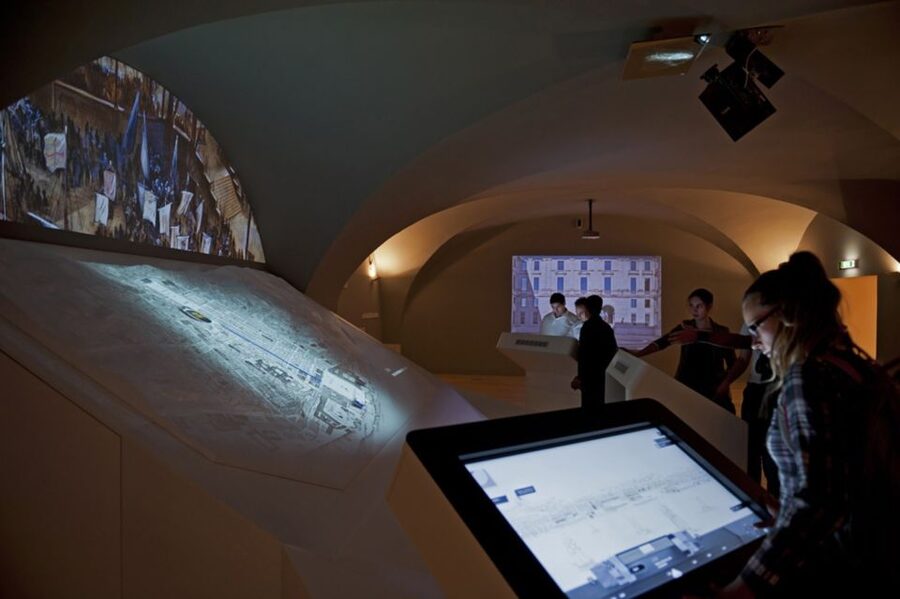
The sixth exhibition area is on the first floor and features a virtual scale model of Lisbon. It shows different types of architecture and provides a closer look at the city’s development.
This model is especially useful after the chronological scenes. The first five areas explain events one at a time. The model lets you step back and consider the city as a whole, including how different buildings and districts relate to one another.
For trip planning, this may be the most practical section. You can use it to understand the contrast between central areas, the riverfront, and other parts of Lisbon. The information also encourages you to keep exploring the modern city after leaving the centre.
The model is not a replacement for walking. Lisbon makes more sense when you climb its hills, examine its tiles, and see how the streets change from one district to another. But the scale model gives you a useful mental map before or after those walks.
A temporary exhibition area is also included. Its subject relates to the centre’s main themes, but the specific display can change. That means the temporary section is a bonus rather than something you should book around.
Audio guides keep the route clear
The recorded audio guide is included with admission. You can listen in Portuguese, Spanish, English, French, Italian, German, Russian, Mandarin, or Japanese. Portuguese has both adult and child versions.
The guide matters because the displays rely on a timed sequence of sets and effects. You are not simply wandering through unrelated rooms. The narration tells you what to notice and connects each episode to the next.
English is available, as are several other widely used languages. If you are visiting with children who speak Portuguese, the child version may make the material easier to follow. The presentation itself is designed to be approachable, but language choice still affects how much you take away.
No individual guide leads the experience in person. That is a plus if you want a steady pace and no group lecture. It is a drawback if you prefer to ask questions or hear personal stories from a local historian.
Because the main journey takes about 60 minutes, listen closely as you move through each section. You may not want to rush the sets, but the experience is not designed as an all-day museum visit.
How much value do you get from the ticket?
No ticket price is provided here, so I cannot make a precise cost comparison. The value depends on what you want from a paid attraction and how you organize the rest of your day.
For a first visit to Lisbon, the centre offers good value when you want a compact overview. In one hour, you get the city’s early story, its maritime role, the 1755 earthquake, Pombal’s rebuilding, and a model of the capital. Buying separate books, museum visits, or guided explanations to cover the same ground could take much longer.
The value is also strong for families. Children often need something to watch and hear, not just text panels. The sets, sound, ships, and earthquake scene give them several ways to follow the story. The child audio option in Portuguese is an added help.
The calculation changes if you already know Lisbon’s history well or want modern culture and daily life. The centre reaches the present day, but one review specifically found the contemporary period underdeveloped. If modern Lisbon is your main interest, spend more time in neighborhoods, food markets, art spaces, or a museum focused on current Portuguese life.
The one-day validity gives you room to fit the visit around weather and other plans. Still, the centre is best understood as a short orientation stop, not as the main cultural event of your entire day.
Best times and practical comfort
The centre opens every day from 10:00 to 19:00, with last admission at 18:00. A morning visit can give you a historical framework before exploring the square and central districts. A late afternoon visit works if you want a shorter indoor stop, but do not arrive after 18:00.
Since air conditioning is not available, cooler parts of the day may be more pleasant during hot weather. A one-hour visit is manageable, but comfort can vary depending on the season and how long you spend in each area.
The location makes this easy to combine with nearby sightseeing. You can visit the centre and then look at the actual square, riverfront, and Baixa streets it discusses. That connection is one of the best reasons to choose this attraction over a history display in a less central location.
The attraction is wheelchair accessible, which makes it easier to include in a wider Lisbon itinerary. You should still allow time for the audio presentation and the move between floors.
Free cancellation is available up to 24 hours before the visit, and reserve-now-pay-later booking can help if your schedule is still changing. Those terms are useful in a city where weather, walking fatigue, and arrival delays can alter your plans.
Who will enjoy it most?
I would recommend the Lisboa Story Centre to first-time visitors who want Lisbon’s major historical events explained without committing to a long museum session. It is also a good choice for families, since the presentation has movement, sound, and staged scenes rather than only written displays.
It suits visitors who want a structured introduction before exploring on foot. After the visit, you will have more context for the port, the earthquake, Pombal’s rebuilding, and the city’s varied architecture.
It is less suitable for anyone seeking a detailed account of contemporary Lisbon, a personal live guide, or a quiet collection of original objects. The audio-led format keeps things orderly, but it limits conversation and questions.
The attraction also asks you to accept a theatrical style. If you like history presented through models, sets, and sensory effects, the format should work well. If you prefer documents, paintings, and extensive labels, you may find it light.
Should you book the Lisboa Story Centre?
Book it if you want a clear one-hour introduction to Lisbon and plan to explore Terreiro do Paço and Baixa afterward. The earthquake sequence, warehouse setting, and virtual city model give you useful context without taking over your day.
Skip it if your schedule is already packed with museums or if modern Lisbon is your main focus. You should also keep the lack of air conditioning in mind during hot weather.
For families, first-time visitors, and anyone who likes history with sound and scenery, this is a practical choice. It will not tell you everything about Lisbon, but it gives you a strong starting point for seeing the city with more understanding.
FAQ
How long does the Lisboa Story Centre visit take?
The main journey takes about 60 minutes. The attraction includes six public exhibition areas, with five on the ground floor and a sixth area on the first floor.
Where is the Lisboa Story Centre located?
It is located at Terreiro do Paço, 78 to 81, 1100-148 Lisbon, in the East Wing of the renovated Terreiro do Paço.
What are the opening hours?
The centre is open every day from 10:00 to 19:00. The last entrance is at 18:00.
Which languages are available for the audio guide?
Audio guides are available in Portuguese, Spanish, English, French, Italian, German, Russian, Mandarin, and Japanese. Portuguese includes adult and child versions.
Is the Lisboa Story Centre wheelchair accessible?
Yes. The attraction is wheelchair accessible.
Does the ticket include an audio guide?
Yes. Admission and the audio guide are included.
Can I cancel or pay later?
You can cancel up to 24 hours in advance for a full refund. Reserve-now-pay-later booking is also available.
Just added in Lisbon
- Half day Spa Water Therapy experience at THE SPA at Corinthia Lisbon★ 4.5 · 51 reviews
- Lisbon Cinematic Photoshoot with Top-Rated Photographer★ 5.0 · 76 reviews
- Central Lisbon E-Bike Tour★ 5.0 · 168 reviews
- Small-Group Sailing Tour on the Tagus River from Lisbon★ 5.0 · 78 reviews
- Lisbon Sailing Catamaran Public Cruise with drinks★ 5.0 · 304 reviews
- Alfama and the Castle of Saint George Skip the line Tour★ 5.0 · 53 reviews
- City Centre Run in Lisbon★ 5.0 · 164 reviews
- Boat tours in the Óbidos Lagoon★ 5.0 · 100 reviews
Tours in Lisbon, compared.
Lisbon City Center Tour – The Unmissable Lisbon
Read our review →
Sintra, Pena, Regaleira, Cabo da Roca & Cascais
Read our review →

Sunset Boat Party Cruise with DJ and Open Bar
Read our review →
Pena Palace, Sintra, Cabo da Roca, & Cascais Daytrip
Read our review →

True 4Hour Private Tuk Tuk Tour: Discover Lisbon with a Local!
Read our review →Browse the lists this tour appears in