
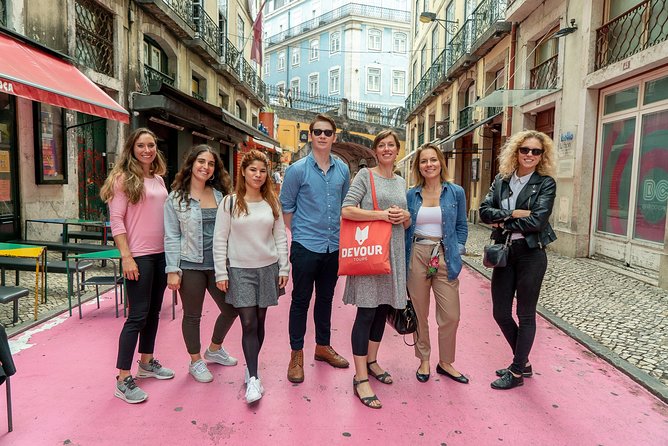
Reviewed · FOOD TOURS
Devour Lisbon: The Ultimate Portuguese Food Tour
Lisbon’s food story is best understood one bite at a time, and this tour gives you plenty of bites. Over about three and a half hours, you move from old pastry shops and pork sandwiches to cod, sardines, wine, and a sit-down Portuguese meal. I like the small maximum of 10 people and the way the food doubles as a tour of Baixa, Chiado, and Cais do Sodré.
I also like that the tastings amount to a full meal, not just a few nibbles. Guides such as Helena, Cecilia, Merritt, Alicia, and Natalia have been praised for mixing food stories with Lisbon history and useful local advice. The main drawback is dietary: this is not suitable for vegans, people with gluten intolerance, or anyone with celiac disease, and lunch may not be the strongest stop for every palate.
Key points at a glance
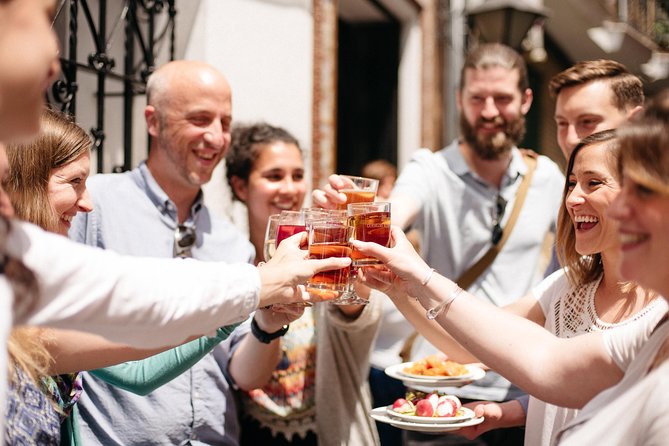
- Nine foods and three drinks: Expect enough food for breakfast and lunch, including cod, sausage, sardines, pastries, coffee, wine, and ginjinha.
- Seven local food businesses: The route uses a mix of traditional shops, cafés, tavernas, and the Time Out Market.
- Three central neighborhoods: Baixa, Chiado, and Cais do Sodré make this useful for getting your bearings early in a Lisbon visit.
- A genuinely small group: The tour caps attendance at 10, so the guide can explain dishes and manage tastings without shouting.
- Strong guide-led storytelling: Helena, Cecilia, Merritt, Alicia, Natalia, Nina, and others have earned praise for food knowledge, local connections, and easygoing energy.
- Bring an appetite: Do not eat a large breakfast first. The portions are generous, and the route ends with substantial savory food.
Why this Lisbon food tour works as a first-day plan
The smart idea here is the combination of walking, eating, and orientation. You are not simply seated in one restaurant while a guide lists ingredients. You move through central Lisbon, pause at specialist food shops, hear why certain foods matter, and finish with a fuller meal.
That makes the tour especially useful near the start of your stay. You get a look at Baixa, Chiado, and Cais do Sodré, then finish at the Mercado da Ribeira, better known as Time Out Market Lisboa. The route gives you a practical sense of where to return later for food, coffee, drinks, and shopping.
I would book it early in a Lisbon visit rather than save it for the final day. The food is the main event, but the guide’s advice can shape the rest of your trip. Several guides are also praised for pointing out places that are easy to miss when you walk through the center on your own.
The tour is offered in English and usually runs for around three hours and 30 minutes. It is a walking experience at a moderate pace, so comfortable shoes and a reasonable appetite matter more than formal dining clothes.
More eating your way around Lisbon:
- Lisbon: Food and Wine Small Group Walking Tour
★ 4.9 · 4,082 reviews - Lisbon Small-Group Food Tour with 18 Tastings in Alfama District
★ 5.0 · 1,967 reviews - Lisbon: Baixa District Food Tour with Dinner and Drinks
★ 4.9 · 1,870 reviews
Confeitaria Nacional starts the day with Lisbon’s sweet tooth
The route begins at Confeitaria Nacional, one of Lisbon’s old-style pastry shops. This is a fitting first stop because Portuguese food culture includes a strong café tradition, and pastries are part of daily life rather than a special-occasion treat.
The sample menu includes pão de Deus, bola de Berlim, and coffee. These give you three different ways to meet Portuguese baking. Pão de Deus is a sweet bread topped with coconut, while bola de Berlim is a filled doughnut-style pastry. Coffee helps set the rhythm for a morning tour and gives the guide a natural opening to discuss how locals use cafés.
This is also a good place to pace yourself. It is easy to think of the first sweet as a small snack, then discover that several more courses are still ahead. Take enough to enjoy the pastry without treating the opening stop as the whole breakfast.
Manteigaria Silva brings the savory side forward
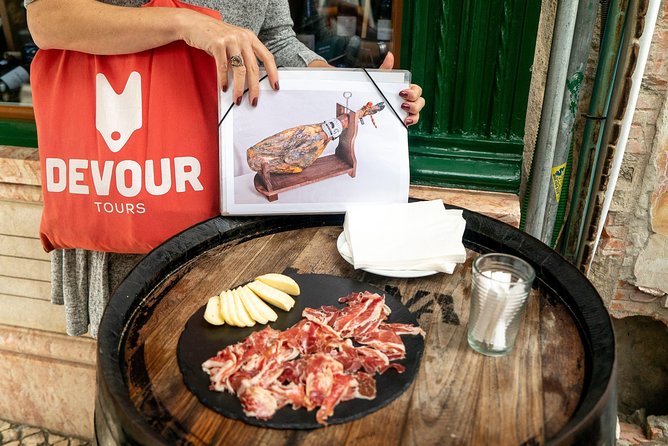
Next comes Manteigaria Silva, a traditional food shop where the emphasis shifts from pastries to preserved and cured foods. The tasting list includes Iberian ham and canned sardines, two foods that show how Portuguese meals balance simple ingredients with strong flavor.
The ham is a useful introduction to the Iberian pantry. Sardines tell a different story, connecting Portugal with its Atlantic coast and its long habit of preserving fish. Canned seafood is not treated here as an emergency cupboard item. It can be a carefully made product, and this stop gives you a chance to understand why it has such a place in Portuguese food culture.
If you are curious about buying edible souvenirs, pay attention here. The provided tour information does not promise shopping time or specific take-home products, but specialist shops such as this can help you recognize the kinds of foods worth seeking out later.
Ginjinha Sem Rival serves Lisbon in a tiny glass
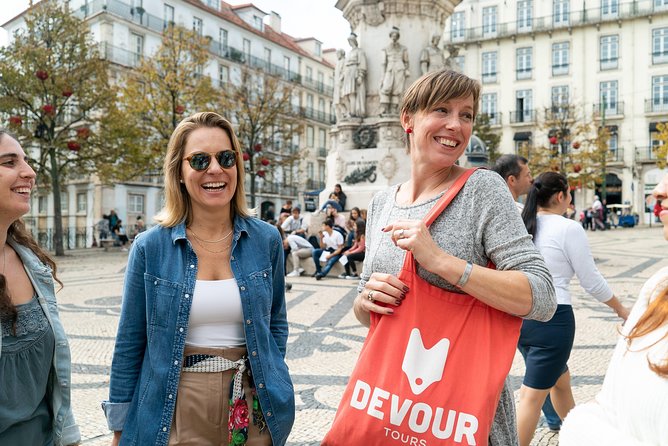
At Ginjinha Sem Rival, you try ginjinha, Lisbon’s sour cherry liqueur. It is sweet, fruity, and served in a small portion, which is welcome because the tour includes several drinks and a lot of food.
This stop matters because ginjinha is tied to Lisbon’s social life as much as its taste. The drink is quick, local, and easy to sample between food stops. It also gives the guide a chance to explain how a familiar city drink fits into local habits.
Alcohol is included, but non-alcoholic options are available for people who need them. Pregnant participants can also request adaptations. You should contact the provider after booking if you have dietary restrictions, since substitutions are not guaranteed at every stop.
A few more things to do in Lisbon worth a look
- Winner 2025 Undiscovered Lisbon Food & Wine Tour by Eating Europe
★ 5.0 · 6,390 reviews - Lisbon Food Tour with 10+ Tastings of Local Delicacies & Wines
★ 5.0 · 1,339 reviews - Award-Winning Original Lisbon Food Wine Tour: 19 Curated Tastings
★ 5.0 · 1,288 reviews - Lisbon Roots – Small group Food & Culture Walking Tour w/tastings
★ 5.0 · 910 reviews
O Trevo makes the bifana the star
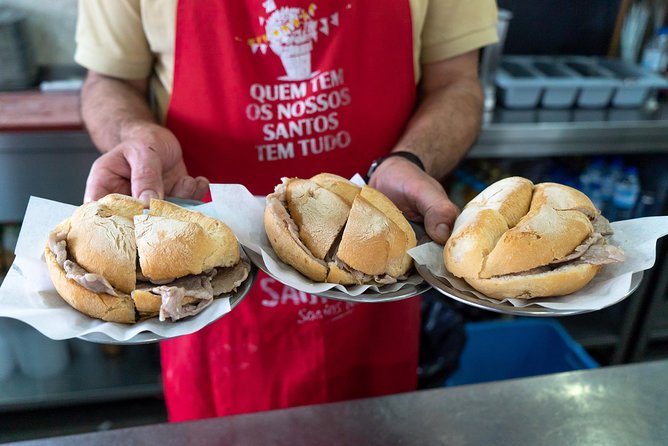
O Trevo is the stop for bifana, the classic Portuguese pork sandwich. This is one of the most useful dishes on the tour because it is ordinary, affordable food that people eat as part of daily life, not a dish designed only for visitors.
The sample menu describes the bifana as pork served in a bread roll, with the meat cooked in a flavorful sauce. It is compact, messy, and satisfying. You can think of it as Lisbon’s answer to the question of what to eat when you want something fast, warm, and filling.
This is one of the stops where the guide’s explanation adds real value. You can find a sandwich on your own, but you may not know why it matters or how it fits alongside the city’s seafood and pastries. Guides including Nina and Helena have been praised for explaining dishes clearly while keeping the mood relaxed.
O Gaiteiro offers a proper Portuguese meal
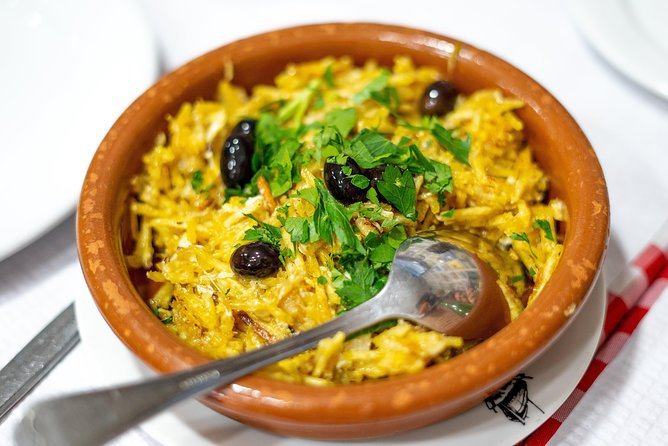
O Gaiteiro is the more substantial sit-down stop. The meal may include bacalhau à Brás, alheira, fish rice, and a stew featuring beans with pork, depending on the exact food selection on the day.
Bacalhau à Brás combines salted cod, potatoes, eggs, and often onion into a soft, comforting dish. It shows why cod has become one of Portugal’s signature foods, even though the fish is caught in colder waters far from the country. Alheira adds another layer to the story. This traditional sausage has Jewish roots and is an example of how Portuguese cooking reflects the communities that shaped the country.
Fish rice gives you another view of Portuguese home-style cooking. It is less about a single famous ingredient and more about a generous shared dish. The meal is valuable because it lets you compare several flavors at once rather than judging Portuguese cuisine from one sandwich or one pastry.
There is one fair warning here. One person described the snack stops as stronger than the main lunch. That does not make the meal a failure, but it tells you to keep expectations realistic. The food is designed as part of a moving tasting tour, not as a carefully paced restaurant lunch with a choice of entrée.
Wine tastings are included, and green wine may appear among the pours. The drinks help show how Portuguese meals work at the table, but you can request non-alcoholic choices if needed.
Time Out Market Lisboa ends the route in Cais do Sodré
The route finishes at Time Out Market Lisboa in Mercado da Ribeira. This ending makes practical sense. The market is a major food stop in its own right, and it is also a useful place to continue exploring after the tour.
The tour information places the final stop at the market, but the listed food sequence also includes Manteigaria as the last named business. You may encounter the famous custard tart there or at the nearby pastry stop, depending on the running order. Either way, pastel de nata is one of the essential tastes of Lisbon.
A good pastel de nata has a flaky pastry shell, a creamy custard center, and a browned top. It is small, but after the savory dishes and sweets before it, it may feel like a proper finish. The warm tart is also one of the clearest examples of why timing matters on this tour. A pastry fresh from the oven is a different experience from one that has been sitting in a hotel display case.
Time Out Market is not a quiet old tavern. It is a large modern food hall, so the mood changes from traditional neighborhood businesses to a more contemporary setting. That contrast is useful. Lisbon’s food culture is not frozen in the past, and the route shows both long-running shops and modern food spaces.
What the guide adds beyond the food
The best part of this experience may be the guide rather than any single dish. The guide connects food to the city around you, explaining why cod, sardines, pork, pastries, and liqueur have become such familiar parts of Portuguese life.
The guide roster changes, but the names repeatedly praised include Helena, Cecilia, Merritt, Alicia, Natalia, Nina, Agatha, Anastasia, and Borja. Their strengths differ. Some are especially lively, while others focus on history, local relationships, or practical food advice.
Merritt, for example, has been praised for taking groups to locally run places and making the food history easy to follow. Helena is noted for combining social insight with stories about the city. Alicia and Cecilia are praised for energy, warmth, and clear explanations. Nina has been singled out for speaking at an easy pace and making sure a vegetarian participant received suitable food at each stop.
That last detail matters. The tour is social, and the guide has to keep a group moving while making sure nobody gets lost in the conversation or left without something to eat. With only 10 people, this is much easier than on a large coach-style food tour.
Is $95.53 a fair price?
At $95.53 per person, this is not a cheap way to grab lunch. It is a good value if you would otherwise spend several days guessing what to order, missing local specialties, and paying separately for small tastings.
The price includes nine food tastings, three drinks, a small-group guide, taxes, and the Devouring Lisbon guidebook. The food is described as enough for a full meal, with some portions covering breakfast and lunch. That makes the cost easier to judge. You are paying for a substantial amount of food plus several hours of interpretation and city orientation.
The value depends on how you travel. If you enjoy food but dislike planning, the tour saves time. If you already have a detailed Lisbon restaurant list and prefer to eat slowly at your own table, the fixed route may feel less flexible.
I would see it as a good splurge for your first or second day. The guidebook and advice can also pay off later, provided you use them to choose more meals during your stay.
Who should book, and who should skip it
This tour suits you best if you want:
- A broad first taste of Portuguese food
- A walking introduction to central Lisbon
- Enough food to replace breakfast and lunch
- A small group instead of a large guided crowd
- Context about dishes, ingredients, and local customs
- A guide who can suggest places to return to later
It is less suitable if you need a vegan or gluten-free menu. The tour cannot accommodate vegans or people with gluten intolerance or celiac disease. Vegetarian, pescatarian, dairy-free, non-alcoholic, and pregnancy-related adaptations are possible, but you must email the guest experience team after booking, and a replacement will not necessarily be available at every stop.
Serious food allergies require an allergy waiver at the start. That is not a reason to avoid the tour automatically, but you should be direct about your needs before arrival.
The route also requires moderate physical fitness. You need to walk at a moderate pace, and poor weather can affect the experience. Free cancellation is available up to 24 hours before the start time, while bad-weather cancellations offer a new date or full refund.
Final call: book it early if food is part of your Lisbon plan
I would book Devour Lisbon: The Ultimate Portuguese Food Tour if you want a hearty, guided introduction to the city rather than a single restaurant meal. The best reasons are the small group, the range of food, and the chance to connect central Lisbon sights with what people actually eat.
Book it near the beginning of your stay, arrive hungry, and wear shoes made for walking. Skip it if you need strict vegan or gluten-free dining, or if you would rather choose every dish yourself. For most omnivorous food lovers, the mix of bifana, cod, sardines, ginjinha, wine, coffee, and pastel de nata offers a useful and tasty start to Lisbon.
FAQ
How long does the Lisbon food tour last?
The tour lasts approximately three hours and 30 minutes.
How much does the tour cost?
The listed price is $95.53 per person.
How many people can join the tour?
The small-group tour has a maximum of 10 participants.
What foods are included?
The tastings may include Iberian ham, bifana, canned sardines, bacalhau à Brás, alheira, fish rice, pastel de nata, pão de Deus, and bola de Berlim.
What drinks are included?
The experience includes three drinks, which may include coffee, wine, and ginjinha, Lisbon’s sour cherry liqueur.
Where does the tour start?
The meeting point is at the Statue of John I in Praça da Figueira, Lisbon.
Where does the tour end?
The tour ends at Time Out Market Lisboa in Mercado da Ribeira, Cais do Sodré.
Can people with dietary restrictions join?
The tour can adapt for pescatarians, vegetarians, dairy-free diets, non-alcoholic options, and pregnant participants. You must contact the provider after booking, and a replacement may not be available at every stop.
Is the tour suitable for vegans or people with celiac disease?
No. The tour is not suitable for vegans, people with gluten intolerance, or people with celiac disease. Serious food allergies also require an allergy waiver at the start.
Just added in Lisbon
- Lisbon: City Highlights Segway Tour★ 4.9 · 422 reviews
- Lisbon: Street Art Tuk Tuk Tour★ 4.9 · 372 reviews
- Lisbon: Segway Medieval Tour of Alfama and Mouraria★ 4.9 · 420 reviews
- LISBON Street Art Tour★ 5.0 · 371 reviews
- Évora and Monsaraz with Regional Wine Tasting from Lisbon★ 4.5 · 229 reviews
- From Lisbon: Horseback Riding on Comporta Beach★ 4.7 · 167 reviews
- Évora and Megaliths Full-Day Tour from Lisbon★ 4.7 · 456 reviews
- Arrabida and Sesimbra Small-Group Day Trip from Lisbon with Wine Tasting★ 5.0 · 494 reviews
Food Tours, compared.

Lisbon Small-Group Food Tour with 18 Tastings in Alfama District
Read our review →
Baixa District Food Tour with Dinner and Drinks
Read our review →
Lisbon Food Tour with 10+ Tastings of Local Delicacies & Wines
Read our review →
Authentic Food and Wine Tour in Porto by Food Lover Tour
Read our review →

Lisbon Private Food Tour – Taste 10+ Local Dishes & Wines
Read our review →Browse the lists this tour appears in