
Reviewed · WALKING TOURS
Best of Lisbon Small-Group Guided Walking Tour
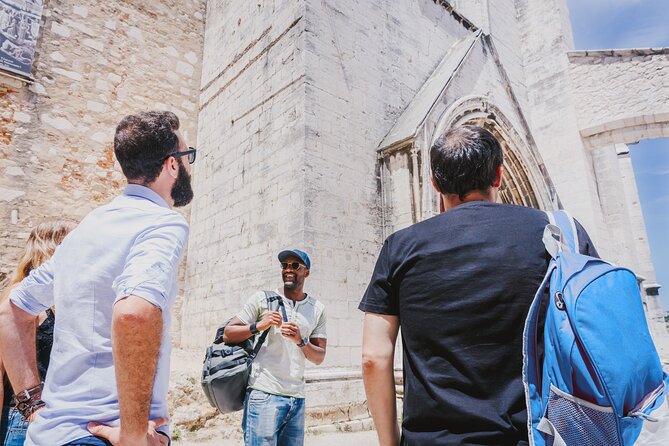
Lisbon’s story comes into focus on this walk: royal power, the 1755 earthquake, the 1974 Carnation Revolution, and the narrow lanes of Alfama all fit into one half-day route. I like the way the tour mixes big civic spaces with small neighborhood corners, so you get both the postcard Lisbon and the lived-in city.
I also like the built-in food stops. A pastel de nata, wine tasting, and tapa give you more than a quick history lesson, and guides such as Felipe, Maria, Jose, Joana, and Filipa are praised for clear English, humor, and useful advice for the rest of your stay.
The tradeoff is simple: this is a brisk overview, not a deep visit to one district. You will see many places from the outside, and the route leaves out Lisbon Cathedral. Alfama and the viewpoints also bring hills, steps, and uneven streets, so comfortable shoes matter.
Key points at a glance
- A 14-person maximum keeps the walk personal: You have a better chance to hear the guide and ask questions than on a large coach tour.
- The route covers Lisbon’s essential center: Rossio, Restauradores, Carmo, Chiado, Baixa, Alfama, and Praça do Comércio all fit into one outing.
- The story moves from earthquake to revolution: You learn how Lisbon was rebuilt after 1755 and how dictatorship ended in 1974.
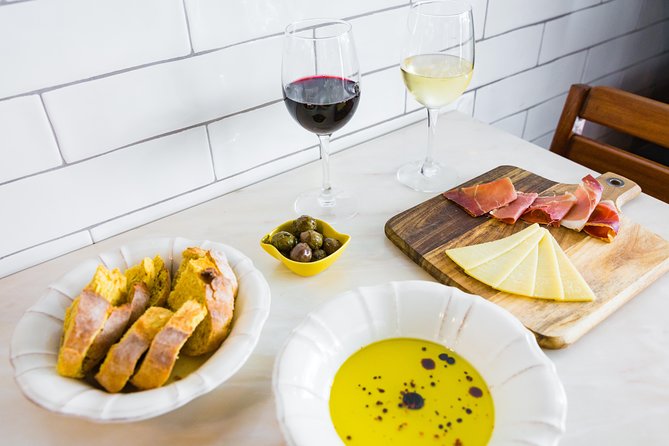
- Food is part of the experience: The price includes a pastel de nata, wine tasting, and a tapa.
- The route ends beside the Tagus: Praça do Comércio is a useful place to continue sightseeing on your own.
- Expect real city walking: Baixa is fairly flat, but Alfama and the viewpoints require moderate fitness.
Why this walk is a smart first look at Lisbon
At $23.94 per person, this tour offers good value if you are arriving in Lisbon without a clear sense of how its central districts fit together. In three to four hours, you cover a wide sweep of the old city, with a guide explaining what you are seeing instead of leaving you to decode grand buildings and tiled streets on your own.
The route is especially useful on your first day. You get a map in your head: Rossio and Restauradores mark the northern end of the center, Baixa forms the planned grid below, Chiado rises to the west, and Alfama climbs toward the castle area. The walk finishes at the river, so you can continue with lunch, a riverside stroll, or more sightseeing.
I would not book it if you already know central Lisbon well and want unusual, little-visited places. One less enthusiastic assessment found the route too focused on familiar squares, the elevator, and Alfama. That is a fair point. The tour is designed as an introduction, and its strength is orientation rather than discovery of remote corners.
Other guided walks in Lisbon:
- Lisbon: History, Stories and Lifestyle Walking Tour
★ 4.8 · 10,902 reviews - Lisbon: Food and Wine Small Group Walking Tour
★ 4.9 · 4,082 reviews - Best of Lisbon Walking Tour: Rossio, Chiado & Alfama
★ 4.9 · 2,700 reviews
Rossio and Restauradores: Lisbon’s public stage
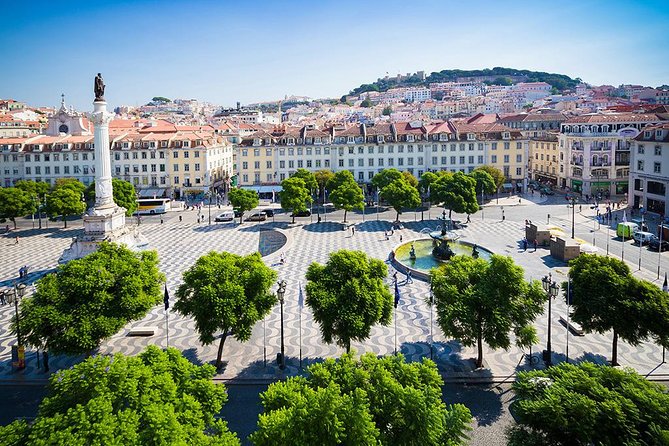
The meeting point is Praça Dom Pedro IV, usually called Rossio, in central Baixa. This broad square has long been one of Lisbon’s main gathering places. Its Portuguese stone paving forms wave patterns, a design that recalls the nearby Atlantic and gives the square a distinctive rhythm underfoot.
You begin with the basics here: where you are, how the center is organized, and why Rossio has such a central role. This is a good place for your first questions, since the open setting makes it easy to gather the group before moving into narrower streets.
A short walk brings you to São Domingos Church. The stop is brief, but it adds another layer to the area’s story. From there, the route reaches Restauradores Square, marked by a tall obelisk honoring Portugal’s restoration of independence from Spain in 1640 after 60 years of Spanish rule.
The guide uses these early stops to connect monuments with national history. The obelisk is not just a decorative column. Its inscriptions refer to battles from the Portuguese Restoration War, giving you a quick lesson in how public squares preserve political memory.
You may also pass Lisbon’s most expensive and fashionable avenue before continuing toward Rossio Station. The contrast is useful: grand commercial Lisbon sits close to older religious buildings and working city streets.
Rossio Station and Carmo Square: engineering and revolution
Rossio Station is one of the route’s most photogenic buildings. Its facade draws on Manueline forms from the 16th century, with ornate stonework around the entrances. The guide also explains the railway engineering behind the line toward Sintra, including the tunnel that carries trains away from the center.
This is a nice example of the tour’s range. One moment you are looking at a decorative historic facade. The next, you are learning how 19th-century transport changed access to Lisbon’s surrounding areas. The stop is short, so you should think of it as an introduction rather than a station tour.
The route then heads uphill toward Largo do Carmo. The square is linked to both the old Carmelite convent and the Carnation Revolution of 1974. Here, the guide explains how Portugal’s 48-year dictatorship came to an end in a largely peaceful military-led revolution.
This political history gives the walk more weight. Lisbon is not only tiled facades and viewpoints. Its streets also tell the story of a country that spent much of the 20th century under authoritarian rule, then changed direction in a single day.
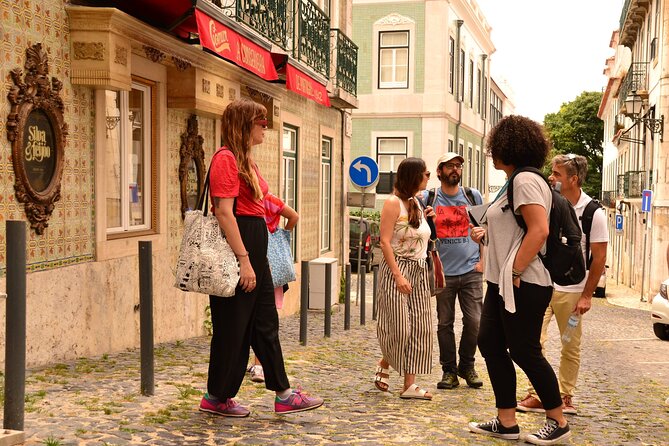
The Carmo area also introduces the route’s physical challenge. The pace is described as manageable, and guides have used public elevators and escalators when available, but you will still walk on hills and uneven pavement. One useful tip from the experience: ask questions and take breaks when needed. Guides such as Felipe and Jose are praised for setting a reasonable pace and looking after solo participants.
Santa Justa and Chiado: views, shops, and old cafés
The Santa Justa Lift is one of central Lisbon’s most recognizable landmarks. The iron structure links the lower Baixa area with the higher streets around Carmo, and the route includes time to admire it and take in a viewpoint.
Do not expect a full ride or a museum visit. Entry to monuments is not included, and this is primarily an outside orientation stop. Still, the lift helps you understand Lisbon’s vertical layout. The city is not difficult because it is large. It is difficult because many of its most interesting places sit on different levels.
From here, you enter Chiado, an elegant district tied to Lisbon’s intellectual and wealthy circles in the 19th century. The neighborhood is known for boutiques, theaters, bookstores, and old cafés. The guide may point out facades and streets that reward a slower return visit after the tour.
Chiado is a good place to notice how Lisbon combines old and new. Contemporary shopping sits inside historic buildings, and traditional café culture remains part of the district’s identity. The ten-minute stop gives you a taste rather than enough time for shopping, so keep a note of places you want to revisit.
The route then follows Rua Augusta, the main pedestrian street through the center. It is busier and more commercial than Alfama, but it provides a clear line through Baixa toward the river.
Same base, a different kind of day out:
- Lisbon City Center Tour – The Unmissable Lisbon
★ 5.0 · 22,234 reviews - Lisbon: Sintra, Pena, Regaleira, Cabo da Roca & Cascais
★ 4.7 · 19,656 reviews - Lisbon: Jerónimos Monastery Entrance Ticket
★ 4.1 · 14,164 reviews - Lisbon: Sunset Boat Party Cruise with DJ and Open Bar
★ 4.5 · 10,378 reviews
Baixa: the city rebuilt after the 1755 earthquake
Baixa is the architectural heart of the walk. The district was rebuilt after the devastating 18th-century earthquake, followed by fires and a tsunami. The new plan used a regular street grid, wider roads, controlled building designs, and construction methods intended to reduce earthquake damage.
Your guide explains why the straight streets feel so different from the tangled lanes of Alfama. Baixa was planned as a rational city center, with anti-seismic ideas that were innovative for their time. The broad avenues and uniform blocks are not accidental. They reflect a deliberate attempt to make the rebuilt capital safer and easier to manage.
This is one of the most valuable parts of the tour because you learn to read the city rather than just photograph it. The route also shows how a disaster can reshape daily life, commerce, transport, and public space.
You will have time in Baixa to take in the streets and ask about Lisbon’s layout. The district is relatively flat, which makes this part easier than the climb toward Alfama. Still, the full route is several hours long, and you should bring water and wear shoes with a firm grip.
Chão do Loureiro and Alfama: the city turns uphill
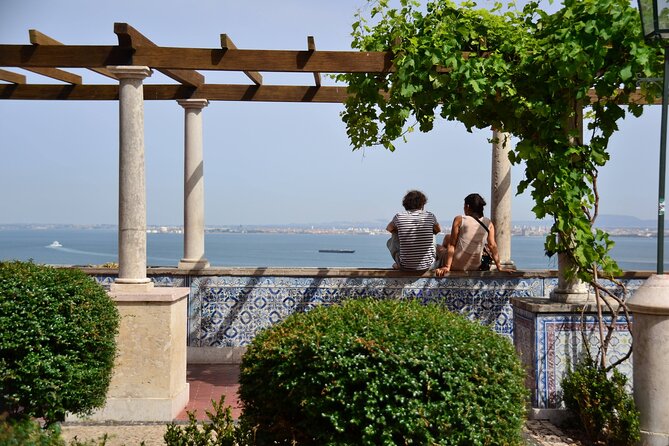
The Miradouro Chão do Loureiro provides a panoramic pause before the route moves into Alfama. Viewpoints are a major part of the Lisbon experience, and this one gives you time to stop, take photographs, and see how the city drops toward the Tagus.
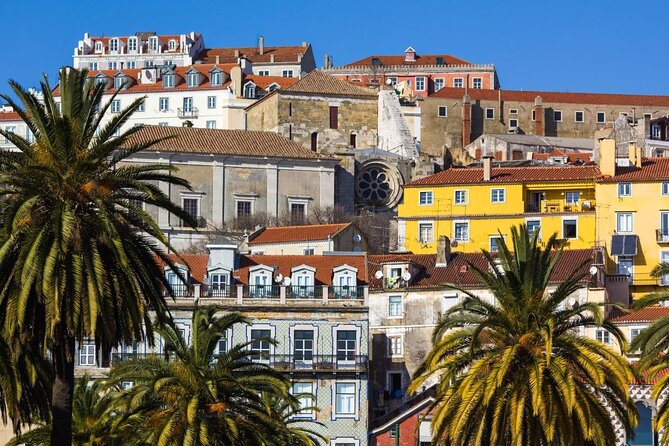
The transition into Alfama feels dramatic. Baixa is ordered and open. Alfama is older, tighter, and full of winding streets. It is one of Lisbon’s oldest districts, with Moorish influence visible in its narrow lanes and irregular layout.
You walk past fado restaurants tucked into the old quarter and learn about Portugal’s famous music. Fado is often associated with longing and melancholy, but the useful point on this tour is how the music belongs to the neighborhood. It is not treated as a stage show detached from daily life. The guide helps you understand why Alfama became so closely linked with the sound.
This is likely the most atmospheric section of the walk, but it is also the part where your legs work hardest. Streets can be steep, and surfaces are not always smooth. One guide-led group found the pace easy enough, with well-timed stops, while another simply described the outing as a hill exercise. Both observations can be true depending on your fitness and the weather.
Rain does not necessarily cancel the experience, but it can make the paving slick and the walk less comfortable. Plan for changing conditions. The tour runs in English, and guides have received strong praise for answering questions, offering restaurant suggestions, and sharing practical ideas for the rest of your time in Lisbon.
Praça do Comércio: a grand finish by the river
The walk ends at Praça do Comércio, Lisbon’s great riverfront square. It was once the site of the Ribeira Palace, which was destroyed in the 1755 earthquake. The square was rebuilt as part of the Pombaline plan and became a formal gateway to the city from the Tagus.
The open space gives the tour a satisfying final contrast. You began in Rossio, surrounded by central streets and city traffic. You finish beside the river, looking across a broad ceremonial square that once welcomed people arriving from the Atlantic.
The guide explains how the square’s reception areas were used for arrivals and official welcomes. After the tour, you are free to continue on your own. Since there is no hotel pickup or drop-off, you should plan your next move before the final stop, especially if you have a timed visit elsewhere.
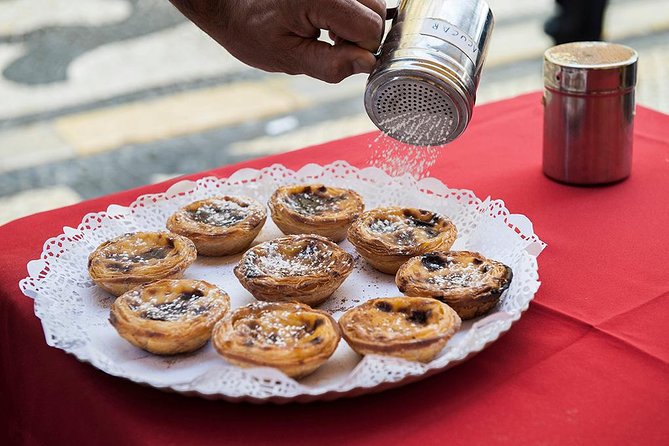
A food stop adds a pleasant finish to the route. The included pastel de nata is a classic Lisbon custard pastry, while the wine tasting and tapa provide a small sample of local flavors. These are tasting portions, not a meal, so you should not rely on them as lunch.
Vegetarian needs have been accommodated during the experience, but you should state your requirements when booking or at the start. The tour includes specified tastings, while other food and drinks are your responsibility.
The guide makes the difference

The route is fixed, but the guide shapes how useful it feels. The strongest guide names associated with this experience include Felipe, Maria, Jose, Joana, Filipa, Flavia, Franco, Carlos, Catarina, Daniel, Guillermo, and Katerina.
The most praised qualities are clear English, energy, humor, and a willingness to answer questions. Maria is described as passionate and funny. Jose is praised for combining history with recommendations and for making solo participants feel included. Felipe is noted for using elevators and escalators when possible and keeping the pace comfortable.
That matters because the walk covers a lot of ground. A flat, fast delivery would turn the tour into a list of dates and buildings. A good guide makes connections between Portugal’s independence, the earthquake, the dictatorship, the food, and the neighborhoods you are crossing.
The group limit is 14 people. That is small enough for a personal feel without the higher cost of a private tour. You still may not get long conversations with the guide at every stop, but you should have a fair chance to hear the explanations and ask questions.
Who should book this Lisbon walk?
I would recommend it most strongly to first-time visitors, short-stay visitors, solo visitors who want company at the start of a trip, and anyone who likes learning a city on foot. It is also useful if you want restaurant and sightseeing suggestions from someone who lives in Lisbon.
The tour is less suitable if you have limited mobility, dislike hills, or want extended time inside museums and monuments. Entry fees are not included, and the walk mainly introduces sites from the outside. It is also not the best match for someone who already knows Rossio, Baixa, Chiado, and Alfama and wants lesser-known districts.
The price is fair because it combines a local guide, a small group, several hours of sightseeing, and three food elements. You are paying for orientation and context, not just transportation between landmarks. Since the average booking is made well ahead of time, reserve early if your Lisbon dates are fixed.
You can cancel for a full refund up to 24 hours before the start time. Changes or cancellations inside that window are not refunded, and the tour requires a minimum number of participants. Service animals are allowed, but you should still expect moderate physical activity.
Should you book it?
Book this tour if you want to get your bearings fast and understand how Lisbon’s main neighborhoods connect. The combination of Rossio, Carmo, Chiado, earthquake-era Baixa, hilly Alfama, viewpoints, and Praça do Comércio gives you a useful first framework for exploring alone later.
Skip it if you prefer slow museum visits, a private route, or a tour built around places far from the central sights. For most first visits, though, this is a well-priced introduction with enough history to make the streets more meaningful and enough food to keep the walk pleasant.
FAQ
How long does the Best of Lisbon walking tour last?
The tour lasts approximately 3 to 4 hours.
Where does the tour begin and end?
It begins at Praça Dom Pedro IV, also called Rossio Square, in central Lisbon. It ends at Praça do Comércio beside the Tagus River.
What food and drink are included?
The experience includes a pastel de nata pastry, a wine tasting, and a tapa. Other food and drinks are not included unless specified.
How large is the tour group?
The group has a maximum of 14 participants.
Is the tour suitable for someone with limited fitness?
The tour requires a moderate level of physical fitness. Baixa is relatively flat, but Alfama and the viewpoints include hills, winding streets, and uneven pavement.
Can I cancel for a refund?
Yes. You can cancel at least 24 hours before the start time for a full refund. Cancellations or changes made less than 24 hours before the start time are not refunded.
More walking tours in Lisbon
- Age of Discoveries Walking Tour in Belém
★ 5.0 · 1,513 reviews - Lisbon Roots – Small group Food & Culture Walking Tour w/tastings
★ 5.0 · 910 reviews - Lisbon: Starter Walking Tour to the highlights in German
★ 4.9 · 781 reviews - Lisbon Tram No. 28 Ride & Walking Tour
★ 4.1 · 766 reviews
Just added in Lisbon
- From Lisbon: Horseback Riding on Comporta Beach★ 4.7 · 167 reviews
- Lisbon: City Highlights Segway Tour★ 4.9 · 422 reviews
- Lisbon: Street Art Tuk Tuk Tour★ 4.9 · 372 reviews
- Lisbon: Segway Medieval Tour of Alfama and Mouraria★ 4.9 · 420 reviews
- LISBON Street Art Tour★ 5.0 · 371 reviews
- Évora and Monsaraz with Regional Wine Tasting from Lisbon★ 4.5 · 229 reviews
- Évora and Megaliths Full-Day Tour from Lisbon★ 4.7 · 456 reviews
- Arrabida and Sesimbra Small-Group Day Trip from Lisbon with Wine Tasting★ 5.0 · 494 reviews
Walking Tours, compared.

Porto Walking Tour, Lello Bookshop, River Cruise and Cable Car
Read our review →
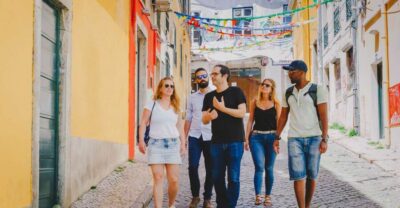
Best of Lisbon Walking Tour: Rossio, Chiado & Alfama
Read our review →
Experience Porto’s Charm: 3-Hour Guided Walking Tour
Read our review →

Browse the lists this tour appears in