
Reviewed · LISBON NEIGHBOURHOOD WALKS
Alfama and Mouraria Tour – The oldest neighbourhoods in Lisbon
Lisbon’s oldest quarters make the most sense on foot, and this tour takes you from the grand waterfront of Praça do Comércio into the steep lanes of Alfama and Mouraria. You’ll see viewpoints, churches, tiled façades, old streets, and places tied to fado and Lisbon’s past.
I like the strong route: it links the city’s monumental center with the lived-in neighborhoods above it. I also like the guides’ practical style. Names such as Walter, Tiago, José, Kate, Hugo, Rita, and Ann-Elisa appear repeatedly in the experience, with praise for clear explanations, humor, restaurant tips, and sensible pacing.
The main drawback is the walking. You’ll climb hills and stairs, often with limited places to sit, and the tour can be difficult to follow if you fall behind. Also, the cathedral and São Jorge Castle may charge admission even though the stops themselves are listed as free.
Key points to know before you book
- The route climbs from the Baixa waterfront into Alfama and Mouraria, so comfortable shoes are essential.
- The tour lasts about two and a half hours and ends near Rossio Square, not back at the starting point.
- The orange umbrella is the meeting marker at the Statue of D. José I, between the arch and the statue.
- You’ll see major viewpoints without necessarily entering every monument, including Lisbon Cathedral and São Jorge Castle.
- Guides are a major part of the experience, with Walter, Tiago, José, Kate, Hugo, and others praised for history, humor, pacing, and local advice.
- The listed price is unusually low at $1.25 per person, making this a strong value if you want orientation rather than a paid-entry museum tour.
Starting at Praça do Comércio
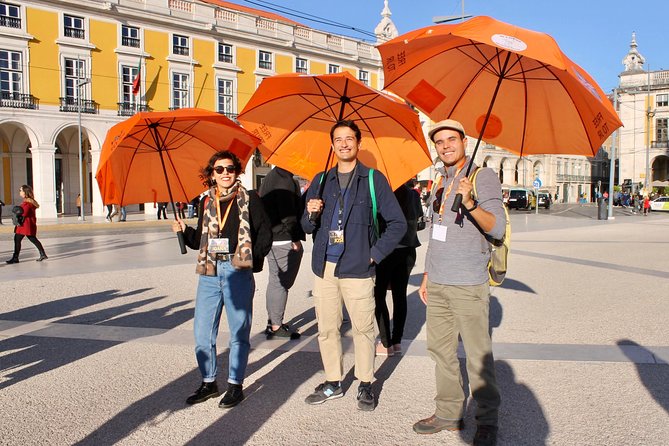
The tour begins at the Statue of D. José I in Praça do Comércio, Lisbon’s great riverside square. This is a smart starting point. You begin in open space, with the grand arch and statue easy to recognize, then move toward the older neighborhoods where the streets become narrower and steeper.
Look for the guide carrying an orange umbrella between the arch and the statue. That detail matters. Praça do Comércio is large, and a vague meeting point could waste the first part of your morning or afternoon.
The opening stop is brief, about ten minutes, followed by another short pause in the square. Your guide can use this setting to explain how central Lisbon fits together before taking you uphill. If you are new to the city, this first orientation helps you understand the relationship between the waterfront, Baixa, Alfama, and the castle hill.
The meeting point is close to public transportation, which makes arrival fairly simple. Plan to arrive early rather than rushing across the square at the scheduled time. One poor experience came from confusion over the meeting place, so read the directions carefully and confirm that you are at the starting point, not the ending point.
Other quarters worth walking in Lisbon:
- Alfama Tour in Lisbon Old Town
★ 5.0 · 4,936 reviews - Private Lisbon Sightseeing Tuk-Tuk Tour: Alfama, Belém & More
★ 5.0 · 4,277 reviews - Lisbon: Hills, Alfama, and Mouraria Tour by Electric Bike
★ 4.8 · 3,438 reviews
Church of St. Anthony and the Casa dos Bicos
The next section moves through two compact but worthwhile stops: the Church of St. Anthony and Casa dos Bicos.
The church occupies the traditional birthplace of St. Anthony of Padua. You will have about ten minutes here, enough for an explanation and a quick look rather than a long religious visit. The stop adds a personal and spiritual layer to the city’s story, especially if you enjoy connecting famous names with actual streets and buildings.
Casa dos Bicos is one of Lisbon’s older houses and is known for its unusual diamond-shaped façade. It was built in the Manueline style, the ornate Portuguese style associated with the country’s maritime age. The stop is short, but the exterior gives you an early taste of Lisbon’s architectural variety.
I appreciate this kind of pause because it keeps the tour from becoming only a viewpoint walk. You get buildings, religious history, urban design, and neighborhood life. The tradeoff is that ten minutes is not enough for a detailed visit inside a museum or church. Think of these stops as introductions, not full guided admissions.
Walking through Alfama’s narrow streets
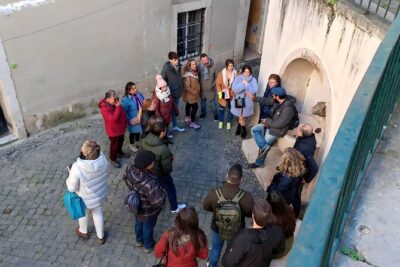
Alfama is the heart of the tour. The group spends about twenty minutes walking through its streets, though the full route includes additional Alfama stops and viewpoints.
This is where the experience becomes more than a checklist of monuments. The streets twist, rise, and narrow as you move away from the orderly waterfront. A guide can point out how the district feels different from the broad squares below, explain local traditions, and connect the lanes to Lisbon’s long development.
The physical setting is part of the lesson. You’ll encounter uneven paving, inclines, and stairs. Several guides are praised for breaking the climb into stages, slowing the pace, and stopping for photographs. That is useful, especially on a hot day, when shade and pauses can make the difference between an enjoyable walk and a tiring one.
Still, you should not treat this as an easy flat stroll. One person found the pace too brisk and lost sight of the group. Stay near the guide, pay attention at corners, and speak up if you need the group to slow down. The tour is limited to a maximum of 20 people, which is manageable, but a group can still stretch out on narrow streets.
Lisbon Cathedral and the climb toward the views
Lisbon Cathedral, or Sé, receives a ten-minute stop. It is described as the oldest church in Lisbon, and its position makes it a useful bridge between Alfama’s residential lanes and the hilltop views ahead.
The guide’s explanation is the main value here. You can learn why the cathedral matters, how it fits into the city’s religious story, and how Lisbon’s old quarters grew around major churches and defensive heights.
Be careful about the meaning of free admission in the schedule. The walking tour itself does not appear to include entry fees, and at least one person was surprised to find that the cathedral and castle could charge for admission. If you want to go inside, carry money for possible tickets and ask the guide what is included before leaving the stop.
The route then reaches the National Pantheon, listed as a very brief stop. The building is an important landmark, but this visit is more of a passing view than a full tour. If you want extended time inside, photography, or a close look at the interior, you may need to return on your own.
Same base, a different kind of day out:
- Lisbon City Center Tour – The Unmissable Lisbon
★ 5.0 · 22,234 reviews - Lisbon: Sintra, Pena, Regaleira, Cabo da Roca & Cascais
★ 4.7 · 19,656 reviews - Lisbon: Jerónimos Monastery Entrance Ticket
★ 4.1 · 14,164 reviews - Lisbon: History, Stories and Lifestyle Walking Tour
★ 4.8 · 10,902 reviews
Portas do Sol and Santa Luzia
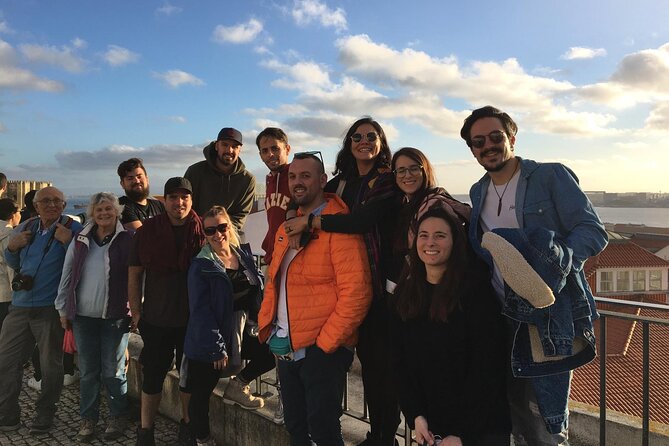
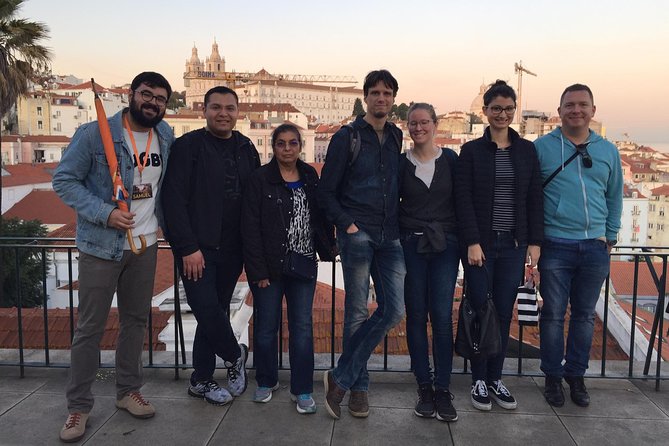
The viewpoints are among the best reasons to book this walk. Miradouro das Portas do Sol offers one of Lisbon’s broadest views over Alfama and the river. Miradouro de Santa Luzia is smaller and more intimate, with a reputation for charm and strong photo opportunities.
These stops also give your legs a break from the climb. Your guide can identify parts of the city below and explain how the hills, river, and old neighborhoods fit together. On a clear day, you’ll get the kind of orientation that is hard to gain from a street map.
The tour allows about ten minutes at each viewpoint. That is enough for photos and a short explanation, but not for lingering over coffee or waiting for ideal light. One account described a guide finding shade and giving people time for pictures on a hot day. That sort of practical pacing is worth appreciating, but it may vary by guide and group.
If you care most about photography, you may wish to return later. The tour gives you a useful first look, then leaves you free to revisit the viewpoints at your own speed.
São Jorge Castle without assuming castle entry
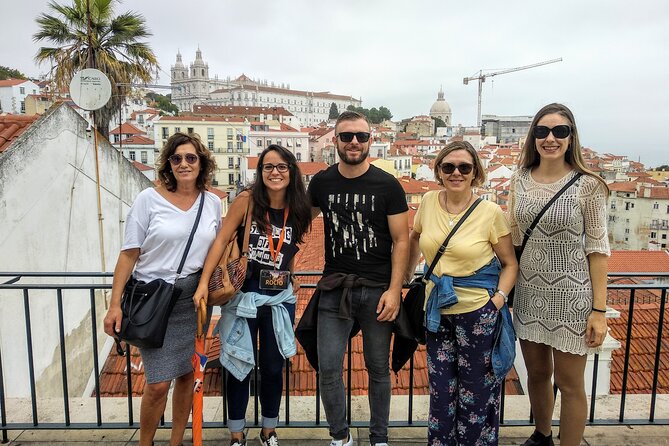
The walk passes São Jorge Castle, the old fortress associated with Moorish rule in the eighth century. The scheduled stop is only about five minutes, so expect an exterior explanation and a look at its position above Lisbon rather than a castle visit.
That distinction is important. The castle is one of Lisbon’s major paid attractions, and the tour price does not appear to cover admission. The guide may explain why the site matters and point out its role in the city’s defenses, but you will need a separate ticket if you want to enter.
One person felt the castle description was too brief, while others valued the stop as part of a larger route. I think the right approach is to treat this tour as an introduction. If São Jorge Castle is high on your list, schedule a separate visit when you can take your time inside.
The route’s strength is that it shows how the castle relates to Alfama and the viewpoints around it. You are not seeing isolated attractions. You are walking through the historic core as a connected hilltop district.
Mouraria, fado, and a more local side of Lisbon
The final major neighborhood section is Mouraria, where the tour spends about twenty minutes around the Monumento Mouraria Berço do Fado. The name points to Mouraria’s connection with fado, Lisbon’s soulful song tradition.
This is an especially useful part of the walk because it shifts the focus from royal monuments and churches to neighborhood culture. Your guide may explain the area’s role in Lisbon’s music and its changing identity. You also get another chance to see ordinary streets rather than only formal attractions.
One memorable detail associated with this part of the experience is a taste of ginjinha, cherry liqueur served in a small chocolate cup from a local seller. This is not something to treat as guaranteed, but it shows the kind of informal local encounter that can make a walking tour feel personal.
Mouraria is also a good place to ask for food suggestions. Guides such as Tiago and Kate are praised for sharing eating tips and pointing people toward useful places in Lisbon. Take notes during the walk, since the tour itself does not include a meal.
São Vicente and the finish near Rossio
The route includes a brief stop at Igreja de São Vicente de Fora, a church dedicated to St. Vincent. The listed timing is only one minute, so do not expect an extended visit or interior tour.
From there, the walk ends around Rossio Square. This is convenient if you want to continue into central Lisbon, find a meal, or use public transportation. It also means you should plan for the return journey before booking. The tour does not loop back to Praça do Comércio.
Ending near Rossio gives the experience a useful shape. You begin beside the river, climb through Alfama and Mouraria, then finish in the central square district. It feels like a short cross-section of Lisbon rather than a neighborhood tour that simply turns around.
What the guides do well, and where to stay alert
The strongest part of this experience is the guide-led storytelling. Walter receives praise for combining history, architecture, humor, and passion. Tiago is repeatedly valued for friendly explanations, patient pacing, shade stops, and practical food suggestions. José is praised for clear historical context and for adjusting the pace to the group.
Kate, Hugo, Rita, Ann-Elisa, and Claudia are also singled out for being entertaining, helpful, friendly, or well prepared. That range suggests that the individual guide can shape the day as much as the route itself.
The tour is conducted in English. Most people can take part, and service animals are allowed, but the hills and stairs deserve serious attention. There are few chances to sit while the guide speaks, so bring water and wear shoes with a secure grip.
Stay close to the group. If you need a slower pace, say so early. The experience is designed as a moving walk through busy old streets, not a seated lecture. One difficult account involved a participant losing the group after falling behind, so do not assume the guide will automatically notice if you disappear around a corner.
Is $1.25 good value?
At $1.25 per person, the listed price is remarkably low for a two-and-a-half-hour introduction to central Lisbon. Even if you later pay separate admission for the cathedral or castle, the tour can still be a practical way to understand where those attractions sit and which ones deserve more of your time.
The value comes from the route and the guide rather than included tickets. You are paying for orientation, explanations, neighborhood context, viewpoints, and a structured walk through streets that can be confusing on your own.
The tour is also capped at 20 people, which keeps it smaller than a large coach-style outing. It is not a private tour, and the quality of the commentary may depend on the guide assigned that day. The high overall rating and 97 percent recommendation rate suggest a strong record, but the less favorable experiences show why meeting-point clarity and group awareness matter.
Free cancellation is available up to 24 hours before the start time. Changes or cancellations inside that window are not refunded, and poor weather or failure to meet the minimum group size can lead to a different date or a full refund.
Who should book this Lisbon walk?
I would choose this tour if you are visiting Lisbon for the first time and want to understand the old center quickly. It suits solo visitors, couples, and small groups who enjoy walking, asking questions, and collecting ideas for later meals and visits.
It is also useful early in a Lisbon stay. After seeing Alfama from the ground and from the viewpoints, you’ll have a better sense of where to return for the cathedral, castle, fado, or a slower meal.
I would hesitate if steep streets, stairs, or standing for long periods are a serious problem. I would also skip it if you want long interior visits at São Jorge Castle, Lisbon Cathedral, or the National Pantheon. This is a guided neighborhood walk, not a ticketed museum tour.
Final verdict: book it for orientation and atmosphere
Book the Alfama and Mouraria Tour if you want a low-cost, active introduction to Lisbon’s oldest districts. The route packs in Praça do Comércio, St. Anthony, Casa dos Bicos, Alfama, the cathedral, two viewpoints, São Jorge Castle, Mouraria, fado connections, and Rossio in one continuous walk.
Go in with the right expectations. You’ll get short stops, outdoor explanations, steep climbs, and a guide who may become the best part of the experience. Bring water, wear good shoes, confirm the orange umbrella meeting point, stay with the group, and budget separately for monument admission. With that approach, this is a smart first look at Lisbon’s old heart.
FAQ
Where does the Alfama and Mouraria Tour start?
It starts at the Statue of D. José I in Praça do Comércio, Lisbon. Look for the guide with an orange umbrella between the large arch and the statue.
Where does the tour finish?
The tour ends around Rossio Square, at Praça do Rossio.
How long does the walking tour last?
The experience lasts approximately two hours and 30 minutes.
Is the tour offered in English?
Yes. The tour is offered in English.
How much does the tour cost?
The listed price is $1.25 per person.
Does the tour include entry to Lisbon Cathedral or São Jorge Castle?
The schedule lists the stops as free, but the walking tour does not clearly include monument admission. Cathedral and castle entry may require separate payment.
How many people can join the tour?
The tour has a maximum group size of 20 people.
Can I cancel for a full refund?
Yes, if you cancel at least 24 hours before the experience start time. Cancellations or changes made less than 24 hours before the start are not refunded.
Just added in Lisbon
- Half day Spa Water Therapy experience at THE SPA at Corinthia Lisbon★ 4.5 · 51 reviews
- Lisbon Cinematic Photoshoot with Top-Rated Photographer★ 5.0 · 76 reviews
- Central Lisbon E-Bike Tour★ 5.0 · 168 reviews
- Small-Group Sailing Tour on the Tagus River from Lisbon★ 5.0 · 78 reviews
- Lisbon Sailing Catamaran Public Cruise with drinks★ 5.0 · 304 reviews
- Alfama and the Castle of Saint George Skip the line Tour★ 5.0 · 53 reviews
- City Centre Run in Lisbon★ 5.0 · 164 reviews
- Boat tours in the Óbidos Lagoon★ 5.0 · 100 reviews
Lisbon Neighbourhood Walks, compared.

Private Lisbon Sightseeing Tuk-Tuk Tour: Alfama, Belém & More
Read our review →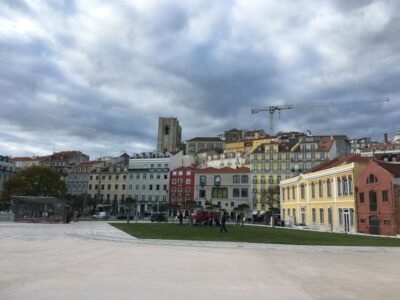
Hills, Alfama, and Mouraria Tour by Electric Bike
Read our review →

Best of Lisbon Walking Tour: Rossio, Chiado & Alfama
Read our review →
Lisbon Small-Group Food Tour with 18 Tastings in Alfama District
Read our review →
Baixa District Food Tour with Dinner and Drinks
Read our review →
Lisbon E-Bike Tour Commerce Square, Mouraria and Alfama
Read our review →Browse the lists this tour appears in