
Reviewed · FÁTIMA, BATALHA & NAZARÉ DAY TRIPS
From Fatima: Private Fatima Tour with a Local Guide
Fátima is easiest to understand when you connect the grand sanctuary with the small village roads and family homes where the story began. This private tour does exactly that, taking you from the Chapel of Apparitions and basilicas to Aljustrel and Valinhos with a local guide who can explain both the religious story and the life of the region.
I like the personal pace and the way the tour reaches places beyond the main square. I also like the included hotel pickup, comfortable air-conditioned vehicle, and the chance to ask questions without a large group setting. The main limitation is time: four hours is enough for the essential sites, but not for a slow visit to every chapel, service, museum, and prayer area in Fátima.
If you book, ask whether Nelson is available. He has guided many of these visits and is praised for clear English, local family connections, patience with children, and an ability to explain the apparitions without rushing. Other guides, including Gabriel, have also led the tour.
Key points to know before booking

- The tour links the sanctuary with Aljustrel and Valinhos, giving you the setting behind the story rather than only its best-known buildings.
- The Chapel of Apparitions is the spiritual center, marking the place associated with the 1917 appearances.
- The Basilica of Our Lady of the Rosary contains the tombs of Sister Lúcia, Saint Francisco, and Saint Jacinta.
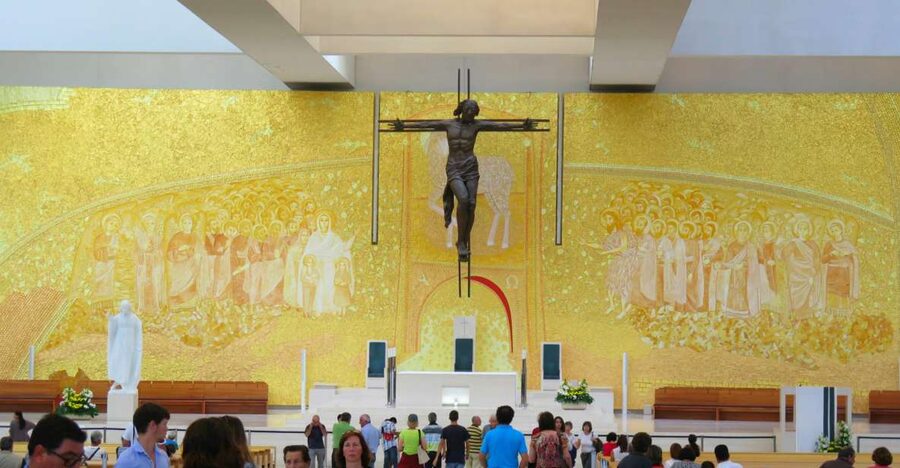
- The modern Basilica of the Most Holy Trinity adds an important contrast, with contemporary design beside older religious buildings.
- Private transport keeps the four-hour route practical, especially when moving between the sanctuary and nearby villages.
- The tour is best for first-time visitors, families, pilgrims, and anyone who wants context instead of simply walking from one site to the next.
Starting at the Fátima sanctuary

The tour begins with pickup from your Fátima hotel, or from the meeting point at Hotel Fátima on Rua João Paulo II. From there, your guide sets the story in order, which matters here. Without some context, the sanctuary can feel like a large collection of churches and open spaces. With the story explained first, each stop has a clearer place in the sequence of events.
The focus is the apparitions associated with Our Lady of Fátima and the three shepherd children, Lucia dos Santos and her cousins Francisco and Jacinta Marto. Your guide explains what happened in 1917 and how the events affected the children, their families, and the local community.
I appreciate that a private visit lets you control the pace. If you already know the basic story, you can ask about details. If Fátima is new to you, your guide can slow down and explain the background in plain language. Families can also ask for explanations suited to children, something several groups found useful when touring with younger children.
The sanctuary itself is open and spacious, with the main sites arranged around a large esplanade. You should expect some walking between buildings, though the tour includes transportation for the wider route. Comfortable shoes are a must, and you should dress for the weather because this activity operates in rain or shine.
Other days north from Portugal:
- Three Cities in One Day: Porto, Nazare and Obidos from Lisbon
★ 4.5 · 3,572 reviews - From Lisbon: Fátima, Nazaré, Batalha, and Óbidos Guided Tour
★ 4.7 · 3,060 reviews - From Lisbon: Fatima Batalha Nazaré & Óbidos Small-Group Tour
★ 4.7 · 2,563 reviews
The Chapel of Apparitions and the heart of the story
The Chapel of Apparitions marks the place where Our Lady appeared to the three children in 1917. It is the key stop for understanding why Fátima became an international pilgrimage destination.
Your guide explains the setting and the events tied to the chapel before giving you time to look around, pray, or simply take in the atmosphere. This is not a stop to rush. Even visitors who come mainly for the history often find the quiet rhythm of the chapel meaningful.
A private guide is especially useful here because the sanctuary can be busy and the religious details may not be obvious. You can ask about the timeline, the role of the children, and the way the site developed over time. The guide can also help you separate the central story from the many details that have gathered around it.
Do not expect a long museum-style presentation at this point. The value comes from being in the place and hearing the story connected directly to it. If you want extended personal prayer time, tell your guide. The tour is private, so there is more room to adjust than on a fixed group excursion.
The Basilica of Our Lady of the Rosary

Next, you enter the Basilica of Our Lady of the Rosary, one of the sanctuary’s main landmarks. Its most important feature for many visitors is the tombs of Saint Francisco, Saint Jacinta, and Sister Lúcia.
The tombs give the story a human scale. The apparitions are often presented as a major religious event, but the basilica brings your attention back to the three children and to Sister Lúcia, who lived much longer and carried the story into later years.
Your guide can explain who each person was and how their lives unfolded. This is one of the places where a local guide adds real value, since you are not simply looking at names on memorials. You hear about the children as people from a rural community, not only as religious figures.
The basilica is also a place of worship, so keep your voice low and follow any instructions in force during your visit. Depending on the timing, services or other religious activity may affect how long you can linger in particular areas. The guide can explain what you are seeing, but cannot control sanctuary schedules.
The Basilica of the Most Holy Trinity

The Basilica of the Most Holy Trinity offers a sharp change in mood and design. Consecrated in 2007 as part of the 90th anniversary of the apparitions, it is a modern building with a much larger scale than the older basilica.
This stop helps you see how Fátima has grown. The sanctuary is not frozen in 1917. It continues to serve large numbers of pilgrims, and the newer basilica reflects that modern role.
I like this contrast because it prevents the visit from becoming a single-note tour of traditional religious architecture. The older sites connect you to the original story, while the Basilica of the Most Holy Trinity shows the continuing importance of Fátima in the present day.
Your guide can point out how the newer structure functions within the sanctuary complex and explain why it was built. If modern architecture is not your main interest, this stop is still worthwhile because it shows the scale of the pilgrimage site and its later development.
A few more things to do in Portugal worth a look
- True 4Hour Private Tuk Tuk Tour: Discover Lisbon with a Local!
★ 5.0 · 8,008 reviews - Lisbon: Private Guided Tuk-Tuk Tour with Hotel Pickup
★ 4.9 · 4,552 reviews - Private Lisbon Sightseeing Tuk-Tuk Tour: Alfama, Belém & More
★ 5.0 · 4,277 reviews - Lisbon Highlights: Private Tuk Tuk Tour Adventure Sightseeing
★ 5.0 · 3,284 reviews
Aljustrel and the homes of the three children

The tour then leaves the main sanctuary for Aljustrel, the village where the three shepherd children were born and raised. This is where Fátima becomes more intimate.
You visit the homes connected with the children and see a setting that helps explain their daily lives. The houses and village sites bring the story down from the formal sanctuary to family life, local customs, and the rural community that surrounded the apparitions.
This is one of the strongest reasons to choose the private tour. A self-guided visit can take you to Aljustrel, but it is harder to understand the relationship between the houses, the children, and the wider area without someone explaining it. Guides such as Nelson have local ties and can add memories and background about how the area changed as Fátima became more famous.
Do not expect the homes to feel like a large attraction with an elaborate display at every turn. Their value is their simplicity. You are seeing the kind of modest village setting in which the children lived, and that makes the story more concrete.
Families often find this part especially approachable. Children can understand a home, a village, and a family more easily than a long explanation about a major sanctuary. The guide can also answer questions at your own pace.
The parish church and its small treasures

The Parish Church is another important stop. This is where the children were baptized, and it adds a different layer to the story than the sanctuary itself.
You can see the connection between the children and the local Catholic community that shaped their lives. Your guide also points out the church’s distinctive treasures, which are easy to miss if you are moving quickly or visiting without an explanation.
This stop is useful for visitors who want more than the most famous pilgrimage sites. It places the children within the ordinary religious life of their village. The grand basilicas came later. The parish church is tied to the community they actually knew.
The time available is limited, so the exact amount of time inside each site can vary. If a particular church or family home matters most to you, say so early. Your guide can usually give more attention to your priorities within the four-hour schedule, though services and opening arrangements may shape the route.
The Angel of Peace sites near Aljustrel

The route also includes sites associated with the apparitions of the Angel of Peace. These locations help explain the religious experiences that preceded the appearances of Our Lady.
The places are less grand than the sanctuary. That is part of their appeal. You may find yourself walking through quieter surroundings and listening to the sequence of events rather than looking at a large monument.
This portion of the tour rewards attention. The places may not mean much without explanation, but with a guide you can understand how they fit into the lives of the children and the developing story of Fátima.
The tour involves a moderate amount of walking, so plan for uneven outdoor surfaces and changing weather. The provider asks you to wear comfortable shoes, and that is good advice even if you normally manage sightseeing in ordinary footwear.
Valinhos and the fourth apparition site

The final major area is Valinhos, associated with the fourth apparition of Our Lady. The site offers another change from the large sanctuary complex and gives you a wider sense of the places connected with the story.
Your guide explains why this location matters and how it relates to the other apparition sites. The benefit of seeing it in the same visit is that you can follow the story geographically. You are not treating each place as an isolated stop.
Valinhos may be particularly appealing if you want a quieter setting or have already spent time at the main sanctuary. It is also a good place to ask questions that came up earlier in the tour, since the private format leaves room for conversation.
The route is not designed as a long nature walk. You should think of Valinhos as a meaningful stop within a compact driving tour, not as a full countryside excursion. Your guide handles the transport between areas, allowing you to cover more ground without spending the whole visit finding roads and parking.
Why the private format matters

The price is $173 per person. That is a serious amount for a four-hour activity, especially for a solo visitor or couple. The value improves for a small family or group because you are paying for a private vehicle, guide, pickup, and a route that covers several locations in one morning or afternoon.
You are not paying only for transport. You are paying for the guide’s interpretation, local context, and ability to change the pace for your group. People who already know Fátima’s story may prefer to explore independently, but first-time visitors can miss a great deal by seeing only the sanctuary on their own.
The vehicle is described as a premium air-conditioned vehicle, and pickup and drop-off are included from Fátima hotels. That saves time and makes the route easier for families, older adults, and anyone who does not want to arrange transport between the sanctuary and Aljustrel.
The private format also helps with questions. Guides such as Nelson are praised for patient explanations, fluent English, calm organization, and the ability to keep children interested. If you are traveling with a toddler, child, or family member who needs a slower pace, tell the guide at the start.
Guide style, language, and pace
Tours are offered in English and Portuguese. Nelson is the name most often associated with this experience, and his local background is a major part of its appeal. He has been described as prompt, polite, easy to contact, and passionate about explaining Fátima and the surrounding area.
He also brings personal connections to the region. That can mean stories about how the area changed, how local families remember the events, and what daily life was like around Fátima. Those details give you a stronger sense of place than a standard script.
Gabriel has also guided this route, including visits adapted for a family with a slower-moving parent and a child. That is a useful reminder that the guide may adjust the plan when your group has specific needs.
Still, guide assignment is not guaranteed in the information provided. If Nelson is important to you, request him when booking, but understand that availability can affect the final arrangement.
Practical details for your four hours
The tour lasts four hours, with starting times available according to the schedule. Pickup is included from hotels in Fátima, or you can meet at Hotel Fátima on Rua João Paulo II.
Wear comfortable shoes and bring clothing suitable for the forecast. You will move between indoor and outdoor sites, and the tour runs in all weather conditions. A moderate amount of walking is involved, but the vehicle reduces the longer distances between the sanctuary, Aljustrel, and Valinhos.
Lunch is not included, so do not expect a meal break as part of the route. Personal expenses are also separate. For a four-hour tour, this is usually easy to manage, but you may want to eat before starting if you prefer not to cut into sightseeing time.
The tour includes mandatory insurance and transport. Cancellation is free up to 24 hours before departure, and you can reserve now and pay later, which helps if your Portugal plans are still changing.
Who should book this Fátima tour?
I would choose this tour if you are visiting Fátima for the first time, want the full story in one organized visit, or prefer a personal guide to a large group. It is also a good fit for families, since the guide can adjust explanations and pace for children.
Pilgrims will appreciate the time at the Chapel of Apparitions, the basilicas, and the sites tied to the children. Visitors with a cultural or historical interest will benefit from Aljustrel, the parish church, and the local background.
I would hesitate only if you want a very slow, contemplative day at the sanctuary or if you plan to attend several services. Four hours covers a lot, but it does not allow unlimited time at every site. You may also prefer independent sightseeing if you already know the story well and are comfortable arranging transport.
Should you book it?
Book this private Fátima tour if you want the sanctuary explained as part of a larger local story. The strongest feature is the combination of the main basilicas with Aljustrel and Valinhos, supported by a guide who can connect religious events with the lives of ordinary families.
At $173 per person, it is not the cheapest way to see Fátima. But for a small group, the included vehicle, hotel pickup, private attention, and local storytelling make the price reasonable. Request Nelson if possible, wear sensible shoes, and allow yourself a little quiet time at the Chapel of Apparitions. That combination gives you the clearest and most personal introduction to Fátima in four hours.
FAQ
How long does the Fátima private tour last?
The tour lasts four hours.
What sites are included?
You visit the Chapel of Apparitions, the Basilica of Our Lady of the Rosary, the Basilica of the Most Holy Trinity, Aljustrel, the Parish Church, sites associated with the Angel of Peace, and Valinhos.
Is hotel pickup included?
Yes. Pickup and drop-off are included from hotels in Fátima. You can also meet at Hotel Fátima on Rua João Paulo II.
Which languages are available?
The live guide is available in English and Portuguese.
Is the tour private?
Yes. This is a private group experience with a private local guide and transportation in an air-conditioned vehicle.
What should I bring or wear?
Wear comfortable shoes and dress appropriately for the weather. The tour operates in all weather conditions and includes a moderate amount of walking.
Just added in Portugal
- Half day Spa Water Therapy experience at THE SPA at Corinthia Lisbon★ 4.5 · 51 reviews
- Lisbon Cinematic Photoshoot with Top-Rated Photographer★ 5.0 · 76 reviews
- Central Lisbon E-Bike Tour★ 5.0 · 168 reviews
- Small-Group Sailing Tour on the Tagus River from Lisbon★ 5.0 · 78 reviews
- Lisbon Sailing Catamaran Public Cruise with drinks★ 5.0 · 304 reviews
- Alfama and the Castle of Saint George Skip the line Tour★ 5.0 · 53 reviews
- City Centre Run in Lisbon★ 5.0 · 164 reviews
- Boat tours in the Óbidos Lagoon★ 5.0 · 100 reviews
Fátima, Batalha & Nazaré Day Trips, compared.
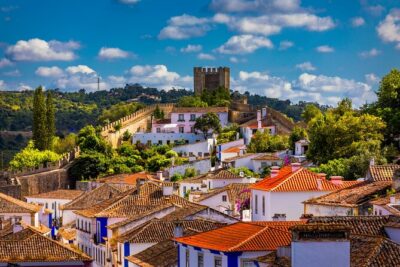
Three Cities in One Day: Porto, Nazare and Obidos from Lisbon
Read our review →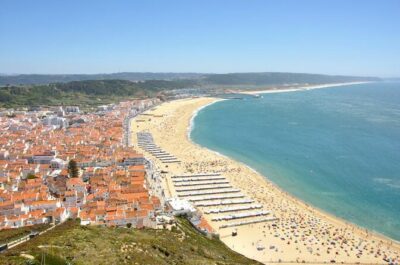
Fátima, Nazaré, Batalha, and Óbidos Guided Tour
Read our review →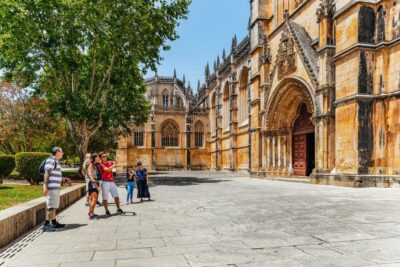
Fatima Batalha Nazaré & Óbidos Small-Group Tour
Read our review →
Fatima, Batalha, Nazare, Obidos – Small Group
Read our review →
Fatima, Nazare, Obidos 8-People Small Group, Day-Tour from Lisbon
Read our review →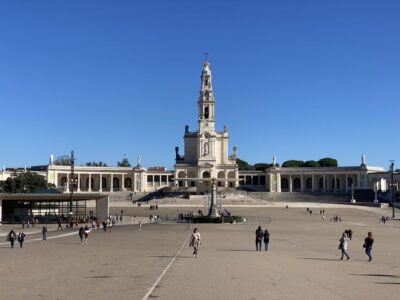
Fátima, Batalha, Nazaré, and Obidos Tour by Van
Read our review →
Browse the lists this tour appears in