
Reviewed · PENA PALACE & SINTRA TOURS
Sintra: National Palace and Gardens Skip-the-Line Ticket
The National Palace of Sintra is the town’s history book in stone, tile, and painted ceilings. Its Moorish beginnings, royal apartments, chapel, kitchens, courtyards, and famous chimneys trace nearly a thousand years of Portuguese life in one compact visit.
I like the low $15 price and the freedom to explore without a fixed tour schedule. I also like the audio guide app, especially for making sense of rooms that might otherwise look like a pretty sequence of tiles and staircases. The main catch is that skip-the-line access may save little on a quiet day, and the entry system can be confusing.
- Moorish, Manueline, and Mudejar details appear throughout the palace.
- The Heraldic Room and chapel are two of the most memorable interiors.
- Geometric glazed tiles and water features give the courtyards their special character.
- Four-language audio guide is included through an app.
- One-hour-plus visits are possible, but allow more time if you want the gardens and full audio commentary.
- No transport or live guide is included, so you must reach the palace and find the correct entrance yourself.
Why Sintra’s National Palace deserves your time
The National Palace is not the fairytale hilltop building most people picture when they hear Sintra. That title usually goes to Pena Palace. The National Palace sits in the town center, with two huge white chimneys rising above its roofline, and its plain exterior can seem almost modest beside its more flamboyant neighbor.
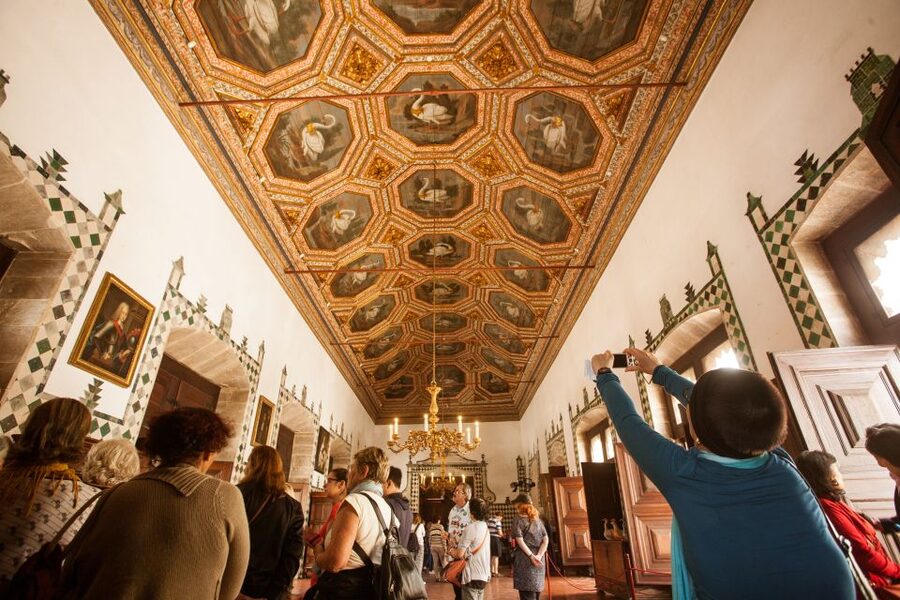
Inside, the mood changes. You find courtyards lined with patterned tiles, rooms shaped by Moorish and Portuguese design, carved ceilings, old furniture, royal symbols, and stairways worn smooth by centuries of use. The appeal is not one single grand viewpoint. It is the way several periods of Portuguese history sit on top of one another.
The ticket costs about $15 per person, which makes it a sensible choice if you have limited time or want a self-guided visit. You can enter on the valid day, move at your own speed, and use the audio guide when you want more context.
The palace is also easier to fit into a short Sintra visit than a full day split between several hilltop sites. If you have only three hours in town, a visit here can work. Just remember that Sintra’s many sights are spread out, and getting between them takes time.
From Moorish fortress to royal residence
The site began as a Moorish castle after the Umayyad conquest of Hispania in the eighth century. After Portugal’s first king took Sintra in 1147, the fortress was extended and adapted for royal use.
That long sequence of additions explains why the palace does not have one clean architectural style. You will see Manueline decoration, associated with Portugal’s Age of Discoveries, alongside Mudejar features influenced by Islamic design. The result is less tidy than a palace built in one era, but much more revealing.
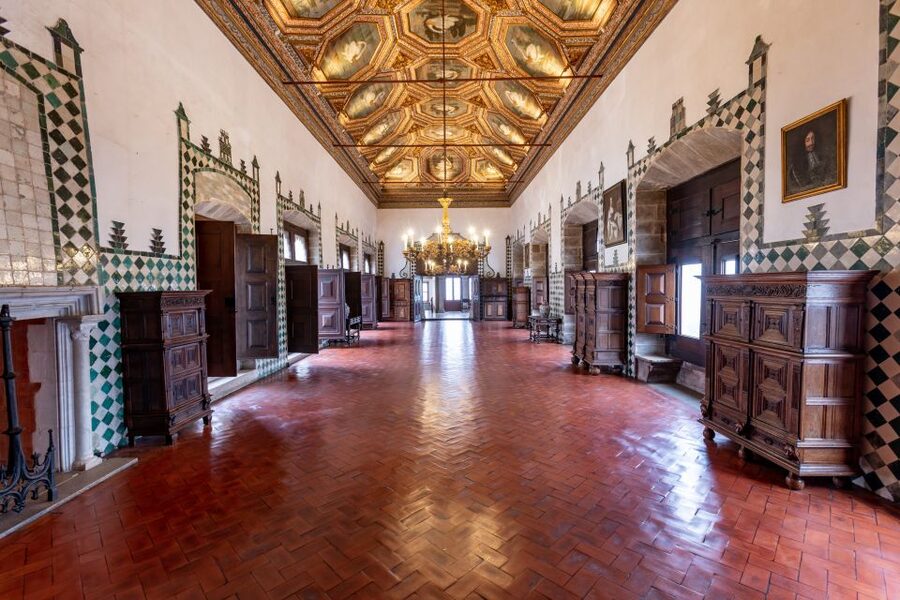
Look closely at the windows with surmounted arches and the walls covered in glazed geometric tiles. These details are easy to rush past if you treat the building as a quick photo stop. The audio guide helps you pause in the right places and understand how each section fits into the palace’s long development.
The palace is often described as Portugal’s best-preserved medieval royal palace. That matters because the rooms do not feel like empty shells. You get a sense of how the building worked as a royal home, ceremonial setting, religious space, and working household.
More palaces and hill parks within reach of Sintra:
- Sintra: Pena Palace and Park Entrance Ticket
★ 4.2 · 17,410 reviews - Lisbon: Sintra, Pena Palace, Cabo da Roca, & Cascais Tour
★ 4.9 · 3,509 reviews - Quinta da Regaleira Skip-the-Ticket-Line Entry & Audioguide
★ 4.2 · 3,316 reviews
The entrance and skip-the-line process
Your ticket is designed to let you skip the ticket-purchase line and go directly toward admission. On busy days, that can be useful, particularly when other Sintra attractions are drawing large crowds.
Do not assume the process will be self-explanatory. The correct meeting point can vary depending on the option booked, and some visitors have found the entry layout confusing. Clear signage is not always enough to tell you where to go next, so check your ticket carefully before arriving.
A pre-purchased ticket is most useful when you are planning a tight day. It gives you one less decision to make in Sintra. On a quiet weekday or outside the main season, you might find little or no line, which reduces the practical value of the skip-the-line feature.
The ticket is non-refundable, so check the date and opening information before booking. The palace is open from 9:30 AM to 6:00 PM, with last admission at 5:30 PM. Do not plan to arrive at the last minute, especially if you want to use the audio guide or see the gardens.
The royal rooms and courtyards

Once inside, follow the route through the palace rooms and courtyards. The visit is self-guided, so you can linger over an unusual ceiling or move quickly through a room that interests you less.
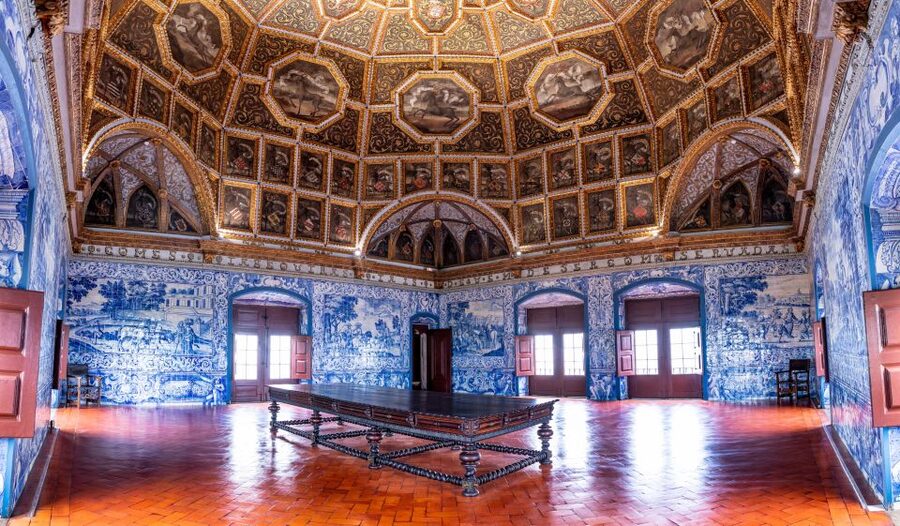
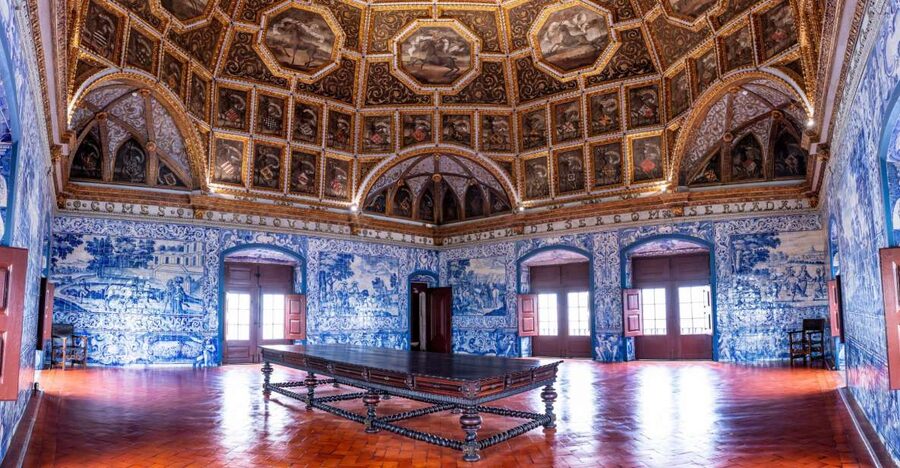
The Heraldic Room is one of the strongest moments. Its decoration carries royal identity and symbolism in a way that rewards a slow look. It is the kind of room that can surprise you because the exterior gives little warning of what is inside.
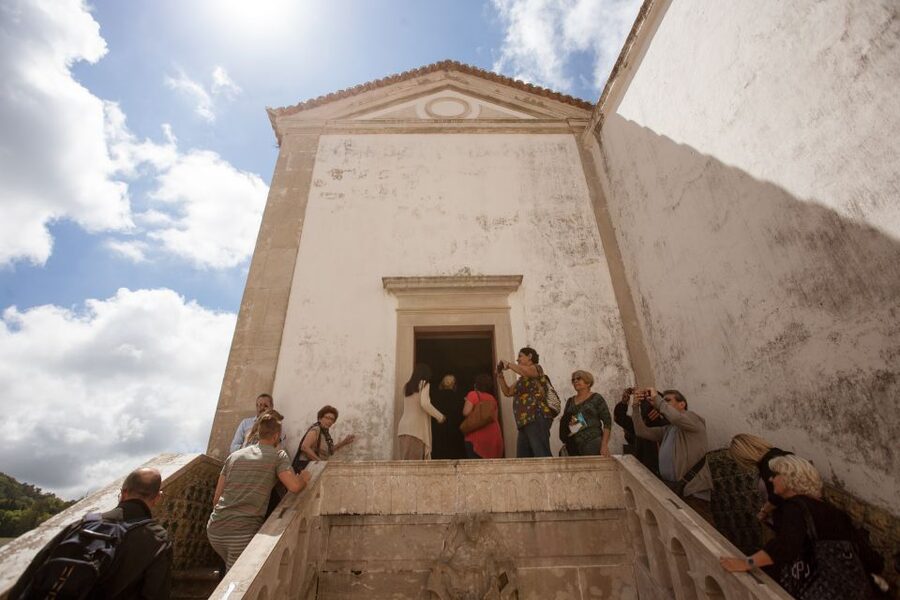
The chapel offers a quieter change of pace. Its religious decoration and historic setting help explain that the palace was more than a residence. Royal life included ceremony, worship, administration, and household routines, all within the same complex.
The kitchens are another worthwhile stop. They bring the palace down to earth. Instead of focusing only on queens, kings, and official rooms, you see evidence of the practical work that kept a court running.
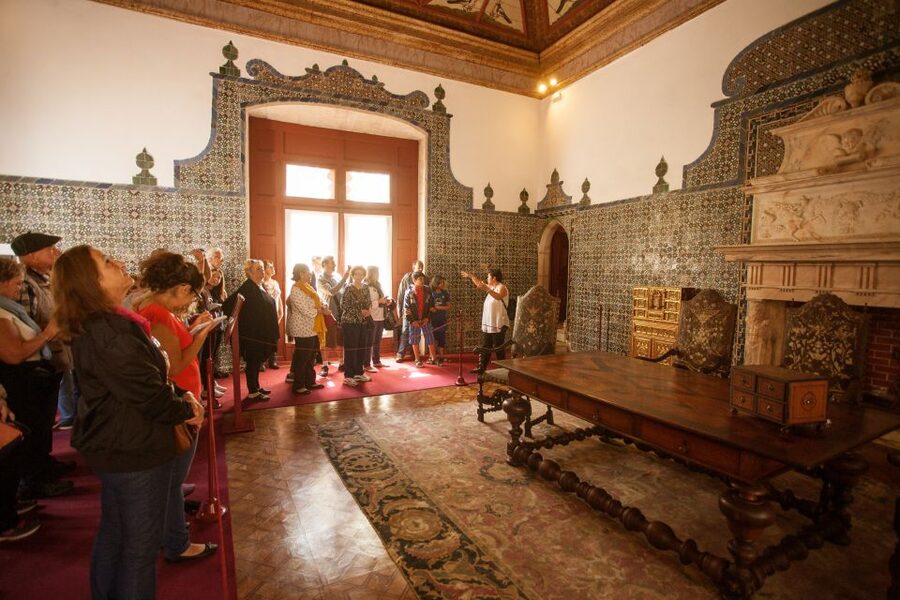
The courtyards are where the palace’s Islamic and Portuguese influences meet most clearly. Expect Mudejar patterns, Manueline details, water features, and tiled surfaces. The water elements are not just decoration. They help create cooler, calmer spaces and show how design traditions from different cultures were adapted in royal architecture.
Staircases connect the rooms and courtyards, and the route includes repeated steps and changes in level. You should be ready to walk up and down throughout the visit. If stairs are difficult for you, the palace may be a poor fit. One past visitor specifically found the site close to impossible with mobility limitations, citing limited access and a lack of handrails.
The tilework is the visual star
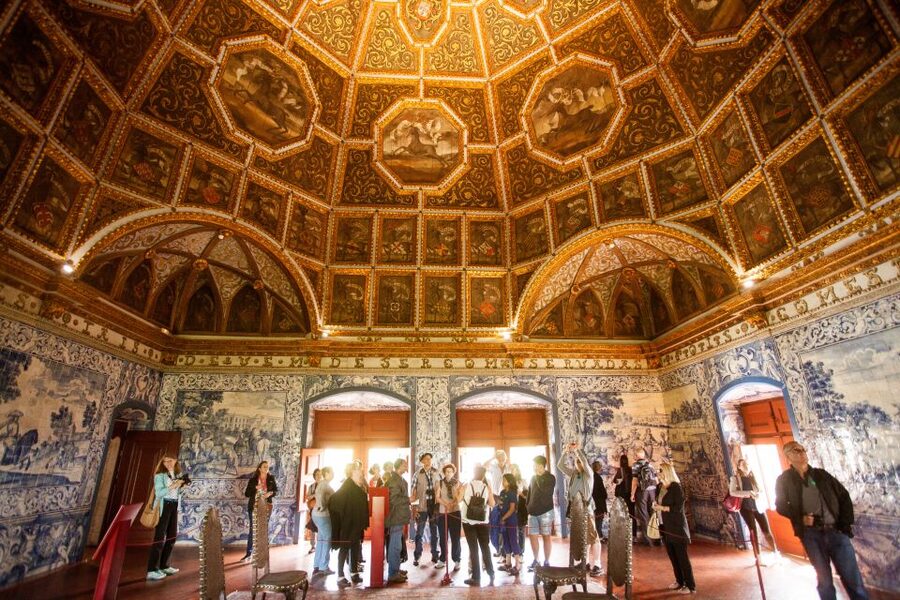
Portugal is famous for azulejos, its painted and glazed ceramic tiles, and the National Palace gives you plenty of chances to see why they matter. Here, tiles are not used only as bright decoration. They cover walls, shape courtyards, and create repeating patterns that change as you move through the building.
The geometric designs reflect the palace’s Mudejar influence. Other rooms show how Portuguese artists adapted tilework into a distinct national style. If you have already seen tiled churches in Lisbon, this visit helps you compare religious and royal uses of the material.
I suggest taking a few minutes to study the patterns rather than photographing every wall immediately. The repeated shapes can blur together when you move too fast. The audio guide also gives the tilework a cultural and historical setting instead of leaving it as a collection of attractive surfaces.
A few more things to do in Sintra worth a look
- Sintra: Castle of the Moors Skip-the-Line Ticket
★ 4.6 · 2,893 reviews - Lisbon: Sao Jorge Castle Skip-the-Line Ticket with Guide
★ 4.6 · 1,191 reviews
The new audiovisual portraits
The palace now includes short audiovisual presentations about 14 historical figures connected to its past. These include queens, cooks, and other people whose lives unfolded inside the royal household.
This is a useful change from the usual palace visit, which can focus too heavily on rulers and formal rooms. The films bring attention to the different people who lived and worked there across the centuries. Their stories add a more human scale to the building.
The portraits feature Portuguese actors and are available in Portuguese and English. They are built into the visitor route, so you do not need to arrange a separate presentation. The palace also offers other tools, including a virtual tour and treasure hunt, although the supplied ticket specifically includes the audio guide app.
Using the audio guide app
The free audio guide is available in Portuguese, English, Spanish, and French. You use your own phone, so bring enough battery and make sure you know how to access the app before entering.
A self-guided audio tour suits this palace well. You can stop when a room catches your eye, skip commentary that does not interest you, and avoid being tied to a group. The guide is especially helpful in the Heraldic Room, chapel, kitchen, and courtyards, where architectural details need explanation.
The audio guide does not replace a live guide. You will not have someone pointing out small details, answering questions, or managing the route for you. If you want a personal, guided experience, this ticket is not that product. It is a flexible admission ticket with digital interpretation.
Allow at least an hour and a bit for a straightforward visit. If you listen to most of the commentary, pause for photographs, and include the gardens, give yourself longer. The common mistake is to spend too much time at Pena Palace first, then arrive here after the gardens or palace rooms are closing.
Palace, gardens, and the limits of a one-day visit
The ticket is described as covering the National Palace and gardens. The palace itself is the stronger part of the visit. Some people find the gardens less impressive than other Sintra attractions, while others enjoy adding a quiet outdoor walk after the rooms.
Garden access can be affected by closing times and local conditions. One reported visit lost garden time because the visitor area closed earlier than expected, and another trip was limited by a high fire-risk day. Check the current opening information before you go, and do not leave the gardens until the final part of the afternoon.
The palace is not enormous, which makes it manageable. You can see the main rooms without giving up an entire day. Still, Sintra rewards realistic planning. Pena Palace, the Moorish Castle, and Quinta da Regaleira each require their own time, and moving between them can eat into your schedule.
If you are choosing between the National Palace and Pena Palace, consider your priorities. Pena offers a more dramatic exterior and hilltop setting. The National Palace offers a more direct look at medieval royal life, interior decoration, kitchens, courtyards, and the changing styles of Portuguese architecture.
Crowds, timing, and comfort
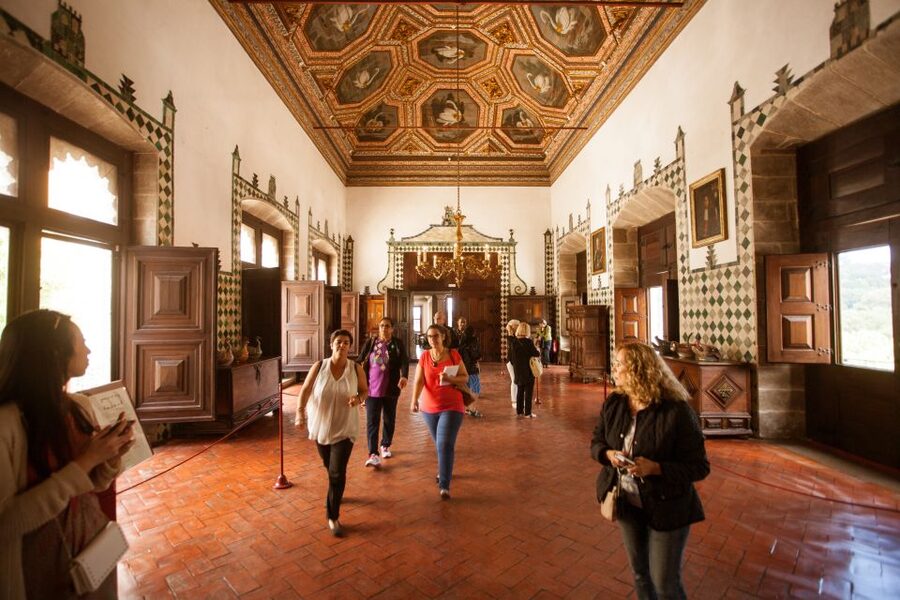
Crowds vary sharply by season, day, and time. Summer afternoons can feel packed, while a Monday in October or a late afternoon outside the busiest period may be quiet. Several visits have had little or no line, so skip-the-line access is not always essential.
The benefit of arriving early is not only a shorter wait. You also get more room to examine the tilework and move through the narrow areas without being pushed along. If early arrival is not possible, a quieter late-afternoon visit may work, but watch the 5:30 PM last admission.
Wear shoes suited to stairs and uneven walking. You will be moving through historic rooms, courtyards, and garden paths, not a flat modern museum. Bring water, since food and drinks are not included.
The experience is not a guided tour, and transport is not included. You must arrange your own way to Sintra and navigate from the town area to the palace entrance. That makes this ticket best for independent visitors who are comfortable managing the day themselves.
Who will enjoy this ticket most

I would choose this experience for:
- First-time visitors with limited time, especially those who want one major Sintra site without committing to a full guided day.
- History and architecture fans who care more about interiors, tiles, royal rooms, and medieval structure than a dramatic exterior.
- Independent visitors who prefer to stop, listen, and photograph at their own pace.
- Families with older children, since the palace offers varied rooms, courtyards, water features, and audiovisual stories.
- Budget-conscious visitors, because the price is modest compared with a private tour and includes the audio guide.
I would think twice if you have serious mobility limitations, dislike stairs, or want a live guide to handle the route. I would also avoid squeezing this visit into the final few minutes of a packed Sintra itinerary.
Is the $15 ticket good value?
At $15, the ticket is good value if you want a substantial historic interior and can use the included audio guide. The palace gives you more than a quick photo stop, yet it does not demand an entire day.
The skip-the-line feature is the less certain part of the value. It can help during busy periods, but it may feel unnecessary when there is no queue. You are mainly paying for convenient pre-arranged entry and the ability to explore independently.
The strongest value comes from combining the ticket with good timing. Arrive when the palace is open, leave room for the audio content, and do not assume you can see it after spending most of the day at Pena Palace.
Should you book the National Palace of Sintra ticket?
Book it if you want to see Sintra’s royal past from the inside, especially the Heraldic Room, chapel, kitchens, tiled courtyards, and layered Moorish, Mudejar, and Manueline design. The reasonable price and four-language audio guide make it an easy addition to a Lisbon or Sintra day.
Skip it if you only want the most dramatic views, have major difficulty with stairs, or already know you will have too little time to reach the palace before last admission. For most independent visitors, though, this is one of the more practical Sintra tickets, with enough history and detail to justify the stop.
FAQ
How much does the National Palace of Sintra ticket cost?
The listed price is $15 per person.
How long is the ticket valid?
The ticket is valid for one day. Check availability for the available starting times.
What are the National Palace of Sintra opening hours?
The palace is open from 9:30 AM to 6:00 PM. Last admission is at 5:30 PM.
Is a live guide included?
No. The ticket includes entry and a free audio guide through an app, but no guided tour.
Which languages are available for the audio guide?
The audio guide is available in Portuguese, English, Spanish, and French.
Does the ticket include transportation?
No. Transportation is not included.
Are food and drinks included?
No. Food and drinks are not included.
Can I use the ticket to visit the gardens?
The experience includes access to the National Palace and gardens, subject to current opening conditions and closing times.
Is the ticket refundable?
No. This activity is non-refundable.
Just added in Sintra
- Sintra Tour With Tuktuk★ 4.9 · 102 reviews
- Private Tour Sintra, Palaces and Mountain Tuk Tuk(2 to 6 people)★ 5.0 · 174 reviews
- Private Tuk Tuk Tour around Sintra★ 5.0 · 118 reviews
- Private Tuk Tuk Tour around Sintra★ 5.0 · 86 reviews
- From Lisbon: Paragliding Tandem Flight★ 4.8 · 78 reviews
- Sintra Historical Jeep Adventure – Palaces & Secret Routes★ 5.0 · 314 reviews
- Sintra Jeep Safari★ 5.0 · 311 reviews
- Sintra: Private Full-Day Sintra, Roca, and Cascais 4×4 Tour★ 5.0 · 176 reviews
Pena Palace & Sintra Tours, compared.
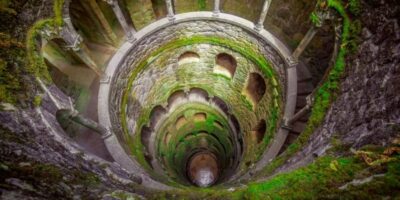
Sintra, Pena, Regaleira, Cabo da Roca & Cascais
Read our review →
Pena Palace, Sintra, Cabo da Roca, & Cascais Daytrip
Read our review →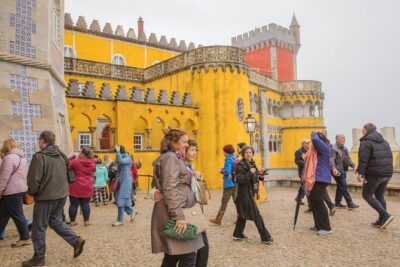
Sintra and Cascais Small-Group Day Trip from Lisbon
Read our review →
Small Group Tour to Sintra, Pena Palace, Cabo Roca and Cascais
Read our review →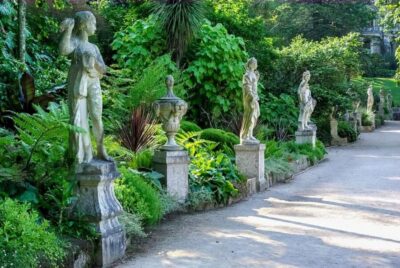
Quinta da Regaleira Skip-the-Ticket-Line Entry & Audioguide
Read our review →
Sintra, Pena, Cabo da Roca Coast & Cascais Day Tour
Read our review →
Sintra to Cascais: 2 Palaces, 4 Sites, Small Group 10 Hour Tour
Read our review →Browse the lists this tour appears in