
Reviewed · BIKE & E-BIKE TOURS
Lisbon: 7 Hills Half-Day Electric Bike Tour
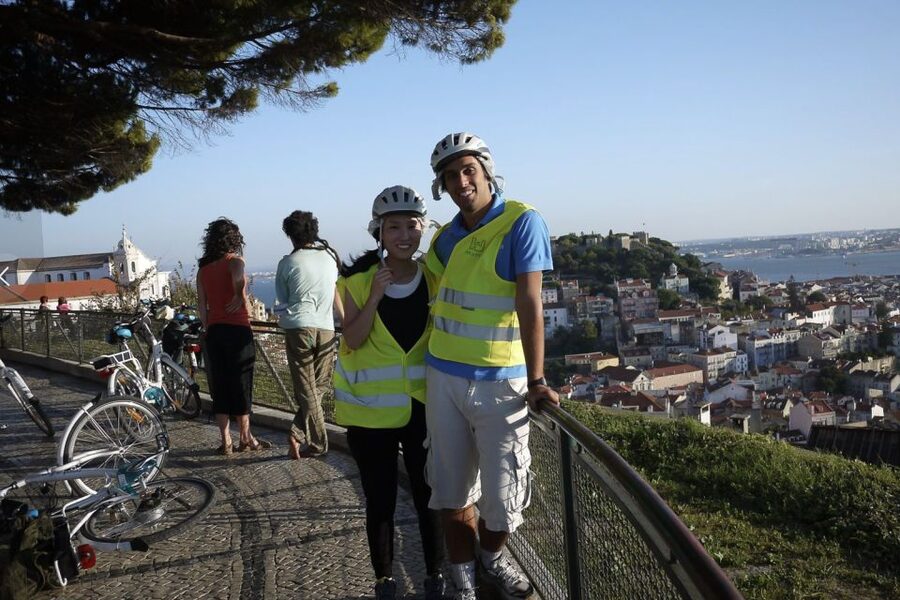
Lisbon’s seven hills are a challenge on foot, but an electric bike changes the equation. You still ride through steep streets and uneven paving, yet the motor takes the sting out of the climbs. In three hours, you can reach viewpoints and neighborhoods that would take much longer to connect by walking.
I like the wide sweep of the route, from Feira da Ladra and the Sé Cathedral to Vila Berta and Penha de França. I also like the practical value: at $27, the tour covers a lot of ground, includes the bike and safety equipment, and gives you a useful first look at Lisbon. The main consideration is that you are still cycling in a hilly city, with traffic, slopes, and rough road surfaces to manage.
I especially appreciate the guides’ care with nervous riders. Rafael, Miguel, Pedro, Diogo, Ricardo, and others are praised for clear instructions, history, and frequent checks on the group. If you have not used an e-bike before, allow a few minutes to get comfortable with the controls.
Key points to know before you book
- The motor makes Lisbon’s steep climbs manageable: You can reach high viewpoints without treating the ride as an athletic event.
- The route covers more than the postcard center: Expect Alfama, Graça, Penha de França, Vila Berta, central neighborhoods, and several city parks.
- Lookout stops are a major part of the experience: Chão do Loureiro, Miradouro da Graça, and Monte Agudo provide different views across Lisbon.
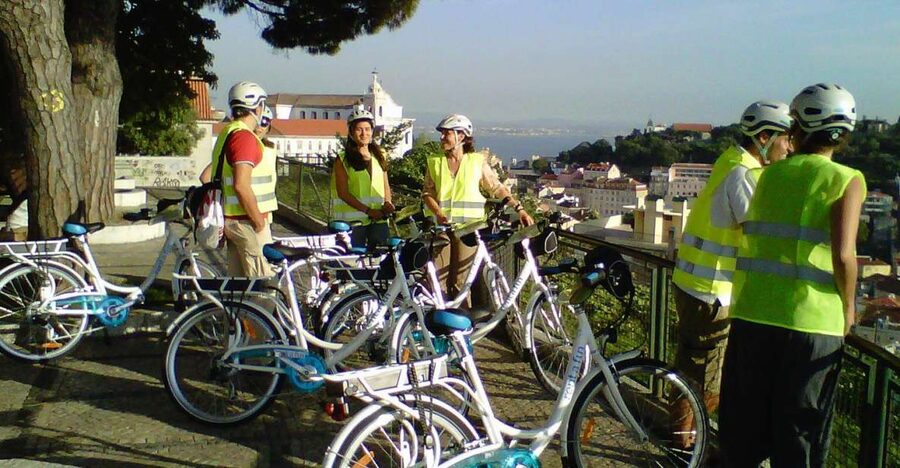
- The guides put safety first: You receive a helmet, an explanation of the bike, and instructions to ride in line and stay with the group.
- It works well at the start of a Lisbon stay: The route helps you identify places to revisit later at a slower pace.
- The ride is not completely effortless: Steep gradients, cobbles, and city streets still require attention and basic cycling confidence.
Why an e-bike makes sense on Lisbon’s seven hills
Lisbon is a city of sudden slopes. One minute you are beside the harbor, and a few turns later you are climbing toward a church or lookout. Walking gives you a close feel for the city, but it can also consume much of a day and leave you too tired for the next neighborhood.
The e-bike is a smart compromise. You pedal, but the electric assistance supplies the push needed on the uphill sections. Riders who had not been on a bike for years found the machines easy to learn, while regular cyclists still found some of the gradients and road surfaces demanding.
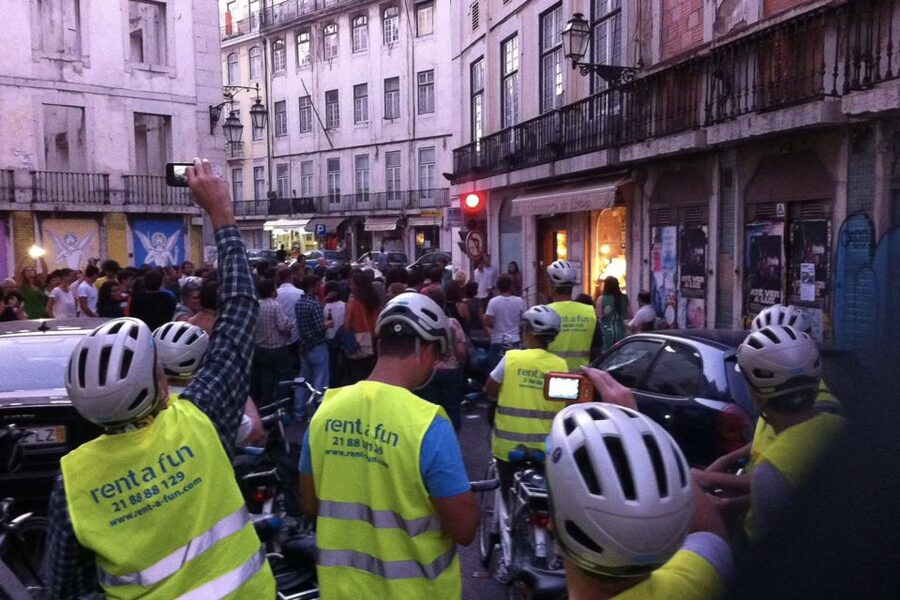
That distinction matters. This is not a flat cycle path beside the river. You will ride through city streets, narrow lanes, and areas where paving can be uneven. The guide sets the pace, explains how to use the bike, and watches the group. The motor helps with effort, but it does not replace balance, braking, or attention.
At the beginning, expect an introduction to the bike and a safety briefing. Guides have been praised for making sure everyone understands the controls before setting off. That is especially useful if you are uneasy about electric bikes or have not cycled in traffic for some time.
More rides around Lisbon:
- Lisbon: Hills, Alfama, and Mouraria Tour by Electric Bike
★ 4.8 · 3,438 reviews - Lisbon E-Bike Tour Commerce Square, Mouraria and Alfama
★ 4.5 · 1,688 reviews - Lisbon: City Highlights and Viewpoints E-Bike Tour
★ 4.9 · 1,556 reviews
Starting in Alfama and climbing above the harbor
The meeting point is on Rua do Jardim do Tabaco in Alfama, at number 2. The tour information also describes the departure as close to Rua Cais de Santarém and the harbor, so check the exact location details when you book. One useful practical warning: finding the shop through Google Maps may not be completely clear, so give yourself extra time rather than arriving at the last minute.
Starting near the water puts you close to one of Lisbon’s oldest quarters. Alfama rises sharply from the river, with lanes that twist uphill and views that appear between buildings. From here, the route quickly shows why an electric motor is useful.
The early part of the ride gives you a feel for the city’s changing levels. You move from the harbor side toward higher ground, passing old streets and reaching sites that would require a long uphill walk. The guide keeps the group together and points out how Lisbon’s neighborhoods fit together.
This is also when you can settle into the bike. Do not expect the motor to make every turn automatic. You still need to steer carefully, especially where the road narrows or the surface changes. Once you get used to the assistance, the hills become far less intimidating.
Feira da Ladra, the National Pantheon, and São Vicente de Fora
The route includes Feira da Ladra, Lisbon’s famous flea market. The market is associated with secondhand goods, old objects, and the everyday side of the city. You do not get a long shopping visit on a moving bike tour, but passing through this area adds local texture to the grand monuments.
Nearby, the National Pantheon is one of the city’s most imposing buildings. Its large dome and pale stone make it easy to spot above the surrounding streets. The tour gives you a chance to see it as part of the neighborhood rather than as an isolated stop reached by taxi.
São Vicente de Fora follows the same pattern. This Mannerist monastery is a major architectural sight, but the appeal of reaching it by bike is the route between the landmarks. You are not simply checking off monuments. You are moving through the streets that connect them, with the guide explaining Lisbon’s past and present along the way.
The exact amount of time at each place depends on the group and the guide. This is a sightseeing ride, not a series of extended interior visits. If your priority is to tour the National Pantheon or monastery inside, you will need to return independently.
The high points: Chão do Loureiro, Graça, and Monte Agudo
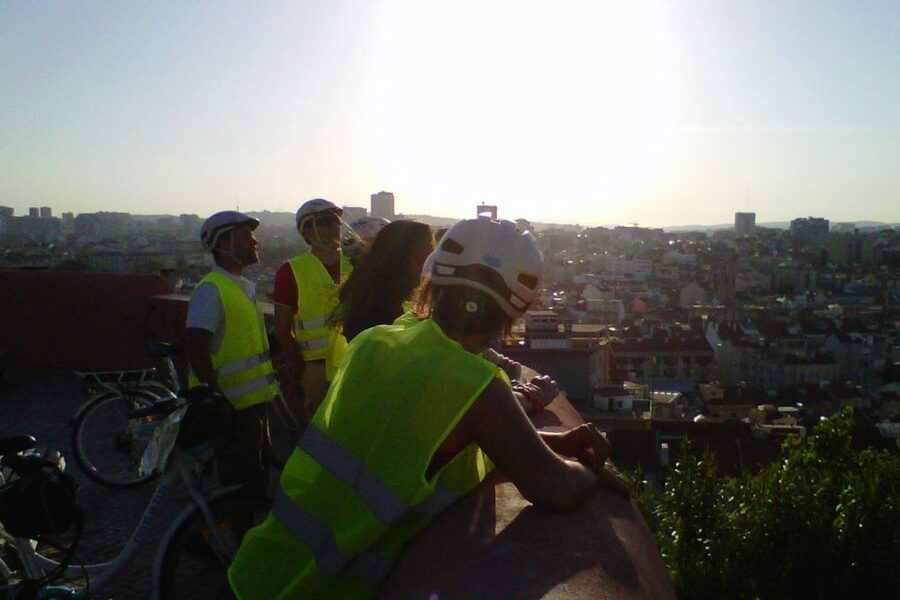
The viewpoints are among the strongest reasons to book this ride. Lisbon’s hills give you changing angles across the rooftops, river, and distant parts of the city. Each lookout has a different feel, so the sequence is more rewarding than stopping at one famous terrace and calling it done.
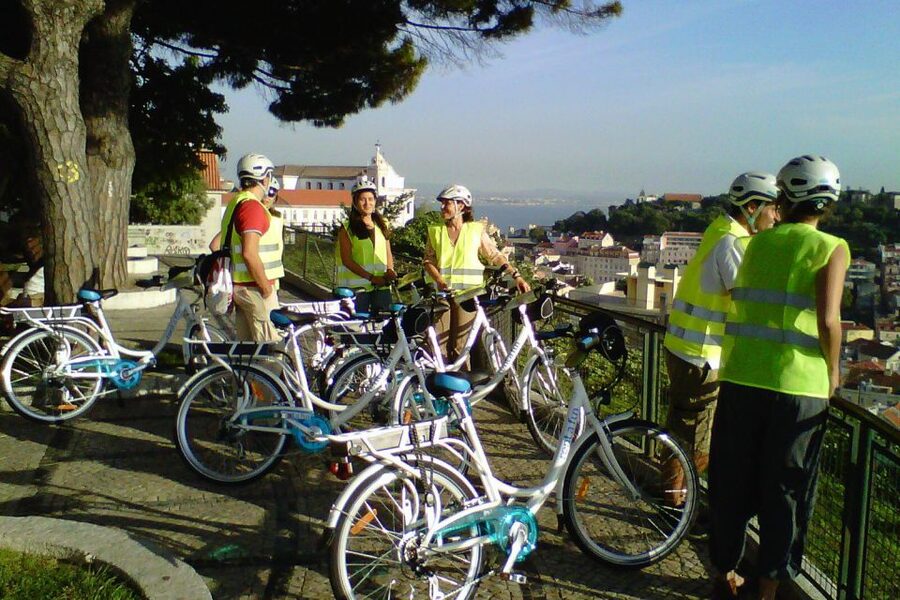
The terrace of Chão do Loureiro offers a high view over central Lisbon. It is a good place to understand the city’s layers: lower streets near the river, rising neighborhoods behind them, and the red roofs spreading across the hills.
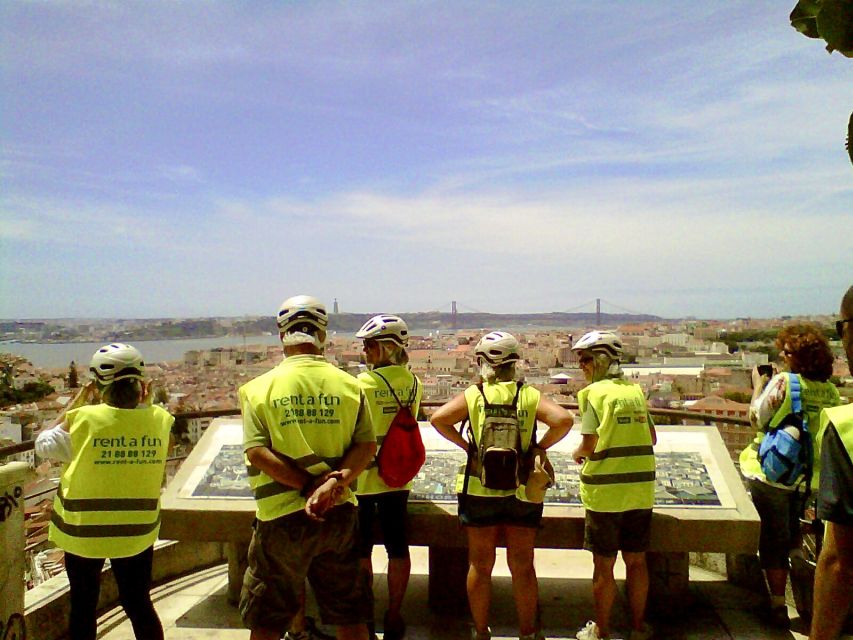
Miradouro da Graça is one of the best-known viewpoints on the route. From here, Lisbon opens out in a broad panorama. The stop also puts you in Graça, a neighborhood with a strong local character and a mix of residential streets, old buildings, and small lanes.
Monte Agudo, in Penha de França, gives you another angle. It is less about seeing the same view again and more about understanding how far Lisbon stretches beyond the central sights. Reaching this point is a clear example of the e-bike’s value. The climb would be tiring on foot, but the motor lets you concentrate on the view rather than your breathing.
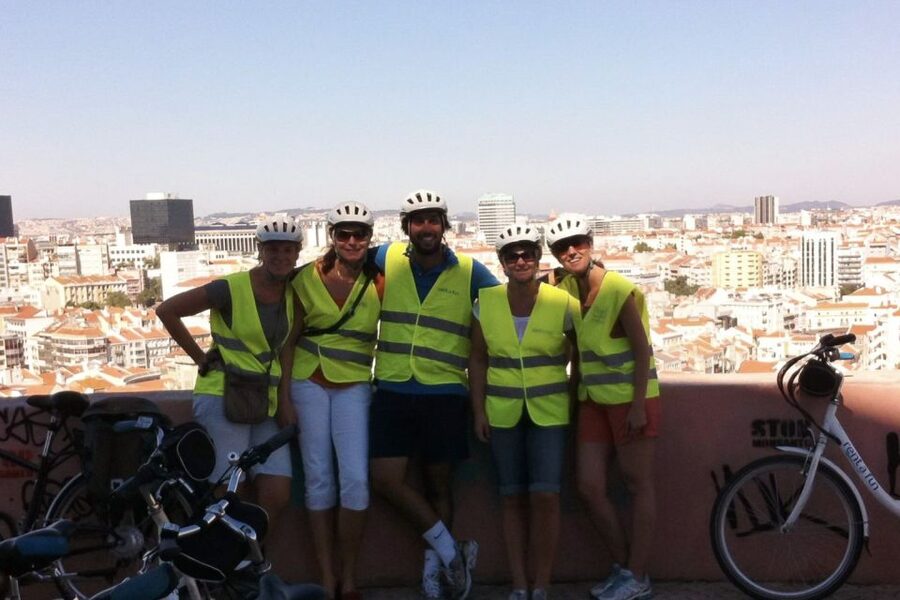
Guides generally leave time for photographs at scenic stops. If you want a picture of your group, ask before setting off or at a lookout. The tour moves at a steady pace, so it is wise to take photos when the group pauses rather than trying to stop independently in a narrow street.
A few more things to do in Lisbon worth a look
- Lisbon Private And Customizable Half-Day Tour
★ 5.0 · 633 reviews - Sintra Half-Day Private Tour – A Journey through Wonderland
★ 5.0 · 601 reviews - From Albufeira: Half-Day Algarve Jeep Safari
★ 4.7 · 2,039 reviews - Madeira: Nuns Valley Half-Day Tour
★ 4.5 · 1,955 reviews
Vila Berta and the city’s quieter corners
The ride does not stay on the main sightseeing circuit. It passes the charming neighborhood of Vila Berta, known for its distinctive residential setting and narrow streets. This is the kind of place you might miss if you move only between Lisbon’s major monuments.
That change of scale is important. The cathedral and monasteries explain the city’s public history, while Vila Berta shows how Lisbon feels as a place where people live. You see ordinary streets, small details, and buildings that do not require an admission ticket or a long explanation.
The route also passes the 15th-century Palácio Belmonte. Its position near Alfama connects the old quarter’s lanes with the city’s grander architectural past. You will see it from the route rather than spend a long time touring it.
I like this mix because it keeps the ride from becoming a monument parade. The best moments may be the turns between the official sights, when you are following the guide through a lane you would not have chosen on your own.
Campos Mártires da Pátria, Jardim do Torel, and the funicular
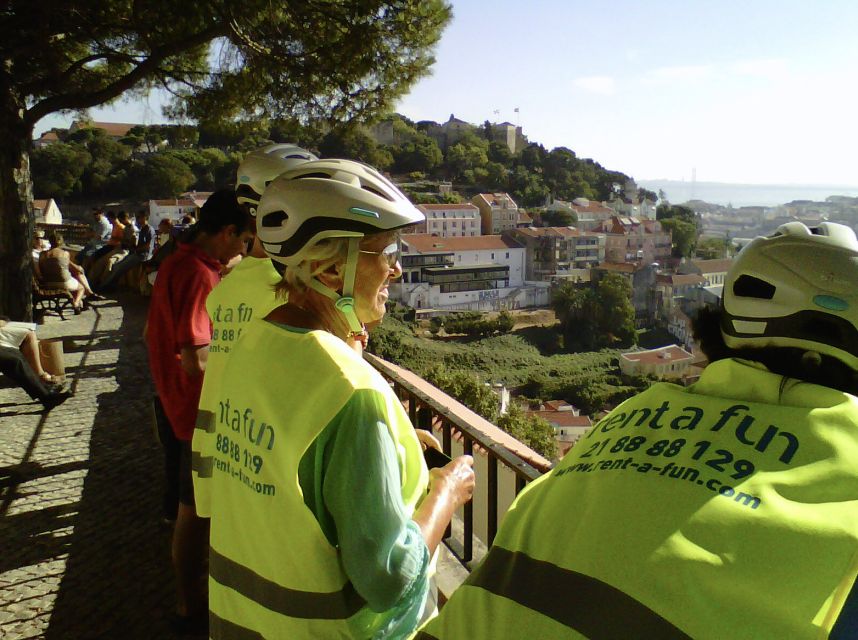
The tour later reaches Campos Mártires da Pátria and Jardim do Torel, two greener pauses in the middle of the city. After several climbs and viewpoints, these spaces give the ride a calmer rhythm.
Jardim do Torel is especially useful as a break from the hard stone and steep lanes. The stop helps you see how Lisbon’s parks and terraces create breathing room within the city. It also gives the guide a natural place to explain the surrounding neighborhoods.
The route includes the Ascensor da Lavra funicular, one of the early vehicles built to handle Lisbon’s hills, dating from 1884. It is a small but telling sight. The funicular exists because these slopes have always shaped how people move around the city.
Seeing it alongside an electric bike makes the point nicely. Lisbon has long needed clever ways to deal with its hills. The funicular solved the problem with rails and cables; your bike solves it with a battery-powered motor.
The Sé Cathedral and Lisbon’s changing center
The Sé de Lisboa cathedral is one of the tour’s essential landmarks. Its heavy medieval form looks different from the lighter facades and tiled buildings found elsewhere in the city. Seeing it from the bike gives you the chance to place the cathedral within the older streets of Alfama.
The route then links old Lisbon with central and financial districts. This broader sweep is one reason the tour works well as an introduction. You gain a mental map of the city instead of seeing only one quarter.
A three-hour ride cannot give you an in-depth visit inside every church or monument. Its value lies in connections: how the harbor relates to Alfama, how Alfama rises toward Graça, and how the viewpoints sit above the city center. I would use this tour to decide where to spend more time later.
What the guides add to the ride
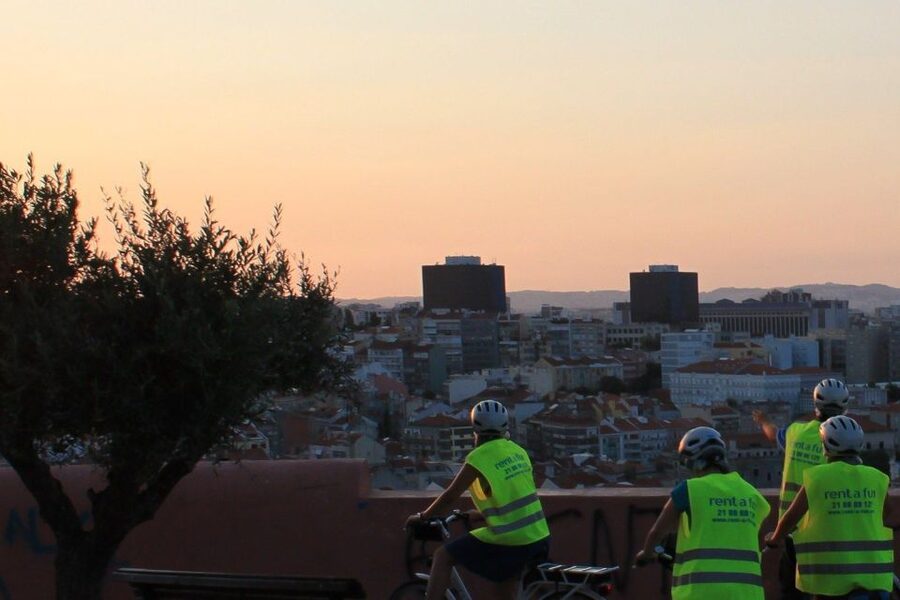
The guide can make or break a cycling tour, and this experience places real weight on that role. The strongest guide reports point to clear bike instruction, careful group management, local history, and a warm sense of humor.
Rafael and Miguel are repeatedly praised for combining city knowledge with calm supervision. Pedro is noted for checking on riders and adjusting the tour to suit the group. Diogo receives particular praise for helping nervous cyclists feel comfortable, while Ricardo is noted for patience and for offering to take photos at scenic stops.
Guides also vary in style. Some give more history, while others adjust the amount of commentary if the group wants more riding. The tour is in English, and the guide leads the group throughout.
Safety instructions matter here. You may be asked to ride one behind another and stay close to the group. That can feel less free than renting a bike alone, but it is the sensible approach on Lisbon’s streets. You are dealing with slopes, turns, pedestrians, and changing surfaces.
Price, pace, and what you actually receive
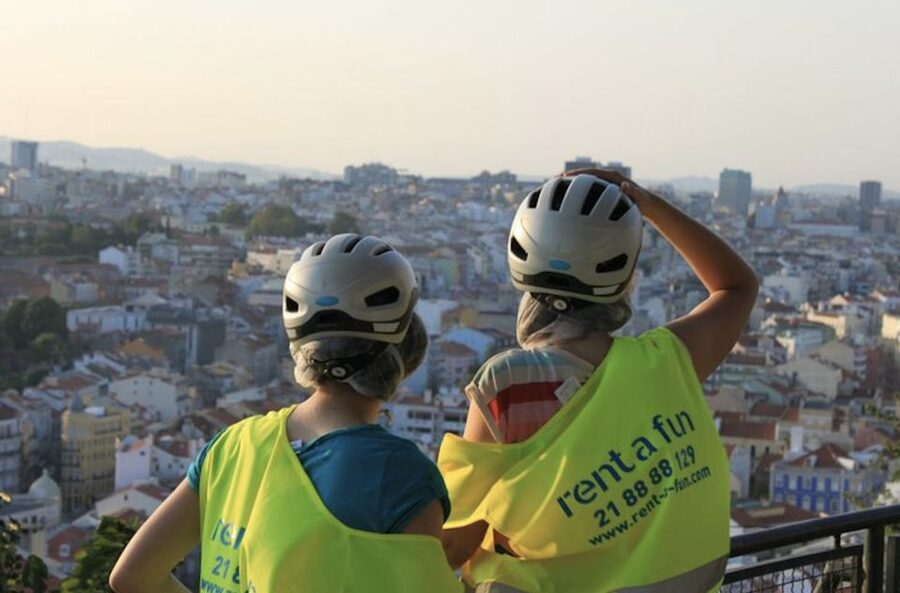
At $27 per person, this is good value if you want an overview rather than a slow visit to one neighborhood. The price includes the e-bike, helmet, guide, insurance, and water. Some rides have also supplied extras such as sun cream or a rain jacket, but treat those as helpful additions rather than guaranteed inclusions.
The three-hour length is well judged. A shorter ride might feel rushed, while a full-day route could become tiring even with electric assistance. You cover a large part of Lisbon without giving up an entire day.
The main tradeoff is pace. You stop often for views and information, but you do not have unlimited time at each sight. The ride is best for seeing many places and learning which ones deserve a return visit.
Free cancellation up to 24 hours before departure and the option to reserve now and pay later make the booking less rigid. Starting the tour early in your Lisbon stay is a sensible move, since you can use the route to plan later walks, meals, and museum visits.
Who should book this Lisbon e-bike tour?
I would choose this tour if you want to cover ground, dislike spending half a day climbing hills, or want an easy introduction to Lisbon before exploring on foot. It also suits families with teenagers, couples, and older riders who are comfortable on a bicycle but do not want a hard physical workout.
It can work for people returning to cycling after a long break, but you should still be honest about your comfort with traffic and uneven streets. One rider who had not cycled for 20 years found the e-bike manageable, while a regular cyclist noted that gradients and road surfaces could still be challenging.
Families with younger children should think about the group pace. One piece of advice from the experience is to consider a private tour if children are likely to need frequent pauses or ride much more slowly than adults.
Wear comfortable clothes and shoes, bring sun protection, and keep some flexibility in your schedule. Water is included, helmets are provided, and the tour is conducted in English. Most importantly, arrive early enough to find the Alfama meeting point and learn the bike without rushing.
Should you book it?
Book it if you want a practical city orientation with real views, not a slow architectural tour. The e-bike turns Lisbon’s hills from a major obstacle into part of the fun, and the route reaches neighborhoods you might not see on foot during a short stay.
Skip it if you dislike cycling in city streets or want long visits inside monuments. For most reasonably confident cyclists, though, the $27 price, three-hour route, and careful English-speaking guides make this one of the better ways to get your bearings in Lisbon.
FAQ
How long is the Lisbon seven hills e-bike tour?
The tour lasts three hours.
How much does the tour cost?
The listed price is $27 per person.
Where does the tour meet?
The meeting point is Rua do Jardim do Tabaco, N2, 1100-287 Lisboa, in Alfama.
What is included in the tour?
The price includes an electric bike, guide, insurance, helmet, and water.
What language is the tour conducted in?
The live tour guide speaks English.
Can I cancel the tour for a full refund?
Yes. You can cancel up to 24 hours in advance for a full refund.
Just added in Lisbon
- Lisbon: City Highlights Segway Tour★ 4.9 · 422 reviews
- Lisbon: Street Art Tuk Tuk Tour★ 4.9 · 372 reviews
- Lisbon: Segway Medieval Tour of Alfama and Mouraria★ 4.9 · 420 reviews
- LISBON Street Art Tour★ 5.0 · 371 reviews
- Évora and Monsaraz with Regional Wine Tasting from Lisbon★ 4.5 · 229 reviews
- From Lisbon: Horseback Riding on Comporta Beach★ 4.7 · 167 reviews
- Évora and Megaliths Full-Day Tour from Lisbon★ 4.7 · 456 reviews
- Arrabida and Sesimbra Small-Group Day Trip from Lisbon with Wine Tasting★ 5.0 · 494 reviews
Bike & E-Bike Tours, compared.
Hills, Alfama, and Mouraria Tour by Electric Bike
Read our review →
City Highlights 3-Hour Guided Electric Bike Tour
Read our review →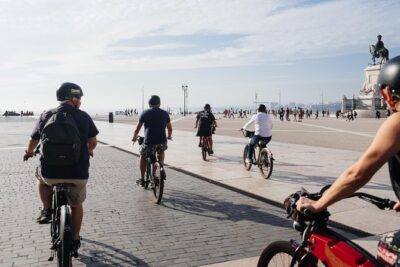
Lisbon E-Bike Tour Commerce Square, Mouraria and Alfama
Read our review →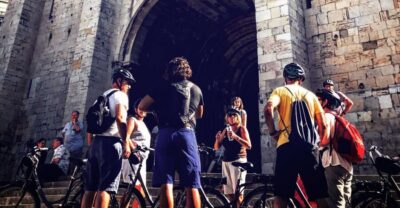


Quad Biking – Sete Cidades from North Coast (Half Day)
Read our review →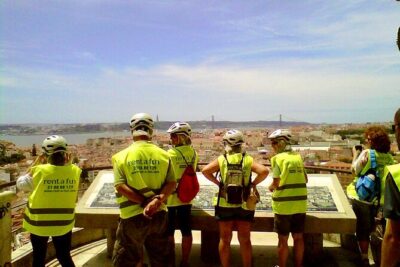
Browse the lists this tour appears in