
Reviewed · CANYONING & COASTEERING
Sagres: Coasteering – Swimming, Cliff Jump & Rock Climbing
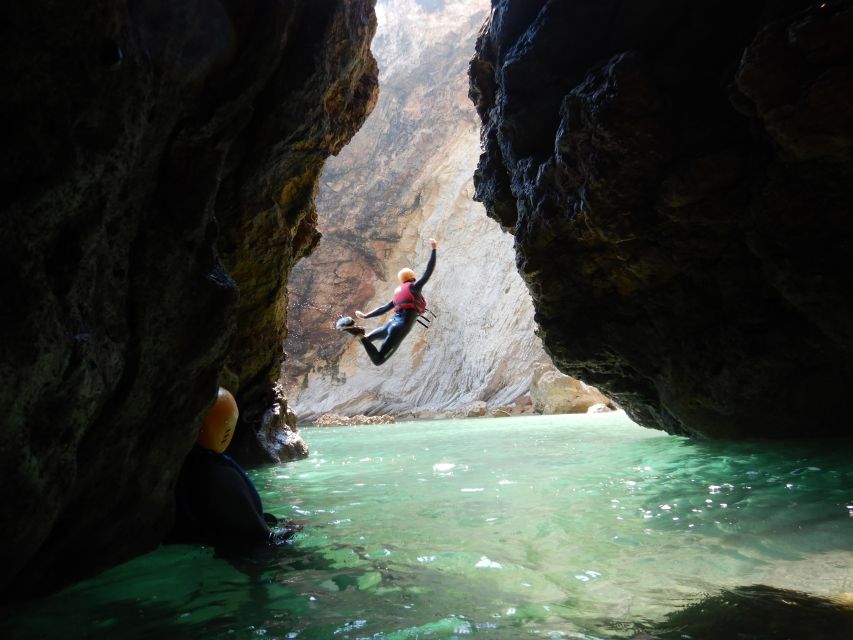
Sagres coasteering turns the Algarve coast into your playground. You scramble over rough rock, swim through clear water, enter sea caves, and jump from ledges that get higher as the outing continues. Guides including Jim, Callum, Bobby, and Annamarie keep the mood light while taking safety seriously. I especially like the gradual jump sequence and the way the route can change for different abilities.
Two things make this a strong choice. You get a close look at cliffs and caves that are difficult to reach on foot, and the photos are included, so you can leave your phone behind. The main catch is simple: this is active, wet, and sometimes nerve-racking. Sharp rocks call for sturdy shoes, and anyone uneasy with heights may prefer to skip some of the jumps.
Key points at a glance

- Jumps build from small to high: You may encounter jumps from about 1 meter to as high as 12 meters, with lower options available.
- Caves are part of the route: Swimming into sea caves gives you a view of Sagres that a standard coastal walk cannot provide.
- Guides adjust the challenge: You can choose easier climbs, lower jumps, or an alternate route if a section feels wrong for you.
- The water time is real: Swimming is a central part of the experience, though you do not need to be an expert swimmer.
- Safety gear is supplied: You receive a wetsuit, buoyancy aid, helmet, protective gloves, and the required instruction.
- Plan for tides and wet footwear: The exact start time is confirmed the day before, and comfortable shoes that can get wet are essential.
What coasteering in Sagres actually feels like

Coasteering is not a gentle sightseeing cruise. It is a moving route along the coast, with short stretches of walking, scrambling, swimming, climbing, and jumping. You are constantly changing position, which is what makes the outing feel more like an adventure than a normal beach activity.
The route begins with a safety briefing and equipment fitting. You get a wetsuit, buoyancy aid, helmet, and protective gloves. The gear may feel bulky at first, but it gives you warmth, flotation, and protection while you work across the rocks.
The first jumps are usually the easiest. This matters. You get time to learn how to enter the water and see how the guides give instructions before facing a larger ledge. The sequence can build toward jumps of roughly 12 meters, but the highest point is not compulsory.
The guides are the heart of the experience. Jim, Callum, Bobby, Joao, Anton, Francisco, and Annamarie have all led sessions at different times. The most useful quality is not showmanship. It is patience. Guides encourage you to try, but they do not force a jump or climb. If you are nervous, they can point out a lower ledge or an easier route.
That makes the activity suitable for a mixed group. A confident jumper can take on more height, while someone new to heights can still swim, climb, and use smaller jumps. You may not all do exactly the same challenge, but you can remain part of the same outing.
Other days spent jumping into water near Algarve:
- Coasteering and Cliff Jumping Near Lagos
★ 5.0 · 212 reviews - Coasteering Algarve: Cliff Jump, Swim & Climb in Sagres
★ 4.9 · 158 reviews - Coasteering Adventure with Snorkeling
★ 5.0 · 133 reviews
Following the rocks from dry land to the sea
The outing usually moves between sections of cliff rather than following one simple path. You walk or scramble across the rock, then reach an entry point for a jump or swim. After crossing a stretch of water, you climb or pull yourself onto another section of coast.
This stop-and-start rhythm gives your body short breaks. It also keeps the scenery changing. One minute you are looking down into clear water, and the next you are working around a rocky corner toward a cave.
The rock can be pointed and uneven. One useful detail from the experience is that normal sneakers or other sturdy shoes that can get wet are better than very thin-soled swim shoes. You want traction and protection underfoot. The supplied information asks you to bring comfortable shoes and waterproof shoes, so treat footwear as a serious part of your preparation, not an afterthought.
Protective gloves help with the rough surfaces, but they do not make the rocks soft. Listen closely when the guide points out where to place your hands and feet. You will enjoy the route more if you move carefully instead of trying to rush toward the next jump.
Swimming into the caves

The sea caves are one of the best reasons to choose coasteering instead of a standard cliff walk. You reach them from the water, often after a jump or a short swim, and enter spaces that are not visible from the top of the cliffs.
The water is described as crystal clear, and the caves provide a quiet change of mood from the exposed coastline. The views are not just something you look at from a path. You are moving through them, with the rock close around you and the open sea behind you.
Swimming is central, but you do not need advanced swimming ability. The activity is not presented as a test of endurance, and a buoyancy aid is included. Still, you should be comfortable enough in water to follow instructions and move between the rocks. If you are not confident in the sea at all, this may not be the right outing.
The water temperature is another reason the wetsuit matters. You will spend time in the sea, not just make a single jump and climb out. Bring a towel because one is not included.
Cliff jumps from 1 meter to about 12 meters

The jumps are the biggest draw for many people, but they are not the whole experience. The route can include small jumps of around 1 meter and build toward much higher ledges. This progression lets you decide how far you want to go.
A good guide will explain the technique and check the water before directing you to jump. The exact sequence depends on the route, the tides, and the ability of the group. You might face several heights, but no jump should be treated as mandatory.
That flexibility is especially useful for families and groups of friends. One person may want the tallest jump, while another may prefer a low entry or an alternate path. You can still share the excitement and see the same caves and cliffs without matching everyone else’s risk level.
The psychological side is real. Some people with a fear of heights have managed to attempt jumps after starting with smaller ones and receiving calm guidance. Others may decide that a lower jump is enough. Both choices are perfectly reasonable. This is meant to be exciting, not a contest.
After each jump, you swim away from the landing point and regroup. The buoyancy aid helps you stay afloat, but you still need to pay attention to instructions and the movement of the sea.
Same base, a different kind of day out:
- Albufeira: 2.5-Hour Benagil Caves & Dolphin Watching
★ 4.6 · 10,710 reviews - Portimão: Benagil Caves Speed Boat Tour with Sunset Option
★ 4.8 · 9,329 reviews - Portimão: Benagil Sea Caves Speedboat Adventure Tour
★ 4.8 · 6,546 reviews - Albufeira: Benagil Caves & Dolphin Watching Speed Boat Tour
★ 4.6 · 6,316 reviews
Rock climbing without a climbing wall
The climbing here is better described as rock scrambling and short climbing sections than a formal climbing session with ropes. You use the natural cliff, find handholds, and work your way around the coast.
Some sections are easy. Others require more concentration, especially when the rock is wet or the route rises from the water. Guides can help you choose a simpler line if a climb feels too difficult.
This part adds balance to the jumps. Jumping gives you a quick burst of adrenaline. Climbing asks for patience and body control. Swimming connects the sections. The mix keeps the four hours from feeling repetitive.
You do not need previous rock-climbing experience. The activity is designed for beginners as well as experienced thrill-seekers, and the guides explain techniques along the way. You should still be ready for physical effort and uneven ground.
Guides who keep the challenge personal

The strongest pattern in the feedback is the quality of the guide support. Jim is repeatedly described as encouraging and patient, while Callum is known for a friendly, funny approach to instruction. Annamarie has helped nervous participants push beyond their usual comfort zone without making them feel pressured.
Bobby, Joao, Anton, and Francisco have also guided sessions. The exact guide depends on the day, so you should not book expecting one particular person unless the operator confirms it. What you can reasonably expect is a guide-led activity in English with clear instructions and route choices.
That personal approach matters more here than on a simple walking tour. A guide decides when a group moves, where it enters the water, and which jump is suitable. You want someone who can read the group rather than follow a fixed script.
The route is adjusted to the group’s ability. Easier alternatives are available for jumps and climbs, and the guides can help you when a section feels intimidating. This is a major reason the activity works for mixed groups.
What the four-hour schedule means for you
The booking lists four hours for the full activity, with about three hours spent on the coasteering adventure itself. Allow time for meeting, equipment, changing, instruction, and the transfer to the coastal location.
The meeting point is the Good Feeling Surf School office in Raposeira, at the bottom of the drive from the guesthouse. The exact starting time is confirmed by the local partner the day before because tides affect the route. Do not assume that a morning booking always begins at the same hour.
Pickup and drop-off from Lagos has been available for some sessions, but you should confirm this when booking rather than assume it is included for every departure. The stated meeting point remains the office in Raposeira.
Tide timing is not a minor detail. It affects access to the rocks, caves, and water passages. Keep the day flexible enough to handle the confirmed start time, especially if you are connecting this activity with another reservation.
Is $70 a fair price?
At $70 per person, this is not the cheapest way to see the Algarve coast. It is good value if you want an active outing with equipment, instruction, access to sea caves, and a set of professionally taken photos.
You would otherwise need to organize suitable wetsuits, flotation equipment, helmets, gloves, transport, and someone who knows the coast and tides. The price also covers the guide’s role in checking the route and offering safer alternatives.
The included photos improve the value. Coasteering is hard to photograph while you are wearing a helmet, swimming between rocks, or preparing to jump. Having images taken for you means you can keep your phone dry and concentrate on the activity.
The price is less attractive if you mainly want a relaxed coastal walk or a short swim. You are paying for a four-hour physical experience, not just a scenic viewpoint. If you dislike getting wet, climbing over uneven rock, or deciding whether to jump, choose a calmer Algarve activity instead.
Who should book this experience?
I would recommend it to active families with children aged 8 or older, groups of friends, couples, and solo visitors who enjoy trying something new. The flexible route is useful for mixed abilities, and you do not need previous climbing or coasteering experience.
Children under 8 are not accepted, and the activity is not suitable for people with mobility impairments. You also need enough water confidence to take part in the swimming sections, even though expert swimming is not required.
This is a particularly good choice if you have already seen the Algarve from beaches, roads, or cliff-top paths and want a different angle. You will spend much of the time close to the water, looking back at the cliffs from below.
It suits people who want encouragement rather than pressure. If you are nervous about heights, tell the guide early. Starting with a small jump can make the larger choices easier, but there is no need to prove anything.
What to bring and what to leave behind
Bring a towel, since one is not included. Wear or pack comfortable footwear that can get wet, preferably normal sneakers or another shoe with a solid sole. Thin swim shoes may leave your feet uncomfortable on the sharp rock.
You will receive the main safety equipment: helmet, buoyancy aid, wetsuit, and protective gloves. High-quality photos are included, so you do not need to carry a camera through the route.
Keep your personal packing simple. The activity involves swimming, climbing, and jumping, so loose belongings are awkward and vulnerable to water. The most important preparation is practical footwear, a towel, and clothing that works around a wetsuit.
Should you book Sagres coasteering?
Book it if you want an active way to see the Algarve coast and like the idea of combining sea caves, swimming, climbing, and cliff jumps in one outing. The adjustable route and patient guides make it friendlier to beginners than the word coasteering might suggest.
Skip it if you want dry clothes, firm paths, or a fully predictable schedule. Tides set the start time, the rocks are uneven, and the highest jumps can feel intimidating even with good instruction.
For most active visitors, the $70 price is reasonable because it includes all major safety gear, an English-speaking guide, and photos. Tell the guide your limits, wear sturdy shoes, and treat the big jumps as optional. That is the best way to get the thrill without turning the day into a test of courage.
FAQ
How long does the Sagres coasteering activity last?
The full activity lasts four hours. About three hours are spent on the coasteering adventure, with additional time for meeting, equipment, instruction, and related arrangements.
What activities are included?
The experience combines swimming, cliff jumping, rock scrambling or climbing, and exploring sea caves along the Algarve coast.
Is the activity suitable for beginners?
Yes. You do not need previous coasteering or rock-climbing experience. Guides provide instruction and adapt the route to the group’s ability.
Do I need to be an experienced swimmer?
No. Expert swimming ability is not required, although swimming is an important part of the activity and you should have basic water confidence.
Are the jumps compulsory?
No. Easier alternatives can be provided if you do not want to make a particular jump. Lower jumps or different routes may be available.
How high are the cliff jumps?
The route can include jumps from about 1 meter to approximately 12 meters. The exact jumps depend on the group and conditions.
What equipment is provided?
A helmet, buoyancy aid, wetsuit, protective gloves, and high-quality photos are included.
What should I bring?
Bring a towel and comfortable shoes that can get wet. Waterproof shoes or sturdy sneakers with a solid sole are recommended for the rocky sections.
Where is the meeting point?
The meeting point is the Good Feeling Surf School office in Raposeira, at the bottom of the drive from the guesthouse.
When will I know the starting time?
The exact start time depends on the tides. The local partner confirms it the day before the activity.
Is the activity suitable for children?
Children under 8 are not permitted. The activity is suitable for older children if their ability matches the group and they can manage the swimming and rocky sections.
Is cancellation available?
You can cancel up to 24 hours in advance for a full refund. You can also reserve now and pay later.
Just added in Algarve
- Kayak Algarve tour BENAGIL by Diamond tours★ 4.0 · 45 reviews
- Dolphins & Benagil Caves with Biologist guide★ 5.0 · 130 reviews
- Kayak Experience with a Local★ 5.0 · 51 reviews
- Benagil, Marinha & Albandeira – Kayak w/ Local Guide★ 5.0 · 87 reviews
- Benagil: Guided tour through the caves and Praia da Marinha★ 5.0 · 83 reviews
- Ride through Paradise: Faro Island Electric 2×2 bike Tour★ 5.0 · 53 reviews
- Bordeira Beach – Horse Riding Tour at Sunset★ 5.0 · 133 reviews
- Welcome to Carrapateira Horse Riding Tour★ 5.0 · 124 reviews
Canyoning & Coasteering, compared.
Madeira Canyoning Beginners – Easy & Fun Waterfall Adventure
Read our review →
Browse the lists this tour appears in