
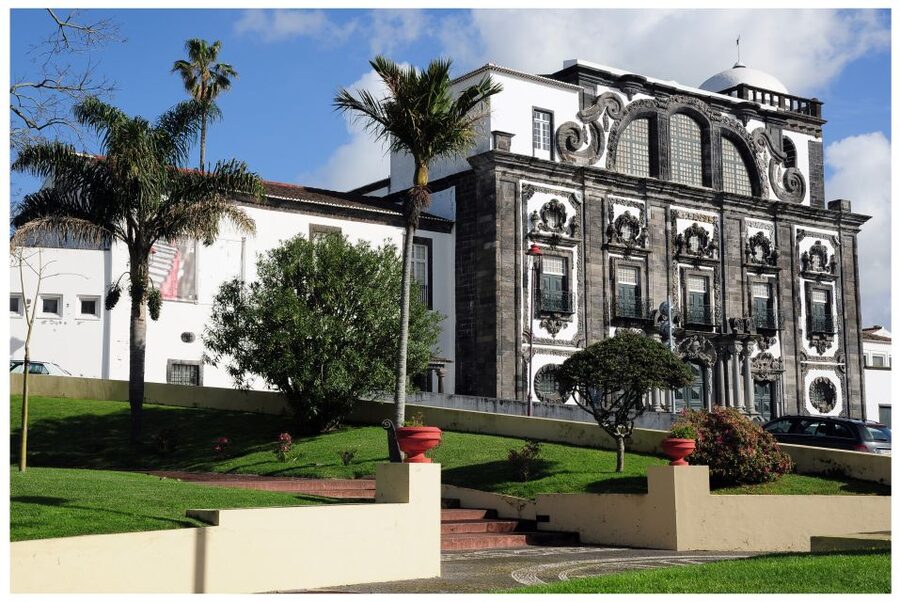
Reviewed · WALKING TOURS
Ponta Delgada: Historical Walking Tour
Ponta Delgada’s story is easiest to understand on foot, where grand churches, sea defenses, gardens, markets, and government buildings sit close together. This tour connects those pieces into one useful introduction to São Miguel’s capital, with time for local culture as well as major sights.
I like the stop at Mercado da Graça, where everyday Azorean life comes into view, and the clear link between Forte de São Brás and the Santo Cristo festivities. The tour also includes museums and gardens, not just photo stops. One thing to consider: Saturday visits may find some interiors closed, and the quality of the experience depends heavily on your guide’s English and presentation style.
Key points to know before booking

- Three hours on foot: The route covers central Ponta Delgada at a steady sightseeing pace.
- A useful first-day orientation: Markets, churches, museums, gardens, theaters, government buildings, and the waterfront history all fit into one tour.
- Local culture is central: Mercado da Graça, the Carlos Machado Museum, and Mercado CORES help place the city’s traditions in daily life.
- A strong religious and political thread: Expect discussion of the Santo Cristo celebrations, Azorean autonomy, and local religious heritage.
- Wheelchair accessible: The activity is designed as an accessible walking tour, though interior access may vary by opening hours.
- Several language choices: Guides are available in English, Portuguese, Spanish, and Scots Gaelic.
Why this walking tour works as a first look at Ponta Delgada
At $41 per person, this is priced as a guided city orientation rather than a quick stroll past the main monuments. You get three hours with a guide, entry to the listed attractions, and personal accident and liability insurance. Lunch, hotel pickup, and drop-off are not included, so you should think of the price as paying for interpretation and access, not transport or a meal.
I like the route because it gives you several ways to read Ponta Delgada. The market shows present-day life. The churches and gardens point to faith and literature. The forts explain the city’s position in the Atlantic. The government buildings introduce the political structure of the Azores.
That variety matters. A city tour can feel thin when it lists buildings without explaining why they matter. Here, the route links culture, religion, politics, literature, and maritime history. You will not see every corner of Ponta Delgada, but you will get a workable mental map for later wandering.
The tour is also a sensible choice near the start of your stay. You can use the opening orientation to decide where to return, where to eat, and which museum or church deserves more time. If you already know central Ponta Delgada well, the value will depend more on your guide’s stories than on the route itself.
Other guided walks in Sao Miguel:
- Angra do Heroísmo: Walking Tour with Local Pastry and Coffee
★ 4.8 · 65 reviews - Lisbon: History, Stories and Lifestyle Walking Tour
★ 4.8 · 10,902 reviews - Best of Lisbon Small-Group Guided Walking Tour
★ 5.0 · 4,869 reviews
Starting beside Luís de Camões
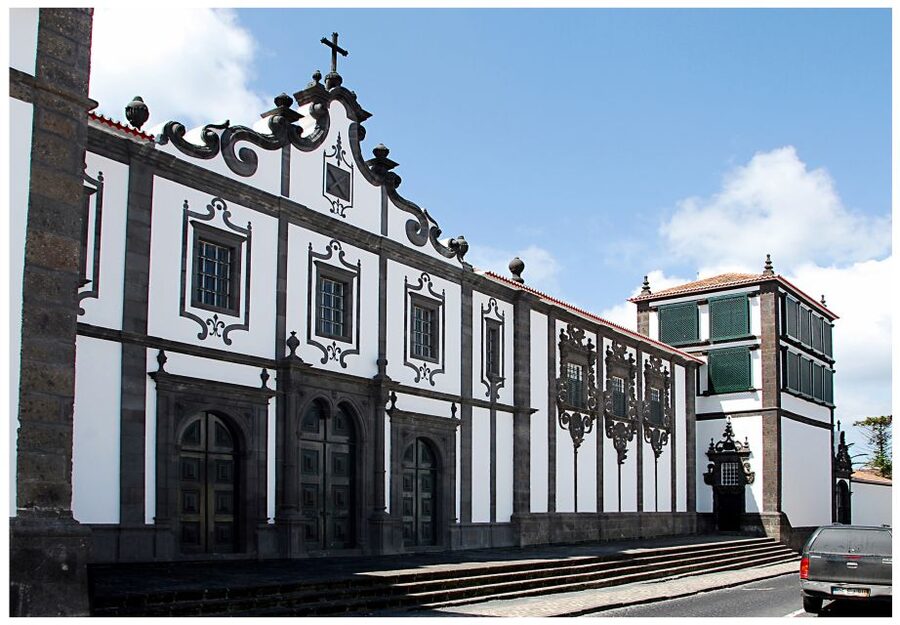
The tour begins at the Ernesto do Canto Public Library, next to a bust of Luís de Camões, one of Portugal’s best-known poets. The meeting point is on Rua Ernesto do Canto, at the former Rua da Graça address listed for the activity.
This is a fitting place to begin because the tour quickly puts literature and local identity into the picture. You are not starting at a generic hotel lobby or a distant meeting point. You begin beside a public institution and a figure tied to Portuguese culture.
Arrive ready to walk. The activity lasts three hours, and comfortable shoes, water, and comfortable clothing are specifically recommended. Since there is no pickup or drop-off, plan your own way to the library and from Mercado CORES at the end.
Mercado da Graça: start with daily Azorean life
The first major stop is Mercado da Graça, a local market filled with produce, aromas, colors, and regional food traditions. This is one of the best choices on the route because markets explain a place through ordinary life rather than formal monuments.
You can expect the guide to use the market to talk about the Azorean way of life and local products. The market is not presented as a separate food tour, so lunch is not included and you should not assume there will be a full tasting session. Still, it gives you a useful look at what people buy, sell, and value.
The market is also a practical early stop. If you want to return later for local shopping, the first visit helps you get your bearings. The tour later returns to Mercado CORES, but Mercado da Graça is the place tied most directly to food and everyday commerce.
Teatro Micaelense and the city’s cultural life
From the market, the route continues to Teatro Micaelense. This theater is presented as an important part of cultural life in the Azores and a marker of São Miguel’s artistic traditions.
The stop helps balance the religious and military sights elsewhere on the route. Ponta Delgada is not only a port city with old defenses. It also has theaters and public spaces that reflect an ongoing cultural life.
The exact amount of interior access can depend on opening arrangements. This is one reason the Saturday warning matters. If an attraction is closed, you may see the building from outside and hear the guide’s explanation instead of entering.
A few more things to do in Sao Miguel worth a look
- Douro Valley: Historical Sites, Wine Experience, Lunch & Cruise
★ 5.0 · 5,133 reviews - Lisbon: Live Fado Show with Port Wine in Historic Center
★ 4.7 · 4,166 reviews - Lisbon: Fado Show with Wine in a Historic Venue
★ 4.8 · 1,294 reviews - Porto: Historic City Center Walking Tour
★ 4.7 · 1,172 reviews
Carlos Machado Museum and the natural world
The Carlos Machado Museum brings natural history and regional culture together. This is a particularly useful stop if you want context for the islands themselves, not just the capital’s buildings.
The museum can help connect São Miguel’s setting with the wider Azorean archipelago. The tour description points to biodiversity and local traditions, giving you a chance to see how nature and culture are treated side by side.
Museum visits also slow the pace. After walking through streets and open spaces, an indoor stop gives you a different way to learn. If museums are your main reason for booking, confirm the expected opening schedule when choosing your date, especially for a Saturday tour.
Igreja do Colégio, Antero de Quental Garden, and the library
The route then moves through Igreja do Colégio, the Antero de Quental Garden, and the Public Library. This section focuses on Antero de Quental, a poet associated with Portuguese literature, and gives the city’s public spaces a literary angle.
The garden is more than a pause between buildings. It provides a setting for discussing the writer and his influence, while the library returns the tour to the role of books and education in civic life.
I like this stretch because it shows how compact central Ponta Delgada can be. Churches, gardens, literary figures, and public institutions all become part of one walk. You do not need a separate transfer between each subject, and the changing scenery helps keep the three-hour route from feeling like a lecture indoors.
The tone here may depend on your guide. One guide named Manuela has been singled out for being friendly and very well informed, while another experience raised concerns about English clarity and an emphasis on biblical stories over secular historical facts. If you prefer a strictly nonreligious history tour, ask about the guide’s approach before booking.
Political history at Padre Sena Freitas Garden and Palácio da Conceição
At Padre Sena Freitas Garden and Palácio da Conceição, the subject shifts to Azorean political autonomy and the division of power among the islands.
This is an important part of the tour because the Azores are not simply a scenic island destination. They are an autonomous region of Portugal, and the tour uses these buildings to explain how regional authority works. The setting gives the political discussion a physical anchor.
You may find this section more useful if you have already wondered why the Azores have their own regional institutions. It will not replace a specialist political history talk, but it adds context that is often missed on a basic city walk.
The gardens also give you a break from tightly packed streets. You can listen, look around, and follow the discussion without rushing from one facade to the next.
Coliseu Micaelense and Campo de São Francisco
The route continues to Coliseu Micaelense, described as one of the archipelago’s largest theaters. Like Teatro Micaelense, it keeps the focus on performance and public culture, but on a larger scale.
From there, you head to Campo de São Francisco. This open space is closely tied to the Santo Cristo festivities, described as the second-largest religious celebration in Portugal. That detail gives the square a special role in the city’s calendar and helps explain why religious traditions remain so visible in Ponta Delgada.
If you are visiting outside the festival period, you will not experience the celebration itself as part of this tour. Instead, you learn about its importance and see the places associated with it. That is still useful, especially if you notice religious processions or Santo Cristo references during the rest of your stay.
Forte de São Brás and Ponta Delgada’s sea connection
Forte de São Brás adds the military and maritime chapter. Its position reflects Ponta Delgada’s connection to the sea and its strategic importance over time.
This stop gives the tour a needed change of subject. After literature, religion, theater, and government, the fort shows why the city developed where it did and why protection mattered. The sea is not just a backdrop here. It shaped trade, defense, and the city’s wider role in the Atlantic.
The fort is also one of the more visually recognizable stops. Even if you are not drawn to military history, it helps explain the city’s position and gives the route a strong sense of place.
Portas da Cidade, the city hall, and Igreja Matriz
The final central landmarks are the Portas da Cidade, Câmara Municipal, and Igreja Matriz de São Sebastião. The Portas da Cidade are the symbolic gateway to the Azores and one of Ponta Delgada’s best-known meeting points.
Nearby, the city hall and the main parish church form the civic and religious heart of the city. Ending this portion of the walk here makes sense: you move from the city’s outer defenses and public gardens back to the central spaces where local government, worship, and daily movement meet.
This is likely the most familiar photo section of the tour, but the guide’s explanation is what makes it worthwhile. You will understand these buildings better after hearing about the market, the port, religious celebrations, political autonomy, and the city’s literary culture.
Finishing at Mercado CORES
The tour concludes at Mercado CORES, associated with Azores for All. This final stop focuses on local crafts and creative projects that celebrate Azorean identity.
It is a useful ending because it brings the tour back to present-day creativity. You begin with a public library and a traditional market, pass through historic and civic landmarks, and finish with local crafts and contemporary projects.
Do not treat the final stop as a replacement for lunch. Food is not included, and the main purpose here is to explore crafts and creative work. It can be a good place to continue browsing after the guided portion ends.
Guide quality, language, and the pace of the visit
The guide makes a major difference on this tour. The best version is warm, clear, and able to connect facts with the places around you. Manuela has been praised for being friendly and highly informed, and the tour is specifically built around local guidance rather than an audio recording.
English quality may vary. One experience raised a concern about difficult English, while another described the guide as well informed but too serious in tone. You should also know that religious stories may receive considerable attention, including biblical material. If you want a secular history lesson only, this may not be the perfect match.
The available languages are English, Portuguese, Spanish, and Scots Gaelic. Check your chosen departure carefully so you know which language will be used.
The route is listed as wheelchair accessible, which makes it a more practical option for many visitors than an uneven or stair-heavy walking experience. Still, opening hours and access inside individual attractions can change. Saturday is specifically worth treating with caution because some stops may be closed.
Is $41 a fair price?
I consider $41 reasonable if you want a structured introduction and expect to use the included attraction entries. Three hours is long enough to cover a wide range of subjects without taking your entire day.
The price is less attractive if you mainly want a casual walk outside. You are paying for the guide’s explanations, the organized route, and access to listed attractions. You still need to cover your own food and transportation to and from the walk.
The flexible booking terms also help. You can cancel up to 24 hours before the activity for a full refund, and you can reserve now and pay later. Those policies are useful when your São Miguel plans may shift.
Who should book this Ponta Delgada walk?
I would choose this tour if you are visiting Ponta Delgada for the first time, want local context, and like moving between different kinds of sights. It suits visitors who want a mix of market life, museums, gardens, churches, literature, politics, theater, and military history.
It is also a practical choice if accessibility matters, or if you prefer learning from a local guide rather than reading signs on your own.
I would hesitate if you want a fast, lighthearted stroll with little religious content. I would also check the date carefully if museums and interiors are essential, since Saturday closures can reduce what you see inside.
Should you book it?
Book this tour if you want Ponta Delgada explained as a living city, not just photographed as a collection of handsome buildings. The strongest features are the broad route, the market and museum stops, the discussion of Santo Cristo and Azorean autonomy, and the chance to hear a local guide such as Manuela.
Skip it if you need a strictly secular tour, guaranteed interior access at every stop, or a highly energetic presentation. For most first-time visitors, though, the three-hour route offers solid value and a helpful introduction to the capital of São Miguel.
FAQ
How long does the Ponta Delgada Historical Walking Tour last?
The tour lasts three hours.
Where does the tour begin?
It begins at the Ernesto do Canto Public Library, next to the bust of Luís de Camões.
Where does the tour finish?
The tour finishes at Mercado CORES, associated with Azores for All.
What is the price?
The price is $41 per person.
What is included in the tour?
A guide, entry to the attractions listed for the tour, and personal accident and liability insurance are included.
Is lunch included?
No. Lunch is not included.
Are pickup and drop-off included?
No. Pickup and drop-off are not included.
Which languages are available?
The live tour guide may be available in English, Portuguese, Spanish, or Scots Gaelic.
Is the walking tour wheelchair accessible?
Yes. The activity is listed as wheelchair accessible.
What should I bring?
Bring comfortable shoes, water, and comfortable clothing.
Can I cancel the booking?
Yes. You can cancel up to 24 hours in advance for a full refund.
Can I reserve now and pay later?
Yes. The tour offers a reserve-now-and-pay-later option.
Just added in Sao Miguel
- Terceira: Whale and Dolphin Watching in a Zodiac Boat★ 4.8 · 230 reviews
- Terceira: Half-Day Dolphin and Whale Watching Tour★ 4.6 · 219 reviews
- Island Van Tour (Full Day) | Terceira Island★ 4.9 · 176 reviews
- Terceira: Half-Day Island Tour with Cheese Tasting★ 4.4 · 106 reviews
- Snorkeling Tour- Vila Franca do Campo Islet★ 4.7 · 220 reviews
- São Miguel: Sete Cidades and Lagoa do Fogo Full-Day Tour★ 4.8 · 65 reviews
- Sete Cidades: E-Bike Rental with GPS and Map Tour★ 4.7 · 179 reviews
- Ponta Delgada: Full-Day Sete Cidades 4X4 Tour with Lunch★ 4.9 · 50 reviews
Walking Tours, compared.
Best of Lisbon Small-Group Guided Walking Tour
Read our review →
Porto Walking Tour, Lello Bookshop, River Cruise and Cable Car
Read our review →
Best of Lisbon Walking Tour: Rossio, Chiado & Alfama
Read our review →
Experience Porto’s Charm: 3-Hour Guided Walking Tour
Read our review →
Browse the lists this tour appears in