
Reviewed · TOURS IN LISBON
Lisbon: National Tile Museum Entry Ticket
Lisbon’s National Tile Museum is much more than a room full of pretty blue-and-white squares. Inside the former Madre de Deus Convent, you’ll follow Portugal’s azulejo tradition from the second half of the 15th century to the present, then see the art in its original surroundings: a church, cloister, chapel, sacristy, and high choir.
I like the clear chronological route, which makes it easy to see how styles and techniques changed. I also like the surprise of the building itself. The tiles are the main reason to come, but the painted church and carved giltwood interiors may be your most memorable discoveries.
The main drawback is practical: this is a self-guided museum visit, not a guided tour, and some displays have limited explanations. The museum can also feel warm, with limited ventilation on hot days. A ticket costs $11, which is fair if you give the collection at least 90 minutes.
Key points to know before you go
- Follow Portuguese tile-making across six centuries, beginning with materials and production methods before moving through a chronological display.
- Look beyond the azulejos, including the former convent’s church, sacristy, Mannerist cloister, Chapel of Saint Anthony, and high choir.
- Allow 90 minutes to two hours if you want time for the main galleries, architectural details, gardens, and café.
- Expect a self-guided visit, with no guide included and no skip-the-line access promised by the ticket details.
- Use the museum as a rainy-day plan, though hot weather can be uncomfortable inside.
- Buy only if your schedule fits the hours, since the museum closes from 1:00 pm to 2:00 pm and does not open on Mondays.
Why Lisbon’s tile museum is worth your time
Azulejos are part of Lisbon’s visual identity, but you can easily admire them without understanding how they were made or how their designs developed. This museum gives you that missing context.
The collection begins with the materials and techniques used to manufacture tiles. That short introduction matters. Instead of seeing each panel as an isolated decoration, you can watch the craft change over time, from early examples to later painted scenes and modern work.
The display covers decorative ceramic tiles from the second half of the 15th century to the present day. It also includes ceramics, porcelain, and faience dating from the 17th to the 21st century. You get a broader view of Portuguese decorative art rather than a narrow collection devoted only to one tile style.
I especially like the chronological arrangement. You do not need a specialist’s background to understand the basic progression. The explanations connected to the different monarchies also help you follow the political and artistic changes without turning the visit into a lecture.
This is not a huge museum that requires a full day. Most people should plan on about an hour and a half, while art lovers may want closer to two hours. That makes it a useful stop between other Lisbon plans rather than a commitment that takes over your day.
A few more things to do in Lisbon worth a look
- Lisbon: Luz Stadium Tour & SL Benfica Museum Ticket w/Scarf
★ 4.7 · 3,264 reviews - Porto: Cálem Cellar Tour, Interactive Museum & Wine Tasting
★ 4.5 · 4,113 reviews - FC Porto: Museum & Tour
★ 4.6 · 2,826 reviews
Entering the former Madre de Deus Convent
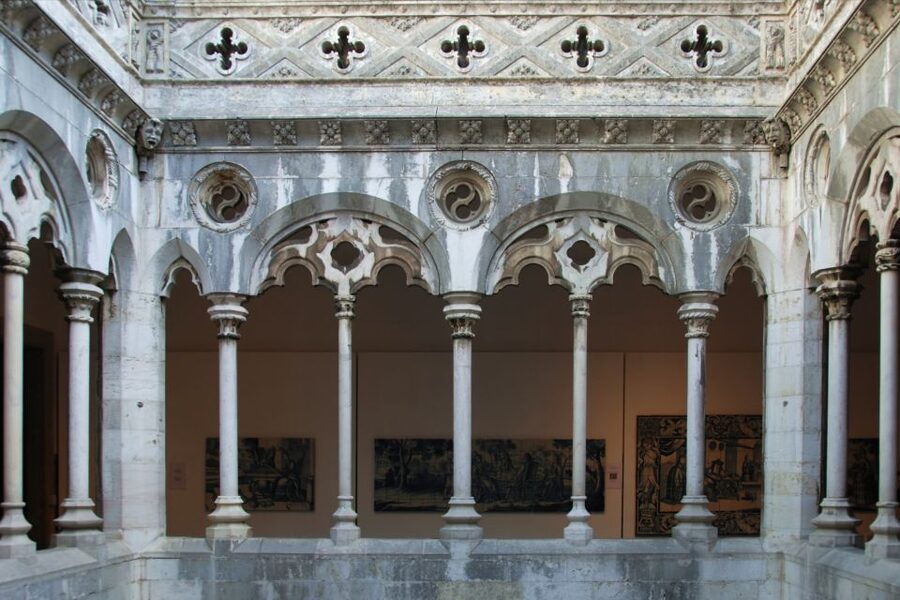
The museum occupies the former Convent of Madre de Deus, founded by Queen D. Leonor in 1509. That setting changes the experience from a standard gallery visit into a look at a historic religious complex that has been altered over several centuries.
The building went through different construction campaigns, so the architecture does not feel like a single period frozen in time. You will find a 16th-century Mannerist cloister, a church decorated with paintings and tilework, a sacristy with a Brazilian wood display cabinet, carved wooden frames, and paintings.
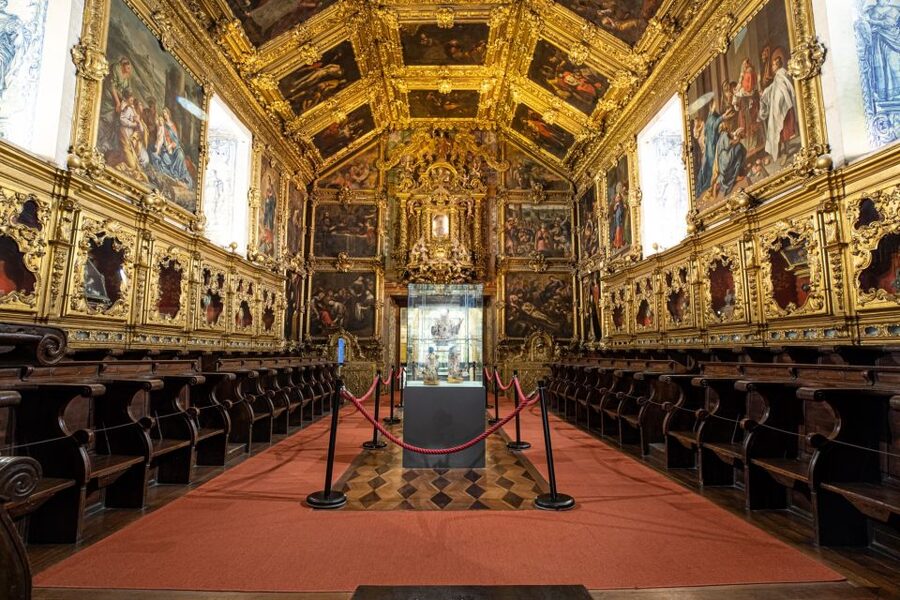
The high choir is another important stop. Its carved giltwood decoration gives you a strong sense of the elaborate religious interiors that once shaped Portuguese worship. You might spend as much time looking upward at the ceiling and woodwork as you do studying the tile panels.
The Chapel of Saint Anthony has an 18th-century Baroque decoration and several canvases by André Gonçalves. It is a useful reminder that the museum is not simply displaying tiles inside a neutral container. The collection and the building explain one another.
I recommend slowing down when you leave the main chronological galleries. The church, chapel, cloister, and sacristy are not side attractions. They show how azulejos worked as part of a larger interior, alongside painting, carved wood, gilding, and religious architecture.
Following the collection from the 15th century onward
The permanent exhibition starts with the basics: what tiles are made from and how different techniques shape the final object. This is the most practical part of the visit, especially if you have admired tiles across Lisbon but never thought about their production.
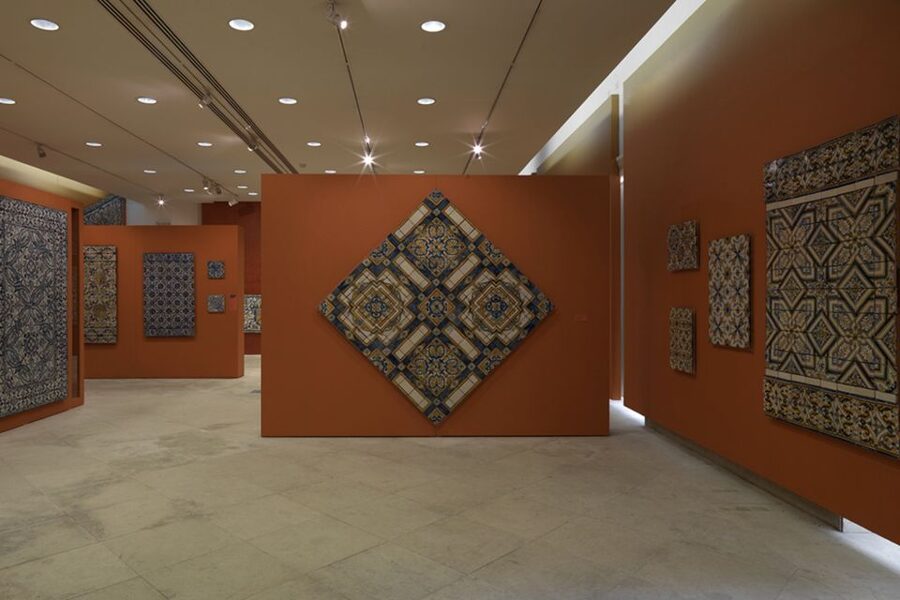
From there, the route follows a chronological order. You will see traditional Portuguese tilework from the 15th century and later examples that show changes in color, subject, pattern, and use.
The museum includes both individual tiles and larger decorative displays. Large scenes help you understand how azulejos can cover walls and turn architecture into a picture surface. Smaller pieces let you compare designs and techniques more closely.
The collection includes traditional and contemporary work, so the final rooms bring the story into the modern era. This prevents the visit from feeling like a museum devoted only to old religious decoration. You can see how the tradition continued and changed rather than ending in the past.
One highlight is the Lisbon city display on the upper floor. It gives you a different way to read the city, especially after seeing tilework in churches and historic interiors. Give this section time instead of rushing toward the exit. It helps connect the museum’s objects with the place you are visiting.
The exhibits do not all provide extensive details beside every piece. If you want a more guided explanation, an audio tour is available, but you need to download an app and bring your own headphones. That is useful to know before arriving. Do not assume the ticket includes a guide or a fully narrated tour.
The church and chapel are part of the main event
Some museum visitors arrive expecting a technical display and are surprised by the church and chapel. I would plan for that surprise rather than treat these rooms as optional.
The church contains notable sets of paintings and tiles. Here, the relationship between tile, image, ceiling, and architecture becomes much easier to understand. A flat tile panel in a gallery can be beautiful, but a complete interior shows why this art became so important in Portugal.
The Chapel of Saint Anthony brings a different mood through its 18th-century Baroque decoration. The number of canvases by André Gonçalves adds another layer to the visit. You are not simply comparing tile patterns. You are seeing how several art forms were brought together in a religious setting.
The sacristy has its own visual appeal, especially the Brazilian wood display cabinet and carved wood frames. The high choir is similarly ornate, with carved giltwood details that reward a pause.
Some objects and religious displays may feel unusual if you are not used to church museums. That is part of the character of the place, but it also means the museum is not a simple, brightly lit art gallery. You should expect a mix of art, architecture, religious history, and decorative craft.
Same base, a different kind of day out:
- Lisbon City Center Tour – The Unmissable Lisbon
★ 5.0 · 22,234 reviews - Lisbon: Sintra, Pena, Regaleira, Cabo da Roca & Cascais
★ 4.7 · 19,656 reviews - Lisbon: Jerónimos Monastery Entrance Ticket
★ 4.1 · 14,164 reviews - Lisbon: History, Stories and Lifestyle Walking Tour
★ 4.8 · 10,902 reviews
How long to stay and how to plan the day
The ticket is valid for one day, but the museum is best treated as a single focused visit. You do not need to rush through it, yet the published opening hours require some planning.
The museum opens Tuesday through Sunday from 10:00 am to 1:00 pm, then from 2:00 pm to 6:00 pm. Last entry is at 5:30 pm. It is closed on Mondays, January 1, Easter Sunday, May 1, June 13, and December 25.
That midday closure is easy to miss. If you arrive shortly before 1:00 pm, you may not have enough time for a relaxed visit before the building closes for its break. I would aim for a morning arrival or enter after 2:00 pm.
The ticket is not described as skip-the-line admission, so you should not buy it expecting guaranteed priority entry. Have the ticket ready at the main entrance and show it when you arrive. Bring a passport or ID card, as requested in the practical information.
Wear comfortable shoes. The former convent includes several rooms and exhibition areas, and you will get more from the visit if you can move at an easy pace. Bring water, especially in warm weather, since ventilation can be limited inside.
The museum is wheelchair accessible. The activity begins and ends at the museum entrance, with no transport or guided route included.
The café, gardens, and a useful break
A café on site makes the museum easier to fit into a half-day plan. It has garden seating, and a short stop there can add breathing room after the indoor galleries.
The café is also a practical reason not to rush straight out after the final display. You can use it to review what you have seen, take a break, or have a light bite. It is not part of the museum ticket, so plan to pay separately.
The gardens add another pleasant pause. They do not replace the main collection, but they make the former convent feel like a place rather than just an exhibition venue.
If you want to combine this visit with another attraction, the aquarium area is described as a short Uber ride away. That can work as a same-day pairing, though you should check your own timing carefully because the museum’s midday closure and the aquarium schedule may not line up.
Is the $11 ticket good value?
At $11 per person, this is a reasonably priced museum visit, particularly if you care about art, architecture, or Portuguese culture. You are paying for more than access to a tile collection. The ticket also brings you into a former convent with a decorated church, cloister, chapel, sacristy, high choir, and gardens.
The value depends on how you visit. If you spend only 30 minutes looking at a few blue-and-white panels, the price may feel less convincing. If you follow the chronological route, study the production introduction, visit the church and chapel, and allow time for the Lisbon display, the cost feels justified.
The ticket is non-refundable, so check the opening days and hours before booking. Since the experience is valid for one day rather than tied to a guided departure, it offers some flexibility within that day, but it does not guarantee that you can enter immediately or bypass a line.
The strongest reason to pay for this museum is that it explains something you will keep seeing throughout Lisbon. Afterward, tiled façades and decorative panels around the city become easier to read. You begin noticing the difference between patterns, painted scenes, and periods instead of treating every azulejo as the same.
Who will enjoy this museum most?
I would recommend it to anyone who likes art, historic buildings, religious interiors, or the details behind everyday city design. It is also a good choice if you want a quieter Lisbon attraction away from the busiest central sights.
Families can do well here because the visit is short enough to manage, and the variety keeps it from feeling like a single repetitive display. Even teenagers who are not eager to visit a tile museum may find the large scenes, unusual interiors, and city display more engaging than expected.
Art lovers should allow extra time for the church, chapel, ceilings, and carved wood. You will likely want the audio tour, but remember that it requires an app and personal headphones.
This may not be the best choice if you want a guided experience, fast entry, or a museum with detailed notes beside every object. It is also less comfortable during very hot weather because ventilation can be limited.
Should you book the National Tile Museum?
Yes, if you want to understand one of Portugal’s most recognizable art forms and see it in a real historic setting. The collection is broad, the building adds real substance, and $11 is fair for a visit lasting around 90 minutes to two hours.
Book it when you have a free morning or afternoon, not as a rushed stop squeezed between fixed appointments. Check the closure dates, remember the 1:00 pm to 2:00 pm break, and do not assume the ticket gives skip-the-line access.
Bring comfortable shoes, water, and headphones if you plan to use the audio tour. Give equal attention to the tiles and the former convent, and this modestly priced museum becomes one of Lisbon’s more rewarding art stops.
FAQ
Where is the National Tile Museum?
It is in Lisbon District, Portugal, inside the former Convent of Madre de Deus.
How much does admission cost?
The ticket costs $11 per person.
How long is the ticket valid?
The ticket is valid for one day.
Is the ticket skip-the-line admission?
No. The activity information specifically says this is not a skip-the-line entry ticket.
What are the museum’s opening hours?
The museum is open Tuesday through Sunday from 10:00 am to 1:00 pm and from 2:00 pm to 6:00 pm. Last entry is at 5:30 pm.
When is the museum closed?
It is closed on January 1, Easter Sunday, May 1, June 13, December 25, and Mondays.
What can I see besides tiles?
The museum includes ceramics, porcelain, and faience, as well as a 16th-century Mannerist cloister, decorated church, sacristy, high choir, Chapel of Saint Anthony, paintings, carved wood, and gardens.
Is the museum wheelchair accessible?
Yes, the activity information states that it is wheelchair accessible.
What should I bring?
Bring your passport or ID card, comfortable shoes, a camera, water, and comfortable clothes.
Is an audio guide included?
No audio guide is listed as included. An audio tour may require you to download an app and bring your own headphones.
Just added in Lisbon
- From Lisbon: Horseback Riding on Comporta Beach★ 4.7 · 167 reviews
- Lisbon: City Highlights Segway Tour★ 4.9 · 422 reviews
- Lisbon: Street Art Tuk Tuk Tour★ 4.9 · 372 reviews
- Lisbon: Segway Medieval Tour of Alfama and Mouraria★ 4.9 · 420 reviews
- LISBON Street Art Tour★ 5.0 · 371 reviews
- Évora and Monsaraz with Regional Wine Tasting from Lisbon★ 4.5 · 229 reviews
- Évora and Megaliths Full-Day Tour from Lisbon★ 4.7 · 456 reviews
- Arrabida and Sesimbra Small-Group Day Trip from Lisbon with Wine Tasting★ 5.0 · 494 reviews
Tours in Lisbon, compared.

Lisbon City Center Tour – The Unmissable Lisbon
Read our review →
Sintra, Pena, Regaleira, Cabo da Roca & Cascais
Read our review →


Sunset Boat Party Cruise with DJ and Open Bar
Read our review →
Pena Palace, Sintra, Cabo da Roca, & Cascais Daytrip
Read our review →

True 4Hour Private Tuk Tuk Tour: Discover Lisbon with a Local!
Read our review →Browse the lists this tour appears in