

Reviewed · TOURS IN LISBON
Lisbon: Lisbon Classical Nights Concert
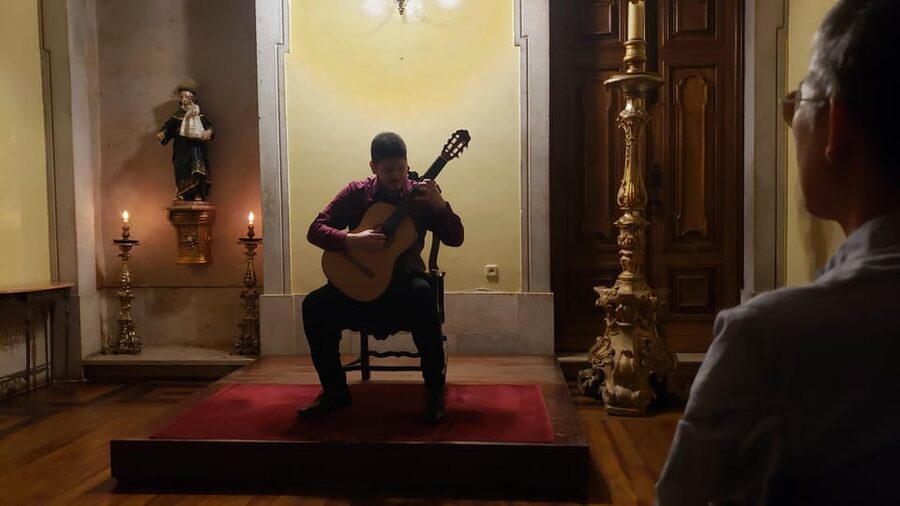
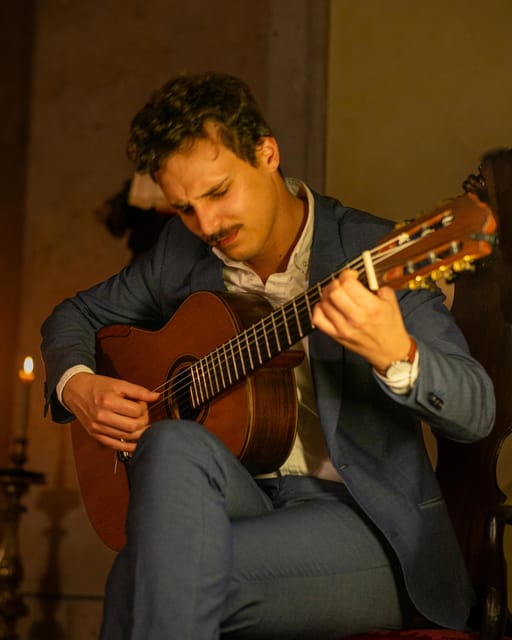
The unusual part of Lisbon Classical Nights is how close you sit to the performer. In a private area of Saint Paul’s Church, a small audience can watch the guitarist’s hands, hear the story behind each piece, and enjoy music in a setting that feels far removed from Lisbon’s busy streets. I especially like the 20-person limit and the mix of Portuguese composers with better-known classical guitar works.
The main consideration is the short running time. You get about 50 minutes of music, not a full evening concert, and the room’s intimate style may not suit you if you prefer a large hall or a formal orchestra. Still, at $23, this is a strong pick for an easy cultural stop after dinner.
Key Points Before You Book
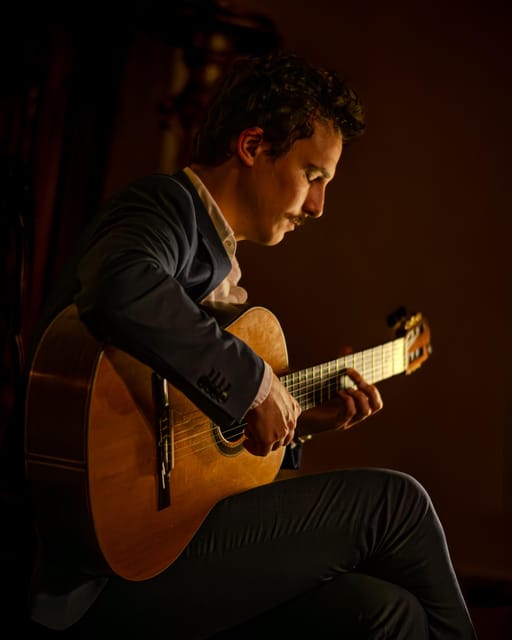
- Private church setting: The concert takes place in an area of Saint Paul’s Church not open to regular public access.
- Only 20 seats: The small audience puts you close enough to see the guitarist’s technique.
- João and other accomplished players: Performers explain the music and its background in English and Portuguese.
- Portuguese music at the center: The program can include Portuguese, Spanish, Brazilian, and Argentinian works, along with classical favorites and original music.
- Fifty minutes at 7 PM: Shows run Tuesday through Saturday, making this easy to fit into a Lisbon evening.
- Ages eight and older: The experience is aimed at adults and older children, not young families.
A Quiet Concert Inside Saint Paul’s Church

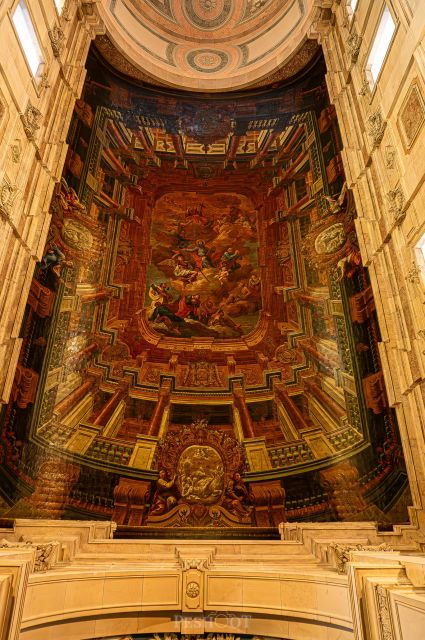
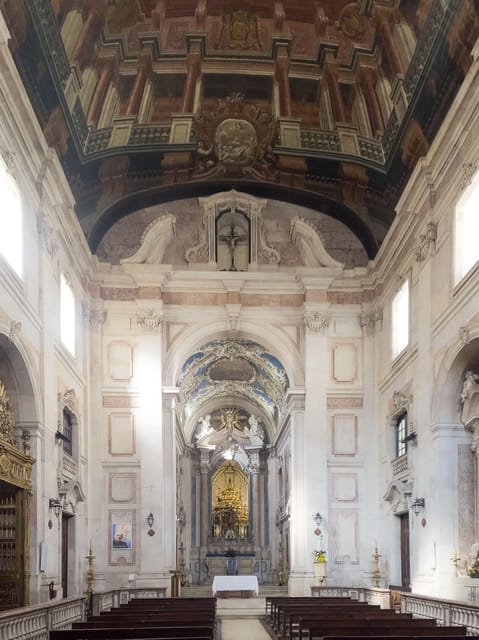
Lisbon Classical Nights begins at the main entrance of São Paulo’s Church. From there, you visit the church before moving into a private area for the performance. That detail matters: this is not simply a guitarist placed in a busy tourist venue. The concert uses a part of the church that regular visitors do not usually see.
Saint Paul’s Church sits in a square shaped by Lisbon’s rebuilding after the 1755 earthquake. Its Pombaline design includes rectangular windows, two bell towers, and a central section topped by a triangular pediment. The church’s story also reaches back to the age of the Discoveries, when foreign merchants and new residents helped change the neighborhood.
You do not need to be an architecture expert to appreciate the setting. The church gives the evening a sense of place before the first note is played. The move from the city streets into a historic religious building also helps the concert feel like a small Lisbon discovery rather than a standard entertainment booking.
The square itself has changed over time. It once served as a market, and in 1849 it received a large limestone fountain. These details give the church a useful backdrop. You are not just paying for a short music recital. You are also spending time in an old Lisbon neighborhood with a visible connection to the city’s rebuilding and commercial past.
A few more things to do in Lisbon worth a look
- Porto: Live Fado Concert with Glass of Tawny Port Wine
★ 4.8 · 2,535 reviews - Porto: Fado Concert in Porto’s Most Beautiful House
★ 4.9 · 1,201 reviews - Porto: The highest-rated traditional fado concert (downtown)
★ 4.8 · 1,130 reviews
What the 50-Minute Program Feels Like
The performance lasts about 50 minutes, so think of it as a focused concert rather than a long night at the opera. That length works well if you want to add music to an evening without giving up a full dinner or a late walk through Lisbon.
The program celebrates major classical guitar composers and includes less familiar Portuguese works. Specific programs can vary, but the music may also reach into Spanish, Brazilian, and Argentinian traditions. One performance included mainly Portuguese and Brazilian classical guitar pieces, while another included classical and more modern music, along with an original composition.
That variety is useful if you enjoy guitar but do not have a long list of composers in mind. The performer does not simply play one piece after another. Pieces are introduced with explanations about the music and, at times, Portuguese culture and history. João, one of the featured guitarists, has been praised for making those introductions clear in both Portuguese and English.
I like this format because it gives your ears a little help. Classical guitar can be subtle, especially when you are hearing unfamiliar composers. A short explanation can show you what to listen for, why a piece matters, or how it connects to Portugal and the wider Iberian and South American tradition.
The program also leaves room for personality. João has been described as personable and engaging, and the small format allows the performer to speak directly to the audience. This is not a silent recital where the musician disappears behind the instrument. The spoken introductions are part of the experience.
Why the Small Audience Matters
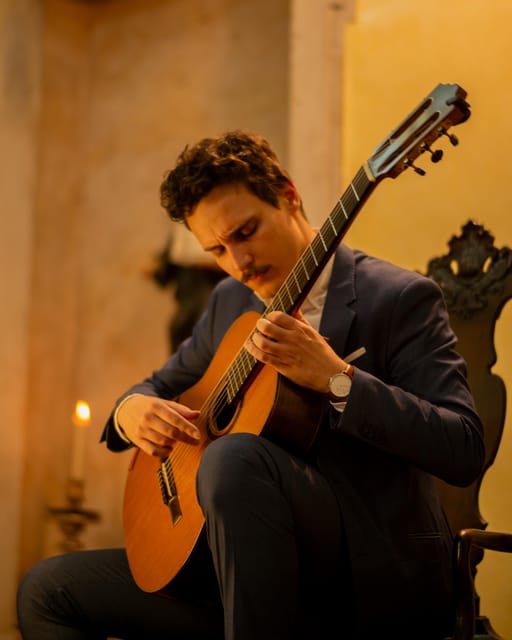
The audience is limited to 20 people. That is one of the strongest reasons to choose this concert over a larger music venue.
In a big hall, you hear the music from a distance. Here, you sit close to the performer and may be able to watch the fingers move across the strings. That visual connection helps you understand the control needed for classical guitar, especially during complex passages.
The small room also makes the spoken parts more natural. The guitarist can address the people in front of him instead of speaking to a distant crowd. The result is closer to a private recital than a major concert production.
There is a tradeoff. A small setting means the experience depends heavily on the individual performer and the mood of the group. If you want grand staging, a full ensemble, or a large audience sharing the excitement, this will feel modest. The appeal is the lack of spectacle. You come for the player, the instrument, and the room.
The intimate format has also been useful for people who want to see the technique up close. Several descriptions of the event point to the chance to watch the guitarist’s hands, which is difficult to do from the back of a conventional concert hall. For an instrument as physical as the classical guitar, that close view adds real value.
The Musician’s Explanations Add Context
A strong feature of Lisbon Classical Nights is the conversation around the music. The guitarist introduces each piece, often in English and Portuguese, and connects the work to its composer or cultural setting.
I would not book this expecting a formal lecture. The format is lighter and more personal. You hear a piece, receive some background, and then listen again with a better sense of what you are hearing. That balance keeps the 50-minute program moving.
Language should not be a major concern for English speakers. The hosts and performers can work in English, Portuguese, or Spanish. The event is not described as a fully translated lecture, but the performer’s English explanations have been clear enough for international audiences.
This is also a good choice if you want more than pleasant background music. The introductions give the concert a local connection. Portuguese guitar culture is not treated as decoration. It forms a central part of the program, alongside music from nearby Spain and from Brazil and Argentina.
The event can also introduce you to composers you might not encounter in a general classical concert. That is valuable for curious listeners, but it means the program may not consist entirely of famous pieces. If you need every selection to be familiar, this may be less predictable than a standard greatest-hits recital.
Same base, a different kind of day out:
- Lisbon City Center Tour – The Unmissable Lisbon
★ 5.0 · 22,234 reviews - Lisbon: Sintra, Pena, Regaleira, Cabo da Roca & Cascais
★ 4.7 · 19,656 reviews - Lisbon: Jerónimos Monastery Entrance Ticket
★ 4.1 · 14,164 reviews - Lisbon: History, Stories and Lifestyle Walking Tour
★ 4.8 · 10,902 reviews
The Church Adds More Than Atmosphere
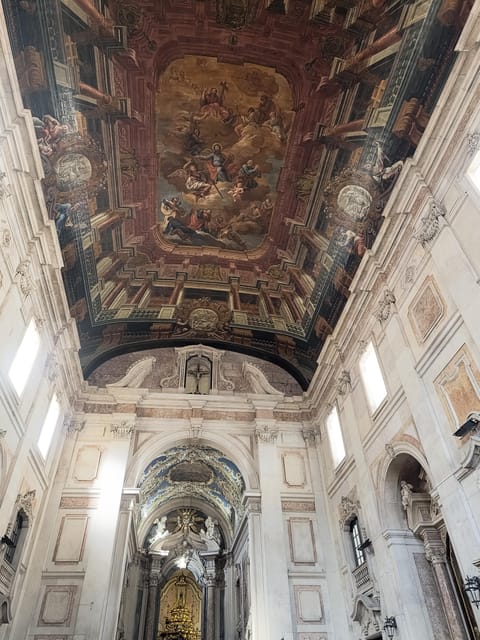
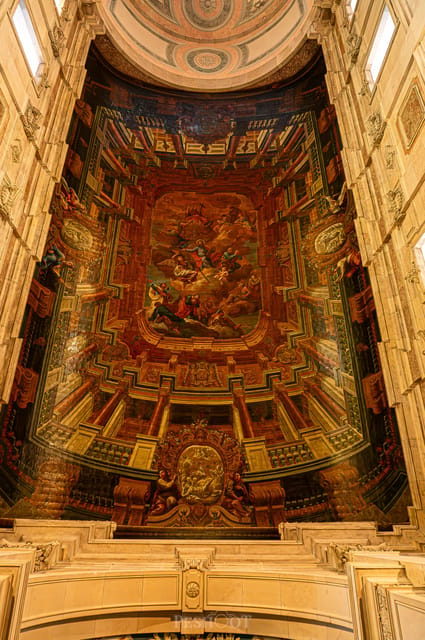
Saint Paul’s Church is an important part of the experience, not just a convenient room with chairs. Its Pombaline design reflects Lisbon’s recovery after the 1755 earthquake, when the area rebuilt quickly because of its commercial importance and the influence of the Marquis of Pombal.
The church faces east, with its main facade framed by two bell towers. Rectangular windows and the triangular pediment give it the ordered look associated with Pombaline rebuilding. The surrounding square adds another layer, with its old market role and limestone fountain from 1849.
The concert takes place in a private part of the church. That means the event gives you access to a quieter interior space while preserving the main point of the venue: you are listening to live music inside a working historic building.
I find the setting especially useful at the 7 PM start time. You can spend the day walking Lisbon, then step inside the church as evening arrives. The contrast between the busy streets and the quiet performance room is part of the appeal, and it does not require a long excursion or complicated transport plan.
The church is not presented as a concert hall with theatrical lighting or elaborate staging. Expect a simple, intimate presentation. If you value architecture, history, and close contact with the performer, the room adds a great deal. If your priority is perfect concert-hall production, keep your expectations modest.
Is $23 Good Value for Lisbon?
At $23 per person, the price is reasonable for a short cultural experience in central Lisbon. You receive entry to the church, a visit to the building, and a 50-minute concert in an area not normally open to the public.
The value comes from the combination. A 50-minute recital alone might not feel like a major night out, but the church visit and the limited audience make this more distinctive than a casual bar performance. You also avoid committing an entire evening to a formal concert.
I would compare it with the cost of other evening entertainment in Lisbon. For $23, you get a scheduled performance, a dedicated musician, a historic venue, and a program connected to Portuguese music. That is a fair deal if you enjoy live music and want something more personal than a large tourist show.
The price is less convincing if you are only looking for a quick photo stop or free church access. The main product is the performance. You should be ready to sit quietly and give the guitarist your full attention for nearly an hour.
The reserve-now, pay-later option can help if your evening plans are still changing. Free cancellation is available up to 24 hours before the start time for a full refund. Since the audience is capped at 20 people, booking ahead is sensible if the date matters to you.
Timing, Languages, and Who Should Go
Shows run Tuesday through Saturday at 7 PM. That makes the concert easy to place between sightseeing and dinner, though you should allow enough time to reach the main entrance of São Paulo’s Church without rushing.
The host or greeter may speak English, Portuguese, or Spanish. The performances can include explanations in English and Portuguese, with the language mix depending on the person performing.
This experience suits you best if you:
- Enjoy classical guitar or want an approachable introduction to it.
- Prefer a small cultural event to a large staged show.
- Like hearing the stories behind the music.
- Appreciate historic churches and old Lisbon settings.
- Want a 50-minute activity that fits neatly into an evening.
- Are comfortable with a quiet, no-frills presentation.
It is less suitable for children under eight, who are specifically not admitted. It may also disappoint you if you want fado singers, a full orchestra, or a long concert with several musicians. This is a solo-guitar experience focused on closeness and concentration.
Practical Tips for a Better Evening
Arrive at the main entrance of São Paulo’s Church and look for the host or greeter. The meeting point is clearly specified as the church’s main entrance, not the private concert room, so begin there.
Try to arrive with enough time to settle before the music begins. With only 20 seats, the room is small, and the close layout is part of the design. A seat near the performer can make it easier to follow the hands and facial expressions, though the limited audience means no seat should feel far away.
Keep the length in mind when planning dinner. The 7 PM start and 50-minute duration leave room for a meal before or after, but the best choice depends on your schedule and the availability of nearby restaurants. The activity itself does not include food or a longer city tour.
This is also a good rainy-evening plan. The church provides an indoor cultural stop, and the music gives you something focused to do after a day of walking. The experience does not depend on views, weather, or outdoor conditions.
Finally, listen to the introductions. They are not filler between pieces. They explain the program and can include Portuguese history and culture, which helps you hear the music as part of a wider tradition.
Should You Book Lisbon Classical Nights?
I would book this if you want a personal, affordable music experience in Lisbon and like the idea of sitting close to a skilled guitarist. The strongest reasons are the 20-person audience, the private church room, the Portuguese focus, and the performer’s explanations in English and Portuguese.
I would skip it if you need a large-scale production, a famous full ensemble, or more than 50 minutes of music. The evening is deliberately simple. Its success depends on your interest in the instrument and your appreciation for a quiet historic setting.
For most music-loving visitors, $23 is a sensible price for a short concert with a strong sense of place. It gives you a different side of Lisbon, one built around strings, stories, and a small room inside an old church.
FAQ
Where does Lisbon Classical Nights take place?
The concert takes place at Saint Paul’s Church, also called São Paulo’s Church, in the Lisbon District of Portugal.
What is the meeting point?
Meet at the main entrance of São Paulo’s Church.
How long does the concert last?
The concert lasts 50 minutes.
What time does it start?
Lisbon Classical Nights takes place at 7 PM from Tuesday through Saturday.
How many people can attend each concert?
The audience is limited to 20 people.
What type of music is performed?
The program focuses on classical guitar, including works by Portuguese composers and music from Portuguese, Spanish, Brazilian, and Argentinian traditions. Some performances may also include modern works or an original composition.
Are the pieces explained during the performance?
Yes. The performers introduce the pieces and may provide cultural or historical context. Explanations can be given in English and Portuguese.
Is the experience suitable for children?
Children under eight are not permitted.
Can I cancel my booking?
You can cancel up to 24 hours in advance for a full refund. A reserve-now, pay-later option is also available.
Just added in Lisbon
- Half day Spa Water Therapy experience at THE SPA at Corinthia Lisbon★ 4.5 · 51 reviews
- Lisbon Cinematic Photoshoot with Top-Rated Photographer★ 5.0 · 76 reviews
- Central Lisbon E-Bike Tour★ 5.0 · 168 reviews
- Small-Group Sailing Tour on the Tagus River from Lisbon★ 5.0 · 78 reviews
- Lisbon Sailing Catamaran Public Cruise with drinks★ 5.0 · 304 reviews
- Alfama and the Castle of Saint George Skip the line Tour★ 5.0 · 53 reviews
- City Centre Run in Lisbon★ 5.0 · 164 reviews
- Boat tours in the Óbidos Lagoon★ 5.0 · 100 reviews
Tours in Lisbon, compared.
Lisbon City Center Tour – The Unmissable Lisbon
Read our review →
Sintra, Pena, Regaleira, Cabo da Roca & Cascais
Read our review →

Sunset Boat Party Cruise with DJ and Open Bar
Read our review →
Pena Palace, Sintra, Cabo da Roca, & Cascais Daytrip
Read our review →

True 4Hour Private Tuk Tuk Tour: Discover Lisbon with a Local!
Read our review →Browse the lists this tour appears in