

Reviewed · LISBON NEIGHBOURHOOD WALKS
Lisbon: Belem Walking Tour with Jeronimos Monastery Entry
Jerónimos Monastery is the star here: a vast Manueline monument where carved stone, royal tombs, and Portugal’s seafaring past come together. With entry tickets ready and a separate access queue, you can spend your morning looking up at the cloisters instead of watching the public line crawl forward.
I like the early start and the way the tour links the monastery to the Discoveries Monument and Belém Tower. I also like the stop for an original Pastel de Belém, made from the old monastery recipe. The main drawback is clear: Belém Tower is closed for restoration, so you will see it from the outside rather than climb inside.
Key points to know before booking
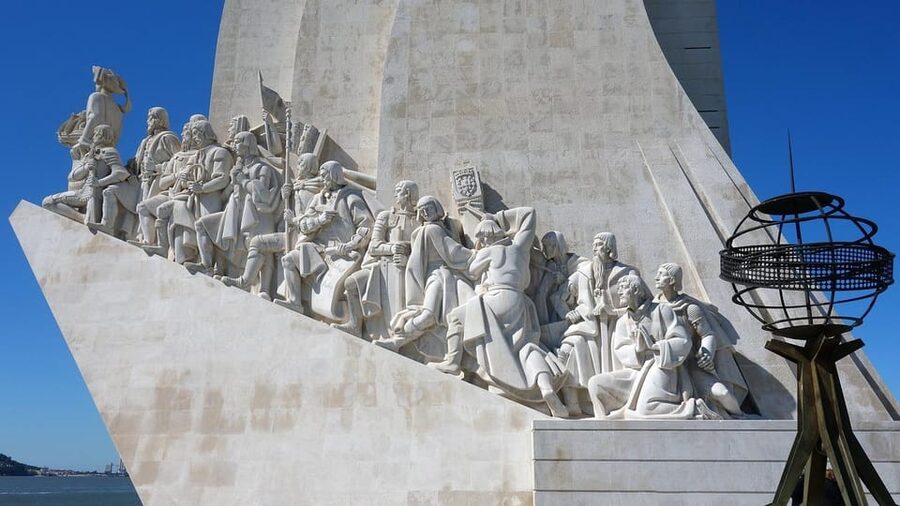
- Jerónimos entry is included: Your guide arrives with tickets already purchased, helping you avoid the standard ticket queue.
- The monastery gets the most time: Expect about 90 minutes for the cloisters, church, tombs, and Manueline details.
- The Pastel de Belém stop is part of the experience: You try the famous custard tart at the historic Belém bakery.
- The route connects three major sights: You walk from the monastery through Empire Square Garden to the Discoveries Monument and Belém Tower.
- Belém Tower is exterior-only for now: Restoration work prevents interior visits.
- The tour suits history lovers who can walk: It lasts three to three and a half hours and is not suitable for wheelchair users or people with mobility impairments.
Why Jerónimos Monastery is worth seeing with a guide
You can enter Jerónimos Monastery alone, but the building gives you very little help along the way. Small signs do not explain every carved rope, globe, saint, royal emblem, or maritime reference. A good guide turns a beautiful building into a readable one.
The visit begins around 9:30 in the morning at the monastery entrance, near the south entrance to the church where access queues form. Your guide waits with the tickets, and the tour uses a separate entrance. This matters most during busy periods, when the public line can eat up a large part of your morning.
The opening section is the upper cloister. This is the visual high point of the visit, with open galleries framing the stonework and giving you a strong view of the architectural design. Your guide explains why the monastery was built, what it meant to Portuguese society, and how it connected to the great voyages of the 15th and 16th centuries.
I especially like this approach because it gives you context before the details start piling up. You are not just told that the style is Manueline. You learn that it developed in Portugal in the early 16th century by joining late Gothic structures with Renaissance elements.
The cloister also shows Portugal at a moment when royal power, religion, and overseas expansion were closely tied. That connection is important. Jerónimos was not built as a quiet retreat with no connection to public life. It helped express the wealth and ambition of the Portuguese monarchy during the Age of Discovery.
Other guided walks in Lisbon:
- Lisbon: History, Stories and Lifestyle Walking Tour
★ 4.8 · 10,902 reviews - Best of Lisbon Small-Group Guided Walking Tour
★ 5.0 · 4,869 reviews - Lisbon: Food and Wine Small Group Walking Tour
★ 4.9 · 4,082 reviews
The cloisters, Chapter Room, and church
After the upper level, you move to the lower cloister and several important rooms. The Chapter Room and old Refectory give you a better sense of the monastery as a working religious complex, not just a decorative monument.
The tomb of Fernando Pessoa is another notable stop. Pessoa was one of Portugal’s major modern writers, and his remains were moved here in the 20th century. That creates an interesting link between the monastery’s royal and religious past and Portugal’s modern literary culture.
The church is known as Santa Maria de Belém Church. Its scale and decoration make it an essential part of the visit, not a quick add-on after the cloisters. This is where the Manueline style is easiest to appreciate as a full architectural language.
Inside, you see the tombs of King Manuel I and his son, João III, along with major figures from the navigation era. Vasco da Gama is buried here, as is Luiz Vaz de Camões, the poet associated with Portugal’s maritime epic tradition.
A guide is particularly useful in the church because the names and symbols can blur together. Guides such as Luis, Leo, Leonardo, and Federico have been praised for explaining who built the monastery, what the carvings mean, and how the royal and maritime stories connect.
The tour is conducted in English, and the guide may use pictures to explain parts of the story. That can help when a carving or historical figure is difficult to understand from a distance. If you enjoy art, architecture, or political history, the church and cloisters justify much of the $70 price on their own.
The Pastel de Belém stop
After the monastery, the tour includes a visit to Pastéis de Belém for the original Pastel de Belém. This is not simply a generic Portuguese custard tart bought at the nearest café.
The recipe was created by monks from Jerónimos Monastery and has been sold at the same establishment since the mid-19th century. That makes the stop a neat continuation of the monastery visit. You see the religious complex first, then taste one of the foods linked to its past.
The tart is included in the tour price, so you do not need to budget separately for this small treat. You should still expect the stop to last about 30 minutes, depending on how the route is arranged that morning.
The pastry stop also gives you a natural pause between the indoor monastery visit and the longer outdoor walk. Lisbon can be hot, and several people found the walk demanding on warm mornings. Take water, use sunscreen, and bring a hat even if the morning begins cool.
Empire Square Garden and the Discoveries Monument
From the monastery, you walk through Empire Square Garden for about 15 minutes. This is an easy transition between the sights, but it is still part of the point of the tour. Belém works best as a connected historical district rather than a series of unrelated photo stops.
The Discoveries Monument comes next, with about 20 minutes for guided sightseeing. It was erected in 1960 to mark the 500th anniversary of the death of Infante D. Henrique, known as the main figure behind Portuguese navigation.
The monument includes other figures connected with the great voyages. Your guide explains who they were and how they contributed to the expansion of Portuguese culture around the world.
This is also the place where a guide can add needed balance. The monument celebrates Portugal’s maritime achievements, but those voyages also shaped conquest, trade, and colonial power. The supplied tour information emphasizes national expansion and cultural influence, so you should expect a traditional historical presentation rather than a long critical discussion of colonialism.
The stop is brief, which works well for anyone who wants the main story without a long lecture. If you like taking photographs, you will have time for sightseeing, but the tour is not designed as an extended photography session.
Same base, a different kind of day out:
- Lisbon City Center Tour – The Unmissable Lisbon
★ 5.0 · 22,234 reviews - Lisbon: Sintra, Pena, Regaleira, Cabo da Roca & Cascais
★ 4.7 · 19,656 reviews - Lisbon: Jerónimos Monastery Entrance Ticket
★ 4.1 · 14,164 reviews - Lisbon: Sunset Boat Party Cruise with DJ and Open Bar
★ 4.5 · 10,378 reviews
Walking to Belém Tower
The final walk to Belém Tower takes about 15 minutes. The route gives you a chance to see how the waterfront monuments relate to one another and to understand why Belém became so closely tied to Portugal’s maritime identity.
Belém Tower, together with Jerónimos Monastery, has UNESCO World Heritage status. It is another fine example of Manueline architecture, though its purpose was different. The tower served as a defensive point against invaders approaching Lisbon.
At present, restoration work means you cannot visit the inside. This is the tour’s biggest limitation, and the change should be clear before you book. You will see the tower from outside while the guide explains its role, design, and place in the defensive system.
The exterior visit still has value, especially if you have never seen the tower. But if your main reason for booking is to climb the tower or explore its rooms, postpone the visit until restoration ends or choose a tour that clearly offers interior access once it reopens.
The experience finishes at Torre de Belém. Transportation is not included, so you will need to arrange your own way back to central Lisbon or to your next stop.
How the timing and walking feel
The full experience lasts three to three and a half hours. The monastery visit takes about 90 minutes, followed by the garden walk, Discoveries Monument, pastry stop, and walk to the tower.
The early start is a major advantage. The 9:30 entry gets you into the monastery before the day becomes even busier, and the separate entrance can save substantial time. One visitor nearly missed the meeting because of traffic and a delayed ride, so leave your hotel earlier than you think you need to.
You should wear comfortable shoes. The route includes indoor sightseeing and outdoor walking, with about 15 minutes between some stops. Bring sunscreen, a sun hat, and an umbrella because the tour operates in rain or shine.
The experience is not suitable for people with mobility impairments or wheelchair users. The provider also asks you not to make noise and does not allow alcohol or drugs during the tour.
Group size can vary, and a private group is available. Small groups have been especially useful for asking questions and keeping the pace comfortable. The guides named in the feedback include Luis, Leo, Leonardo, Federico, Frederico, Daniel, Ricardo, Renan Stein, and Frederick. The guide assigned to you may be different, but the tour is conducted in English.
Guide quality and the value of explanation
The strongest part of this tour is the guide’s role inside Jerónimos Monastery. Several guides have been praised for clear English, prompt communication, humor, and the ability to answer questions without turning the morning into a dry classroom lecture.
Luis is repeatedly singled out for giving a well-paced explanation and taking time with questions. Leo and Leonardo are described as enthusiastic about Portuguese history and good at making the stories easy to follow. Federico is noted for connecting the monastery’s architecture to Portuguese monarchy and the wider history of Belém.
That matters because the monastery is impressive even without help, but it is much easier to remember when you understand the people and ideas behind it. The best moments are likely to come from small details: the meaning of a carving, the reason a figure appears in a particular location, or the connection between a royal tomb and the maritime expansion of Portugal.
One caution is that the amount of information can feel heavy for some people. One rating of four stars described the tour as almost too informative to follow. If you prefer a quick overview with plenty of free time, this may feel dense. If you like history and want the building explained properly, the detail is a benefit.
Is the $70 price good value?
At $70 per person, this is not the cheapest way to see Belém. The price includes Jerónimos Monastery entry, an English-speaking guide, and an original Pastel de Belém. Transportation and lunch are not included.
The value depends on how you would otherwise plan the morning. If you were already prepared to buy a monastery ticket, stand in line, read limited signs, and research the building yourself, the extra cost pays for speed and interpretation. The separate access queue may be worth a great deal during a crowded morning.
If you enjoy self-guided visits, you may prefer buying entry on your own and exploring at your own pace. You would save money, but you would lose the historical connections that make the cloisters, church, tombs, and monuments easier to understand.
The tour also gives you a simple route through the district. You do not need to work out how to connect the monastery, pastry shop, Discoveries Monument, and tower. That convenience is useful on a short Lisbon visit.
Free cancellation is available up to 24 hours before the start time, and you can reserve now and pay later. The tour can be canceled if the minimum number of participants is not reached, so keep that possibility in mind when arranging a tightly timed day.
Who should book this Belém tour?
I would choose this tour if you want Jerónimos Monastery explained rather than simply photographed. It is a good match for first-time visitors, history fans, architecture lovers, and anyone who wants an efficient introduction to Belém.
It also suits you if queues make you impatient. The monastery is the one place where the practical benefit is most obvious, since pre-purchased tickets and separate access can save time.
You may want to skip it if you have already toured Jerónimos with a guide, dislike scheduled walks, or want to spend a long time at each monument. The tower closure is another reason to wait if interior access is essential.
For most people, the strongest plan is to book the morning tour, wear practical shoes, bring protection from the sun or rain, and treat the tower as an exterior stop. The monastery, the old pastry recipe, and the clear connection between royal power and Portuguese navigation make this a useful first look at Belém.
FAQ
How long does the Belém walking tour last?
The tour lasts about three to three and a half hours, including the monastery visit, walks, monument stops, and Pastel de Belém tasting.
What is included in the price?
The price includes entry to Jerónimos Monastery, an original custard tart from Pastéis de Belém, and an English-speaking guide.
Where does the tour begin?
You meet the guide in front of the entrance to Jerónimos Monastery, near the south entrance to the church where access queues form. Pay close attention to the supplied meeting-point photo.
Does the tour include entry to Belém Tower?
No. Belém Tower is currently undergoing restoration and cannot be visited inside. The tour includes an exterior visit with historical explanation.
Is transportation included?
No. Transportation and lunch are not included. The tour finishes at Torre de Belém.
Is the tour suitable for wheelchair users?
No. The activity is not suitable for wheelchair users or people with mobility impairments.
What should I bring?
Bring comfortable shoes, comfortable clothing, sunscreen, a sun hat, and an umbrella. The tour runs in rain or shine.
More neighbourhood walks in Lisbon
- Alfama Tour in Lisbon Old Town
★ 5.0 · 4,936 reviews - Private Lisbon Sightseeing Tuk-Tuk Tour: Alfama, Belém & More
★ 5.0 · 4,277 reviews - Lisbon: Hills, Alfama, and Mouraria Tour by Electric Bike
★ 4.8 · 3,438 reviews - Lisbon: Fado in Chiado Live Show
★ 4.6 · 3,095 reviews
Just added in Lisbon
- Half day Spa Water Therapy experience at THE SPA at Corinthia Lisbon★ 4.5 · 51 reviews
- Central Lisbon E-Bike Tour★ 5.0 · 168 reviews
- Small-Group Sailing Tour on the Tagus River from Lisbon★ 5.0 · 78 reviews
- Lisbon Cinematic Photoshoot with Top-Rated Photographer★ 5.0 · 76 reviews
- Lisbon Sailing Catamaran Public Cruise with drinks★ 5.0 · 304 reviews
- Alfama and the Castle of Saint George Skip the line Tour★ 5.0 · 53 reviews
- City Centre Run in Lisbon★ 5.0 · 164 reviews
- Boat tours in the Óbidos Lagoon★ 5.0 · 100 reviews
Lisbon Neighbourhood Walks, compared.

Private Lisbon Sightseeing Tuk-Tuk Tour: Alfama, Belém & More
Read our review →
Hills, Alfama, and Mouraria Tour by Electric Bike
Read our review →

Best of Lisbon Walking Tour: Rossio, Chiado & Alfama
Read our review →
Lisbon Small-Group Food Tour with 18 Tastings in Alfama District
Read our review →
Baixa District Food Tour with Dinner and Drinks
Read our review →
Lisbon E-Bike Tour Commerce Square, Mouraria and Alfama
Read our review →Browse the lists this tour appears in