
Reviewed · LISBON NEIGHBOURHOOD WALKS
Lisbon: Alfama and São Jorge Castle Quarters Walking Tour
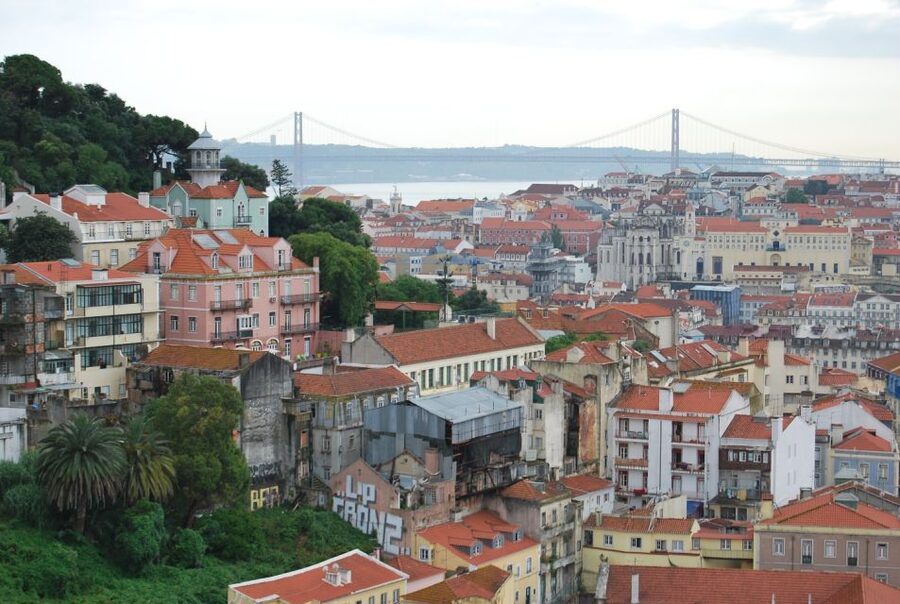
Lisbon’s oldest quarter unfolds one steep alley at a time on this 150-minute walk through Alfama. You follow old city walls, pass Roman salt tanks, hear how fado took root, and reach the Portas do Sol belvedere for one of the city’s best-known views.
I like the way the route ties big history to small details, from the Roman name Olisipo to the Moorish word Al-Hamma. I also like that Lisbon Cathedral admission and a guided visit are included, giving you more than an outside look at one of the city’s key buildings.
The main catch is simple: São Jorge Castle is not included. You reach its walls and explore the surrounding quarter, but you do not enter the castle itself. The steep streets and stairs also make this a poor fit for anyone with mobility impairments.
Key points to know before you book
- Casa dos Bicos meeting point: Find the spike-covered building at Campo das Cebolas near Terreiro do Paço Metro.
- Alfama from Roman to modern times: The route connects Olisipo, Moorish Lisbon, Jewish heritage, fado, and present-day neighborhood life.
- Cathedral entry included: You visit Lisbon Cathedral inside, with its blend of architectural styles.
- Castle quarter, not castle interior: The walk follows the area and walls around São Jorge Castle, but admission is extra.
- A guide-led history walk: Guides speak English, Spanish, Portuguese, German, or French, with past tours led by people such as Ricardo, Agatha, Helena, Elena, Lucy, and Fatima.
- Two and a half hours on foot: Wear comfortable clothing and expect uneven streets, slopes, and stairways.
Starting at Lisbon’s spike-covered house

The tour begins at Casa dos Bicos, the odd-looking building at Campo das Cebolas. Its diamond-shaped stone points give it the nickname House of the Spikes, and its survival after the 1755 Lisbon Earthquake makes it a fitting starting point for a walk through the city’s past.
You meet beside the building, near Terreiro do Paço Metro, and look for a guide carrying a black bag marked Lisboa Autêntica. This is useful in a busy central area, though you should arrive with enough time to orient yourself. Transfers are not included, so you make your own way to the meeting point.
Casa dos Bicos was built around 1523. Its unusual façade immediately gives the tour a strong visual beginning, rather than starting with a plain street corner and a long introduction. From here, the route moves toward Alfama and the older layers of Lisbon.
I like this opening because it places you at the edge between the rebuilt lower city and the older hillside quarter. You begin with a building that links architecture, earthquake survival, and Lisbon’s changing fortunes before climbing into streets that feel far older.
Other guided walks in Lisbon:
- Lisbon: History, Stories and Lifestyle Walking Tour
★ 4.8 · 10,902 reviews - Best of Lisbon Small-Group Guided Walking Tour
★ 5.0 · 4,869 reviews - Lisbon: Food and Wine Small Group Walking Tour
★ 4.9 · 4,082 reviews
Cetária and the Roman roots of Olisipo
One of the more unusual stops is the Cetária, where you can see traces of old Roman salting tanks. These remains point to the practical side of Roman Lisbon. The city was not only a place of monuments and government. It was also a working port where food was processed and preserved.
Your guide explains how Lisbon was known as Olisipo in Roman times. The story then moves to Alfama’s thermal waters. The Romans found the springs, and later Muslim residents gave the area the name Al-Hamma, linked to baths or hot waters.
This is the kind of detail that makes the walk useful beyond a list of dates. You begin to understand why Alfama developed where it did and why its name carries a trace of an earlier culture. The route presents Lisbon as a place shaped by Roman, Muslim, Jewish, and Portuguese influences.
The Cetária is not a grand ruin with a huge structure to enter. Think of it as a small but revealing piece of evidence. Its value comes from the explanation around it, so this stop depends heavily on your guide’s storytelling.
Into Alfama’s alleys and inner patios
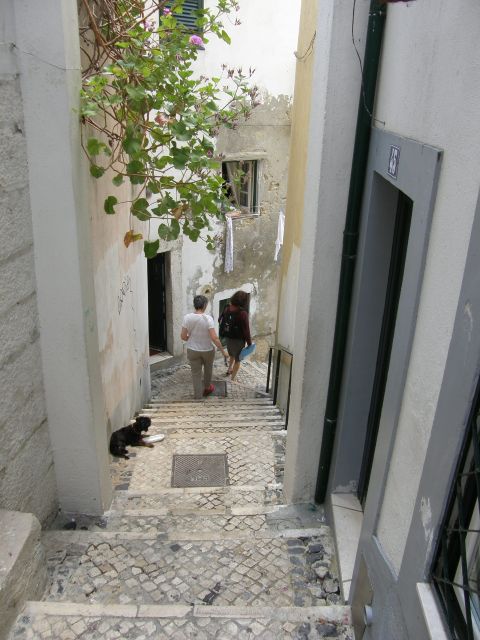
Alfama is best understood on foot, and this is where the tour earns its price. The route works through a maze of narrow lanes, interior patios, stairways, and small squares. You are not simply walking along a main road and pointing at façades. You are following the kind of irregular path that gives the quarter its character.
The streets can feel confusing, which is exactly why a guide helps. You hear how the area grew around the castle and old defensive walls, and you get a clearer sense of where Lisbon began. The route also reaches what was once the city’s Jewish Quarter.
You should expect a steady amount of walking. Alfama has slopes and stairs, and the activity specifically is not suitable for people with mobility impairments. Comfortable clothing is listed as essential, but good walking shoes would be a sensible choice as well.
I like the human scale of this part of the route. Your guide points out how residents use the spaces, not just what happened there centuries ago. The walk is designed to connect the past with daily life, which helps Alfama feel like a living neighborhood rather than an open-air museum.
Largo do Chafariz de Dentro and the beginnings of fado
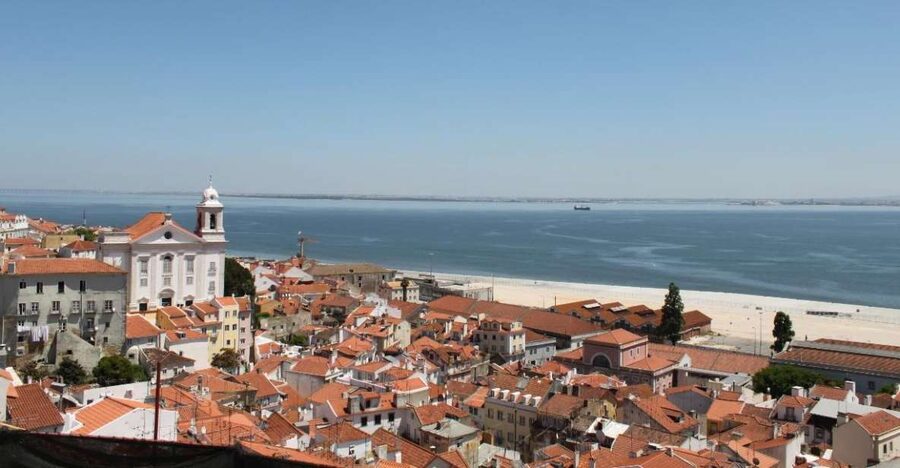
The route passes through Largo do Chafariz de Dentro, one of Alfama’s old gathering places. Here, the subject turns to fado, the Portuguese music closely linked with Lisbon.
You learn about the birth and customs of fado rather than simply receiving a recommendation for a music venue. That matters because fado is part of Alfama’s identity, and understanding its local setting gives you a better reason to seek it out later.
The information provided for the tour does not promise a live fado performance. You should expect an explanation of the music, its roots, and its place in local life, not a concert. If hearing fado is high on your list, use the guide’s advice to choose a separate performance for another evening.
This section also shows why taking the walk early in your stay can be smart. Several people who enjoyed the experience found it useful for getting their bearings and deciding what to revisit later. You may finish with a better sense of where to return for food, music, or further exploring.
Same base, a different kind of day out:
- Lisbon City Center Tour – The Unmissable Lisbon
★ 5.0 · 22,234 reviews - Lisbon: Sintra, Pena, Regaleira, Cabo da Roca & Cascais
★ 4.7 · 19,656 reviews - Lisbon: Jerónimos Monastery Entrance Ticket
★ 4.1 · 14,164 reviews - Lisbon: Sunset Boat Party Cruise with DJ and Open Bar
★ 4.5 · 10,378 reviews
Lisbon Cathedral and its changing architecture
Lisbon Cathedral, or Sé, is the main interior visit on the route. Admission and a guided tour are included, which adds real value to the $23 price.
The cathedral was built in the 12th century and changed over time. Inside, you see a mixture of architectural styles rather than one perfectly uniform design. That blend reflects Lisbon’s long history of rebuilding, alteration, and changing artistic taste.
A guided visit helps you read the building. Without context, a visitor might see only a large old church with heavy stonework. Your guide can point out how different periods appear in the structure and explain why the cathedral matters to the city.
The visit also breaks up the outdoor walking. Even so, this is still a walking tour, not a cathedral-focused experience. You get an informed introduction rather than an exhaustive study of every chapel, object, or architectural detail.
Portas do Sol and the view over Alfama
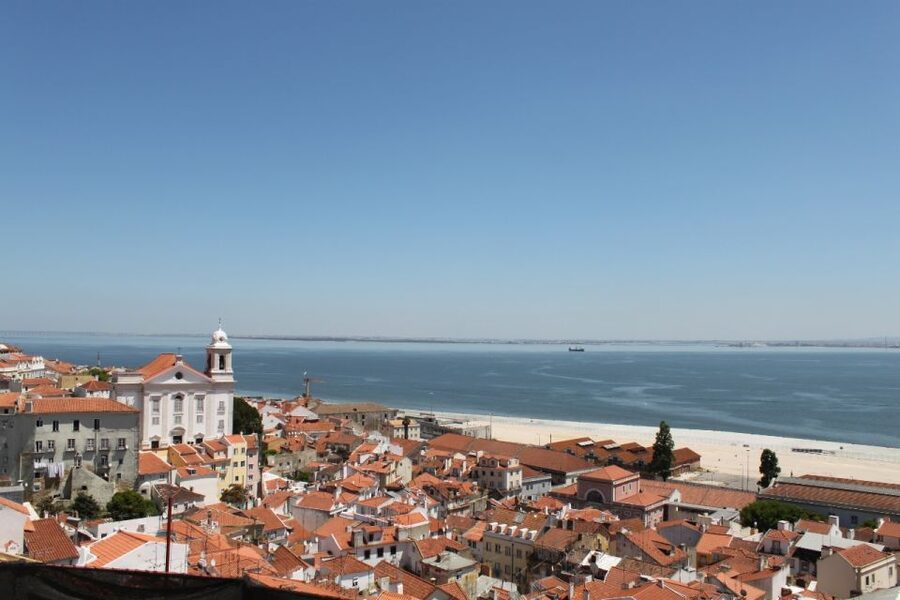
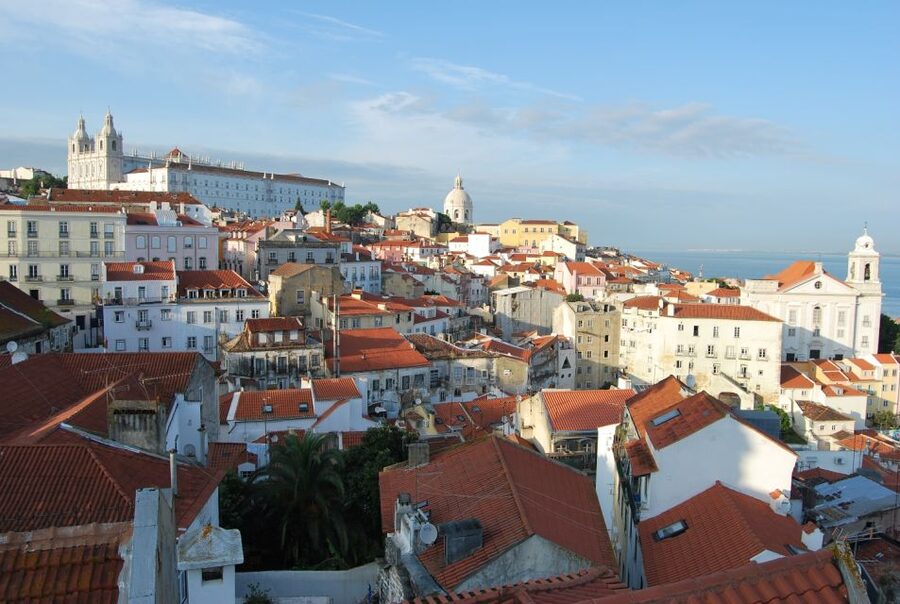
The walk continues to Portas do Sol, a belvedere with broad views across Alfama and toward the Tagus. This is one of the route’s strongest pauses because the view helps you make sense of the hills and tangled streets you have just crossed.
From above, Alfama’s layout becomes easier to read. You can see why the quarter feels compact and layered, and why the castle has such a commanding position. The stop also gives you a chance to pause after the uphill sections.
Bring your camera, but do not treat this only as a photo stop. Listen to the explanation of the area below and use the view to place the cathedral, the old quarter, and the river in relation to one another. A good guide turns a scenic pause into a useful map of Lisbon.
The route’s order makes sense. You first work through the details at street level, then reach a viewpoint where the whole quarter comes together. It is a satisfying finish to the central part of the walk.
Reaching the São Jorge Castle quarter
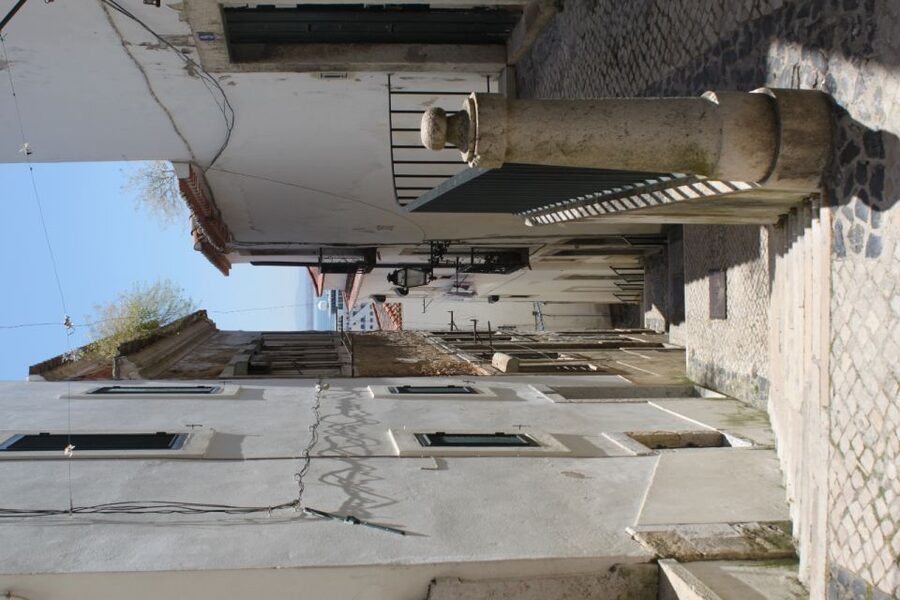
The title can cause confusion, so read the castle detail carefully. You explore the streets around São Jorge Castle and follow parts of the old walls, but entrance to the castle is not included.
That is not a small technicality if you want to tour the castle interior. You will need a separate admission and additional time for that visit. The walking tour is better understood as an introduction to the castle quarter, its defensive setting, and the routes leading through Alfama.
For some people, this arrangement is ideal. You get the neighborhood context first, then decide if you want to spend more of your day inside the castle. For others, the title may suggest a full castle visit, so you should not book expecting that.
The route still gives you a useful look at the castle’s role in Lisbon. The walls, slopes, and narrow approaches help explain how the quarter developed. Just keep the limits of the included visit in mind when planning your day.
How the guides shape the experience

The tour is available in English, Spanish, Portuguese, German, and French. The guide matters a great deal here because much of the value comes from explanation, connections, and local stories rather than from paid attractions.
The guiding team has included Ricardo, who has a background as a history teacher, along with Agatha, Helena, Elena, Lucy, Fatima, Beatrice, and others. The experience can vary with the individual guide, but the strongest descriptions point to clear storytelling, warm conversation, and a willingness to answer questions.
Some departures have been very small, with one family receiving what felt like a private tour. That is not guaranteed, so you should not book on the assumption that every group will be tiny. Still, the format appears suited to discussion, and guides have sometimes adjusted the route slightly when asked.
That flexibility can be especially helpful for families. One guide made a point of engaging children, and a 15-year-old enjoyed the experience. The walk covers serious history, but it is not presented as a lecture. Expect stories, cultural explanations, and practical advice for the rest of your stay.
Is $23 good value for 150 minutes?
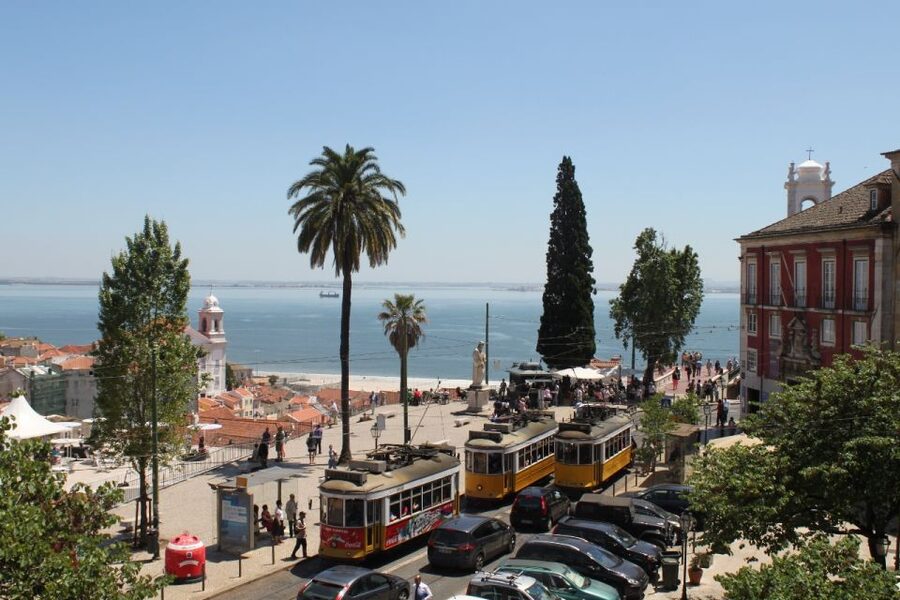
At $23 per person, this is a fair price for a two-and-a-half-hour guided walk that includes Lisbon Cathedral entry. The cost is not just paying for movement through Alfama. It covers a live guide, a planned route, historical interpretation, local customs, and advice for the rest of your visit.
The cathedral admission strengthens the value. If you only wanted a short neighborhood stroll, you could explore Alfama on your own. But the Roman remains, Jewish Quarter, fado background, castle setting, and architectural explanations are easier to connect with someone guiding you through them.
The price is less attractive if your main goal is to enter São Jorge Castle. That admission is extra, and you would still need to pay for the castle separately. You should compare this tour with your total castle plans rather than assuming the castle is part of the package.
I would use this walk as an orientation on your first day or second day in Lisbon. You gain a practical map of Alfama and a list of places worth returning to. It also helps you decide how much time to set aside for the cathedral, castle, viewpoints, and fado.
Who should book this Alfama walk?
I would recommend it to first-time visitors who want historical context without spending a full day in a museum. It suits couples, families, and anyone who prefers to understand a neighborhood before exploring it alone.
It is also a good choice if you want a guide who can connect architecture, food customs, music, and local life. The route does not focus on one period, so you get a broad introduction to Lisbon’s development.
You should think twice if steep streets and stairs are difficult for you. The activity is not suitable for people with mobility impairments, and the route through Alfama is not designed as a flat, easy walk.
You should also skip it if you expect an inside tour of São Jorge Castle. Choose it for the castle quarter and Alfama, then arrange castle entry separately if that is important to you.
Should you book it?
Book this tour if you want a well-organized introduction to Alfama, with a live guide, cathedral entry, Roman remains, fado background, and a viewpoint at Portas do Sol. At $23, it offers good value for a focused 150-minute walk, especially early in your Lisbon stay.
Do not book it under the impression that São Jorge Castle admission is included. The route reaches the castle area and walls, not the castle interior. With that expectation set correctly, this is a practical and engaging way to get your bearings in Lisbon’s oldest quarter.
FAQ
How long does the walking tour last?
The tour lasts 150 minutes, or two and a half hours.
How much does the tour cost?
The listed price is $23 per person.
Where does the tour meet?
You meet at Campo das Cebolas beside Casa dos Bicos, the building covered in stone spikes. The nearest Metro station is Terreiro do Paço.
How do I identify the guide?
The guide will be holding a black bag with the Lisboa Autêntica logo.
Is São Jorge Castle included?
No. The route explores the streets and area around São Jorge Castle, but castle admission is not included.
Is Lisbon Cathedral included?
Yes. Entrance to Lisbon Cathedral and a guided visit are included.
Which languages are available?
The live guide is available in Spanish, Portuguese, German, English, and French.
Are transfers included?
No. You are responsible for getting to and from the meeting point.
Is the tour suitable for people with mobility impairments?
No. The activity is listed as unsuitable for people with mobility impairments.
Can I cancel for a full refund?
Yes. You can cancel up to 24 hours in advance for a full refund. You can also reserve now and pay later.
More neighbourhood walks in Lisbon
- Alfama Tour in Lisbon Old Town
★ 5.0 · 4,936 reviews - Private Lisbon Sightseeing Tuk-Tuk Tour: Alfama, Belém & More
★ 5.0 · 4,277 reviews - Lisbon: Hills, Alfama, and Mouraria Tour by Electric Bike
★ 4.8 · 3,438 reviews - Lisbon: Fado in Chiado Live Show
★ 4.6 · 3,095 reviews
Just added in Lisbon
- Half day Spa Water Therapy experience at THE SPA at Corinthia Lisbon★ 4.5 · 51 reviews
- Central Lisbon E-Bike Tour★ 5.0 · 168 reviews
- Small-Group Sailing Tour on the Tagus River from Lisbon★ 5.0 · 78 reviews
- Lisbon Cinematic Photoshoot with Top-Rated Photographer★ 5.0 · 76 reviews
- Lisbon Sailing Catamaran Public Cruise with drinks★ 5.0 · 304 reviews
- Alfama and the Castle of Saint George Skip the line Tour★ 5.0 · 53 reviews
- City Centre Run in Lisbon★ 5.0 · 164 reviews
- Boat tours in the Óbidos Lagoon★ 5.0 · 100 reviews
Lisbon Neighbourhood Walks, compared.

Private Lisbon Sightseeing Tuk-Tuk Tour: Alfama, Belém & More
Read our review →
Hills, Alfama, and Mouraria Tour by Electric Bike
Read our review →

Best of Lisbon Walking Tour: Rossio, Chiado & Alfama
Read our review →
Lisbon Small-Group Food Tour with 18 Tastings in Alfama District
Read our review →
Baixa District Food Tour with Dinner and Drinks
Read our review →
Lisbon E-Bike Tour Commerce Square, Mouraria and Alfama
Read our review →Browse the lists this tour appears in